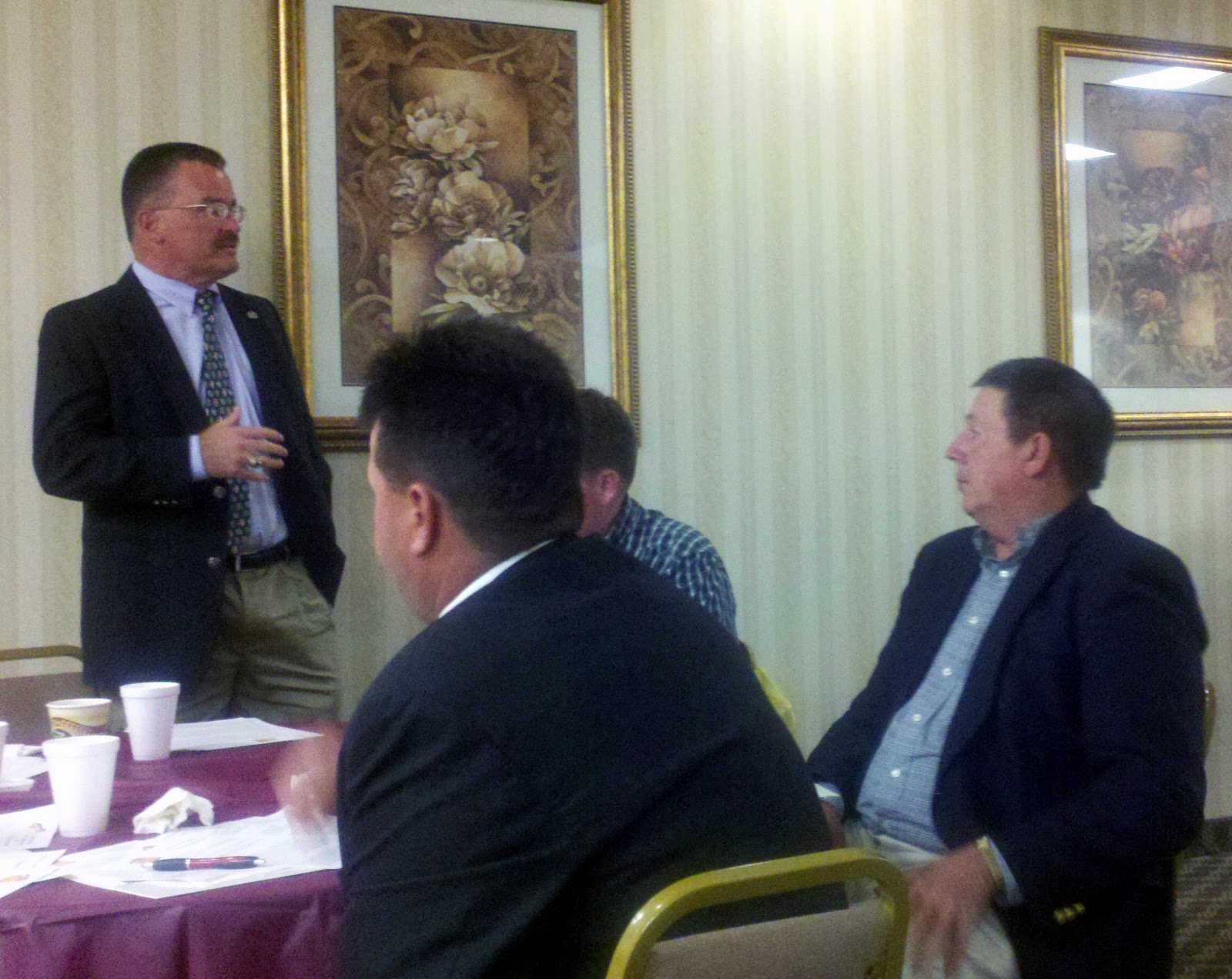
Farm Bureau members meet with legislators at Senatorial District meetings


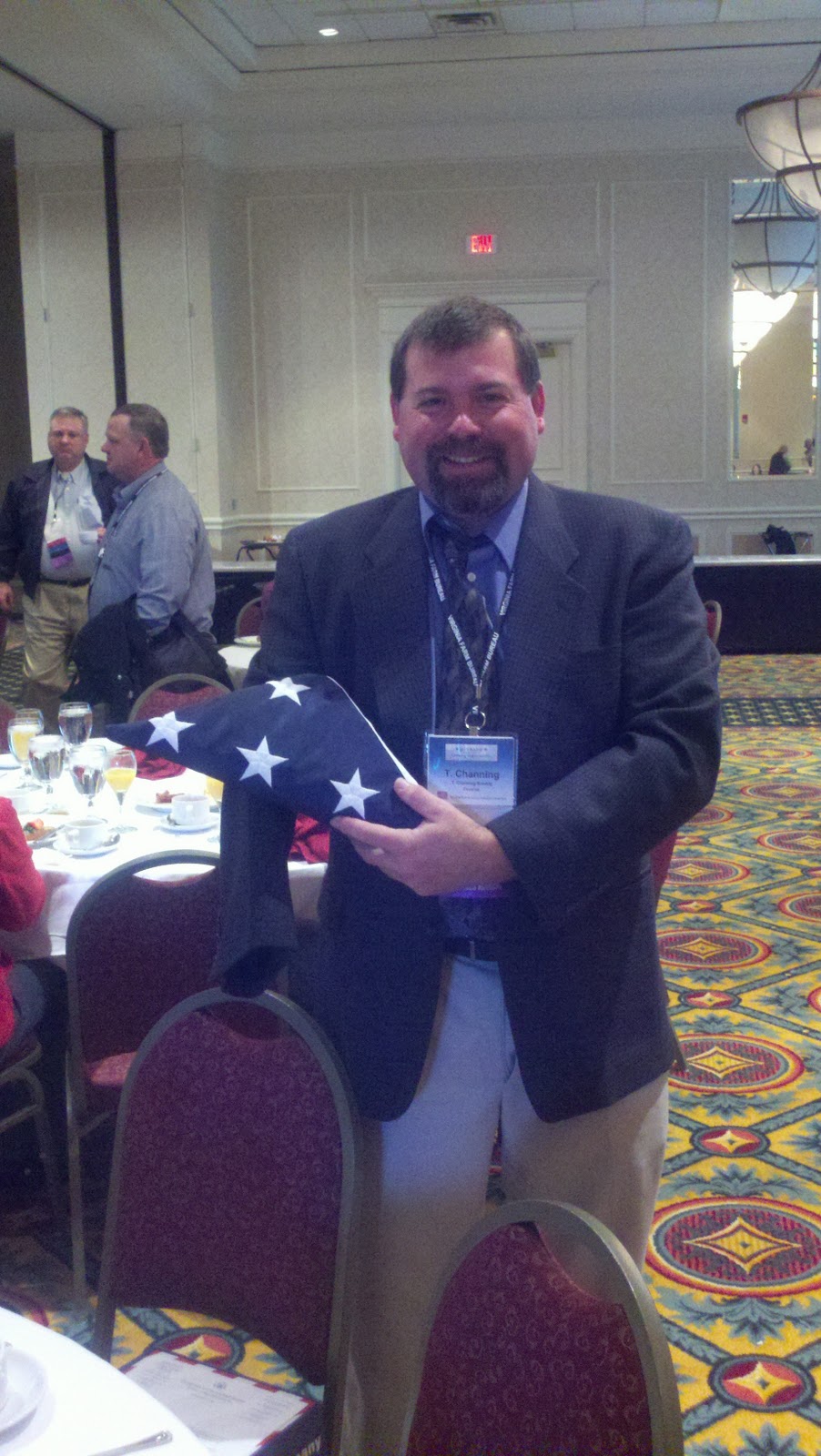
Del. Ed Scott discusses the legislative issues with Farm Bureau members at a Senatorial District meeting in Zion Crossroads Tuesday night.

 Farm Bureau began its annual senatorial district meetings this week in Zion Crossroads. Farm Bureau members from Augusta, Fluvanna, Orange, Greene Spotsylvania, Albemarle and Madison counties were in attendance as well as Delegate Ed Scott and Sens. Emmett Hangar and Tom Garrett.

Each year before the General Assembly starts, producer members meet with their legislators to discuss the issues most important to them for the upcoming session. This year water quality, property rights, animal care, funding for Virginia Cooperative Extension and game laws were the topics of discussion.

Senatorial District meetings are a great way to connect with your legislators and educate them on some of our critical issues. You will also hear how your legislators feel about these issues which helps us gauge where they stand on an issue.

Having producer members attend these meetings is critical to our legislators understanding more about Virginia agriculture so they can make more informed decisions that affect our livelihood.

Senatorial District meetings run through December. If you are a producer member and interested in attending, please contact your Field Services director or County Farm Bureau office.

Governmental Relations collects more than 13,500 property rights postcards

The Stand Our Ground: Property Rights postcard campaign has technically come to end, and we have received more than 13,500 signed postcards. Many thanks to the county Farm Bureaus for their participation!

At county Farm Bureau annual meetings this summer and fall, Virginia Farm Bureau asked its members to sign postcards in support of the second passage of a constitutional amendment to protect property rights in the upcoming General Assembly. Each county was asked to sign “112 for 2012,” which equals almost 10,000 cards. As you can see, we surpassed that goal!

The top three counties to collect signed postcards are:

1. Page County- 1,509
2. August- 448
3. Bedford-  354

The postcards will be delivered to legislators at a crucial time next year.


The 2011 Virginia General Assembly passed a resolution to amend the state constitution to further protect your property rights. This has been a long-term priority goal for Virginia Farm Bureau since 2008.

HJR 693, patroned by Delegate Johnny Joannou, D-Portsmouth, was intended to prevent eminent domain abuse by the condemning authorities. The proposed amendment would tighten up the state’s definition of “public use” with regard to eminent domain and ensure that your land can not be taken and given to another private entity. It also would ensure that private property cannot be taken without just compensation to the owner and that no more property is taken than necessary.

To amend the state constitution, the General Assembly must pass a resolution in two consecutive years, and the wording of the resolution in the second year must be exactly the same as the wording in the first year. If this second amendment is passed by the legislature in 2012, it will go before Virginia voters next November.

Even though the campaign has technically ended, we are still collecting signed postcards! So please send them to Kelly Pruitt, Governmental Relations. The more postcards we get, the bigger the impact we will make on our legislators.

Virginia Farm Bureau joins U.S. Farmers and Ranchers Alliance

The Virginia Farm Bureau recently joined the U.S. Farmers and Ranchers Alliance, a newly formed alliance consisting of a wide range of prominent farmer- and rancher-led organizations and agricultural partners. This marks the first time agricultural groups at the national, regional and state levels have collaborated to lead the dialogue and answer Americans’ questions about how we raise our food – while being stewards of the environment, responsibly caring for our animals and maintaining strong businesses and communities.

USFRA recently held town hall meetings across the country to discuss concerns uncovered by surveys commissioned by USFRA, and answered questions from audience members and online participants.

The surveys found that Americans think about food production a lot, yet 72 percent of consumers say they know nothing or very little about farming or ranching. Many consumers think the United States is on the wrong track with regard to the way the nation produces food.

 Consumers surveyed said some of the agricultural topics with the most confusing information include the use of pesticides and antibiotics and genetic engineering in crops. Seventy-nine percent of those surveyed said that producing healthy choices for all consumers is very important for farmers to consider when planning farming practices.

For more information, visit http://www.usfraonline.org/

**Farm Bureau is offering a USFRA message training program on the morning of Legislative Day, January 24, 2012, for County Farm Bureau leaders. At this message training program, you will

  • Learn how to better communicate with consumers
  • Receive a brief overview of USFRA’s communications strategies, and learn why it’s important to listen to consumers to better understand their concerns. Increased consumer skepticism about the food production system should be addressed with the right language 
  • Learn to view different scenarios and various reactions
  • Be able to communicate more comfortably and effectively with consumers
  • Be able to incorporate research-tested messages when communicating about your farm

Seats for this program are limited. Please register as soon as you can if you are a County Farm Bureau leader. Contact your Field Services Director for details.

VFBF News Leads: State begins tracking owner-financed farm conservation practices

*News Leads are the weekly top agriculture stories written by Farm Bureau’s Communications Department and sent to local newspapers and TV stations around the state as a news release. This story was released on Oct. 13. 

Virginia farmers in six soil and water conservation districts are being urged to participate in a pilot program to collect information about conservation practices they’ve implemented.

“Farmers need to know what’s going on, and they should participate,” said Wilmer Stoneman, Virginia Farm Bureau Federation associate director of governmental relations. “This is a program that is valuable to them. It’s a direct response to Farm Bureau’s complaints that incomplete data is being used by the Environmental Protection Agency to draw up mandatory conservation programs to improve water quality in the Chesapeake Bay watershed.”

Best management practices are changes farmers and other landowners make to their property to reduce or eliminate soil erosion or contamination of water. They include switching to no-till planting methods, fencing livestock out of waterways, using nutrient-management planning for crop production, and covering manure storage facilities.

The Virginia Department of Conservation and Recreation has records only of practices installed using cost-share funds from federal and state conservation programs. Those were the records the EPA used for its Chesapeake Bay computer model in recent years.

“We know that a lot more conservation practices have been installed or are in use on Virginia farms than are on record,” Stoneman said. “They have to be, since there has never been enough cost-share funding to meet the demand for financial assistance. So many farmers paid for these practices out of their own pockets, but they are not being credited in the EPA model.”

In response to that complaint, the 2010 Virginia General Assembly passed a bill requiring the secretary of natural resources to establish a data collection program for voluntarily implemented agriculture and forestry BMPs. Virginia’s 47 soil and water conservation districts are the primary collection agents, and six pilot districts started that work this summer.

The pilot districts are located in and around Bristol, Roanoke, Harrisonburg, Charlottesville, the Northern Neck, Virginia Beach and Chesapeake. For more information, visit vaswcd.org.

Scam Alert for Forest Landowners

The Virginia Department of Forestry has received several reports of a man posing as a representative of the state agency who is approaching elderly and widowed landowners in Central Virginia trying to buy the timber on their property. This is a scam that could cost the landowners tens of thousands of dollars.

VDOF Assistant Regional Forester Robbie Talbert said, “We have an individual who has been contacting landowners in Goochland and Fluvanna counties telling them that ‘Forestry’ has asked him to contact them regarding selling their timber. While he doesn’t explicitly mention the VDOF, by invoking ‘Forestry’ he is trying to associate himself with the Virginia Department of Forestry. VDOF does not have any employee or contractor contacting landowners for the purpose of selling their timber.


“While some landowners have contacted our Goochland office asking whether this person works for us, it’s quite possible that other landowners are being scammed – an action that can cost them thousands of dollars. We want citizens to know that this individual does not work for the Virginia Department of Forestry, and that the VDOF does not purchase timber. Anyone making such a sales pitch to landowners is trying to scam these citizens. We urge landowners who may be contacted by someone claiming that ‘Forestry’ sent him to purchase their timber to contact their local sheriff’s office and report the incident immediately,” Talbert said.

Before landowners consider selling their trees, the Virginia Department of Forestry has a few tips that may enable them to attain – and retain – the maximum value from their timber sale while minimizing the overall impact to their land; protecting the water resources that either originate or pass through their property, and keeping them on the right side of the law.
First, have a plan!

Chuck Wright, VDOF area forester for Goochland and Fluvanna counties, said, “Most forest landowners harvest timber only once or twice during their lifetimes. It’s extremely important to have a good plan for overall management of their timber resources as well as a specific timetable when that timber is going to be harvested.”

A sound timber sale is the result of careful planning, management and marketing, and each of these variables can make a tremendous difference in the amount of money that their timber sale will bring.

Things to consider in a timber sale are:

• Volume and species of timber to be sold

• Statement of purchase price and method of payment

• Length of time allowed for cutting

• Boundary line location and CLEAR marking of those boundaries

• Restrictions on logging, such as designated places for skid trails, haul roads, logging decks and stream crossings

• Required use of Best Management Practices, or BMPs, for watershed protection

• Responsibilities of the logging contractor at the completion of the harvest to repair any damages caused by his activity and to stabilize any erosion that has occurred as the result of the harvest

Although professionals who work with the Virginia Department of Forestry can provide landowners with recommendations on how to manage their timberland, including when to harvest, VDOF employees do not provide landowners with a value associated with the sale of their timber.

Wright said, “As a state agency, the VDOF does not sell timber, nor do we ask individuals to solicit timber sales on our behalf. It is solely a private enterprise, and it is a landowner’s individual decision as to whether he or she would like to sell timber.”

Landowners should also keep in mind that timber markets tend to fluctuate, and it is often best to solicit the services of a private consulting forester to handle a potential harvest and provide them with information regarding the value of their timber. Upon request, the VDOF can provide landowners with a list of private forestry consultants who work in their area.

Second, know the Law!

In Virginia, water quality protection from timber harvesting is the responsibility of not only the logging contractor and the timber owner, but also the landowner.

The Virginia Department of Forestry oversees the enforcement of the Silvicultural Water Quality Law. This law mandates the protection of the Commonwealth’s streams and rivers from any negative effects, mainly sedimentation, caused by timber harvesting. The law allows for the issuance of civil penalties of up to $5,000 per day for failure to correct problems due to sedimentation caused by the logging activity.

Wright said, “The important thing to note here is that the penalty is placed on ALL owners and operators, which includes the landowner. So it’s vital for you to be involved with your timber sale to the extent possible, or have a professional forester who is looking out for your interests on your timber sale.”

The Virginia Department of Forestry is available to provide landowners with assistance in planning their timber harvest. Please call the VDOF regional office in Charlottesville at 434-977-5193 and ask to be put in touch with the appropriate field personnel for your area.

Latest updates on dust regulations from American Farm Bureau

Here is the latest report from American Farm Bureau on dust regulations from their Newsline podcast, which airs on Mondays and Thursdays.

Newsline 10-24-11 Latest on Dust Regulations for Agriculture

Good news from the EPA can be made better with legislation from Congress. American Farm Bureau Regulatory Specialist Rick Krause explains how in this report from AFBF’s Johnna Miller.

Miller: Farmers and ranchers recently got some welcome news…that the Environmental Protection Agency would not be expanding air quality standards that regulate agricultural dust.

Krause: That was good news for us, because that is exactly what we wanted EPA to do. Farm dust is naturally occurring, for the most part. It comes from driving on unpaved roads. It comes from tractors in farm fields. It comes from moving livestock. It’s very important for farmers and ranchers to be able to continue these and not be regulated just on the basis of the naturally occurring dust that there is.

Miller: But American Farm Bureau Regulatory Specialist Rick Krause says farmers and ranchers still have concerns about the current dust regulations, which is why Krause says Congress needs to pass the Farm Dust Regulation Prevention Act.

Krause: Just in the course of the last couple of months there have been four huge dust clouds that have swept over Phoenix and this is the dust that EPA regulates. There’s no way that you can control it. There’s no way you can regulate it. So these bills would exclude from regulation naturally occurring dust that occurs from farming activities and also from things like these dust storms. We think that this is the other part of the issue that needs to be solved.

Miller: Krause says this legislation acknowledges the difference between dust that is a nuisance and what’s called “fine particulate matter” which causes serious health concerns.

Krause: This bill separates that out. It would exclude from regulation farm dust, but at the same time the bill has a provision that if scientific information does come around and is developed that shows that these materials cause health effects then it would allow EPA to regulate. It does not roll back any EPA protections. It really builds on the basis that good regulation should be based on good science. This bill would allow EPA to regulate according to what the science says.

Miller: Johnna Miller, Washington.

Miller: We have two extra actualities with AFBF Regulatory Specialist Rick Krause. In the first extra actuality he talks about the unanticipated effects dust regulations can have on farmers and ranchers. The cut runs 29 seconds, in 3-2-1.

Krause: If farmers have to park their tractors because of dry or windy conditions, that means they’re not going to be able to get into the fields. That’s going to cost them lost time. That’s going to cost them lost productivity. If farmers and ranchers are limited to driving 15 to 20 miles per hour down country roads, that’s going to cost them a lot of time and it’s going to cost them lost productivity. All of these issues cumulatively cause significant economic burdens to farmers and ranchers.

Miller: In the second extra actuality Krause notes that the EPA acknowledged that further regulations on farm dust have no scientific basis. The cut runs 18 seconds, in 3-2-1.

Krause: During the course of their review, EPA also indicated that the scientific basis for finding health impacts from dust were very uncertain and so they basically admitted that they did not have the information that they necessary to further regulate farm dust.

Miller: Newsline is updated Mondays and Thursdays by 5pm eastern time. Thank you for listening.

VFBF News Lead: Animal control officers get training on ag animal care

*News Leads are the weekly top agriculture stories written by Farm Bureau’s Communications Department and sent to local newspapers and TV stations around the state as a news release. This story was released on Oct. 20.


Photo by USDA

RICHMOND—Virginia animal control officers are receiving training on agriculture animal care standards that were approved by the 2011 General Assembly.

“We want them to know how to enforce the new animal care standards law,” said Dr. Daniel Kovich, program manager for the Office of Animal Care and Health Policy within the Virginia Department of Agriculture and Consumer Services. Since the legislation passed in April, Kovich has been meeting with animal control officers so they are aware of the new law, know how to apply it, and understand how to educate the public about animal welfare.

 “The average person gets conflicting messages about animal welfare,” Kovich said. “How do animal control officers manage this public confusion? These people expect the animal control officers to share their viewpoint and do something about it [alleged animal abuse].”
 The new legislation sets a reasonable standard for agricultural animal care based on accepted animal husbandry practices.

“Our farmers take care of their animals and use management practices that are appropriate for each animal,” said Lindsay Reames, assistant director of governmental relations for the Virginia Farm Bureau Federation. “They know what needs to be done to take care of their farm animals and this law codifies basic care standards.”

The law mandates that farmers give their animals proper feed, water and veterinary care. It is intended to catch bad actors who fail to provide for the basic needs of their livestock.

Prior to the new legislation, only companion animal care standards existed. “This is a tool for earlier intervention in cases of animal neglect so it doesn’t get to the point of animal cruelty,” Kovich said.

Animal care is a topic that was identified recently by the U.S. Farmers and Ranchers Alliance as one that consumers want more information about. The USFRA was formed by a wide range of farmer-led organizations and agricultural partners to lead a dialogue in answering Americans’ questions about how farmers raise their food.

Farmers believe they take good care of their animals but some consumers question those practices.

“Farmers use accepted, science-based care for their animals to keep them safe, healthy and productive,” Reames said. “It’s hard for the average person who’s never been on a farm to understand how farmers care for their animals. But their practices are for the good of the animal.”

Animal Agriculture Alliance wants to celebrate Food Day every day

The Center for Science in the Public Interest has proclaimed today “Food Day” to to raise awareness of raising food prices, world hunger the declining quality of the American diet. Unfortunately, the campaign downplays the importance of modern agriculture and unfairly criticizes the way of life of many food producers.

But the Animal Agriculture Alliance, a friend of Virginia Farm Bureau, recently released an op/ed piece from their chairman Chris Ashworth about celebrating “Food Day” every day and supporting American farmers and ranchers. Click to read the article:

 Real Farmers, Real Food

Celebrate Food Day – Every Day

You may have heard that October 24 has been designated Food Day. But the thing is, to farmers and ranchers, Food Day is every day. I feel honored to be among the less than two percent of Americans who help stock your local supermarket. I’m here to tell you that farming is not just a business; it is a way of life, no matter if you have ten cows or 10,000.

Farming is rewarding work, but it is also tiring, dirty, and sometimes heartbreaking. You don’t have to look further than this summer’s historic drought in Texas or the devastating floods in the Northeast to see that it takes a special sort of resiliency to put up with the uncertainty of Mother Nature.

Modern food production relies on a mix of technology and tradition. There is a reason why agriculture looks the way it does today. No, our industry is not perfect. But time and time again, American agriculture has shown a commitment to continuous improvement- be it for food safety or environmental stewardship. And as a veterinarian, I can tell you today’s farmers are able to provide better care for their animals than past generations ever could.

Although most of us are fortunate to spend just a small percent of our incomes on food, we shouldn’t forget that one in eight Americans has trouble getting enough to eat. The demand for safe, affordable food will only increase as our population grows worldwide – but I am confident that American farmers will rise to this challenge, if we let them.

Let’s use Food Day to celebrate the diversity of American agriculture. While we should enjoy and appreciate the taste of fresh seasonal products from the local farmers market, we can’t afford to deny the importance of large scale producers who provide the bulk of what we rely on in the grocery store. In many ways, agriculture is the backbone of our nation. We must protect it.

On October 24, take this opportunity to learn more about your food straight from the people who understand how it is produced best – farmers and ranchers.

Visit the Real Farmers, Real Food Web site for more information, including a message from Miss America 2011 Teresa Scanlan, an agriculture advocate, and to sign a petition in support of agriculture’s diversity and consumer choice.

Washington County Young Farmers produce ag commercials

This summer, members of the Washington County Young Farmers Committee produced a  two 30-second commercial on the importance of agriculture on the economy of Southwest Virginia. The commercials ran on WCYB-TV in September and featured cameos from Governor Bob McDonnell and Congressman Morgan Griffith.
“The thought literally just hit me that if everybody else takes to the air waves to promote their cause, why can’t we?” said Bear Lloyd, chairman of Washington Count YFs.
Lloyd contacted WCYB, who shot the commercials. He then contacted Griffith’s office and Secretary of Agriculture Todd Haymore’s office, and sent in a request to Governor’s McDonnell’s for his comments on agriculture. Lloyd said everyone was supportive.
The commercials ran for two weeks, several times a day.

Virginia Farm Bureau Federation AgPAC endorses General Assembly candidates

Virginia AgPAC endorses General Assembly candidates Virginia AgPAC, the political action committee of Virginia Farm Bureau Federation, announced in late August its endorsement of the following candidates for seats in the Virginia General Assembly.
The endorsements are based on the recommendations of local committees of farmers.
The non-partisan AgPAC was created in 1999 to support candidates who can best support

agriculture, forestry and Farm Bureau issues.


*denotes incumbents

Virginia Senate
1st District
John Miller* (D)
3rd District
Thomas K. Norment, Jr.*(R)
4th District
Ryan McDougle* (R)
6th District
Ralph Northam* (D)
7th District
Frank Wagner* (R)
8th District
Jeff McWaters* (R)
10th District
John Watkins* (R)
11th District
Steve Martin* (R)
12th District
Walter Stosch* (R)
14th District
Harry Blevins* (R)
15th District
Frank Ruff* (R)
16th District
Henry Marsh* (D)
17th District
Edd Houck* (D)
18th District
Louise Loucas* (D)
19th District
Ralph Smith* (R)
20th District
Roscoe Reynolds* (D)
22nd District
Thomas Garrett, Jr. (R)
23rd District
Steve Newman* (R)
24th District
Emmett Hanger* (R)
25th District
Creigh Deeds* (D)
26th District
Mark Obenshain* (R)
27th District
Jill Vogel* (R)
28th District
Richard Stuart* (R)
29th District
Chuck Colgan* (D)
33rd District
Mark Herring* (D)
35th District
Dick Saslaw* (D)
36th District
Toddy Puller* (D)
38th District
Phillip Puckett* (D)
40th District
Bill Carrico (R)

Virginia House of Delegates
1st District

Terry Kilgore* (R)
3rd District
Will Morefield* (R)
4th District
Joseph Johnson* (D)
5th District
Israel D O’Quinn (R)
6th District
Anne Crockett-Stark* (R)
7th District
Nick Rush (R)
8th District
Greg Habeeb* (R)
10th District
Randy Minchew (R)
12th District
Joseph Ryan Yost (R)
13th District
Bob Marshall* (R)
14th District
Danny Marshall* (R)
15th District
Todd Gilbert* (R)
16th District

Don Merricks* (R)

17th District
Christopher Head (R)

18th District
Michael Webert (R)

19th District
Lacey Putney* (I)

20th District
Dickie Bell* (R)

21st District
Ron Villanueva* (R)

22nd District
Kathy Byron* (R)

23rd District
Scott Garrett* (R)

24th District
Ben Cline* (R)

25th District
Steve Landes* (R)

26th District
Tony Wilt* (R)

27th District
Roxann Robinson* (R)

28th District
William Howell* (R)

29th District
Beverly Sherwood* (R)

30th District
Ed Scott* (R)

31st District
Scott Lingamfelter* (R)

32nd District
Tag Greason* (R)

33rd District
Joe May* (R)

34th District
Barbara Comstock* (R)

35th District
Mark Keam* (D)

40th District
Tim Hugo* (R)

42nd District
David Albo* (R)

50th District
Jackson Miller* (R)

51st District
Richard Anderson* (R)

54th District
Bobby Orrock*(R)

55th District
John Cox* (R)

56th District
Peter Farrell (R)

58th District
Rob Bell* (R)

59th District
Matt Fariss (R)

60th District
James Edmunds* (R)

61st District
Tommy Wright* (R)

62nd District
Riley Ingram* (R)

63rd District
Rosalyn Dance* (D)

64th District
William Barlow* (D)

65th District
Lee Ware* (R)

66th District
Kirk Cox* (R)

67th District
Jim LeMunyon* (R)

68th District
Manoli Loupassi* (R)

72nd District
Jimmie Massie* (R)

73rd District
John O’Bannon* (R)

75th District
Roslyn Tyler* (D)

76th District
Chris Jones* (R)

77th District
Lionell Spruill* (D)

78th District
John Cosgrove* (R)

79th District
Johnny Joannou* (D)

80th District
Matthew James* (D)

81st District
Barry Knight* (R)

82nd District
Harry Purkey* (R)

83rd District
Chris Stolle* (R)

84th District
Sal laquinto* (R)

85th District
Robert Tata* (R)

86th District
Tom Rust* (R)

88th District
Mark Cole* (R)

90th District
Algie Howell* (D)

96th District
Brenda Pogge* (R)

97th District
Chris Peace* (R)

98th District
Keith Hodges (R)

99th District
Margaret Ransone (R)

100th District

Lynwood Lewis*