From the Field: Advocacy–My Personal Story

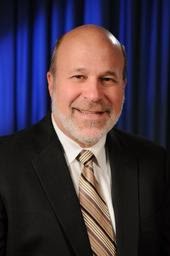
From the Field is a bi-monthly column writtenby Mark Campbell, Farm Bureau Field Services Director for the Central District. He writes about Farm Bureau member benefits and County Farm Bureau activities.

http://WVIR.images.worldnow.com/interface/js/WNVideo.js?rnd=440810;hostDomain=www.nbc29.com;playerWidth=480;playerHeight=300;isShowIcon=true;clipId=9730296;flvUri=;partnerclipid=;adTag=News;advertisingZone=;enableAds=true;landingPage=;islandingPageoverride=false;playerType=STANDARD_EMBEDDEDscript;controlsType=fixedNBC29 WVIR Charlottesville, VA News, Sports and Weather

I think the most dominant message in the agriculture community last year was about agriculture advocacy; getting the message about today’s agriculture industry out to the general public. It didn’t matter what commodity you raised; every trade magazine talked about it. Numerous daily ag emails that I subscribe to talked about it. But when faced with having to deliver the message yourself, the mantra of telling agriculture’s story hits home.

This happened to me on Monday afternoon. Emily Nelson, one of the staff from my soil and water conservation district, called and asked if I would be willing to be interviewed from a farmer’s perspective by the NBC TV station in Charlottesville about cost share conservation programs. I have to admit that I was initially reluctant and tried to think of some other people. But I then realized that I needed to seize on the opportunity when presented. There wasn’t much time since the reporter wanted to come to the farm in less than 24 hours. So I agreed and mentally prepared myself for some comments that I wanted to make.


I checked with Martha Moore, and she gave me a couple of comments, specifically about supporting the budget amendments for funding of cost-share agriculture BMPs by Senator Hanger and Delegate Scott. When it was all said and done, I think that having less than 24 hours’ notice was probably best, because the waiting time made me more anxious about what I was going to say.

Tuesday at 12:30 pm, the TV reporter and two staff from the soil and water district arrived. I took them to two riparian areas, and he interviewed me and Emily of the soil and water district. Both of us had great presentations and great comments. We didn’t high-five afterward, but it was one of those occasions when you feel that you just nailed it. I took the opportunity to give the reporter a paper with all of my contact information and offered myself as a resource for agriculture information and anything about beef and beef cattle, which he seemed very appreciative. They left at 1:30 pm.

The story aired at 5:30 pm, but I didn’t get to see it since I was in a budget meeting in Charlottesville. However, I did see it online and the video is above for you to view. The story that ran didn’t include any of my videoed interview or Emily’s interview. However, he did use some of our comments. One hour combination of talking and video was edited to 1 minute and 11 seconds. The text of the online story was O.K., but I didn’t like that one of his comments about cattle being a large pollutant to streams followed my comment, giving the appearance that I said it. In conclusion, the interview and story was positive, because it did get some of the agriculture message out to the general public, even though it wasn’t all the comments that I had hoped for. Most importantly, I was able to share that farmers care about water quality and are doing their part. I am very pleased that the reporter had interest in doing a story about cost share conservation programs and was willing to make the 45 minute drive from Charlottesville to Nelson County. I also had the opportunity to make myself available to him as a resource for agriculture issues.

This was my experience, but other farmers have been active recently. Lynnwood Broaddus of Caroline County wrote a letter to the editor in the Free Lance Star newspaper in Fredericksburg as a rebuttal to comments made about AFBF’s lawsuit appeal challenging EPA’s regulation of the Chesapeake Bay watershed. Vickie Gibson of Orange County responded to false and derogatory advertising by an Arby’s franchise owner in Richmond comparing grass fed beef to grain fed beef. Pictured in the ad was a nice piece of sod compared to a bucket filled with corn, candy, and syringes. Vickie quickly contacted the franchise owner to correct their information. She also sent the message out through Facebook. I read the letter, and she did a great job. I think some of our workshops with U.S. Farmers and Ranchers Alliance have paid dividends.

Advocacy can take many forms such as the three that I mentioned: TV, newspaper, and social media. In our age of abundant and immediate information, the general public is still misinformed and ignorant about agriculture. However, the food movement over the past decade has created an open discussion and is creating more awareness. That being said, we still need to tell our story and be ready to take advantage of opportunities whenever and wherever they are.

Another opportunity to advocate for agriculture will occur next week in Richmond. Farmers from all over the state will be visiting with legislators in the General Assembly to voice their opinions on issues and tell their story. Until next time, Mark

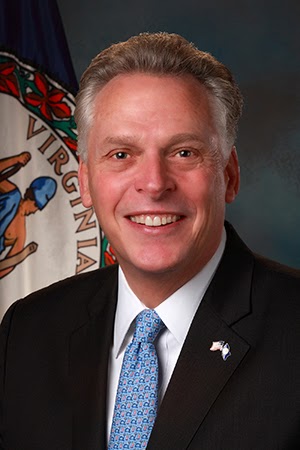
Meet Gov. McAuliffe’s Cabinet

Governor McAuliffe’s cabinet has been finalized.  Each of these individuals are designees until they are confirmed by the General Assembly over the course of the next couple of weeks.
Two of the most critical to the agriculture and forestry industry are the Secretary of Agriculture and Forestry and Secretary of Natural Resources.
Sec. of Agriculture
Todd Haymore
Todd Haymore was renamed Secretary of Agriculture and Forestry.  Governor McAuliffe has outline a couple of aggressive agenda items for Secretary Haymore’s term including making Virginia the agriculture and forestry export capitol of the East Coast.  Governor McAuliffe has made this statement in a number of formal and informal speeches he has made over the course of the last month.  Mostly recently, he included this in his address to the General Assembly on Monday, January 13.  For full text of Governor McAuliffe’s remarks, click here. 

Many members have asked about the Commissioner of Agriculture and Consumer Services as well as State Forester.  Secretary Haymore announced this morning to the Senate Finance Sub-Committee that he has made interim appointments until he has time to go through the process of interviewing and selecting candidates for these positions.

Sec. of Natural Resources
Molly Ward
Molly Ward was named as Secretary of Natural Resources.  She has reached out to Farm Bureau to express her interest in learning more about our positions on areas under her Secretariat.  President Pryor has extended an invitation to her to meet with us to discuss our policies. For more information on her background, click here.

Below is a complete list of the other Secretariats as well as the Governor’s Chief and Deputy Chief of Staff:

Governor’s Cabinet
Paul Reagan

Suzette Denslow

Nancy Rodrigues


Status Update: Tobacco Buyout Payment Cuts

Wilmer Stoneman
Associate Director
Governmental Relations

Last November, we requested that you contact Virginia members of the House of Representatives, the U.S. Senate and Secretary Vilsack asking them to work with Congressman Hurt in opposing sequestration cuts to the Tobacco Transition Payment Program (TTPP) which was designed to help transition tobacco producers to the free market. USDA identified TTPP, a privately-funded, temporary, contractual program, as a direct payment program and thus subject to FY2014 federal budget sequestration.

Your efforts in responding to the Action Alert were rewarded this week when it was announced that tobacco growers and quota holders will receive the full amount of their final tobacco buyout payment, as directed by a provision within the Budget Control Act.  In a letter this week to Senator Warner, Secretary Vilsack maintained that “funding for the TTPP is sequestrable” under the Budget Control Act. However, the Office of Management and Budget, in coordination with USDA, also determined that, under the Budget Control Act and authority for the program, TTPP funds sequestered in fiscal year (FY) 2013 are available for FY2014 payments. Vilsack continues, “Similarly, funds sequestered in FY2014 will become available at the beginning of FY 2015 to complete the final payment.”

The Farm Service Agency has not yet issued official instructions to state and county FSA offices concerning new revisions to the TTPP payment schedule and procedures. We cannot state for certain the actual amounts or timing of the payments at this time.  However, it is our understanding that producers and quota holders could receive up to 95% of the scheduled TTPP payment in January or February 2014 (FY2014) and receive the balance of the final scheduled TTPP payment this fall in FY2015 (ideally as close to October 1, 2014 as possible).  Financial institutions that provided lump sum payments will be paid first, most likely in January 2014, to avoid the government accruing interest.

Again, thank you making the legislative and agency contacts necessary to address this issue.  We appreciate the efforts and support of Congressmen Hurt, Griffith, Forbes, Scott and Goodlatte, Senators Warner and Kaine and Governor McDonnell in working towards a resolution on this issue.

Clarke County Farm Bureau Helps Local FFA with Swine Cooperative

The 2014 Virginia General Assembly starts on Wednesday, and while many issues will come up between now and March, ag education is one that is always on Farm Bureau’s mind.

Below is a story written by Clarke County FFA Student Brittany O’Meara on the swine cooperative Clarke County Farm Bureau and the Clermont Foundation will help oversee with the Clarke County FFA.

If you have any stories on things your county Farm Bureau is doing for ag education that you’d like to share on the blog, please contact Kelly Pruitt at 804-290-1293 or kelly.pruitt@vafb.com

The Clarke County Public Schools, Clermont Foundation and the Clarke County Farm Bureau will share in the oversight of FFA members in the swine cooperative. The cooperative will be used by FFA members as a means of a Supervised Agricultural Experience (SAE). SAE’s are hands-on educational experiences that enable not only FFA members but all students to become aware of the agriculture opportunities in the communities around them. This can be done through simple projects such as being a part of an agricultural business, finding a job related to agriculture, or by using science to experiment on agriculture based ideas.

This partnership was very beneficial in the process of the swine cooperative because it gives a basis as to how it will function. The Clermont Foundation is providing the land and means for the cooperative to function properly. They also agreed to enable students’ access to Clermont farm during the time that the cooperative is active. The Farm Bureau generously agreed to fund the cooperative with a maximum of $6,800 to the FFA chapter. In addition, they agreed to assist in helping students with day to day monitoring of the pigs at Clermont. CCPS plans to construct a checklist for students to ensure the swine and resources are appropriately monitored. Most importantly, the students will receive the proper instructions on how to fulfill SAE requirements and how to properly take care of swine. Lastly, the goal of all three of the organizations is to actively encourage student involvement in the swine cooperative.   

The swine cooperative provides the perfect means for students to gain a better understanding of how agriculture functions on a farm from day to day. It not only teaches how to appropriately care for a pig but also encourages more involvement in FFA and in the agricultural industry. Students also receive a better understanding of how a real life business functions through the hands on experience they gain by working with the pigs. It also provides a way for students to learn the economics behind a business. For instance, how much profit was made and how that relates to how much weight was gained by the pigs. Lastly, the swine cooperative is meant to demonstrate how a proper SAE is planned and carefully constructed. When the swine cooperative is completed, students will hopefully be encouraged to be more involved in the FFA association.   

The swine cooperative could not have been done without the continued support of the Clarke County School Board and the community. When asked how it will benefit Clarke County Dr. Mike Murphy says, “Education is the most important thing we do in the Clarke County Public Schools. Any time we can expose young people to new and different ways of thinking, planning, and problem solving we have really done a good job.”

Gov. McDonnell Introduces Last Budget

Martha Moore
Vice President
VFBF Governmental Relations
Governor McDonnell introduced his budget on Monday, December 16, 2013.  This budget begins on July 1, 2014 for FY15 and July 1, 2015 for FY16.  Overall, Governor McDonnell provided continued incremental increases to a number of items of interest based on Farm Bureau policy.  There were a number of items important to agriculture and forestry:
  • $28 million of new funding for agriculture best management practices cost share funding 
  • No additional dollars for operational support for local soil and water conservation districts 
  • $485,782 increase/ $999,500 increase respectively for the state portion of the Reforestation of Timberlands program (incentive payments to landowners to replant pine trees) which means a full match in FY16
  • No cuts to the funding provided for the Coyote Damage Control Program 
  • $1.23 million for 15 grain inspector positions to handle the increase inspections for exports
  • No increase for purchase of development rights local matching fund
  • $250,000 increase in the Agriculture Forestry Industries Development Fund
  • $267,768 increase/$220,038 increase respectively for each year of the biennium in funding for the weights and measures program for 3 additional inspectors
  • $220,000 for 2 regional agriculture education specialists in Virginia Cooperative Extension to support agriculture teachers

Register for Legislative Day by Jan. 3rd

Virginia Farm Bureau members will speak with state legislators about issues of interest to farmers in their community and statewide during the organization’s annual Legislative Day on Jan. 23.
Member-identified critical issues for the 2014 session of the Virginia General Assembly are:
  • adequate funding for the state’s Agriculture Best Management Practices Cost-Share Program;
  • adequate funding for operational support and technical assistance for soil and water conservation districts;
  • opposition to attempts to support mandatory labeling of genetically modified food products;
  • setting a baseline for the regulation of on-farm activities on agricultural operations;
  • including $7.6 million for Phase 2 of Virginia Tech’s dairy research in the capital expenditure authorization to enable the university to relocate the remaining parts of the dairy complex and replace six dilapidated buildings with three modern research, teaching and Virginia Cooperative Extension facilities;
  • protecting private property rights of landowners by resisting expansion of the term “navigable” to include all waters of the state; and
  • maintaining a minimal burden of proof of “Crown Grant” properties and their associated rights.

 “Emails and phone calls can be effective, but any legislator will tell you, meeting face to face with them has the biggest impact.” said Kelly Pruitt, VFBF governmental relations grassroots coordinator. “Legislative Day gives farmers from all across the state the opportunity to let their legislators know what issues are important to them face to face.”

This year, the VFBF Women’s Committee will host a legislative reception the night before Legislative Day—on Jan. 22—at which Farm Bureau leaders will be able to talk with their representatives in an informal setting.
Members will have appointments on Jan. 23 with their respective state senators and delegates.
During those appointments, members will present their representatives with copies the Agriculture Map of Virginia puzzle to encourage their participation in Agriculture Literacy Week March 23-29 at their local schools.

If you are a producer member, and interested in attending Legislative Day, please have your MSS register you by Friday, Jan. 3. 

Virginia Farmers Among Those Shaping National Farm Bureau Policies

San Antonio River Walk
Virginia representatives will join more than 5,000 Farm Bureau members from across the nation in helping shape policies important to farmers and ranchers Jan. 12-15 at the 2014 American Farm Bureau Federation Annual Convention.

The theme of the event is “Our Heritage; Our Future.” The Virginia Farm Bureau Federation delegation, which includes 8 voting delegates and 2 alternates, will join farmers from across the country in formulating policies related to U.S. Environmental Protection Agency regulations, the next federal farm bill and other issues that affect farmers nationwide.

“It’s important that Virginia representatives attend the national convention to help shape policies that affect all farmers,” said VFBF President Wayne F. Pryor. “It’s important for us to work with American Farm Bureau, because we rely on them to represent our interests in Congress.”

Farmers attending this year’s convention also will have the opportunity to attend workshops to help them improve their operations. Topics to be covered include new technologies and trends in agriculture; being a strong agriculture advocate; and economic impacts on U.S. farms.


“The national convention helps our Farm Bureau leaders stay involved in the national policymaking process and gives them a better overall understanding of current trends and issues that affect farmers all over the country,” Pryor said.

BREAKING NEWS: McAuliffe Reappoints Secretary of Ag; Names Secretary of Natural Resources

Todd Haymore
Democratic Gov.-elect Terry McAuliffe has reappointed the state secretary of agriculture and forestry and named a new natural resources chief.

McAuliffe said today that Todd Haymore is staying on as agriculture secretary. He’s the third holdover from Republican Gov. Bob McDonnell’s Cabinet. Haymore previously served as commissioner of the state Department of Agriculture and Consumer Services during Democrat Tim Kaine’s administration.

McAuliffe also named former Hampton Mayor Molly Joseph Ward secretary of natural resources. She stepped down as mayor last September to take a job at the White House.

USFRA Seeking Farmer and Rancher Input

The U.S. Farmers and Ranchers Alliance (www.fooddialogues.com/about-usfra) urgently needs farmer and rancher respondents for a brief market research survey the organization is conducting. 

USFRA’s goal for this research is to continue to identify ways to address people’s misconceptions about farming and ranching. The organization is asking for a short amount of time and honest opinions from farmers and ranchers. Each farmer and rancher respondent to the survey will receive a $15 honorarium for their time (estimated to be approximately 15 minutes).

The link to the survey is: https://hrgisurvey.com/survey/html.pro?ID=710

Was Your Holiday Dinner Hormone Free?

The article “Was Your Holiday Dinner Hormone Free?” appeared in the Bristol Herald Courier the week after Thanksgiving and was written by Phil Blevins, a Washington County Extension Agent. It has also been making the rounds on Facebook, and we think Phil did a great job dispelling some of the myths about hormones. The story is below:

We hear a lot of talk about hormones and food and usually the discussion centers around meat. This causes many people to become concerned about the safety of the food they eat. Was your Thanksgiving meal or any other meal for that matter, hormone free? The short answer to that question is no. It is impossible to have a hormone free meal, because both plants and animals produce hormones as a natural part of growth and development. 
When looking at promotional statements for some turkeys, for example, they will read something like this, ‘Our turkeys are raised without the use of hormones’. Did you know that all turkeys (including Butterball, etc.) and chickens are raised without the use of supplemental hormones? It is prohibited. However, to say a turkey was raised without hormones is somewhat of a contradiction since the turkey produces its own hormones. As stated earlier, even plants produce hormones but that doesn’t mean plants are dangerous either, just that it is part of living things. 

People often criticize the beef industry because of implant use as if something sinister is involved. The products used have been tested rigorously and clearly pose no threat to human health. If you compare the beef we eat to the plant products we eat it is surprising to most how the hormone levels compare. For example, one ounce of cabbage has 1,061 times more estrogen than one ounce of beef from an implanted steer. If you compare the estrogenic activity of other common foods you find that defatted soy flour has 755 million ng/500grams, tofu has 113.5 million ng/500grams, beef from an implanted steer has only seven (7) ng/500 grams, and beef from a non-implanted steer has only five (5) ng/500 grams. 

Have these plants been altered in some way to cause these high levels? The answer again is no. It is simply a natural part of life. Does it mean that cabbage and other plants are unsafe? Absolutely not! In fact, coleslaw on a hotdog is a favorite of many, especially if it is an all-beef hotdog. 
We have a wonderful food system in this country and the technology has helped provide a safe wholesome food supply that is more economical than any other country in the world. This system also makes good nutrition more affordable to the poor, a luxury many countries only wish for. It seems we should worry less and be more thankful for the abundance we are privileged to have.