Governor’s State of Emergency Order Gives Farmers Temporary Exemption

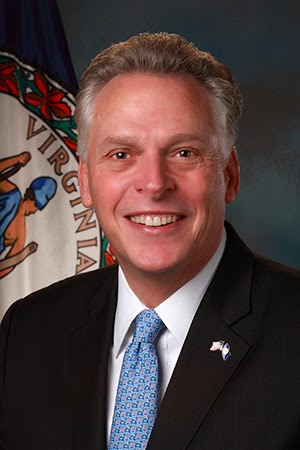
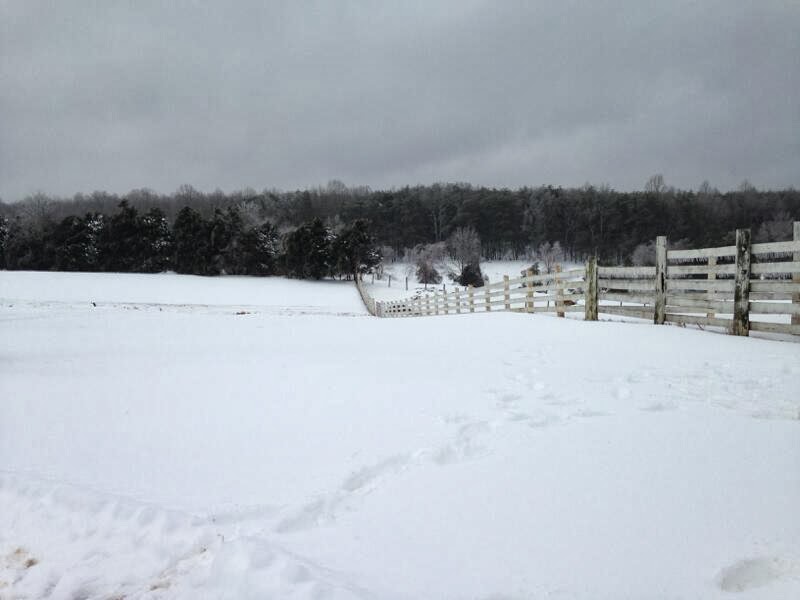
Due to the winter storm Governor McAuliffe declared a State of Emergency with Executive Order 7. This Order allows the Virginia Department of Transportation, Virginia Department of Motor Vehicles, and Virginia State Police to jointly authorize a temporary waiver of registration and license requirements, along with normal weight and width restrictions, for the purpose of ensuring essential emergency relief supplies reach those in need in a timely manner. Agency letter can be view here: https://drive.google.com/file/d/0Bwdwqn87Kb-9MXNESnEwb25DOE0/edit?usp=sharing
This waiver is in effect beginning 12 p.m. February 11, 2014, until 12 pm March 1, 2014, or whenever the crisis has abated, which is soonest.
The exceptions activate the FMCSA Section 390.23 Relief of Regulations including hours of service. Loads are restricted to a maximum of 12 feet wide and over height loads up to a maximum of 14 feet provided hauling permit regulations and safety guidelines are followed as published in the Virginia Hauling Permit Manual. Exemption shall not be valid on posted structures for restricted weight.

We hope this will give some relief to farmers that need to get feed to poultry and livestock in these tough weather conditions the Commonwealth is facing, and we appreciate the forethought of Governor McAuliffe in helping Virginia prepare for this situation.

There’s An App For That! Even For Forest Landowners

Andrew Smith
Sr. Assistant Director
VFBF Governmental Relations
Yeah, I know. How many times have you heard “there’s an app for that”? Smartphones are here to stay and are only getting more powerful, and, I must admit, even useful. It took me a while to give up my “flip phone,” and will even admit I still have a “bag phone” lying around at home somewhere. I just wanted a mobile phone I could talk on, but have quickly realized how smart phones can help make my work day and home operation less stressful and be able to stay on top of things.

Obviously email and searching the internet is handy, but there are a growing number of applications, or “apps,” that focus on the needs of landowners that I am finding useful. And many of these are free.

The good folks with Virginia  Forest Landowner Education Program (VFLEP), like Jennifer Gagnon, have developed a list of these apps, and I encourage you to take a look and give ones you think would be useful a try. The list include categories of Mapping, Data Collection, Soils and Water, Invasive Species, Field Guides, and Field Tools. Certainly there are a host of others that are useful in running your farm, but I wanted to share with you some to help manage your forestland. After reviewing the list, check out and see what’s available through on your app store.

Check out the list on the VFLEP here on their Mobile Apps page.

Jennifer Gagnon has also made available her presentation at the 2013 Virginia Forestry Summit on apps, you can find that here.

I hope you will take the time to check this resource page out, and while you are there, look into all the other great programs and information the Virginia Forest Landowner Education Program make available to the landowners of Virginia.

On-Farm Activities Compromise Legislation Passes Senate

Trey Davis
Assistant Director
VFBF Governmental Relations
Yesterday, SB51 (Stuart), compromise legislation developed by the On-Farm Activities Working Group, passed the Senate the floor with a 32-7 vote! Farm Bureau would like to thank Sen. Richard Stuart for his leadership and Sen. Chap Petersen for his support.

SB51 (Stuart) allows you to continue to do the following at your farm:

-sell agricultural products and related items incidental to your operation including food products that comply with state law

-hold activities on your farm including pick-your-own operations, agritourism, hayrides, etc.

Localities will still have the ability to craft ordinances relating to agritourism but cannot prohibit these activities unless there is a direct impact on the health, safety, or general welfare of the public.

In the 2013 General Assembly, legislation was defeated that would have expanded the Right-to-Farm Act to include a broad range of on-farm activities.  Farm Bureau expressed concerns of adding the proposed language (HB1430) to this specific Code section as it is intended to protect production agriculture from being deemed a nuisance by localities.  As a result of these discussions, the Department of Agriculture and Consumer Services (VDACS) convened the On-Farm Activities Working Group (OFAWG) in 2013 comprised of private citizens, local government representatives and agricultural stakeholder groups, including Virginia Farm Bureau.

Following the final meeting of the OFAWG, a consensus was reached among the majority of the participants to present a compromise bill in the 2014 General Assembly.  This compromise legislation adds a new part to the appropriate local government Code section (§15.2) allowing agritourism activities at an agricultural operation to be permitted unless there is a substantial impact on the health, safety or welfare of the public.  The legislation further allows the sale of agricultural or silvicultural products and the preparation and sale of food products, as long as those food products currently comply with state law.


Sen. Chap Petersen, a co-sponsor of the bill, expressed his support for SB51 in his blog “OxRoadSouth” yesterday before the Senate vote. His post is below:

One of the recurring issues in Richmond over the past two years has been the right of localities to restrict (or not) farm-related businesses.  This issue has consumed the Ag Committee and caused some pretty sharp divides. 

Here is the context: 

In Virginia, we have millions of acres dedicated to agriculture.  A small percentage of this acreage is located on family-owned farms.  More and more, these farms have become boutique operations, which sell their wares in order to be profitable.  The best example is farm-based wineries which have become a cottage industry (literally) in Loudoun and Fauquier Counties.Of course, there is an another trend which conflicts with the growth in farm businesses.  That is the migration of wealthy people to these picturesque valleys.  To many, these wineries and other farm businesses are a nuisance.  With that in mind, some counties have created zoning ordinances to restrict farm-based businesses. 

I’m a co-sponsor of SB 51 which simply states that localities must make a finding of “substantial impact” on health and welfare before it moves to restrict a business which is based on agricultural products. 

(Note:  Woodstock music festival would not qualify as a farm product industry.  Well, actually it might.  Okay, never mind). 

I think this is only fair.  An owner of agriculturally zoned land has rights.  Already, she must jump through a number of regulatory hoops in order to sell her own products.  (If selling food, it’s the VDH; if selling alcohol, it’s the ABC).  For example, the ABC license already requires a public hearing and that license can limit hours and mode of operation. 

Allowing localities to put a Special Use Permit process automatically on top of the existing regulatory structure will kill farm businesses, which is an outcome that some might support.  But I don’t and so I’m supporting SB 51.It passed the Ag Committee on a 10-5 vote last week and will be on the floor today. 

(Update at 1:45 pm) 

Bill has passed the Senate on a 32-7 vote. 

– See more at: http://oxroadsouth.com/2014/02/farming-and-sb-51/#sthash.FGxutHFv.dpuf

Breaking News: Senate Passes Farm Bill, Heads to the White House

VFBF President
Wayne F. Pryor
U.S. Sens. Mark R. Warner (D-VA) and Tim Kaine (D-VA) voted today for Senate passage of the bipartisan Agriculture Reform, Food and Jobs Act of 2014, which now goes to the President for his signature.  The legislation included many provisions championed by the Senators that will benefit Virginians, including strengthened crop insurance for farmers and conservation programs for the Chesapeake Bay.  The 2014 farm bill, which saves taxpayers more than $23 billion over 10 years, passed the House last week and was approved in the Senate with broad bipartisan support on a 68-32 vote.
The farm bill provides historic reforms including eliminating wasteful direct payment subsidies, strengthening the agriculture safety net, and reinvesting in the conservation of our natural resources.  The legislation requires reasonable efforts toward land conservation on the part of farmers receiving federal premium subsidies for crop insurance and provides $100 million for the Regional Conservation Partnership Program, a new competitive grant program into which the Chesapeake Bay Watershed Initiative has been consolidated. The bill also includes $8.6 billion of savings by tightening a loophole in Supplemental Nutrition Assistance Program (SNAP) benefit calculations. More importantly, the farm bill rejects the harsh eligibility cuts in the House-passed version of the bill and will not remove anyone from food assistance programs.  
“Virginia Farm Bureau Federation supports the final passage of the conference’s farm bill, “said Wayne F. Pryor, President of Virginia Farm Bureau Federation.”Country of Origin Labeling and other livestock issues continue to be important to us. We have debated them through several previous farm bills, and that debate will undoubtedly continue. However, the conservation programs and funding, along with the crop insurance and other programs that help us survive weather extremes and volatile markets are well past due.  We are thrilled the farm bill has passed.”

The 2014 farm bill continues funding for a number of other provisions that will help grow Virginia’s local food systems, including efforts to encourage education and training for new farmers and increased funding for community-supported agriculture programs such as farmers markets.
“I’m very pleased that the House and Senate have again found common ground on major legislation – in this case on a bill that supports Virginia’s farmers and agribusiness while also reducing the deficit,” said Senator Warner. “This legislation will finally give growers and producers the long-term certainty they need to maintain and expand their businesses. I’m also encouraged that the farm bill reaffirms our commitment to protecting the Chesapeake Bay. The new Regional Conservation Partnership Program sustains Bay-related jobs and continues providing Virginia’s farmers with the tools they need to help conserve this important watershed.”
“I’m heartened that Congress came together today to pass a farm bill that restores certainty for farmers across the country,”said Senator Kaine. “This bill saves taxpayers $23 billion over ten years, eliminates wasteful direct payments, strengthens crop insurance, and closes loopholes in the SNAP program without reducing nutrition access for the neediest people.  It also ensures robust support for Chesapeake Bay restoration and improves farmers’ access to export markets and consumers’ access to fresh, local, organic foods.  While no bill of this scope is perfect, this farm bill greatly benefits farmers and families across the country and serves as another positive sign that Congress will work across the aisle to get things done this year.”

Governor McAuliffe Announces First Agriculture and Forestry Industries Development Fund Planning Grants of Administration

Governor Terry McAuliffe has announced the awarding of two planning grants from the Governor’s Agriculture & Forestry Industries Development Fund (AFID).  The two projects, one in Essex County and the other a partnership effort between the Town of Purcellville and Loudoun County, have been awarded a total of $34,500 to support the growth of agricultural and forestry projects in the Commonwealth. The AFID planning grant program encourages local governments to promote agriculture and forestry and incorporate the needs of these important industries into their economic development planning efforts.
Speaking about the planning grants being awarded to the localities, Governor McAuliffe said, “Job creation and expanded economic development are the chief priorities of my administration, and I plan to ensure that agriculture and forestry are a major part of our efforts to grow and diversify our economy” said Governor McAuliffe. “Supporting local efforts to strengthen these critical industries is an important component of my economic development strategy, and I applaud leadership in Essex County, Loudoun County, and the Town of Purcellville for exploring how their agricultural assets can be better utilized and grown for future job creation opportunities.”

The AFID planning grants program, funded annually at $250,000, was developed in 2012 to encourage local and regional governments to think strategically about how they can better support and integrate agriculture and forestry-based industries into their community’s overall economic development efforts.  The planning grants are part of the larger Governor’s AFID program, an economic development tool specifically for agriculture and forestry value-added or processing projects.  AFID economic development grants are available for political subdivisions of the Commonwealth interested in growing their agriculture and forestry industries by strategically targeting for assistance those businesses that add value to Virginia grown agriculture and forestal products.   
                        
“The two projects are prime examples of what we hoped the AFID would do for localities interested in building on their agricultural and forestry economic assets,” said Secretary of Agriculture and Forestry Todd P. Haymore. “Essex County will utilize its grant funding to better incorporate agriculture and forestry into their strategic economic development growth plans, a primary goal of the AFID program.  AFID funds will be used by the Town of Purcellville, working in partnership with Loudoun County, to explore the creation of a possible viticulture and enology center, an excellent example of seeking new initiatives that can have lasting, positive impacts on a region’s agriculture and forestry sectors.”
Applications for AFID planning grants are accepted on a rolling basis throughout the fiscal year.  Successful funding requests must show a clear need to be addressed, a solution to be undertaken, demonstrate strong support from local government and the agriculture and forestry community, and be able to match each dollar requested with a dollar of local government funds, or allowable in-kind contributions. Localities interested in applying may visit http://vdacs.virginia.gov/agribusiness/planning.shtmlor contact Stephen Versen at stephen.versen@vdacs.virginia.govor 804.786.6911 for more information.
Details on the two grant awards are below:
1.      Project Title:  Loudoun County Viticulture and Enology Education Center
Applicant:      Town of Purcellville
Award:           $17,500
Summary:      The Town of Purcellville, with the support of Loudoun County, and in conjunction with Northern Virginia Community College (NVCC), will conduct a feasibility study for the development of a viticultural and enology education center, using as a model the Shelton-Badgett North Carolina Center for Viticulture & Enology.  It would serve Virginia’s wine industry by training the next generation of wine makers and vineyard managers through certificate and degree programs. 
2.      Project Title: Developing a Roadmap for Agriculture and Forestry Industries in   Essex County                              
Applicant:      Essex County Industrial Development Authority
Award:           $17,000
Summary:      Through a competitive bidding process, the Essex County Industrial Development Authority (IDA) is proposing to hire a contractor to work with an appointed Essex County Agriculture and Forestry Advisory Board to develop a strategic plan for agriculture and forestry industries within Essex County.  The effort will help the County promote and enhance the competitiveness of its agriculture and forestry industry.

Breaking News: House Passes Farm Bill

The House of Representatives on Wednesday passed a bill authorizing nearly $1 trillion in spending on farm subsidies and nutrition programs, setting the stage for final passage of a new five-year farm bill that has been stalled for over two years.
Negotiators from the House and Senate spent several weeks working out their differences on issues in the legislation, including cuts to food stamps, income caps on farm subsidies and a price support program for dairy farmers. The bill is expected to save about $16.6 billion over the next 10 years.
The bill passed the House by a vote of 251 to 166. The Senate is expected to take up the bill later this week.
The American Farm Bureau Federation supports the new Farm Bill, which was filed late Monday. AFBF President Bob Stallman released the following statement earlier today:

“The American Farm Bureau Federation commends the House for its passage of the new five-year farm bill today. It’s been a tough road for the legislation during the past two years, but we are pleased with the clear bipartisan vote that prevailed. We appreciate the conferees’ diligent work in making some tough decisions to put forth a solid bill and in getting it to this crucial point.

“We now turn our attention to the Senate for timely passage of the bill, which will provide farmers and ranchers certainty for the coming year and allow the Agriculture Department to begin planning for implementation of the bill’s provisions.

“Farm Bureau is optimistic the final 2014 farm bill will soon be ready for the president’s signature, and America’s farmers and ranchers can, with certainty, continue with their business of providing food and jobs for America.”

Farm Bill Filed; Farm Bureau Urges Passage

AFBF President
Bob Stallman
House-Senate negotiators reached agreement and filed a new farm bill late Monday: a nearly 960-page measure that combines a landmark rewrite of commodity programs together with bipartisan reforms and savings from food stamps.
Factoring in cuts already made during two years of debate, the bill should generate about $23 billion in 10-year savings, a third of which is attributed to the nutrition title. The single-largest savings will come from ending direct cash payments to farmers, which cost more than $4 billion annually. This nearly 18-year-old program will be replaced by two options linked to real market losses. But the total dollars within the commodity title are projected to be substantially less, and more than ever, crop insurance emerges as the backbone of the farm safety net.
The American Farm Bureau Federation is urging House members to pass H.R. 2642, the 2014 farm bill. “The bill will provide farmers and ranchers certainty for the coming year and allow the Agriculture Department to begin planning for implementation of the bill’s provisions,” said AFBF President Bob Stallman in a statement. Stallman described the legislation as a solid bill that includes many Farm Bureau-supported provisions, including risk management for fruit and vegetable farmers and support for livestock farmers during disasters.
Below is his full statement: 

“The American Farm Bureau Federation urges House and Senate members to pass H.R. 2642, the 2014 Farm Bill. The bill will provide farmers and ranchers certainty for the coming year and allow the Agriculture Department to begin planning for implementation of the bill’s provisions.
“We appreciate the hard work of the conferees to get the farm bill to this point. They had many tough decisions to make, but were able to move forward with a solid bill that includes many Farm Bureau-supported provisions. We are particularly pleased with provisions to provide risk management to fruit and vegetable farmers and to support livestock farmers during disasters. We now urge House members to bring it on home by voting in support of the bill.
“It is imperative that all of agriculture unify behind this farm bill, for the good of the whole of American agriculture, consumers, our hard-working farm and ranch families and the rural communities they support.”

Legislative Day moves to Feb. 11-12

Due to the Inclement Weather this week, Virginia Farm Bureau’s Annual Legislative Day has been rescheduled to Feb. 11th and 12th. It will still be held at the Marriott in Richmond. 

A briefing of issues will begin at 4 p.m. and the Legislative Reception will be from 6-8 pm on the 11th. The breakfast will be on the 12th then meetings with legislators on the Hill to follow. If someone is attending the County President’s Conference they will have enough time to make it to their meeting on the 12th.

You have until Wednesday, Jan. 29th to register. Please contact your MSS if you are interested in attending. 

Governor McAuliffe Announces More Than $1 Million in Farmland Preservation Grants

Governor Terry McAuliffe has announced the recipients of fiscal year 2014 farmland preservation grants.  Eight localities have been awarded just over $1,058,000 from the Virginia Department of Agriculture and Consumer Services (VDACS).  Localities must use the grant monies to preserve farmland within their boundaries through local Purchase of Development Rights (PDR) programs. PDR programs compensate landowners who work with localities to preserve their land permanently by voluntarily placing a perpetual conservation easement on it.
VDACS allocated almost $149,678.46 each to the counties of Albemarle, Clarke, Fauquier, Isle of Wight, James City, and Stafford, as well as the City of Virginia Beach.  Rappahannock County will receive an $11,000 grant.  These allocations total a little more than $1,058,000, bringing the total allocation of state matching funds to $8.68 million since 2008, when PDR funds were first distributed.
Speaking about the farmland preservation grants, Governor McAuliffe said, “Today’s announcement, which will be the first of many, highlights my administration’s goal of conserving Virginia’s working lands, an important component of land preservation.  These grants are the first step toward my administration’s goal of conserving 400,000 acres of open space and working lands across Virginia. I applaud the commitment of my predecessors and the General Assembly to land preservation, and I look forward to building on the successes they have achieved over the last eight years.”

Secretary of Agriculture and Forestry Todd Haymore added, “Adequate and accessible working lands are the foundation of agriculture and forestry, Virginia’s largest industries.  Local governments receiving these funds will be able to use them alongside their dedicated local support, creating new opportunities to preserve working farmland, produce goods for purchase, create jobs, generate tax revenue, and protect our precious natural resources.  I look forward to working with Governor McAuliffe, Natural Resources Secretary Molly Ward, localities, and landowners during the next four years to preserve as many working land acres as possible”
This is the seventh time that the Commonwealth has provided state matching funds for certified local PDR programs.  Of the 22 local PDR programs in Virginia, 18 have received local funding over the past few years. To date, more than 6,700 acres on 49 farms in 12 localities have been permanently protected in part with $6 million of these funds.  Additional easements are expected to close using the remaining funds over the next two years.  Future new appropriations will help preserve additional working lands as well.

Localities interested in future rounds of grant applications for PDR matching funds should contact the Office of Farmland Preservation at the Virginia Department of Agriculture and Consumer Services. They may e-mail Andrew Sorrell, the Office of Farmland Preservation Coordinator, at andrew.sorrell@vdacs.virginia.govor call 804.786.1906.

Bedford Young Farmers Place Second At American Farm Bureau Convention

W.P. and Amy Johnson of Bedford were one of the three runners-up in the Excellence in Agriculture competition at the American Farm Bureau Convention in San Antonio, Texas,  earlier this week. Each runner-up will receive a Case IH Farmall 45A, courtesy of Case IH, and $3,000 in cash and STIHL merchandise, courtesy of STIHL.
The Excellence in Agriculture Award recognizes young farmers and ranchers who do not derive the majority of their income from an agricultural operation, but who actively contribute and grow through their involvement in agriculture, their leadership ability and participation in Farm Bureau and other organizations.

Congratulations!