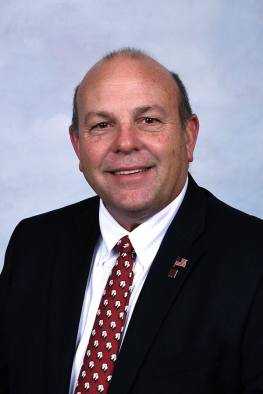
 From American Farm Bureau Federation President Zippy Duvall:
The idea of having the right to manage your own property is as ingrained in the idea of America as the ideas of independence, liberty and freedom. In “The Federalist Papers,” James Madison, one of the signers of our Constitution, wrote, “Government is instituted no less for protection of the property than of the persons of individuals.” It was the desire to own property and the vastness of available land in the “New World” that attracted so many to leave crowded Europe in the late 1700s, stake their claim in wide-open America and use the land for productive purposes, including raising crops and livestock. Some of today’s farmers and ranchers are descendants of those who came to America in those early days with the dream of owning land.
The founders of our nation understood the importance of land ownership and property rights. Today, that concept seems to be under attack by the very government that was founded on the basis of independence, liberty and freedom. John Duarte, a fourth-generation California farmer, is defending himself again an Environmental Protection Agency lawsuit claiming that he broke the law by plowing his land. He faces millions of dollars in federal penalties, plus the multi-million-dollar cost of the legal fight. A couple of years ago, a West Virginia farmer was told by EPA that dust and feathers blown to the ground from her chicken houses constituted a violation of the Clean Water Act. Farm Bureau helped her defend her farm in court and the court sided with her. However, that hasn’t stopped the EPA from going after more farmers for the same type of activity.
Continue reading →
 The Virginia Department of Game and Inland Fisheries is asking for comments on changes to hunting, trapping, or other wildlife regulations that you would like to see for the 2017–2018 seasons. They are interested in understanding the values and concerns behind your recommended changes to our hunting, trapping, and wildlife laws. This information will help the Department determine the best course of action to address potential regulation changes. Comments will be accepted until November 30, 2016.
 Do you know the background of the Endangered Species Act or ESA? If you live in the western United States you most likely grew-up understanding the impacts of the ESA. If you live east of the Mississippi River, the ESA is likely coming your way.
 Farm Bureau is urging Congress to pass legislation blocking a recent IRS proposal that would result in higher estate taxes for farmers and ranchers. The IRS’ plan for more restrictive rules for using valuation discounts would make it more difficult for farmers and ranchers who operate family-owned partnerships, LLCs or corporations to transfer their farms and ranches to the next generation.
 International trade was a major theme in the opening half hour of Monday night’s presidential debate between Hillary Clinton and Donald Trump. Selling more of our goods around the world is a great way to help farms and ranches, benefit rural communities, and keep the United States ahead of its global competitors. Farm Bureau seeks the successful conclusion and congressional approval of trade agreements and other measures to expand global markets for U.S. agricultural exports.
 For farmers and ranchers, immigration reform must balance agriculture’s need for a dependable supply of agricultural labor with enhanced security at our nation’s border. It is a delicate balance that, at present, has not yielded a solution.
 Dr. Megan Seibel, President of Roanoke County Farm Bureau, has been appointed to the position of Assistant Secretary of Agriculture and Forestry. Prior to her appointment, Megan served as the Director of the Virginia Agriculture Leaders Obtaining Results (VALOR) Program at Virginia Tech. She also served as the Associate Director for the Center of Cooperative Problem Solving at Virginia Tech and an Associate Fellow of the Occupational Research Centre in the United Kingdom. An agricultural producer, Megan and her family manage a wine grape and beef cattle operation in Botetourt County. Megan graduated from James Madison University with her Bachelor’s of Science in Nursing, and received her Master’s in Career and Technical Education and her Doctor’s of Philosophy in Agriculture and Extension Education from Virginia Tech.
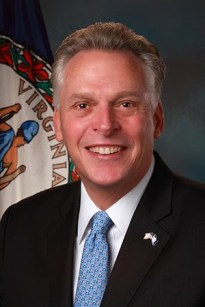 The combined shortfall fiscal year 2017 is $861.4 million. Some of the key strategies to address the shortfall include eliminating raises for state employees of $125.1 million; pulling $392.3 million from Rainy Day Fund; and cutting $70 million from state agencies. There will be additional cuts made by the Governor in his budget that he will introduce in December for the fiscal year 2018.
