GMO Labeling Bill Brings Greater Clarity

The House Agriculture Committee approved H.R. 1599 on Tuesday, a move that will bring greater clarity to food labeling, according to AFBF. H.R. 1599 empowers consumers by continuing to require warning labels for foods that may have adverse effects on the public, noted AFBF President Bob Stallman in a statement. “At the same time, it does away with labeling schemes that would stigmatize foods based on nothing more than the way in which they were developed,” he added.

Further, “H.R. 1599 restores reason to our food discussions and shows pseudoscience and food quackery the door,” said Stallman. “We look forward to passage by the full House in the very near future.”

From the Field: Farm Bureau Out and About

From the Field is a bi-monthly column written by Mark Campbell, Farm Bureau Field Services Director for the Central District. He writes about Farm Bureau member benefits and County Farm Bureau activities.
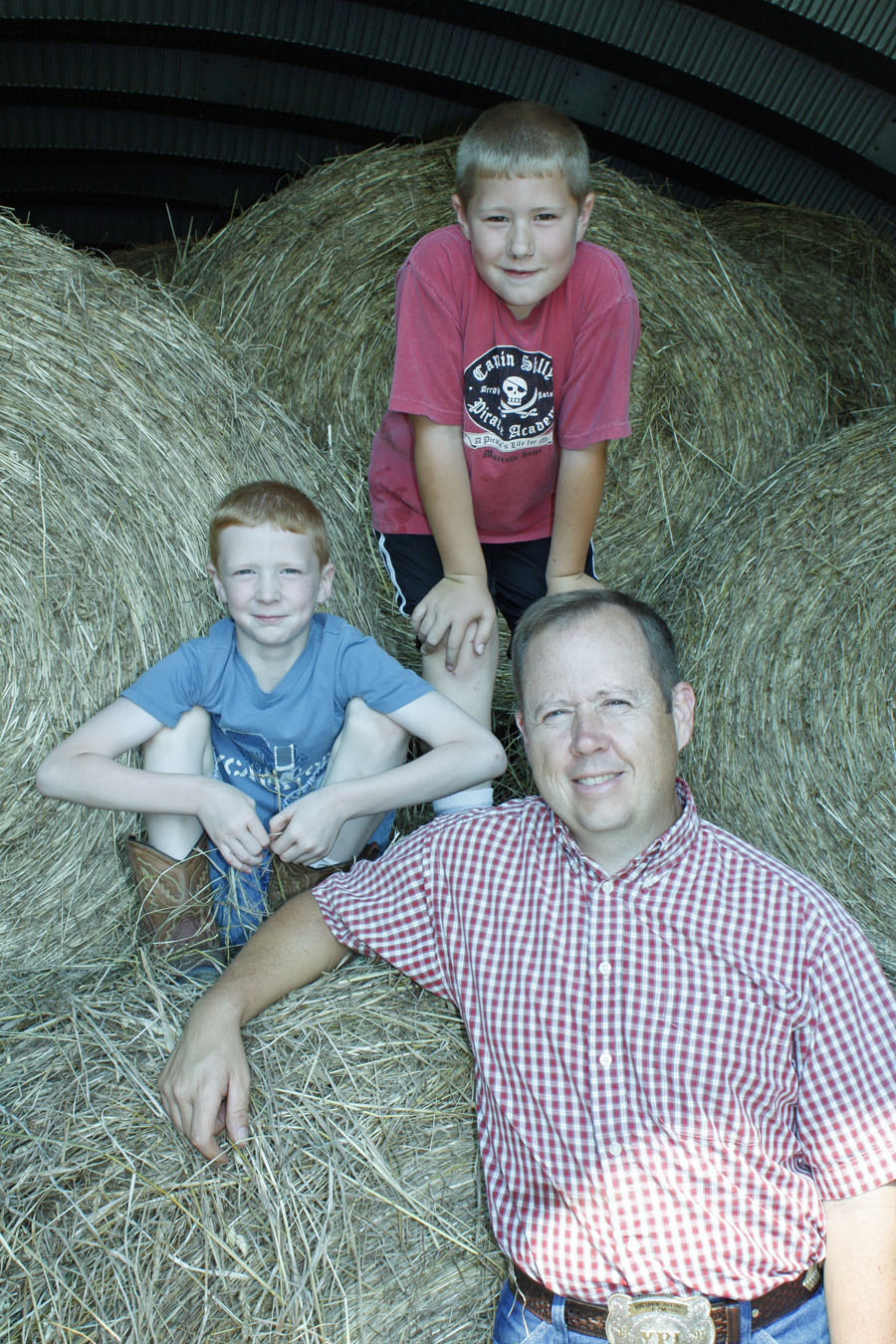

Last week, the agents at the Buckingham County Farm Bureau office and I had a booth at the open house for the “BARN” at Buckingham Courthouse. “BARN” stands for Buckingham Agriculture Resource Network, and it is a building facility comprised of cattle pens area and classroom space. This was a project primarily driven by the Buckingham Cattlemen’s Association, who is no stranger to the beef industry and is, in fact, nationally recognized for their preconditioned, value added feeder cattle and bred heifer sales.  

The purpose of our booth was to promote Farm Bureau. We interacted with a lot of Farm Bureau members, which were most of the attendees. There were only four people that we not members and we provided information about our organization and encouraged them to join. I think these opportunities are important for us as our presence helps strengthen our foundation in the agriculture community. It also builds a stronger relationship with the members and builds loyalty. The personalized service of the agents and MSSs helps with member retention, and the agents that worked the booth with me engaged every person that walked by. Several members even sat down and talked a while. It was obvious that the agents were well liked and respected by the members. It was a fun day, and I enjoyed seeing the facility and the fencing demonstrations.
Other agriculture infrastructure has been completed across the state over the past few years which has been beneficial to farmers and good for Virginia. Projects range from farmers markets and food hub facilities to livestock venues such as the Olde Dominion Ag Complex. The Olde Dominion Agricultural Foundation has an excellent video on their website http://www.theodac.com/that is very inspiring about the future of agriculture and describes the facility. It is worth watching. Let us also not forget the State Fair of Virginia grounds with more space and new buildings.
The next big event that I will be at with Farm Bureau will be the Ag Expo. The Ag Expo will be in eastern Orange County this year. I have never been to it before because it has traditionally been in eastern Virginia, but a few of my co-workers have, and they said that it is a big event that attracts a lot of farmers. We will have a presence there as we have had for years. So look for us there on August 6.
Until next time,

 Mark

EPA: Chesapeake Bay Clean-up Progressing in Virginia

A 2014-2015 interim report card on efforts by Virginia farmers to reduce pollutants reaching the Chesapeake Bay found producers are “generally on-track for meeting programmatic milestones” in a multi-year effort.

The report, prepared by the U.S. Environmental Protection Agency, “notes that many farmers are taking the steps required to reduce soil erosion and runoff of nitrogen and phosphorous,” said Wilmer Stoneman, Virginia Farm Bureau Federation associate director of governmental relations.

“Farmers have said all along that there’s no quick and easy fix to bay restoration. We’re pleased to hear that we’re on track to make that a reality.”

The Interim Evaluation of Virginia’s 2014-2015 Milestones and WIP Progress was published June 10. WIP stands for watershed implementation plan, a specific set of conservation improvements and benchmarks established for each watershed in the state by the EPA under the overall Chesapeake Bay Program partnership.

Conservation efforts in different sectors are being tracked by the Virginia Department of Conservation and Recreation, which supplied the numbers to the EPA for evaluation. They include activities related to agriculture, urban and suburban storm water, wastewater treatment plants and nutrient-reduction credit efforts. The EPA found that farmers are currently on track for reaching the overall 2017 target for reducing nitrogen and phosphorus runoff by 60 percent compared to levels measured in 2009.

“Virginia farmers are doing well in implementing best management practices to reduce erosion and pollutants, although the report said additional BMP steps may be needed in the future,” Stoneman said. “It also noted that the state of Virginia has committed or spent almost $25 million in the bay watershed since 2012 to help farmers install fencing to keep cattle out of waterways.

“Farmers are grateful for the assistance, but much more cost-share funding will be needed in order to continue with this good progress. It can cost tens of thousands of dollars to fence some properties—money that many producers just don’t have available to spend.”

The report noted that Virginia is expected to have 274 individual farm Resource Management Plans developed by the end of this year, well above the goal of 40 plans. The voluntary RMP program was introduced last year and entails plans developed by professional nutrient management specialists for participating farms.

“Farmers are eager to do their part to clean up the bay under voluntary programs like RMPs,” Stoneman said, “but we need the additional staff and financial resources to carry out these recommendations. And we will continue to ask the General Assembly to fully fund these efforts.”

Federal Court Upholds EPA Power re: Chesapeake Bay TMDL

On Monday, the U.S. Court of Appeals for the Third Circuit sided with the Environmental Protection Agency and affirmed the district court’s ruling that the Chesapeake Bay TMDL is lawful under the Clean Water Act. In a 60-page opinion, the Third Circuit panel found that the statutory term “total maximum daily load” is ambiguous and that EPA reasonably interpreted that term to include not only a total allowable pollutant load, but also “allocations” of the total among point and nonpoint sources, timelines for states to put measures in place to achieve those source allocations and requirements that states provide “reasonable assurance” that those source limits will be achieved.

The panel rejected arguments by American Farm Bureau and other agricultural and home builder associations that the Bay TMDL (and EPA’s interpretation of the statute) exceeds EPA’s Clean Water Act authority and intrudes upon the states’ primary authority over land use and water resources. In so doing, the panel repeatedly emphasized the act’s goal of improving water quality, as well as EPA’s role within the cooperative federalism framework. AFBF is continuing to analyze the decision.  

From the Field: Turn Up The Heat

From the Field is a bi-monthly column written by Mark Campbell, Farm Bureau Field Services Director for the Central District. He writes about Farm Bureau member benefits and County Farm Bureau activities.

I heard on the radio this morning of a quote, unknown author, about responsiveness of Congress.  The person said “they will see the light when the heat is turned up”.  The Waters of the U.S. is serious business and if we are serious about preventing its implementation, you need to contact Senators Warner and Kaine immediately.  You need to encourage them to support S. 1140, Federal Water Quality Protection Act.
I won’t go into all of the details, but please take time to read the analysis of American Farm Bureau.  It is very eye opening to the tricks of EPA and unfortunately disappointing to learn of an agenda driven government agency that instead of yielding to the wishes of the citizenry went on the offensive to override the people’s wishes.  You can read the analysis here http://fbnews.fb.org/Templates/Article.aspx?id=39681&utm_source=June+23%2C+2015&utm_campaign=June+23%2C+2015&utm_medium=email.
More importantly, contact Senators Warner and Kaine to oppose Waters of the U.S. and support S. 1140. 
Until next time,

Mark

American Farm Bureau President: Your Contacts Have Made A Difference

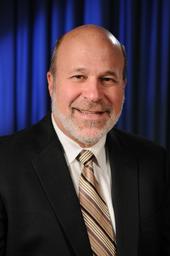
AFBF President Bob Stallman
Farm Bureau does a lot of things right. But one thing we need to do better, or just more often, is acknowledge our achievements.

An accomplishment on the policy front is all the testimony we’ve given at congressional hearings this year, to get our message in front of lawmakers and on the record. Volunteer leaders and staff have testified concerning water rights for public land ranchers, EPA’s abuse of the federal rulemaking process on the “waters of the U.S.” rule, our analysis of what the final WOTUS rule means for landowners, reauthorization of the Federal Grain Standards Act, the importance of Trade Promotion Authority to expanding global markets and, before the week is out, repeal of country of origin rules to prevent retaliation by Canada and Mexico. We have been especially visible and vocal on the hearings front in the first six months of 2015.

Farm Bureau’s leadership on the big issues of the day has been visible in the media. We’re getting our message out like never before. A notable example was a front-page story in the New York Times in May, by a Pulitzer prize-winning journalist, about EPA’s misuse of the WOTUS comment period to conduct a lobbying and public relations campaign. That story led to AFBF’s general counsel, Ellen Steen, appearing on Fox News. EPA criticism of the Times story only gave it more visibility. Checkmate!

Even in this tough political environment, Farm Bureau is advancing its priorities. A key Senate committee recently passed a bill, S. 1140, to force EPA and the Corps to take a mulligan on WOTUS. The House has passed a Trade Promotion Authority measure that is now up for a vote in the Senate. House committees will hold hearings soon on the Safe and Accurate Food Labeling Act to establish a national approach to GMO labeling, and we expect the House to vote on the bill in July. Endangered Species Act reform and immigration reform are long games, but we see opportunities to move both issues forward. And we are developing a tool for farmers to evaluate how seed and agricultural equipment companies handle and secure farm data.

I’ll end with two simple words: THANK YOU. Because these achievements are due to the commitment, vision, leadership and hard work of the entire Farm Bureau family. I look forward to celebrating more victories with you.

House’s TPA Bill Will Grow Farmers’ Access to Foreign Markets

House passage Thursday of a trade promotion authority bill brings the U.S. a step closer to completing ambitious trade negotiations around the world, which is key to expanding access to international markets and continuing U.S. farmers and ranchers’ story of growth and prosperity, according to American Farm Bureau Federation President Bob Stallman.

“Congressional support is critical to breaking down trade barriers and completing ambitious new trade agreements like the Trans-Pacific Partnership. TPA streamlines negotiations and strengthens our position at the bargaining table,” Stallman said in a statement.

Stallman also noted Farm Bureau’s appreciation for the leadership of Rep. Paul Ryan (R-Wis.), Ron Kind (D-Wis.), House Speaker Boehner (R-Ohio) and Majority Leader McCarthy (R-Calif.) on this issue.