Bay Foundation Issues Statement In Stream Fencing Court Case

Peggy Sanner, Chesapeake Bay Foundation (CBF) Virginia Assistant Director and Senior Attorney, released the following statement regarding CBF’s lawsuit against the Commonwealth of Virginia seeking requirements that large livestock farms fence their animals out of streams:

“In our lawsuit, CBF asked a Richmond Circuit Court judge to find that, under Virginia law, the Commonwealth’s largest animal operations must ensure livestock are fenced out of streams to protect downstream users from manure-carried pathogens and other pollutants. We are disappointed by the decision of the court, which disagreed with our position.

“CBF has decided not to appeal the judge’s order. Instead, CBF will press legislators and the McAuliffe administration to fully fund state stream fencing programs and continue our work with farmers to ensure that their farms are not polluting local waters and the Bay.

“Across the Commonwealth, farmers recognize that stream fencing improves herd health and farm bottom lines, and they have been signing up in unprecedented numbers for state cost-share funds to assist them in excluding livestock. To ensure adequate funding and technical assistance are available to meet the demand, currently estimated at over $70 million, CBF will work closely with legislators, agency staff, and other partners in the coming months and years. With more than 8,000 stream miles in Virginia polluted by pathogens and other manure-carried pollutants, Virginia has much work to do.”

From the Field: What are Other State Farm Bureaus Doing to Promote Agriculture?

From the Field is a bi-monthly column written by Mark Campbell, Farm Bureau Field Services Director for the Central District. He writes about Farm Bureau member benefits and County Farm Bureau activities.

Last week I and all of the other field staff attended the 2015 Farm Bureau Southern Region Field Staff Conference in Gatlinburg, TN.  This conference is held every three years in different locations throughout the southern region which encompasses the states from Virginia and Kentucky to Texas and Oklahoma.  One of the best things about these conferences and others like it is the networking.  The sharing of ideas and experiences with the same job is always beneficial.  I am proud to report that Virginia Farm Bureau is doing a lot of things right and have many programs in place that some states are just now getting around to implementing.
All of the states are dealing with lower membership numbers compared to a couple of years ago.  Most states are engaging the existing members more to increase retention.  Arkansas reported that they started doing member appreciation days at county Farm Bureau offices and they thought this helped strengthen membership.  Several county Farm Bureaus in Virginia have been doing this for years and the staff and members always enjoy it.  North Carolina has implemented radio and highway billboard sign ads across the state to mainly strengthen the image of Farm Bureau and agriculture in general.  Some states are just now starting anniversary billing for membership which we have had for a few years.

On leadership training and development, several states do a regional or state wide training for new county Farm Bureau directors.  In Virginia, we do one on one training at the county level; usually right before the monthly board of directors meeting.  This has worked well for all involved as it limits travel and time away from the farm for the volunteers.  Most states have a yearly conference for county Farm Bureau presidents.  Texas has theirs in conjunction with a commodity conference.
Several other states have the Member Deals Plus program but it has a different name in each state.  Similar to what we have been doing the past year, Arkansas is making a concerted effort to add businesses to the program in each county to give the program more value to the members.  We had a contest this spring at Sales Conference and at the VFB Women’s Conference where we received over 200 referrals.  We have also analyzed existing programs to determine to continue with them or not.
Under the promotion category, I liked what Florida does.  Several counties in the state cook or cater meals for the county fair livestock exhibitors and their families.  They recognized that meals over several days at a fair can be expensive on a family.  So they provide meals to the exhibitor families for $3.00/person.  It is their way of helping to promote agriculture.  In Virginia, several county Farm Bureaus pay for a dinner for livestock exhibitors and buyers, provide t-shirts, or purchase animals.  Florida also promotes the Bonnies Plants scholarship program for 3rd graders on the best and biggest cabbage.  This has been well received by students and teachers and ties in with their Ag in the Classroom program.
It was good to hear some new ideas, and good to know that many of those things are already taking place in Virginia.  However, we are always looking to be more effective, efficient, and providing value to our members.  So if you have any ideas, feel free to contact one of the field staff. 
Until next time,

Mark

Stallman: Secret Documents Show EPA Dismissed Concerns about WOTUS Rule

Just when it seems EPA’s handling of the waters of the U.S. rule couldn’t be more suspect, secret documents have come to light that show the process may be even worse than we thought.

Sen. Jim Inhofe, chairman of the Environment and Public Works Committee, asked the Corps of Engineers to provide documents that came to his attention concerning the EPA’s and Corps’ development of the rule. The Corps provided the documents, but asked that they be kept from public view. Evidently, they show that Corps staff had questions about the validity of EPA’s economic analysis and the rule’s unworkability due to lack of clarity concerning what “waters” were to be regulated. The documents also show that staff’s concerns, even those based on the view that the rule didn’t go as far as they would like, were ignored or overridden. Chairman Inhofe remarked that while the rule was “purportedly a joint effort of EPA and the Corps,” it appears that the Corps was cut out of the process.

In other words, this was EPA’s show, and political officials in the administration were determined to push the rule through over objections by agency staff, not to mention the objections of thousands of farmers and other landowners, other regulated sectors and state and local governments. The documents reveal a dysfunctional process, and they show that an “ends justify the means” mentality prevailed at EPA.

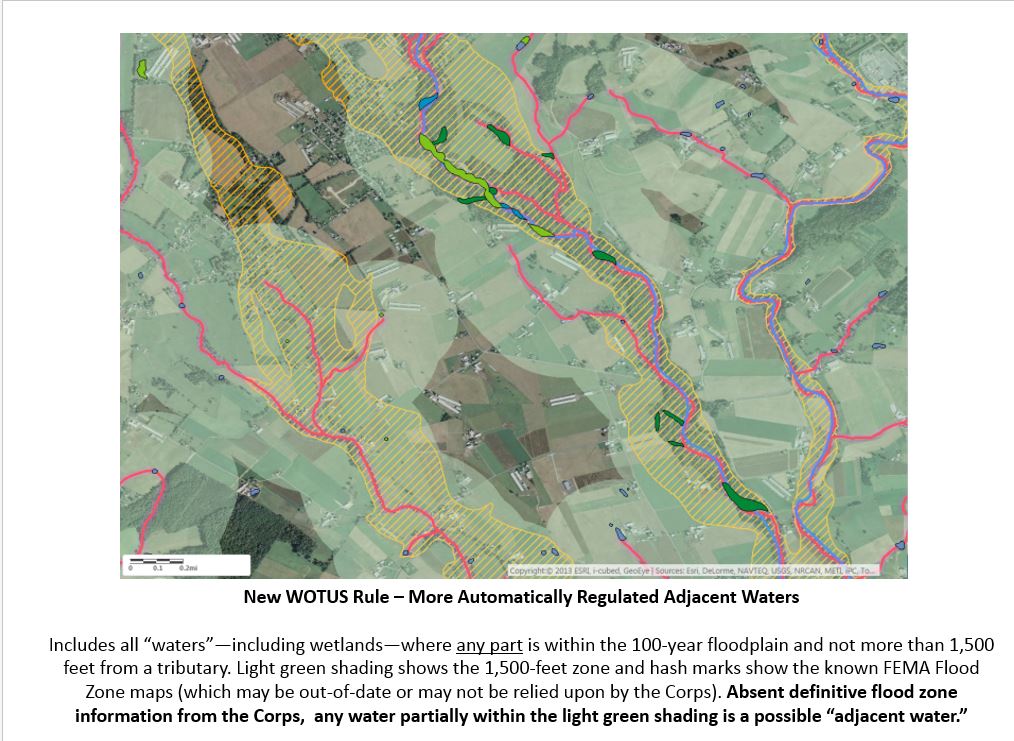
Unfortunately, this isn’t very surprising. All of this seems to validate much of what we have been saying about the serious flaws in EPA’s economic analysis, and about how difficult it is for anyone, including apparently the Corps, to know what is a “water” and which “waters” are regulated under the rule.

The fact that these documents exist and that the Corps has asked the committee to keep them hidden from the public begs the question: what else is out there? What other internal agency documents might reveal what’s behind the flawed economic analysis, or other factors that shaped the rule? What EPA documents have not been revealed that would shed light on how the agency made decisions and whether it genuinely considered the public’s concerns?

It’s time for some transparency.

House Approves the Safe and Accurate Food Labeling Act of 2015

The House on Thursday approved H.R. 1599, the Safe and Accurate Food Labeling Act of 2015, on a 275 to 150 vote. Passage of this legislation is a priority issue for Farm Bureau.

“Congress stood with farmers and ranchers today in supporting innovation that helps the environment and keeps food prices down for everyone,” AFBF President Bob Stallman said in a statement. The legislation protects consumers from confusing and misleading GMO labels and will create a national, voluntary labeling standard based on science and common sense. 

Stallman Announces Departure in January

AFBF President Bob Stallman announced on Tuesday that he will not seek reelection in January 2016 following 16 years at the helm of the nation’s largest, most influential general farm organization. Stallman, a cattle and rice producer from Columbus, Texas, is the 11th president during AFBF’s almost 97-year history.

“It has been a tremendous honor to serve the nation’s Farm Bureau members and represent agriculture and rural America,” Stallman said. “After 16 years as AFBF president, six as Texas Farm Bureau president and several more in other Farm Bureau roles, it is time to hand over the reins of leadership—a decision that is made easier by knowing the great leadership and foundation that exist to continue moving Farm Bureau forward. I am as optimistic as ever about the future of American agriculture and Farm Bureau.”

Virginia Farm Bureau Responds to Lynchburg News & Advances’ Inaccurate Bay Op/Ed

On Sunday, July 5, the Lynchburg News & Advance ran an op/ed piece on the Chesapeake Bay that contained several inaccuracies. Virginia Farm Bureau Federation President Wayne Pryor responded with a letter to the editor. It reads below:

Just as it is the responsibility of all Virginians to protect our waterways, it is the responsibility of the media to accurately portray the state of our natural resources. 
In the July 5 editorial, “A degree of progress on the James and the Bay,” The News & Advance incorrectly reported that the “dead zone” in the Chesapeake Bay this year will be about 1.37 million cubic miles. It’s actually expected to be a much-less-dramatic 1.37 cubic miles, as reported on June 23 by the National Oceanic & Atmospheric Administration and the U.S. Geological Survey. 
It is my hope that some of your readers saw that figure, questioned its accuracy and were able to find the correct information online. It’s readily available. It’s also my concern that the astoundingly large error overshadowed the fact that the year’s dead zone is 10 percent smaller than the long-term average as measured since 1950. 
That decrease is due in part to efforts to decrease agricultural and other runoff into the bay and its tributaries. It’s a sign that progress is being made. The Environmental Protection Agency has acknowledged as much, noting recently that Virginia is among states on target to meet their goals for nitrogen and phosphorous runoff by 2025. 
I have to assume they checked and double-checked their math.

Lawsuit Regarding Additional Regulation of Large Livestock Farms Dismissed

A circuit court judge in Richmond rejected on July 9 a lawsuit aimed at declaring a cow a fertilizer applicator.

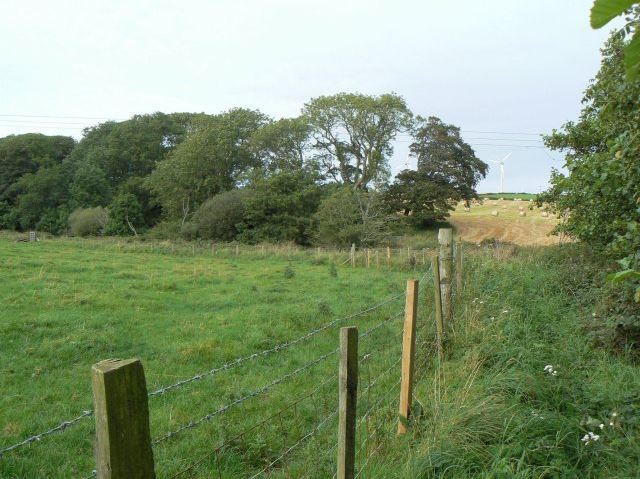
The suit by the Chesapeake Bay Foundation asserted that Virginia should prohibit large-scale livestock farmers from allowing their animals access to rivers and streams.

The state defines “large” cattle farms as those with 200 or more animals; there are fewer than 70 such farms in Virginia. State law mandates that “waste shall not be applied” in farms’ buffer zones along stream banks, and the lawsuit argued that waste dropped by animals near streams constitutes application.

The court, however, maintained that the language of existing law refers to farmers spreading manure for fertilizer—a regulated practice that requires a permit.

Virginia Farm Bureau Federation, the state’s largest farmers’ advocacy organization, was among agricultural groups that intervened in the case. VFBF President Wayne F. Pryor, a grain and beef cattle producer, said he was pleased with the outcome. “Pastured livestock are exempt from storm water regulations, but stream exclusion fencing is not a particularly new practice and livestock farmers are well aware of the need to protect water quality—both locally and downstream,” Pryor said.

“In recent decades, many, many Virginia farmers have voluntarily fenced their animals out of streams. And we know many more have applied for available cost-share funding to help them do likewise.”