Two Projects Receive State Funds to Support Agricultural Development
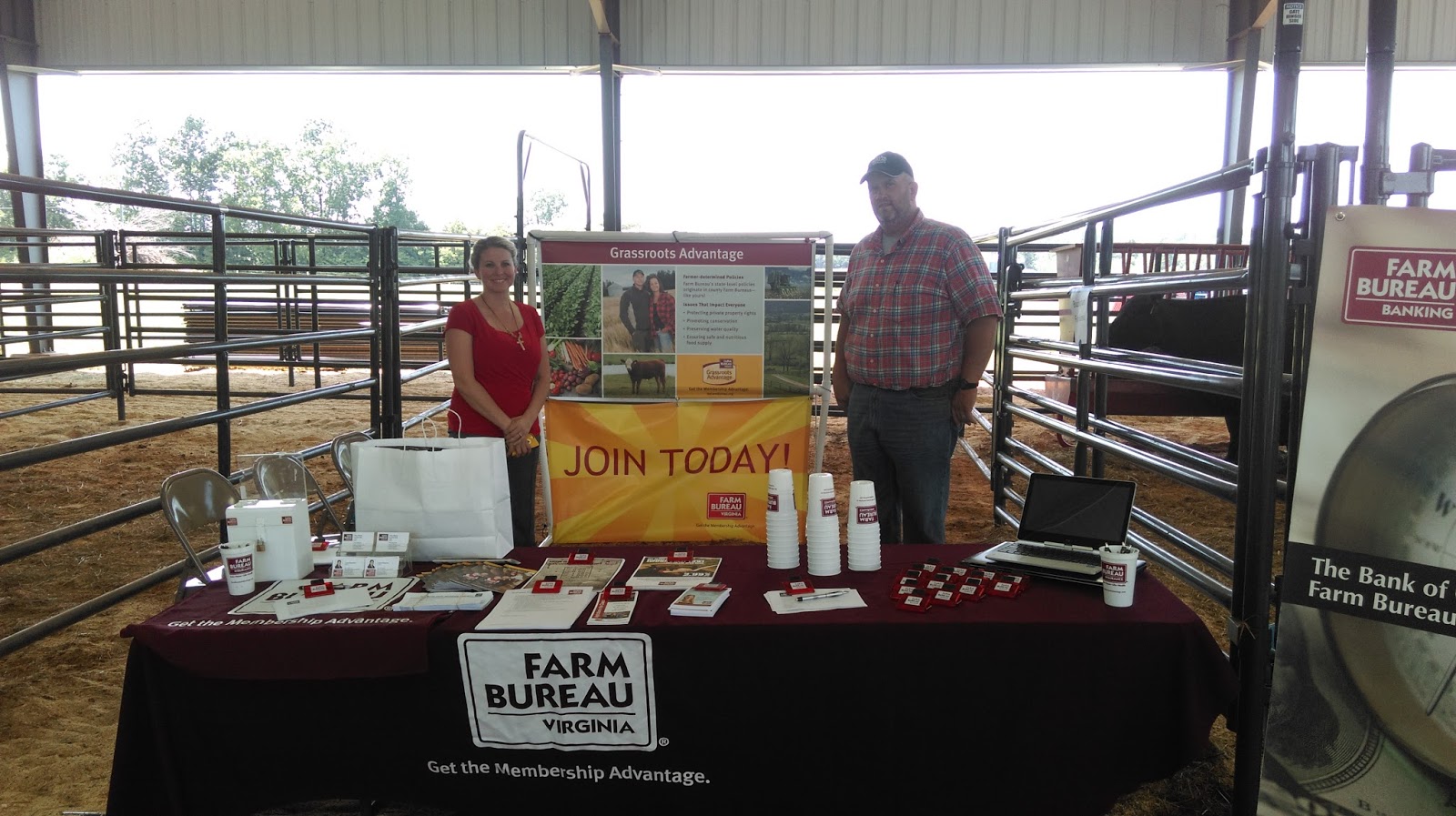
From the Field: Using Existing Events to Promote Farm Bureau
Farm Bureau Releases Detailed Analysis of Waters of the U.S. Rule
This Week’s Commodity Comments: June 10, 2015
Agriculture and Forestry Industries Development Planning Grants Announced in Halifax and Botetourt County
Virginia Farm Bureau Satisfied with Elk Management Plan
The decision was made following a public comment period on a proposal by the Department of Game and Inland Fisheries to close the state’s elk hunting season in 31 counties west of the Blue Ridge.
“I am so pleased that the board was open to working with the agricultural interest in this state to come up with a much more manageable plan,” said Emily Edmondson, a Tazewell County cattle producer and a member of the Virginia Farm Bureau Federationboard of directors. “My belief in the system was restored by the genuine interest and effort by DGIF to work with the agriculture community.”
Edmondson said she and other Farm Bureau members rallied together to submit comments and voice their concerns about the proposal.
“I’m a great believer in being able to talk and communicate, and I’m so glad that all interests will be served,” she said. “There needs to be a plan, and we need to work at this. The elk have been here, and now we can figure out a way to handle them in the future.”
In 2012 the game department re-established about 75 elk in Buchanan County, and elk hunting was prohibited in Buchanan, Dickenson and Wise counties. Currently, hunters with a valid deer tag may hunt elk anywhere in the state except that three-county Elk Management Area. The hunting policy was established primarily to limit the risk of reintroduced elk—or deer—transmitting diseases to agricultural livestock and the white-tailed deer population.
Closing the elk season west of the Blue Ridge would have added 28 more counties to the Elk Management Area. The initial proposal caused distress for farmers, who shared concerns about the potential elk have to damage cropland, pastures and vineyards, as well as the potential for injuries and vehicle damage in collisions with elk.
This Week’s Commodity Comments: June 3, 2015
Click here for this week’s Commodity Comments, a weekly newsletter designed to provide agricultural producers with an analysis of current market trends by Farm Bureau Market Analyst Jonah Bowles.
American Farm Bureau President: Here’s What We Know about the Final WOTUS Rule
Well, the other shoe has dropped—or perhaps “heavy boot” is more apt. The EPA and Army Corps of Engineers have finalized the rule to redefine “waters of the United States” under the Clean Water Act. We’re going through the final rule (and the nearly 300 pages of accompanying explanation) line by line to determine how it will affect farmers and other landowners. Regardless of EPA’s assurances about what the rule will or won’t do, we’ve dealt with enough EPA doubletalk and overzealous enforcement to know that it’s the fine print that really matters, not a blog post, news release or choreographed town hall meeting.
Here is what we know so far. First, EPA and the Corps have not addressed agriculture’s concerns. In particular, the agencies have doubled down on their definition of regulated “tributaries” broadly to include any place on the landscape where rainwater channels and flows enough to leave a mark. Second, the agencies have not consulted with state and local governments, small businesses or the regulated community to determine the best way to protect truly important waterways without interfering with our ability to use and manage the land. Actually, it appears they’ve added components that weren’t even initially proposed for public review and comment (so much for transparency). Third, the rule does not provide more clarity than landowners had before. If anything, it will be even more confusing and difficult for a landowner to determine if he or she will have to get a federal permit. Fourth, EPA has been deceptive in its promotion of the rule—saying this is about drinking water when it’s really about federal control over land, and misrepresenting Internet “clicks” in support of “clean water” as public “comments” in support of the rule. The agency also has made promises it cannot possibly keep concerning whose activities will and won’t be regulated once enforcement is in the hands of individual regulators, citizen enforcers and the courts.
Last year, AFBF took the time we needed to pore over the rule and report our findings. The result was a comprehensive, credible analysis that enabled Farm Bureau to show exactly where and how the rule would create problems for farmers and ranchers. Due to our leadership, some groups (which shall remain nameless) that had high praise for the proposed rule on day one had to backtrack, and were more reticent in their reactions to the final rule. We are taking the same care to evaluate the final rule and respond thoughtfully and accurately to the agencies’ spin campaign. There is no one more qualified and able to do this than your AFBF policy and legal experts.
Here is one more thing we know: This is far from over. We can and must ditch this rule. Stay tuned!
Farm Bureau Reviewing Final WOTUS Rule
“Based on EPA’s aggressive advocacy campaign in support of its original proposed rule—and the agency’s numerous misstatements about the content and impact of that proposal—we find little comfort in the agency’s assurances that our concerns have been addressed in any meaningful way,” Stallman said.
Stallman also reiterated farmers and ranchers’ concern that the process used to produce the rule was flawed, with EPA’s proposal transgressing clear legal boundaries set by Congress and the courts. The rule deals more with regulating land use than protecting the nation’s valuable water resources.
“EPA’s decision to mount an aggressive advocacy campaign during the comment period has tainted what should have been an open and thoughtful deliberative process,” he added. “While we know that farmers and ranchers were dedicated to calling for substantial changes to the rule, we have serious concerns about whether their comments were given full consideration.”
After a thorough review of the rule, which Farm Bureau expects to complete in the next few days, the organization will decide on an appropriate course of action.