Track your Tractor Usage and Raise Money for Agriculture in the Classroom

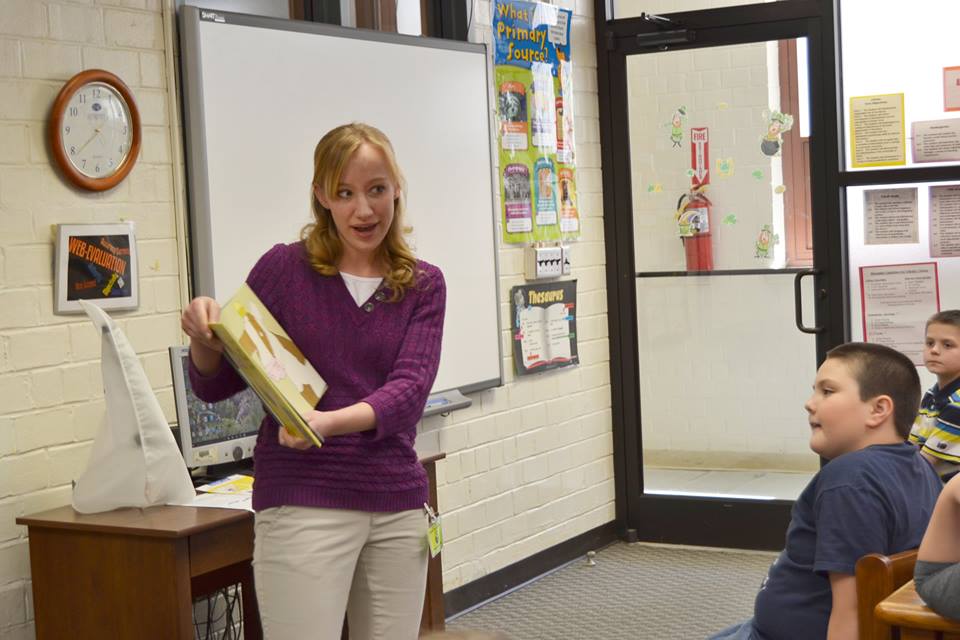
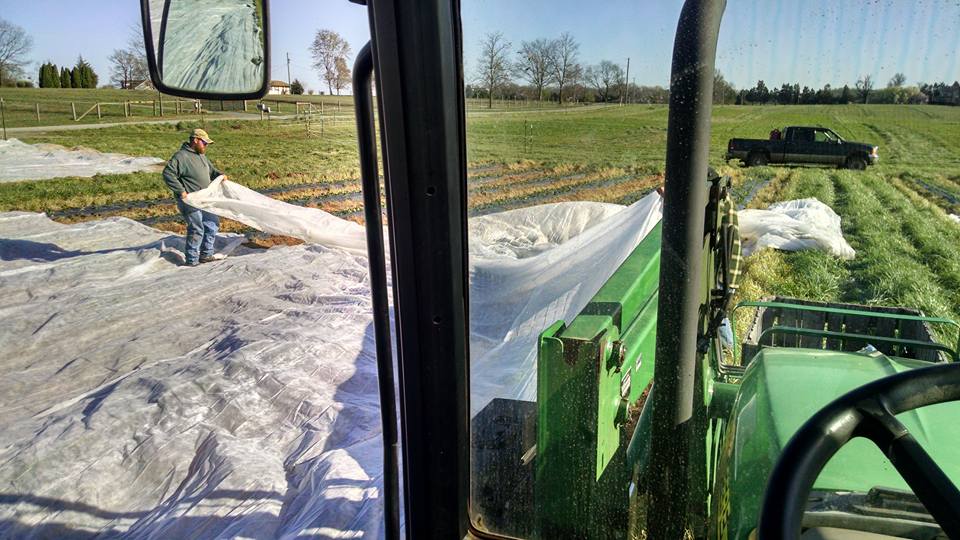
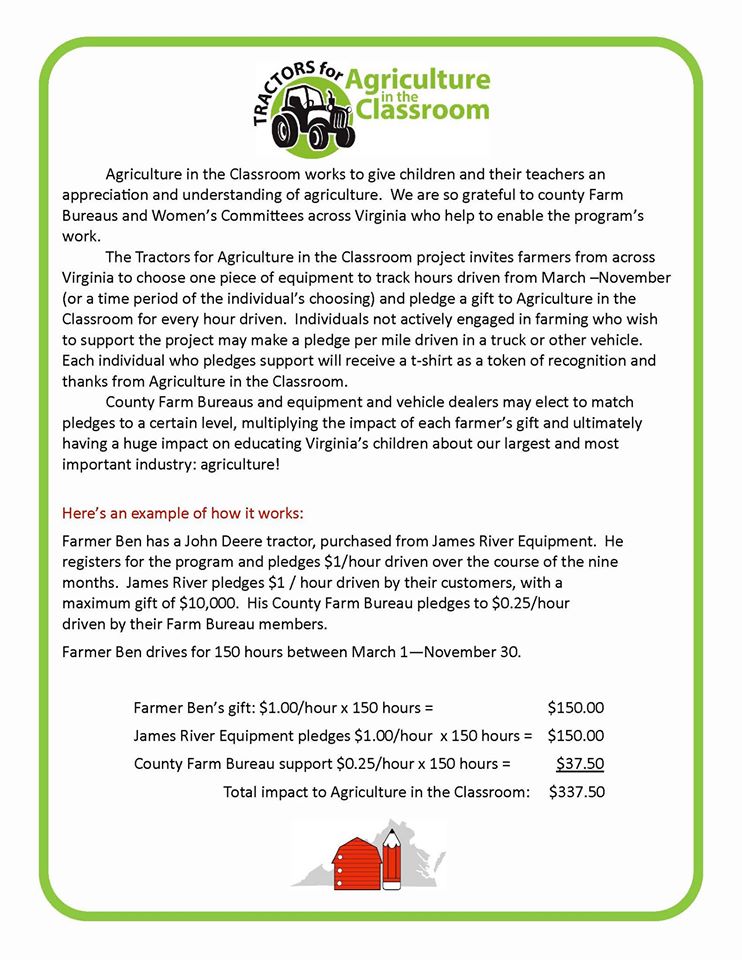
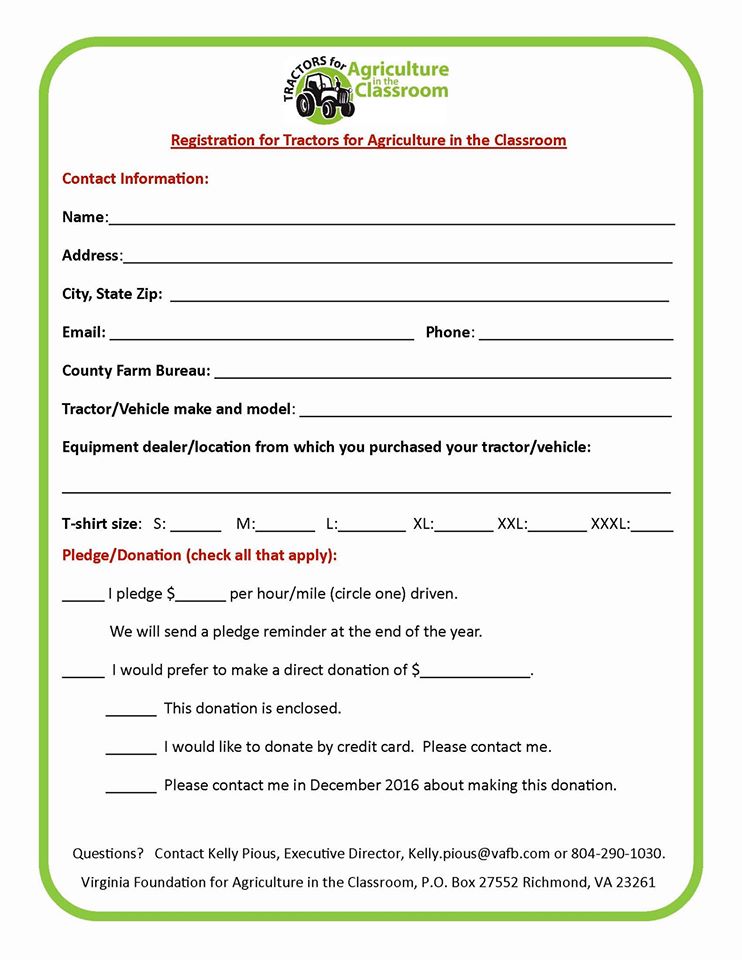
Spring is here and supporting Agriculture in the Classroom is as easy as operating a tractor on your farm! Just choose one piece of equipment (or a vehicle) to track hours of use from March through November (or a time period that fits you best) and pledge a gift to Agriculture in the Classroom for every hour of operation. If you are interested in participating, have questions or need a pledge form, please contact Agriculture in the Classroom at 804-290-1034.

What Virginia Farmers are Planting in 2016


The Virginia Department of Agriculture and Consumer Services today announced the planting intentions of Virginia farmers as of March 1 surveys by the USDA’s National Agricultural Statistics Service. 
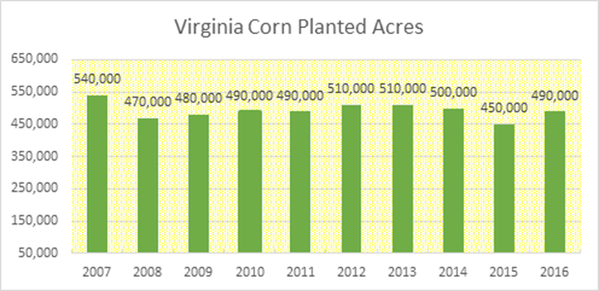
Farmers in Virginia intend to plant 490,000 acres of corn, 40,000 higher than 2015. U.S. corn growers intend to plant 93.6 million acres for all purposes in 2016, up 6 percent from last year and 3 percent higher than 2014. 
Soybean acreage in Virginia is expected to total 630,000 acres, unchanged from the previous year’s acres. U.S. soybean planted area for 2016 is estimated at 82.2 million acres, down 1 percent from last year. 
Upland cotton acreage to be planted in Virginia is forecast at 80,000, down 5,000 acres from 2015. The U.S. total upland cotton acreage is estimated at 9.35 million acres, up 11 percent from the previous year. 

Peanut acreage in Virginia is expected to total 19,000 acres, unchanged from the previous year’s acres. U.S. peanut planted area for 2016 is estimated at 1.48 million acres, down 9 percent from last year. 

Flue-cured tobacco growers in Virginia intend to harvest 21,000 acres, down 500 acres from 2015. For flue-cured producing states, growers intend to harvest 209,000 acres, 4 percent below last year. 
Producers intend to harvest 250 acres of dark-fired tobacco in Virginia, unchanged acres from the previous year. Burley tobacco was estimated at 1,200 acres, down 100 acres from 2015. 
Barley seeded by Virginia farmers in the fall of 2015 totaled 44,000 acres, down 2,000 acres from previous year. U.S. seeded acreage was 3.14 million acres, down 12 percent from the previous year. 
Winter wheat seeded by Virginia farmers in the fall of 2015 totaled 240,000 acres, down 20,000 acres from previous year. Seeded acreage for the nation was 36.2 million acres, down 8 percent from the previous year. 

Farmers in the state intend to harvest 1.18 million acres of all hay, up 5,000 from 2015. U.S. farmers intend on harvesting 54.3 million acres of hay in 2016, down slightly from last year.
VDACS Names Dr. Charles Broaddus as New State Vetrinatian

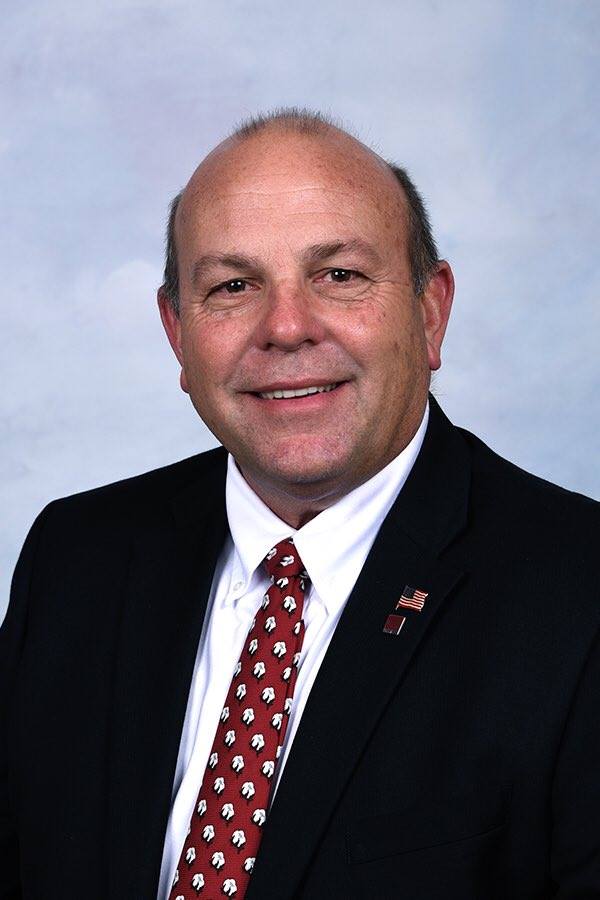
The Virginia Department of Agriculture and Consumer Services (VDACS) recently selected Dr. Charles C. Broaddus as State Veterinarian and Director of the Division of Animal and Food Industry Services (AFIS).  He will begin his new duties May 11.
Dr. Broaddus came to VDACS in 2009 as Program Manager of the Office of Veterinary Services. Prior to joining the Agency, he worked in private practice and in academia. His undergraduate degree is in Economics from the University of Virginia, and he holds a Doctor of Veterinary Medicine (D.V.M) degree from Auburn University, where he also completed a dairy internship. He also holds a PhD in veterinary clinical sciences from Oklahoma State University, where he completed a theriogenology residency (animal reproduction).


Broaddus is a member of the American Veterinary Medical Association’s Council on Public Health and Veterinary Regulatory Medicine, the Virginia Veterinary Medical Association, the Virginia Academy of Food Animal Practitioners, and is a member of several committees of the United States Animal Health Association. He currently serves in the Army Reserves, Veterinary Corps.
 “I am delighted to welcome Dr. Broaddus to his new position within the Agency,” said Sandra J. Adams, Commissioner. “His practical hands-on experience in working with agriculture clients, his background in all aspects of animal health, his experience with animal-disease response and his enthusiastic commitment to Virginia agriculture will be a tremendous asset as State Veterinarian.”
The Division of Animal and Food Industry Services is comprised of the State Veterinarian’s Office and specialized programs in Laboratory Services, Veterinary Services, Meat and Poultry Services, Dairy and Foods, and Animal Care and Emergency Response.  The Division oversees such diverse functions as meat inspection, animal health and welfare, food inspection, livestock disease prevention and eradication, emergency planning and food security.

Dr. Broaddus lives in Hanover County with his wife, Dr. Kristy Broaddus, a veterinary surgeon, and their three children.

From the Field: VFB Staff Strengthening Partnerships on Member Benefits

The General Motors (GM) $500 discount with Farm Bureau was introduced in Virginia in 2012.  Shortly after the program introduction, the district field services directors (DFSDs) visited with all of the dealerships’ sales managers to introduce ourselves and Farm Bureau to them. 
Since that time, the GM discount program has been very successful.  In the first three quarters of 2015, Farm Bureau members saved almost $500,000 with the purchase of 992 vehicles.  That is certainly a good return on the $40 membership dues investment. 
In an effort to further enhance this benefit, our DFSDs have been visiting every GM dealer in the state this month and in April.  At these visits, we are meeting again with the sales managers and providing them promotional materials to use in their dealerships such as large window clings that say “Member Discount Available Here”, and table top displays.  During the meetings, we are asking dealers to partner with us by having a vehicle on display at some county Farm Bureau events and meetings.  At least one dealer is going to do a “Farm Bureau Day” at their dealership as a promotion.

At the same time, we are cross promoting Member Deals Plus and membership.  We are asking them and their salesman to become members and participate in Member Deals Plus.  Some dealerships are now offering discounts on service and free, state inspections through Member Deals Plus. 
Feedback that we have received all over the state is that the GM salesmen state how easy the program is to use and they use it to sell vehicles on a regular basis.  Many of the salesman stated that they ask customers if they are Farm Bureau members.
We are actively promoting and enhancing our member benefits package.  One of the best methods of advertisement is verbal.  So, if you have used one of the Farm Bureau member benefits, tell a family member or friend and encourage them to join if they aren’t Farm Bureau members.  We can save members a significant amount of money.  Help us spread the word about Farm Bureau’s member benefits. 
Until next time,

Mark

AFBF: In Failing to Move Voluntary GMO Labeling Measure, Senators Abandon Farmers, Consumers

On Wednesday, The Senate rejected a bill that would have prevented any state from requiring GMO labels on food.

Calling the Senate’s failure to move forward with debate on a voluntary GMO labeling bill “inexcusable,” American Farm Bureau Federation President Zippy Duvall said farmers will continue their fight to secure a law that supports consumers, America’s farmers and ranchers and our nation’s system of affordable, productive agriculture.

“To say we are angry with those senators who abandoned farmers and ranchers and turned their backs on rural America on this vote is an understatement. Their votes opposing this measure ignored science, threw our nation’s food system into disarray and undermined the public’s understanding of the many benefits of biotechnology in feeding a growing and hungry population,” Duvall said in a statement.

With a July 1 start-date set for a mandatory GM labeling law in Vermont, passage of a national voluntary GMO labeling bill is needed immediately. The measure Farm Bureau was anxious for the Senate to take up this week was offered by Sen. Pat Roberts (R-Kan.).
Duvall said farmers are willing to give senators a second chance.

“We remain hopeful they will have a chance at redemption by correcting this situation that will otherwise lead to increased food costs for consumers and stifle agricultural innovation, which remains a strength of our nation. We must not let anyone forget that rural America and our farmers and ranchers do matter,” he said.

VFBF Vice President Visits Brazil As Part of PAL Program

Virginia Farm Bureau Federation Vice President Scott Sink is currently in Brazil as part of the American Farm Bureau Federation‘s Partners in Agricultural Leadership (PAL) Program. PAL provides participants with unique opportunities to represent agriculture when opportunities arise in the media, on speaking circuits or in testimonial arenas.  Program graduates may be best described as “advocates for agriculture” – stepping forward and promoting awareness about issues important to those in the farm-to-consumer food chain.
Below is a blog entry written by Scott Sink and Jeremy Barron, a young farmer from Indiana, about their experiences so far.

 “Worldwide Look of Seed Development”
 A first-hand experience with Monsanto in Santa Cruz del Palermas, São Paulo Brazil.
Scott Sink and Jeremy Barron -PAL Class 8
3-15-16
Have you every wondered how farmers manage pests on millions of acres of food grown around the world? It takes time, discovery, repetition, resources, regulation, and determination to create a sustainable solution that serves the needs of farmers and meets the demands of a growing population. Yes, the short answer is GMO’s. During a recent trip to Brazil, we had a chance to learn first hand from Monsanto on how new seeds are developed and the rigorous process needed to create these highly demanded products.

 The process starts with discovery on the farm. Monsanto works directly with local farmers to understand changes in their climate, environment and production practices.  The discovery process is the identification of traits needed to help farmers meet these challenges. This process takes 2-4 years while exploring hundreds of millions of traits which are selected and tested for suitability and proof of concept, this process takes an additional 2-4 years.


After 6-8 years of research and testing the development process selects from just hundreds of traits to test for safety, allergenic properties and suitability. This phase allows researchers to define the safest most effective traits narrowing the selection to less than 5 traits.
The next phase of the cycle allows traits to be integrated into the seeds. Allowing researchers to conduct field tests, regulatory studies and submit findings to regulators. Leading researchers to the final trait that they will push forward for approval. This process can take up to 5 years to gain approvals in countries and markets around the world. The final phase before product launch allows researchers another 2 to 3 years to conduct field tests on the seed trait that is being brought to market.

The process described above evolves over 10 years, cost in excess of $200 million dollars, and goes through over 100 safety and environmental studies to reach a sustainable solution for both the field and home.  Our trip has allowed us to have a greater appreciation of the time, cost, and scrutiny that a GMO seed goes through.  Without this process farmers will not have the products that they need to be productive and consumers will not be able to enjoy the food security they expect.


Farm Bureau Applauds Governor, Legislature for Ag Budget

Farm Bureau is pleased with funding of agriculture-related items in the finalized state budget.

Most notably, Gov. Terry McAuliffe and the Virginia General Assembly allocated a record amount of money for cost-share assistance in implementing agricultural best management practices. Included was $54.39 million for cost-share money in fiscal year 2017 and $8.8 million for fiscal year 2018.

“These funds are critical to helping Virginia farmers work cooperatively with the state to help achieve its water quality goals,” said Martha Moore, vice president of governmental relations.

Of the $54.39 million, $19.6 million is for farmers who have signed up and been waiting for cost-share money to install stream exclusion fencing. The practice protects waterways and reduces erosion of stream banks by keeping livestock out of creeks and rivers.

Legislators also included money for local soil and water conservation districts, which provide technical assistance to farmers implementing BMPs. They allocated $7.4 million for FY2017 and $1.2 million for FY2018.

The state budget also included an additional $345,701 for FY2017 and $197,101 for FY2018 to fund two additional Virginia Department of Agriculture and Consumer Services weights and measures staff who would focus on keeping farm scales in compliance. Those funds also would pay for replacing some needed equipment for the program.

Also incorporated was $1.8 million for full funding of the Reforestation of Timberland program. “This is the first time since the Gilmore administration the industry severance tax will be fully matched by the commonwealth to provide funding for a cost-share program with landowners to incentivize the replanting of pine trees,” Moore said.

Other ag-related budget items include bond money for replacing and renovating some of the livestock and poultry facilities at Virginia Tech. Those facilities provide research that translates into applied technologies that help farmers be more profitable and sustainable.

“Funding for BMPs helps farmers and the environment, and funding for research helps farmers’ long-term bottom lines” Moore said. “We are thrilled that the governor and the General Assembly are able to support the state’s largest economic industry by giving agriculture and forestry a boost in the budget.”

$390,000 in USDA Specialty Crop Block Grants Available for Virginia Agricultural Interests Announced

The Virginia Department of Agriculture and Consumer Services (VDACS) is accepting applications for United States Department of Agriculture (USDA) Agricultural Marketing Service Specialty Crop Block Grant funding.  Agricultural associations, industry and producer groups, community-based organizations, educational institutions and non-profits that seek to improve the competitiveness of specialty crops in Virginia are eligible to submit proposals for grants up to $60,000 per project.  Individual producers are not eligible for grants.  VDACS anticipates administering nearly $390,000 in funds for the development of specialty crops.  The deadline for submitting applications is April 14, 2016. 
Speaking about the grants, Governor Terry McAuliffe said, “Our administration is committed to job creation and economic development throughout the Commonwealth, especially in one of Virginia’s largest industries – agriculture.  As we work to build the new Virginia economy, we will continue to keep our farmers and producers at the forefront of our economic development and jobs creation strategic plans.  I am pleased to announce the availability of these federal dollars for specialty crops and encourage our producer groups to take advantage of this opportunity.   There is great potential for positive long-term economic benefits for our agriculture industry from increasing our focus on the incredible diversity of crops that can be cultivated in the Commonwealth.”

Specialty crops are categorized as fruits, vegetables, tree nuts, dried fruits and nursery crops, including floriculture, that are not typically covered by traditional crop insurance. Specialty crops do not include standard commodities such as corn, wheat, soybeans, peanuts, cotton or tobacco.  Processed foods are eligible, provided their development enhances the competitiveness of specialty crops.  Specialty crop competitive grant proposals must be specific and explain how an association, industry group or organization will use the funds to enhance the competitiveness of specialty crops. Some examples include research, promotion and marketing plans, as well as food safety projects and projects that improve food access. 
In awarding the USDA Specialty Crop Block Grant funds, VDACS will give priority to projects with the sole purpose of enhancing the competitiveness of specialty crops as they pertain to the following issues:
Enhancing food safety;
·         Assisting all entities in the specialty crop distribution chain in developing “Good Agricultural Practices,” “Good Handling Practices,” “Good Manufacturing Practices,” and in cost-share arrangements for funding audits of such systems for small farmers, packers and processors;
·         Investing in specialty crop research, including research to focus on conservation and environmental outcomes;
·         Developing new and improved seed varieties and specialty crops;
·         Enhancing pest and disease control; and development of organic and sustainable production practices;
·         Increasing child and adult nutrition knowledge and consumption of specialty crops;
·         Improving efficiency and reducing costs of distribution systems;
·         Developing local and regional food systems; and
·         Improving food access in underserved communities.
Guidelines, instructions and the application for the USDA Specialty Crop Competitive Grants are available online at vdacs.virginia.gov/sales-specialty-crop-competitive-grant-program.shtml(click on Application Form to apply), via e-mail to Melissa Ball at melissa.ball@vdacs.virginia.govor by mailing VDACS, Specialty Crop Grants Application, 102 Governor Street, Richmond, VA  23219.  Applications received after the April 14, 2016, deadline will not be considered for funding.  All funding is contingent upon USDA’s notice of funds availability. The duration of each grant is two years, and the grant period will begin October 1, 2016.