BREAKING NEWS: Senate Judiciary Committee Approves Immigration Reform Bill

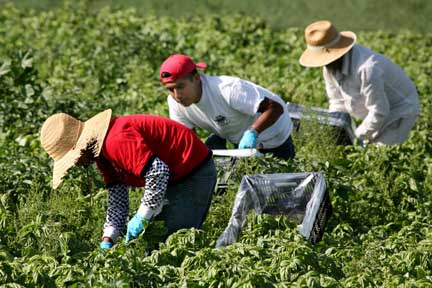
The Senate Judiciary Committee approved a balanced immigration reform bill on Tuesday that includes a fair and workable farm labor provision. In a statement, American Farm Bureau Federation President Bob Stallman said the bill will provide ample labor for farmers and ranchers and an increased level of surveillance along our country’s borders. 
“The success of American agriculture depends on the workers who show up every day and work in partnership with our nation’s farm and ranch families to tend our crops and livestock,” said Stallman. “Agricultural labor reform is not about whether foreign workers will grow and harvest our food. That is a matter of fact. It is about whether those foreign workers will tend crops here in the United States, or in their home countries. We believe American food grown on American soil is the best option.”

Below is Stallman’s full statement:
“The time is long overdue for our nation to have a comprehensive agricultural labor plan that works for all sectors of agriculture and across all regions of our nation. The Senate Judiciary Committee today passed a balanced immigration reform bill today that included a fair and workable farm labor provision that sets the stage for Senate action beginning next month.
“The success of American agriculture depends on the workers who show up every day and work in partnership with our nation’s farm and ranch families to tend our crops and livestock.  Agricultural labor reform is not about whether foreign workers will grow and harvest our food. That is a matter of fact. It is about whether those foreign workers will tend crops here in the United States, or in their home countries. We believe American food grown on American soil is the best option.
“We believe this bill will help ensure an adequate supply of farm labor but also will provide an increased level of surveillance of high-risk areas along our borders. We know that one of the best ways to improve border security is to create a legal, workable way for farm workers to enter our country. If we do not have to waste resources locking up lettuce harvesters, we can focus on keeping those with criminal intentions out of our country.
“This is shaping up to potentially be a banner year for public policy advances related to agriculture, and we are pleased to be a part of that process. Efforts to win farm labor reform, make progress on the farm bill and upgrade our nation’s waterway shipping system are setting the table for what could be a great year for agricultural policy.”

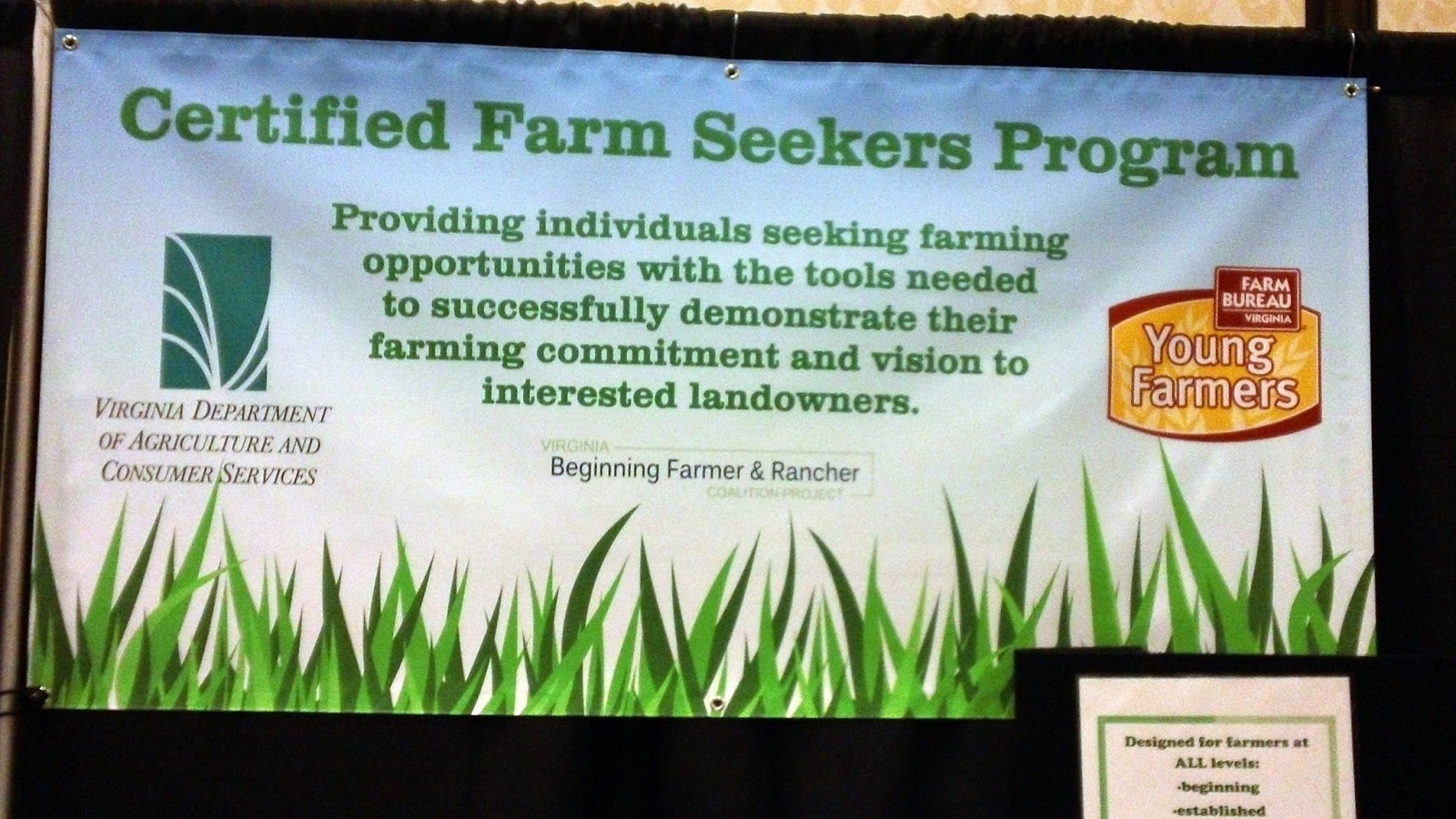
Certified Farm Seekers Program Gains Momentum

With the weather becoming warmer and planting underway, what better time for a Certified Farm Seekers update? Since its last blog post back in August, the Certified Farm Seekers program has gained a considerable amount of momentum in its goal of matching farm seekers with farm owners. Over 50 interested farm seekers have submitted applications and are in various stages of completing the requirements of a resume, business plan, and on-farm experience. These efforts to produce quality farm seekers have directly resulted in many promising land transition conversations between farm owners and CFS participants.  

A productive trip was taken in March to Virginia Tech to meet with the future of agriculture-the Agricultural Technology students.  Three separate classes learned more about the CFS program and started work on the Introduction to Whole Farm Planning module, which is a short series of worksheets that allows farm seekers to organize their farming goals and plans. Many students really reflected the intent of the program-to provide a way for dedicated farmers, who do not have easy access to land, to find farming opportunities in Virginia.

Although the program is primarily self-guided, workshops are currently being conducted across the state, in order to give participants a chance to complete the requirements with a staff member present. The Bedford County Young Farmers Committee recently hosted such a workshop at their May monthly meeting.

Bedford County Young Farmers Chairperson, W.P. Johnson, noted, “The group really enjoyed the presentation and was amazed at the opportunities available.  Business planning with expert review allows us to ensure our ability to approach land owners professionally and financial institutions with confidence. This is an equation for success for young and beginning farmers. I feel that the Certified Farm Seekers Program is an invaluable tool that is underutilized by young agriculturalists.”

If you are interested in holding a CFS workshop or learning more about the program, contact:

Stefanie Kitchen
(804) 290-1030
Ron Saacke
(804) 514-4202
Kevin Schmidt
(804) 786-1346

Breaking News: House Ag Committee Approves Farm Bill

The House Agriculture Committee on Wednesday approved its version of the 2013 farm bill. The Senate Agriculture Committee approved its version on Tuesday.
“This provides a great reason for optimism we will have a new long-term farm bill this year,” said American Farm Bureau Federation President Bob Stallman. “That belief is further supported by the fact that the bills are more striking in their similarities than in their differences. Both bills provide a solid start for a farm bill that serves America’s farm and ranch families. The emphasis on crop insurance as a risk management tool, combined with flexibility that the measures offer through other safety net choices, will go a long way in ensuring a stable agricultural economy over the next few years.”
The Senate’s version, the Agriculture Reform, Food and Jobs Act of 2012, limits funding cuts to $23 billion, while the House expects to see $40 billion in savings. The Senate on Wednesday voted to proceed with consideration of the farm bill. First votes on the bill are expected to be held Tuesday, with Senate consideration completed before the Memorial Day recess on May 24. No information has been released yet regarding House consideration.

Below is Stallman’s full statement:

 “The House Agriculture Committee today approved its version of the 2013 Farm Bill. That bill joins the version approved on Tuesday by the Senate Agriculture Committee. This provides a great reason for optimism we will have a new long-term farm bill this year. That belief is further supported by the fact that the bills are more striking in their similarities than in their differences. Both bills provide a solid start for a farm bill that serves America’s farm and ranch families. The emphasis on crop insurance as a risk management tool, combined with flexibility that the measures offer through other safety net choices, will go a long way in ensuring a stable agricultural economy over the next few years.

“These bipartisan-supported bills offer a basic-but-broad risk management platform supported by all types of farmers and ranchers in all regions. Among the balanced risk management strategy are options based both on crop prices and revenue levels. Both committees also proved thoughtful in their efforts to reform our nation’s farm law, from significant changes in how commodity programs are structured to streamlining in other aspects, such as conservation programs. The savings from those efforts will help pay for new risk management programs and make contributions to reduce our nation’s deficit.

“Many aspects of both bills reflect the essence of Farm Bureau’s farm bill proposal. We continue to analyze both bills and will weigh their ability to provide effective risk management tools to meet the needs of America’s farmers, ranchers and growers. This and other issues will be hashed out when the full House and Senate take up their bills and then again when the chambers come together to negotiate a single bill. We remain optimistic that the congressional leadership will carry on in the bipartisan spirit exemplified by the House and Senate Agriculture committees, and that they will remain true to their commitment to pass a farm bill.”

Prince George County Farm Bureau Discusses Animal Welfare Issues with Local Animal Control

Lindsay Reames
Assistant Director
Last week, I attended a meeting the Prince George County Farm Bureau held with their Chief of Police, local law enforcement, Board of Supervisors members, County Extension Agent and animal control officers to discuss how they could work together to address animal welfare issues in the county.  

Bill Kreider, Prince George County Farm Bureau President, led the meeting and discussion.  i gave an overview of agriculture animal welfare issues in Virginia and  Virginia Farm Bureau’s commitment to producing a safe, abundant food supply.  Dr. Dan Kovich with the State Veterinarians office gave a presentation on animal care and animal cruelty laws in Virginia.
Mr. Kreider offered the resources and expertise of the Prince George Farm Bureau to assist at the local level in enforcing the animal laws in Virginia.  The meeting was a great way to develop a relationship between local law enforcement and the Farm Bureau.  The main reason is if there is a case when animals are seized that the local animal control can call on the Farm Bureau for help. The help may be providing feed, shelter and/or transportation for the animals. Also if there is a situation where the Animal Control Officer has a question with regards to agriculture animals that they have a local resource they can reach out to.  

If you are a county Farm Bureau interested in hosting a similar in your county, please contact me at 804-290-1019 or lindsay.reames@vafb.com

Breaking News: Senate Ag Committee Approves Farm Bill

AFBF President
Bob Stallman

The Senate Agriculture Committee on Tuesday approved its version of the farm bill, the Agriculture Reform, Food and Jobs Act of 2012. “By following a bipartisan path and approving its farm bill legislation, the committee moved the farm bill forward with provisions that work well for America’s farm and ranch families,” said American Farm Bureau Federation President Bob Stallman. He added that Farm Bureau is especially pleased that the bill places a high priority on crop insurance as a risk management tool and also offers a measure of flexibility through safety net options beyond crop insurance.

Further, “We are pleased that the Senate held firm to its intention of limiting cuts to $23 billion,” Stallman said. “That will help maintain workable and viable commodity and conservation titles by limiting program cuts to levels that are fair for farmers and ranchers.” The measure next moves to the full Senate for consideration.

Below is Stallman’s full statement:

“The Senate Agriculture Committee today put the farm bill on a solid road toward success. By following a bipartisan path and approving its farm bill legislation, the committee moved the farm bill forward with provisions that work well for America’s farm and ranch families. We are especially pleased that this bill places a high priority on crop insurance as a risk management tool and that it also offers a measure of flexibility through safety net options beyond crop insurance.

“While the bill contains many provisions compatible with the core farm bill proposal offered by Farm Bureau, we recognize that no farm bill is perfect and there is always room for improvement. We are pleased that the Senate held firm to its intention of limiting cuts to $23 billion. That will help maintain workable and viable commodity and conservation titles by limiting program cuts to levels that are fair for farmers and ranchers.

“We also believe that the bipartisan compromise to oppose means testing, payment limitations or premium subsidy reductions for the crop insurance program and to formalize a tie between crop insurance and conservation compliance helped set the tone of cooperation for this bill moving forward. Overall, this bill meets our firm position that the farm bill be bipartisan in nature, reform-minded in structure and crafted around a broad, flexible, crop insurance-based program that provides our farmers certainty and extends much-needed risk management tools across more acres and more crops.”

Governor McDonnell Announces Agriculture and Forestry Industries Development Fund Planning Grant Recipients

Governor Bob McDonnell has announced the recipients of fiscal year 2013 planning grants from the Governor’s Agriculture & Forestry Industries Development Fund (AFID).  Eleven projects covering more than thirty localities have been awarded a total of $249,000 to support the growth of agricultural and forestry projects in the Commonwealth. The AFID planning grants program was developed to encourage local governments and regional organizations to analyze and plan strategically about how they can support and integrate agriculture and forestry-based industries into their communities’ overall economic development efforts.
 A listing and brief summary of the qualifying projects and their locations is included below.
Speaking about the AFID planning grants awards, Governor McDonnell said, “We’ve had great success incorporating two of the Commonwealth’s largest industries, agriculture and forestry, and their significant overall impact on our economy into our economic development agenda. That strategic decision has been justified many times over. Exports have reached new record highs during the last three years and we’ve successfully utilized AFID economic development grants to attract new agribusinesses to Virginia and to help existing operations expand. Creating a program that incentivizes communities to plan for how they can best grow and support agricultural and forestry industries in their business community is a natural continuation of a strategy that is proven to benefit Virginians and create jobs.” 

Governor McDonnell continued, “Creating opportunities and the right environment for businesses to succeed is the approach we’ve taken over the course of my administration to keep the economic recovery going in Virginia. During my time as governor, unemployment has dropped from 7.2% to 5.3% because of our commitment to conservative principles and smart, targeted investments that lead to job creation. The AFID is just one more example of our efforts at work. Our General Assembly partners in this initiative, leaders such as Delegates Steve Landes, Kirk Cox, and Ed Scott and Senators Bill Stanley, John Watkins and Emmett Hanger, deserve many thanks for their work to make funds available for important local economic development efforts such as the AFID planning grant program.” 
 The communities and regions receiving AFID planning grants will match each dollar awarded with a dollar of local funds, including certain types of allowed in-kind contributions. The program also requires the active participation of a board, committee, or working group representing the relevant agriculture and forestry interests in the locality.
“Flexibility was given to applicants to pursue the type of project that made the most sense for their region or locality, whether it was something as broad as creating a strategic plan for agriculture and forestry development, or as specific as construction of a commercial kitchen facility,” said Secretary of Agriculture and Forestry Todd Haymore.  “It was extremely important that projects demonstrate involvement from the local agriculture and forestry community, giving an indication that it was the producers themselves who helped identify and support economic development opportunities that were of true benefit to their industries.  I am hopeful that the successful implementation of these planning grants will lead to future awards of some of our larger AFID facility grants to these same localities that will have benefitted from their dedication to planning for agriculture and forestry.”
AFID planning grant program guidelines were announced on November 27, 2012, with applications for FY 2013 due March 1, 2013.  Applicants demonstrating a clear need, a solution to be undertaken, and strong support from local government and the agriculture and forestry community received the highest marks during the review process.  The next round of AFID Planning Grants will be fall 2013. Localities interested in applying may visit http://vdacs.virginia.gov/agribusiness/planning.shtmlfor more information.
Agriculture and forestry are Virginia’s largest industries, with a combined economic impact of $79 billion annually:  $55 billion from agriculture and $24 billion from forestry.  The industries also provide approximately 500,000 jobs in the Commonwealth according to the Weldon Cooper for Public Service at the University of Virginia.
Governor’s Agricultural and Forestry Industries’ Fiscal Year 2013
Planning Grant Recipients and Projects
Project Title:  New Markets for Agriculture Producers in Southwest Virginia through Online Marketing and a Local Food Campaign
Applicant:      Town of Abingdon
Award:           $20,000
Summary:        Abingdon Convention and Visitors Bureau and Appalachian Sustainable Development will work together to develop new, year-round markets for locally produced agricultural products by creating and marketing an online order system to facilitate the sales of local foods to restaurants and other institutions.  The effort will also further develop Rooted in Appalachia website and mobile app to promote local foods and restaurants serving them.
Project Title:  Fields of Gold – The Next Season of Agritourism in the Shenandoah Valley
Applicant:      Central Shenandoah PDC (CSPDC)
Award:           $35,000
Summary:        Fields of Gold is a regional agritourism marketing initiative led by the CSPDC in the Shenandoah Valley.  They recently completed a year-long planning process, funded by the Department of Housing and Community Development (DHCD), and have received significant support and buy-in from their member localities, as well as awards for the effort.  This grant is to develop and market a robust website that will include an interactive map of agritourism sites, an events calendar and farm-to-restaurant guide.  The marketing and build-out of the website were identified as key deliverables in their strategic marketing plan.
Project Title:  Fauquier County Impact of Agriculture Study
Applicant:      Fauquier County
Award:           $6,000
Summary:        Funds will be used to conduct a study of the needs of the farming community in Fauquier and to off-set the costs of having UVA’s Weldon Cooper Center conduct an “Impact of Agriculture” study to document the overall economic contribution of agriculture to Fauquier.  As part of the study, a working group of county farmers, representing all segments of the local farming community, will work with the County’s Agricultural Advisory Committee and the Fauquier County Farm Bureau to conduct, review and analyze results of a farmer survey.  Studies will help the County determine what changes to the zoning ordinance might be necessary to assist the agricultural community.
Project Title:  Planning for Agritourism and Agribusiness Benefits in Giles, Montgomery and Pulaski Counties
Applicant:      Giles County – lead applicant, Montgomery and Pulaski Counties
Award:           $35,000
Summary:        Project will develop a strategic plan for agricultural economic development in the
tri-county region.  It will include interviews/surveys of agritourism operations and agribusinesses, an inventory of these businesses, policy recommendations, and an economic impact study. 
Project Title:  Meat Processing Facility for Southside Virginia
Applicant:      Halifax County
Award:           $12,500
Summary:        Grant funds will help pay for a professional, third-party feasibility study of a USDA inspected meat processing facility in Halifax county to serve Southside Virginia.
Project Title:  The Highland Center Local Food Incubator
Applicant:      Highland County
Award:           $20,000
Summary:        Grant funds will help pay for the renovation and upgrading of a commercial kitchen at the Highland Center in Monterrey.  Specifically, they will be used to create a temperature-controlled meat processing area in the kitchen that will allow for the production of value-added meat products under USDA inspection.  This project is the culmination of years of effort to grow Highland County’s economy by building on its agricultural assets, primarily livestock.  It will complement the County’s recently completed USDA inspected slaughter facility, by giving producers the opportunity to add further value to their meat. 
Project Title:  James City County Rural Economic Development Strategic Plan
Applicant:      James City County
Award:           $20,000
Summary:        The county boasts many agricultural and forestry assets, and has undertaken a number of individual efforts to promote them, but never has the County taken a comprehensive look at how to protect, support and leverage these assets.  The need is particularly important for the County, with development pressures coming from its east (Williamsburg/Hampton Roads) and west (exurban Richmond).  This effort is just the type of project the AFID Planning Grants program was designed to engender.  It is being led by their Rural Economic Development Committee, which includes key local government personnel, local business leaders and agricultural producers).  This project could be used as a model for other jurisdictions under development pressure. 
Project Title:  Feasibility Study for Barging Logs across the Chesapeake Bay
Applicant:      Northern Neck Planning District
Award:           $35,000
Summary:        Funds are part of a proposed $100,000 feasibility study to determine the economic efficiency of utilizing barge transport to bring logs timbered on the Eastern Shore for milling in Kinsale.  Study will be conducted in two phases with Phase I determining the basic economic feasibility of the project, especially as compared to extending their current wood basket by truck.  Phase II will develop a detailed proposal for moving forward with the project.  The study seeks to address the timber availability problem faced by sawmills on the Northern Neck and lack of a robust transportation infrastructure to otherwise transport timber into the area.
Project Title:  Southside Food Enterprise Center for Production, Marketing, and Education of Value-Added Food Processing Serving Virginia Farm-Based Producers
Applicant:      Prince Edward County
Award:           $20,000
Summary:        Since 2009, Prince Edward County has been working to provide local food processing options for area producers, primarily though its existing community cannery facility.  They have completed a feasibility study on developing a new shared-use kitchen and food-business incubator.  AFID Planning Grant funds will be used to develop an operational plan for this facility.  A separate application to the Tobacco Commission for funding for facility construction is pending.
Project Title:  Vision for Agriculture and Forestry in Region 2000, 2013-14 Strategic Plan
Applicant:      Virginia’s Region 2000 Local Government Council; includes Amherst, Appomattox, Bedford and Campbell Counties and Lynchburg City
Award:           $35,000
Summary:        Funds will be used to bring in a consultant to work with the organization and local partners to develop a regional strategic plan for the agriculture and forestry components of the region’s economy.  The study will include an inventory of regional agriculture and silviculture assets, SWOT analysis and will seek to develop a plan endorsed by member jurisdictions.
Project Title:  Staunton Feasibility Study of a Commercial and Shared-Use Kitchen
Applicant:      City of Staunton
Award:           $10,500
Summary:        Funds will be used to help analyze the feasibility of a certified, commercial, shared-use kitchen and to research and create a replicable business model.  The development of a commercial kitchen was a recommendation from a recent Community Foods Planning Project.  The Project’s key partners, the City of Staunton and the Staunton Creative Community Fund, have successfully undertaken other local food development projects and are developing a suite of services to assist area food entrepreneurs from start-up through launch.  This study will be useful to other communities considering a commercial kitchen as well. 
About the Agriculture and Forestry Industries Development Fund
The creation of the AFID was part of Governor McDonnell’s jobs-creation and economic development agenda during the 2012 session of the General Assembly.  Funded at $1 million in each year of the biennium, the AFID is broken into two categories with $750,000 going to large grants to assist local efforts in expanding current or attracting new agriculture and forestry processing facilities using Virginia-grown products (http://www.vdacs.virginia.gov/agribusiness/afid.shtml) and $250,000 dedicated to small grants to assist localities in improving local economic development efforts relating to agribusiness (http://www.vdacs.virginia.gov/agribusiness/planning.shtml).

Round Table Allows Farmers to Weigh In On Immigration Reform

This story appeared in the May 9th edition of News Leads, the week’s top ag stories sent out by the VFB Communications Department to media across the state.

Sen. Mark R. Warner, D-Va., said the so-called Gang of Eight’s current immigration bill “is the best chance in 35 years to fix a broken immigration system.”

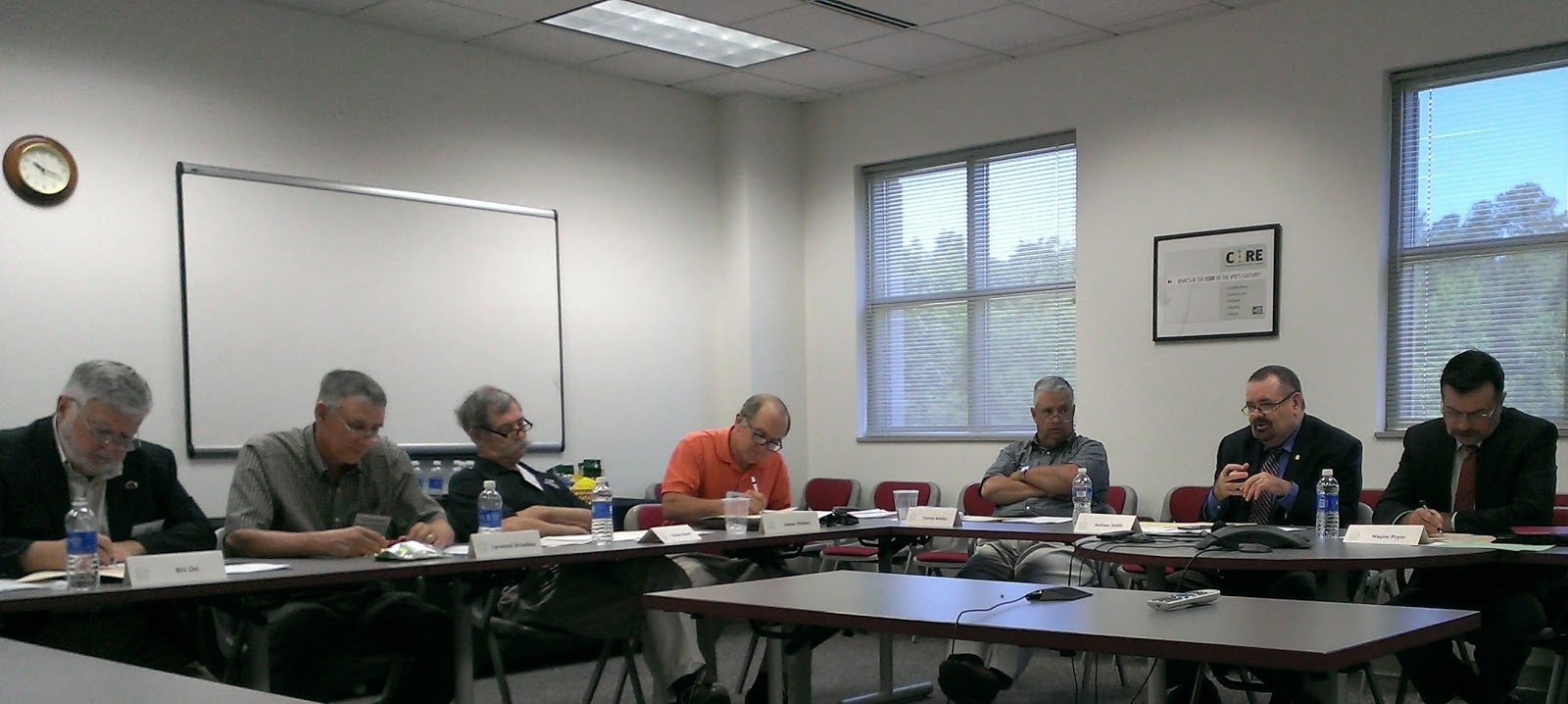
Warner announced that to a room full of farmers and agribusiness professionals during a May 3 round-table discussion about immigration reform at Virginia Farm Bureau Federation’s headquarters.

About 30 people attended to give Warner input on the proposed legislation.

“I want to hear your concerns, because we still have time,” he said.

He outlined the highlights of the bill, which include a pathway to citizenship for the 11 million immigrants currently in the United States illegally; increased border security; employer verification requirements; and an opportunity for more high-skilled and guest workers to enter the country.


Many of the producers attending the meeting rely on the federal H-2A or H-2B foreign worker program for their seasonal labor needs.

“Over the last decade or so, all of agriculture has begun to use foreign workers,” said Wilmer Stoneman, VFBF associate director of governmental relations.

“I think getting legal status for those 11 million helps all of you,” Warner said. “That’s going to be the big kahuna of this legislation.”

But meeting participants were more concerned about wage rates required under the proposed legislation.

Several Pittsylvania County dairy operators spoke out about hourly wage increases.

Roger Jefferson, a Pittsylvania County dairy farmer, expressed concerns about how they would affect his bottom line.

“I could just quit the business, but a lot of people can’t walk away from it and I don’t want to walk away from it,” Jefferson said.

“I am a little concerned about the wage rate,” Warner responded.

Others shared concerns about the requirement that farmers give American laborers the first crack at seasonal job openings. They said it’s next to impossible to get American workers to fill the jobs, and many of those they hire don’t actually show up for work. By that time, the opportunity to hire foreign workers for the season has passed.

Troy Simpson, who owns a landscape business and hires foreign workers, said he tried filling jobs with American workers, “and it just didn’t work.”

He had 150 referrals from the Virginia Employment Commission; 74 were scheduled for interviews, but only 34 showed up. Six of the 34 reported for work, and only one is still working for Simpson.

The assertion that immigrants are taking Americans’ jobs, Simpson said, “is a falsehood.”

From the Field: Cheers to Betty Rosson and Farm Moms Everywhere

From the Field is a bi-monthly column written by Mark Campbell, Farm Bureau Field Services Director for the Central District. He writes about Farm Bureau member benefits and County Farm Bureau activities.

http://WVIR.images.worldnow.com/interface/js/WNVideo.js?rnd=976104;hostDomain=www.nbc29.com;playerWidth=480;playerHeight=300;isShowIcon=true;clipId=8842191;flvUri=;partnerclipid=;adTag=News;advertisingZone=;enableAds=true;landingPage=;islandingPageoverride=false;playerType=STANDARD_EMBEDDEDscript;controlsType=fixedNBC29 WVIR Charlottesville, VA  News, Sports and Weather

Betty Rosson of Louisa County was selected as a regional winner for Farm Mom of the Year.  I won’t repeat the press release.  But I will tell you that Betty Rosson was totally surprised.  Her son, Charles, nominated her for the award.  She has already been interviewed by the NBC station in Charlottesville and RFD TV.  The link to the NBC video is above.  The national winner will be selected on Mothers’ Day.  You have until May 11th to vote for her here http://www.americasfarmers.com/farmmom/vote.aspx.  
Congratulations Betty!  You are a great representative for all of the hard working farm moms out there.
Mothers in a farm family are the glue that holds the family and farm together.  Farm moms and wives not only provide a lot of the family nurturing, but they also help with running the farm.  With all that they are responsible for, they still keep a manner of order and cleanliness.  I remember my mother and now my wife always fussing at us to take our boots off before we come into the house.  In fact, I would argue that is probably one of the most used phrases of farm moms across America.  Take your boots off! 
I am sure the other most used phrase from farm moms is “Good job!”  Farm moms are tremendously supportive of their family.  A supportive word of encouragement really helps.  They sometimes have a difficult task of keeping everyone on track and things in order.  If it weren’t for farm moms, our farm and family life definitely wouldn’t be as rich and enjoyable as it is now.  Let’s show our mothers how much we appreciate them on Mother’s Day. 
Until next time,
Mark

Summit Showcased Ag’s Need to Build Relationships and How Words Have Consequences


Lindsay Reames on the Governmental Relations staff attended this event. Above is a video by the American Meat Institute that she saw during a presentation by Janet Riley  as an example of how the industry is trying to be more transparent and open our doors and show the public how animals are processed.

“The era of ‘don’t ask, don’t tell’ in agriculture is over,’” remarked Dallas Hockman, to attendees at the Animal Agriculture Alliance’s 12th annual Stakeholders Summit. Hockman, Vice President of Industry Relations for the National Pork Producers Council adamantly told Summit attendees that the ag industry can no longer afford to stay quiet; we must communicate.

More crucially, however, Hockman emphasized that the industry doesn’t just need to “communicate” but instead, must form relationships with consumers and recognize their concerns.

“This is about transparency, and transparency means that it’s our job to go and inform our customers, it’s not our customer’s job to come and ask us about something,” said Hockman. “We all know what we’re against, but the challenge is: what are you for? It’s not what you say, it’s what people hear.”

Numerous speakers throughout the day put the responsibility on the industry to communicate to consumers, instead of the other way around.
 

Earlier in the day, David Wescott, Director of Digital Strategy for APCO Worldwide, told attendees that they must identify their true stakeholders, ask those stakeholders what they want, and then give it to them.

Both Hockman and Wescott discussed the importance of relationship building with consumers. But while communication, engagement and finding the “middle ground” consumers were themes highlighted in the morning’s presentations, the day ended with heated discussions on topics ranging from Hallmark/Westland to engaging the media.

“The consumer has a right to know anything he wants to know about where he’s spending his wholly earned, almighty dollar. That’s a reality,” said Andy Vance, Editor of Feedstuffs and one of the afternoon’s speakers. “Consumers increasingly want to know more about their food and they increasingly are more and more skeptical about companies and industries that don’t give them what they want to know.”

Vance emphasized that the industry needs to think about the five or ten things that it has issues with and analyze those issues objectively. Vance described the presentations of the day as somewhat of a rollercoaster, each offering a different viewpoint, or highlighting a different challenge facing the industry.
The Summit’s first day, certainly ended on a high note, however, with a presentation by famed Peterson Brothers parody creator, Greg Peterson, presenting his videos for the audience. Peterson is the creator, along with his two brothers, of the popular videos “I’m Farming and I Grow it,” and “Farmer Style.”

In addition to Peterson, a Kansas State University Senior, there were also several other college agricultural students in the audience, namely the Animal Agriculture Alliance’s 4th annual College Aggies Scholarship winners: Tiffany Swanson (North Dakota State University), Zachary Frazier (Purdue University) and Karoline Rose (Montana State University). These students were presented with their awards at the Summit’s luncheon on May 1st.

The Summit closed with a half-day “workshop” focused on crisis communications, employee hiring strategies and the intersection of the environmental and animal rights movements and how those partnerships affect agriculture. To view presentations from May 1st, please visit the Alliance website. Presentations from May 2nd are available to Alliance members and registered attendees only.

The 12th annual Stakeholders Summit, themed “Activists at the Door: Protecting Animals, Farms, Food and Consumer Confidence,” was held May 1-2, 2013 in Arlington, Virginia. It included about 200 leaders from across the food chain.

Event sponsors included Alltech Ag Network, U.S. Poultry and Egg Association, Murphy-Brown LLC, Farm Credit, Provimi North America, Merck Animal Health, Zoetis, Hy-Line,  American Feed Industry Association, Bayer Animal Health, United Soybean Board, Alltech, National Cattlemen’s Beef Association, National Pork Board, National Pork Producers Council, Diamond V, Aviagen, Genus/PIC/ABS, United Egg Producers, WATTPublishing Co., Cactus Feeders, BrakkeConsulting, Kemin,  AgriBeef Co., Seaboard Foods, National Association of Farm Broadcasting, Protect the Harvest, Elanco Animal Health and the Potash Corp.

Questions about the Summit should be directed to Emily Meredith, Communications Director, and 703-562-1413 or emeredith@animalagalliance.org.

Tobacco Farmers Open Fields to Chickpeas

By David Kesmodel, The Wall Street Journal
Prodded by the largest U.S. hummus maker, farmers in the heart of tobacco country are trying to grow chickpeas, an improbable move that reflects booming demand for hummus.
Sabra Dipping Co., a joint venture of PepsiCo Inc. (PEP) and Israel’s Strauss Group Ltd., wants to cultivate a commercial crop in Virginia to reduce its dependence on the legume’s main U.S. growing region—the Pacific Northwest—and to identify new chickpea varieties for its dips and spreads.
For Sabra, which makes hummus at a plant near Richmond, Va., a secondary source of supplies could help protect the company if a chickpea shortage occurred because of crop failures in Washington or Idaho. Sourcing chickpeas locally also would lower its shipping costs. But the Virginia effort carries risk, because experts say the state’s high summer humidity could prove a significant obstacle to its viability.
“We need to establish the supply chain to meet our growing demand,” says Sabra’s chief technology officer, Tulin Tuzel. “We want to reduce the risk of bad weather or concentration in one region. If possible, we also want to expand the growing seasons.”

Long a staple of Middle Eastern cuisine, hummus is earning a growing following among Americans seeking more-healthful snacks. The chickpea dip is low in fat and high in protein. Sales of “refrigerated flavored spreads”—a segment dominated by hummus—totaled $530 million at U.S. food retailers last year, up 11% from a year earlier and a 25% jump over 2010, according to market-research firm Information Resources Inc.
The growth has caught the attention of big food companies like PepsiCo, which bought a 50% stake in Sabra in 2008, and Kraft Foods Group Inc. (KRFT), which owns Athenos, another big hummus brand. Sabra on Tuesday is expected to announce an $86 million expansion of its hummus plant near Richmond to help meet demand. It expects to add 140 jobs to the facility, which currently employs about 360, over the next few years.
Sabra doesn’t disclose financial data, but IRI data show its hummus sales were about $315 million last year, up about 18%. And because some retailers, including Costco Wholesale Corp. (COST), don’t provide information to IRI, the figures understate Sabra’s retail sales.
Sabra, based in White Plains, N.Y., has helped introduce more Americans to hummus through huge sampling events in major cities in which it has handed out 10,000 2-ounce packages a day. Sabra began its first national television advertising campaign earlier this year.
“Most of the consumers out there still don’t know what hummus is,” said Adam Carr, chief executive of Tribe Mediterranean Foods Inc., a Sabra rival. “We think that there are going to be lots of new users coming to the category.”
Growing demand for hummus has pushed up prices for chickpeas, spurring farmers to increase production. The average price that farmers received for chickpeas was 35 cents a pound last year, a 10-cent increase over the mid-2000s, according to the U.S. Department of Agriculture.
Though chickpeas are a tiny crop compared with corn or wheat, last year’s U.S. harvest totaled a record 332 million pounds, up 51% from the previous year, according to the USDA. The value of the U.S. chickpea crop hit a record $115.5 million last year, USDA data show.
U.S. farmers are expected to plant a record 214,300 acres of chickpeas this year, up 3% from last year and a fivefold increase over a decade ago, the USDA said. Demand for the U.S. crop from Spain, Turkey and Pakistan also has led farmers to plant more.
In Walla Walla, Wash., farmer Pat McConnell, 51, said he intends this spring to plant about 950 acres with chickpeas, more than double his crop last year. “They’ve become a pretty lucrative option,” he said. “I really think chickpeas are going to continue to grow in popularity.”
Virginia officials are eager to develop new crops in a state where tobacco farming has shrunk dramatically since the 1990s because of declining cigarette sales.
Sabra has provided financial support for chickpea research at Virginia State University, and this spring, Virginia State recruited farmers to plant chickpeas in on-farm trials.
But Virginia’s summer humidity and heat could make chickpeas more susceptible to a fungus known as Ascochyta blight that long has threatened chickpea crops in the U.S.
Virginia State University agronomist Harbans Bhardwaj is working on identifying a variety more suited to the climate, that could potentially be planted months earlier than most chickpeas. Mr. Bhardwaj thinks Virginia farmers may be able to grow the crop on a commercial scale within three years.
James Brown, a 72-year-old tobacco, corn and soybean farmer in Clover, Va., said he knew nothing about chickpeas when an extension agent from Virginia State called him several months ago and asked if he would plant the legume.
He said he jumped at the opportunity because he is looking for ways to make his roughly 300-acre farm more profitable.
Mr. Brown planted four acres with chickpeas in mid-April. That week, his wife served him the first chickpeas he’d ever eaten. “They tasted pretty good,” the farmer said.