This article appeared on Prince William Living’s website and features several Prince William Farm Bureau members!
By Carla Christiano | Photos by Amanda Causey Baity & Mark Gilvey
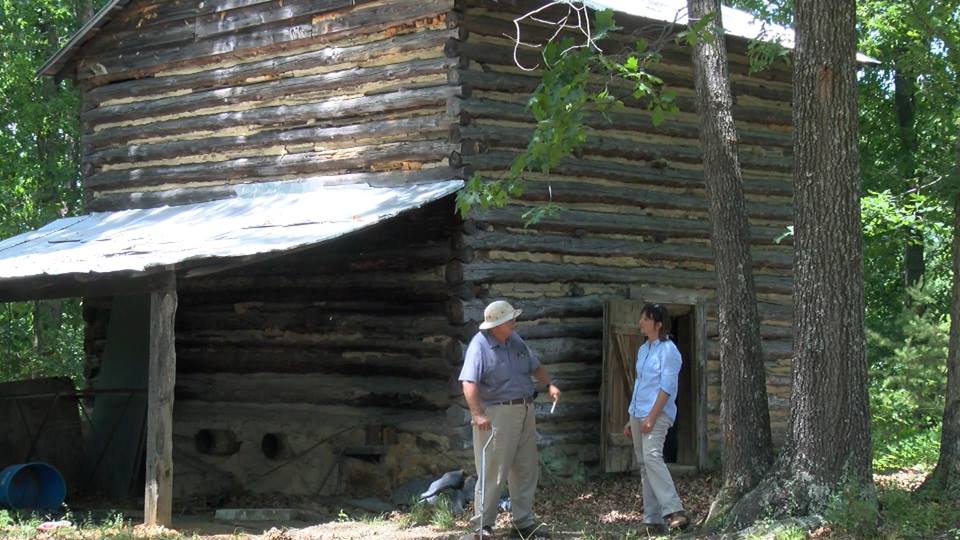
Marooned in an overgrown field of weeds near where Route 28 intersects the Route 234 Bypass, the old terra cotta Thomasson barn (also known as Innovation Barn) stands forlornly on what used to be a thriving dairy farm. It is a remnant from Prince William County’s agricultural past when names like Cherry Hill, Featherstone, Liberia and Clover Hill were actual working farms and not just street names. When William T. Thomasson built this barn in the early 1900s, more than half of county land was farmland. Today as more farms disappear into housing developments or shopping centers, the remaining farmers have made various choices to continue to farm.
An Agricultural Past
Prince William County’s history is rooted in agriculture. And even before the county’s founding in 1731, the big cash crop was tobacco.
Prince William County’s history is rooted in agriculture. And even before the county’s founding in 1731, the big cash crop was tobacco.
According to the University of Virginia Historical Census Browser, the earliest recorded agricultural census of Prince William County, completed in 1850, shows 579 farms.
As the railroad came to Manassas in 1851, it later became a strategic point for both Union and Confederate armies during the Civil War. It brought devastation to a peaceful farming area in the aftermath of three battles fought between 1861 and 1863, and took the area decades to recover.
Wealthy men purchased and transformed some farms like Liberia and Ben Lomond that had served as Civil War hospitals into dairies in the late 1800s and early 1900s. In the eastern part of the county, hog farms and more dairies proliferated. As late as 1964, there were 97 dairy farms in Prince William County. Today, only two dairy farms still exist.
Robert Beahm of Nokesville remembers that time well. One of eight siblings, the 94-year-old former farmer and rural letter carrier grew up on his family’s Nokesville “home place” without electricity and used an outdoor privy until 1933, when the family added a bathroom. “When I was growing up, it was completely rural,” he said.
Farmers still face many of the same challenges that Beahm faced—unpredictable weather, diseases, and insects. But, today’s farmers also face another even more difficult challenge—development. Starting in the 1950s and 1960s, developers began buying up farmland and creating housing developments. Between 1954 and 1964, the county lost almost half of its farms because it became more profitable to sell the land than to work it. Only during the Great Depression did the county lose more farms and more farmland; however, it was still only about 36 percent of the total at the time.
In 1974, the number of total farms in the county dropped to 276—with 127 of those farms making less than $2,500 in receipts (around $12,706 in today’s money).
Today’s Farms in Prince William.
In the most recent USDA Agricultural Census taken in 2012, Prince William County listed 330 farms and a total of 35,638 acres of farmland. Although that is a loss of about 20 farms since 2002, it was a gain of a little more than 3,000 acres of farmland in 10 years. Farmland, however, only makes up about 16 percent of the county’s total of 222,615 acres and approximately 30 percent of the land in the county’s designated rural crescent. (For comparison, 56 percent of county land was agricultural in 1940.) The rural crescent covered approximately 117,000 acres and was created by the board of supervisors in the county’s 1998 Comprehensive Plan to preserve the rural area and to contain development sprawl. Much of that land lies within the A-1 Agricultural zoning district, which limits development to one single-family home per 10 acres and agricultural uses.
Additionally, farms today are getting smaller. In 1925, mostcounty farms were between 50 and 99 acres. In 1964 and again in 2012, most county farms were between 10 and 49 acres, though their distribution has changed.
From an economic standpoint, the prospects for farming in the county have declined as well. In 2014, crop production amounted to $2,566,188 in taxable sales in Prince William County out of $5,108,149,658 in total taxable sales, according to the Virginia Department of Taxation. So crop production works out to be just .05% of the taxable sales in the county. In 2012, the USDA Agricultural Census listed $12,034,000 in gross sales with 52 percent ($6,227,000) coming from livestock sales. However, production expenses amounted to $17,271,000, meaning the farms lost money overall. This trend continued as reported in the 2007 and 2002 agricultural censuses.
Of the 330 farms, more than half (197) reported receipts of $5,000 or less; however, 23 had receipts of more than $100,000, and two had receipts of more than $500,000. “For most of them, the farm is a second job. Most of their income comes from a second job. No one is making millions of dollars or anything like that,” said Paige Thacker, Prince William County Extension Service Extension Agent.
Thacker noted that most county farms are niche farms. “They are trying to find alternative crops. We have a Christmas tree grower that now is growing potatoes and sweet potatoes and adding small crops at a time. They are diversifying into smaller areas that don’t take a lot of effort or maintenance or labor,” she said.
Niche Farming Arrives
One of those niche farms is TrueFarms, which grows hydroponic lettuces and herbs—without soil, using water and nutrients and no pesticides or preservatives. The crops at TrueFarms are housed not on dirt fields, but in a computerized ½-acre greenhouse on Tom and Debbie Truesdale’s 11 acres near Haymarket.
One of those niche farms is TrueFarms, which grows hydroponic lettuces and herbs—without soil, using water and nutrients and no pesticides or preservatives. The crops at TrueFarms are housed not on dirt fields, but in a computerized ½-acre greenhouse on Tom and Debbie Truesdale’s 11 acres near Haymarket.
TrueFarms harvests 52 weeks out of the year and sells directly to 15 restaurants and dozens of Giant and Whole Foods supermarkets throughout the area. “When there are two feet of snow on the ground, we’re still harvesting,” said Tom Truesdale. Still, it can be difficult to compete with corporate farms. “They are so large that they get these economies of scale that make it very tough for the family farm to compete so you have to devise ways to differentiate your farm,” said Truesdale. For TrueFarms, that differentiation is supplying fresh produce weekly all year.
“We have to do something like that to compete with these big corporate farms,” he added.
Other newcomers to farming are Sarah and Dan Desmedt of the Bloom Flower Farm who grow fresh flowers in Nokesville. Their crops include peonies, larkspur, snapdragons, gladiolus and sunflowers, as well as blackberries, asparagus and fingerling potatoes in patches on their 16 acres. Although the pair has dabbled in providing flowers for weddings, they sell most of their crops at the Manassas and Haymarket farmers’ markets.
“Farming is hard work, but it’s necessary,” Sarah Desmedt said. “You have hardships and you learn lessons about life—about successes and failures.” One of the setbacks they encountered was with dinner plate dahlias. They planted 200 tubers, but half of them were infested by corn borer moths. The plants died from the inside out. “That was a depressing thing, but now we know what to look for,” she said.
For Don and Helen Taylor of Windy Knoll Farm in Nokesville, farming was something they were born into in Pennsylvania. They purchased their 95-acre farm about 30 years ago and started with beef cattle, then sheep. Both Helen and her husband worked other jobs—she as a nurse and he as an electronic engineer—while they worked nights and weekends on the farm.
Helen Taylor said that farming journals used to have articles on crop management but now they focus on financial management for farms. “You can’t just work hard…you have to work smart. Your cost margins are so much narrower,” she said. “You have to determine what’s valuable where you are. It’s not valuable to plant corn or soybeans here so we looked at agritourism.” That’s why they turned their barn, which originally had a dirt floor and housed cows and sheep, into an event space. They built an addition two years ago to expand space.
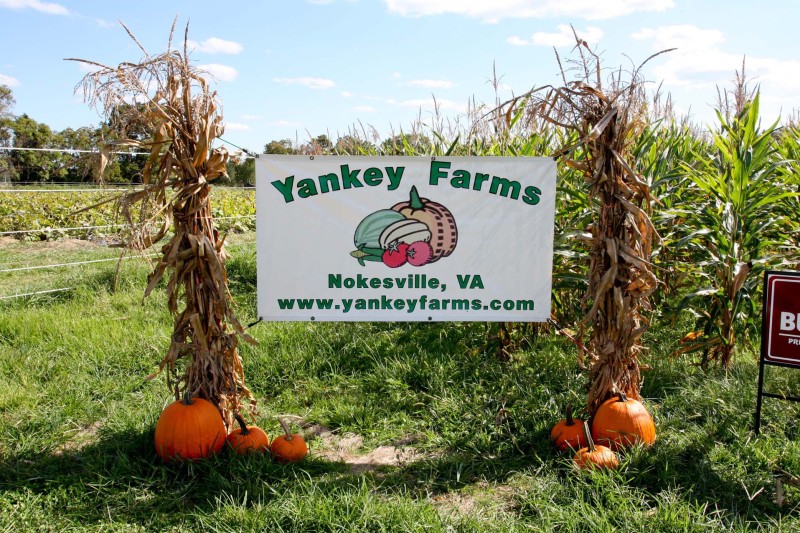
For Jay Yankey of Yankey Farms near Nokesville, farming has been in his family for generations—his mother’s family farmed near the Hoadly area as far back as the 1700s. Yankey, who also holds a full-time job as the director for the Prince William Soil and Water Conservation District, said farming is his passion. “It’s what I grew up around. It’s what I enjoy doing—producing something, seeing at the end of the day something somebody is going to enjoy that’s nutritious,” he said.
Unlike his father and uncle who had commodity farms, Yankey’s is a small diversified farm. “We raise produce, some grain, beef cattle, and a little bit of hay. We direct market most of our fruits and vegetables. We do a pick-your-own strawberry and pumpkin patch. We operate Community Supported Agriculture, a subscription program where people buy at the beginning of the season and get a share of the produce throughout the season. We have a roadside stand where we sell our vegetables. We direct market beef for people to put into their freezer,” he said.
When Yankey started farming full time in 1998, he said he went the direct market route so he could farm less land and still make money. “It takes a whole lot more land and a whole lot more capital to do commodity [farming]. The rule of thumb: to generate a $50-70,000 salary, you would need somewhere around 500 to 700 acres of land for a one-person salary. That’s probably the biggest obstacle in starting a commodity operation. In this area, it’s hard to come up with enough land that isn’t already being farmed by somebody.
“The biggest challenge is finding land to farm because some of the land has been developed in recent years,” he continued. “The other big challenge is moving equipment on the roads. There’s a lot of traffic. With the type of farming that we do, having a lot of people nearby is a benefit. It’s a double-edged sword. It’s a hassle to move equipment up and down the road but having a lot of people to sell stuff to is beneficial.”
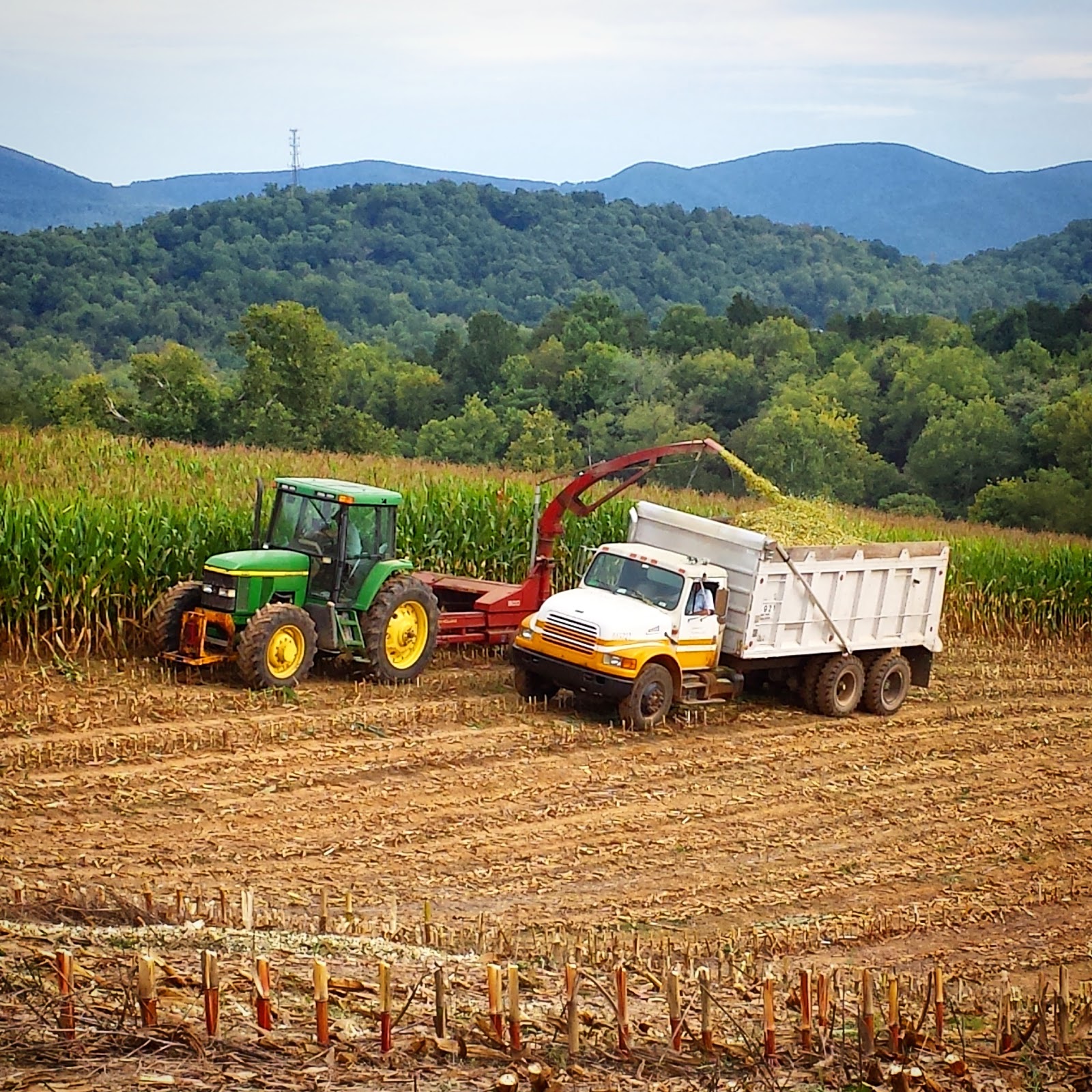
Farming is also a family business for Stephanie House Cornnell. With her father and brother, she owns Kettle Wind Farm, a 4,500-acre dairy, grain and turf farm with locations in Prince William, Fauquier, and Culpeper counties. At Kettle Wind Farm in Nokesville, one of the last two dairy farms in Prince William, the family and a staff milk 350 Jersey and Holstein cows. Their dairy supplies Marva Maid milk and sells it to 7-Eleven and Prince William County schools. They also raise and sell 2,500 acres of soybeans, 1,000 acres of corn and 1,000 acres of turf. Turf was not something the family had planned to grow. But in 1997, Cornnell’s father decided to enter what has turned out to be an extremely profitable enterprise. The farm sells its turf to landscape contractors. Cornnell is working on a turf management degree from Penn State.
One challenge her farm faces is the lack of open land in Prince William County. “We’re getting pushed out of the area a bit, so we’re spreading out into larger farmland in Fauquier and Culpeper…They have a lot more open land,” said Cornnell. She said the 10-acre lots that the county set aside to preserve farmland take the land out of production. “It does make it difficult to farm in the area,” she said.
County is Reevaluating Policies
The county is currently reevaluating its agricultural and land policies. As part of that process, the Planning Office is updating the Economic Development Chapter of the Comprehensive Plan. One of the emerging themes for consideration is promoting agribusiness and the rural economy, said David McGettigan, Long Range Planning Manager of the Prince William County Planning Office. The Planning Office’s “Rural Study Report,” released in July stated, “Without policy changes, the Rural Area will likely develop in a manner dominated by large lot residential development, with little contiguous open space and significant loss of agricultural lands.”
Although the report stated farming needs supportive policies and “Agricultural land is a key element of rural character and needs to be a high priority for action,” it recommended increasing the permitted density in the rural area from one dwelling per 10 acres to one dwelling per 5 acres, and increasing the open space requirement from the current 50 percent to 60 percent.
But even prospective policy changes may not be enough. As Truesdale said, “Farming is dwindling in Prince William because it’s not as profitable. Developers are soaking up all the land. I’m not sure what will stop development.”
For more historical information and detailed charts about farming in Prince William County click here.
Carla Christiano (cchristiano@princewilliamliving.com) is a native of Prince William County, admitted history geek and a technical writer for Unisys.