New Plan Would Improve Internet Service in Rural Areas

Farmers and rural residents without high-speed Internet access are quickly being left behind in this digital age.

Seventeen percent of Americans lack access to advanced broadband service, and the majority of them live in rural areas, according to the Federal Communications Commission. A full 53 percent of rural Americans lack access to service reaching the broadband benchmark speed set by the FCC. By comparison, only 8 percent of urban Americans lack access to the same service.

“So much of our rural areas are without access to dependable Internet services which, in today’s business environment, are crucial,” said Andrew Smith, Virginia Farm Bureau Federation senior assistant director of governmental relations. “That’s why Virginia Farm Bureau supports efforts to improve broadband access to all Virginians.”

Americans rely on farmers and ranchers to produce food for a rapidly growing population, and technology that can help them grow more with less is readily available. But without broadband access, farmers may not be able to take advantage of it.

“Often, many forget that our farms are businesses in rural areas that require the same infrastructure as those based in metropolitan areas,” Smith said. “Farmers need the Internet to run and market their operations.”

Farmers and other rural Virginians also stand to benefit from educational and medical resources that broadband service can provide, Smith added.

VFBF and the American Farm Bureau Federation are lauding a plan that would allow government subsidies for broadband carriers that provide stand-alone Internet access to rural communities. The legislation was proposed by FCC Commissioner Ajit Pai and is supported by 61 U.S. senators.

Currently, the FCC’s Universal Service Fund provides support only to rural carriers that supply telephone service. Rural telephone carriers are not investing in broadband access for their customers because of insufficient funding, but Pai’s plan is intended to remedy that.

Additionally, President Obama recently unveiled a pilot program called ConnectHome that would provide high-speed broadband access and digital services to more families at a lower cost. The program targets low-income families in both urban and rural areas.

From Prince William Living: Farming In The Prince William Community Finding A Niche

This article appeared on Prince William Living’s website and features several Prince William Farm Bureau members!

By Carla Christiano | Photos by Amanda Causey Baity & Mark Gilvey

Marooned in an overgrown field of weeds near where Route 28 intersects the Route 234 Bypass, the old terra cotta Thomasson barn (also known as Innovation Barn) stands forlornly on what used to be a thriving dairy farm. It is a remnant from Prince William County’s agricultural past when names like Cherry Hill, Featherstone, Liberia and Clover Hill were actual working farms and not just street names. When William T. Thomasson built this barn in the early 1900s, more than half of county land was farmland. Today as more farms disappear into housing developments or shopping centers, the remaining farmers have made various choices to continue to farm.

An Agricultural Past
Prince William County’s history is rooted in agriculture. And even before the county’s founding in 1731, the big cash crop was tobacco.

According to the University of Virginia Historical Census Browser, the earliest recorded agricultural census of Prince William County, completed in 1850, shows 579 farms.
As the railroad came to Manassas in 1851, it later became a strategic point for both Union and Confederate armies during the Civil War. It brought devastation to a peaceful farming area in the aftermath of three battles fought between 1861 and 1863, and took the area decades to recover.

Wealthy men purchased and transformed some farms like Liberia and Ben Lomond that had served as Civil War hospitals into dairies in the late 1800s and early 1900s. In the eastern part of the county, hog farms and more dairies proliferated. As late as 1964, there were 97 dairy farms in Prince William County. Today, only two dairy farms still exist.

Robert Beahm of Nokesville remembers that time well. One of eight siblings, the 94-year-old former farmer and rural letter carrier grew up on his family’s Nokesville “home place” without electricity and used an outdoor privy until 1933, when the family added a bathroom. “When I was growing up, it was completely rural,” he said.

Farmers still face many of the same challenges that Beahm faced—unpredictable weather, diseases, and insects. But, today’s farmers also face another even more difficult challenge—development. Starting in the 1950s and 1960s, developers began buying up farmland and creating housing developments. Between 1954 and 1964, the county lost almost half of its farms because it became more profitable to sell the land than to work it. Only during the Great Depression did the county lose more farms and more farmland; however, it was still only about 36 percent of the total at the time.

In 1974, the number of total farms in the county dropped to 276—with 127 of those farms making less than $2,500 in receipts (around $12,706 in today’s money).
Today’s Farms in Prince William.

In the most recent USDA Agricultural Census taken in 2012, Prince William County listed 330 farms and a total of 35,638 acres of farmland. Although that is a loss of about 20 farms since 2002, it was a gain of a little more than 3,000 acres of farmland in 10 years. Farmland, however, only makes up about 16 percent of the county’s total of 222,615 acres and approximately 30 percent of the land in the county’s designated rural crescent. (For comparison, 56 percent of county land was agricultural in 1940.) The rural crescent covered approximately 117,000 acres and was created by the board of supervisors in the county’s 1998 Comprehensive Plan to preserve the rural area and to contain development sprawl. Much of that land lies within the A-1 Agricultural zoning district, which limits development to one single-family home per 10 acres and agricultural uses.

Additionally, farms today are getting smaller. In 1925, mostcounty farms were between 50 and 99 acres. In 1964 and again in 2012, most county farms were between 10 and 49 acres, though their distribution has changed.

From an economic standpoint, the prospects for farming in the county have declined as well. In 2014, crop production amounted to $2,566,188 in taxable sales in Prince William County out of $5,108,149,658 in total taxable sales, according to the Virginia Department of Taxation. So crop production works out to be just .05% of the taxable sales in the county. In 2012, the USDA Agricultural Census listed $12,034,000 in gross sales with 52 percent ($6,227,000) coming from livestock sales. However, production expenses amounted to $17,271,000, meaning the farms lost money overall. This trend continued as reported in the 2007 and 2002 agricultural censuses.

Of the 330 farms, more than half (197) reported receipts of $5,000 or less; however, 23 had receipts of more than $100,000, and two had receipts of more than $500,000. “For most of them, the farm is a second job. Most of their income comes from a second job. No one is making millions of dollars or anything like that,” said Paige Thacker, Prince William County Extension Service Extension Agent.

Thacker noted that most county farms are niche farms. “They are trying to find alternative crops. We have a Christmas tree grower that now is growing potatoes and sweet potatoes and adding small crops at a time. They are diversifying into smaller areas that don’t take a lot of effort or maintenance or labor,” she said.

Niche Farming Arrives
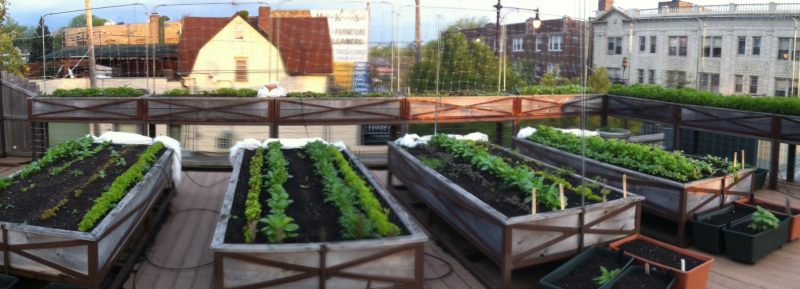
One of those niche farms is TrueFarms, which grows hydroponic lettuces and herbs—without soil, using water and nutrients and no pesticides or preservatives. The crops at TrueFarms are housed not on dirt fields, but in a computerized ½-acre greenhouse on Tom and Debbie Truesdale’s 11 acres near Haymarket.

TrueFarms harvests 52 weeks out of the year and sells directly to 15 restaurants and dozens of Giant and Whole Foods supermarkets throughout the area. “When there are two feet of snow on the ground, we’re still harvesting,” said Tom Truesdale. Still, it can be difficult to compete with corporate farms. “They are so large that they get these economies of scale that make it very tough for the family farm to compete so you have to devise ways to differentiate your farm,” said Truesdale. For TrueFarms, that differentiation is supplying fresh produce weekly all year.

“We have to do something like that to compete with these big corporate farms,” he added.

Other newcomers to farming are Sarah and Dan Desmedt of the Bloom Flower Farm who grow fresh flowers in Nokesville. Their crops include peonies, larkspur, snapdragons, gladiolus and sunflowers, as well as blackberries, asparagus and fingerling potatoes in patches on their 16 acres. Although the pair has dabbled in providing flowers for weddings, they sell most of their crops at the Manassas and Haymarket farmers’ markets.

“Farming is hard work, but it’s necessary,” Sarah Desmedt said. “You have hardships and you learn lessons about life—about successes and failures.” One of the setbacks they encountered was with dinner plate dahlias. They planted 200 tubers, but half of them were infested by corn borer moths. The plants died from the inside out. “That was a depressing thing, but now we know what to look for,” she said.

For Don and Helen Taylor of Windy Knoll Farm in Nokesville, farming was something they were born into in Pennsylvania. They purchased their 95-acre farm about 30 years ago and started with beef cattle, then sheep. Both Helen and her husband worked other jobs—she as a nurse and he as an electronic engineer—while they worked nights and weekends on the farm.

Helen Taylor said that farming journals used to have articles on crop management but now they focus on financial management for farms. “You can’t just work hard…you have to work smart. Your cost margins are so much narrower,” she said. “You have to determine what’s valuable where you are. It’s not valuable to plant corn or soybeans here so we looked at agritourism.” That’s why they turned their barn, which originally had a dirt floor and housed cows and sheep, into an event space. They built an addition two years ago to expand space.

For Jay Yankey of Yankey Farms near Nokesville, farming has been in his family for generations—his mother’s family farmed near the Hoadly area as far back as the 1700s. Yankey, who also holds a full-time job as the director for the Prince William Soil and Water Conservation District, said farming is his passion. “It’s what I grew up around. It’s what I enjoy doing—producing something, seeing at the end of the day something somebody is going to enjoy that’s nutritious,” he said.

Unlike his father and uncle who had commodity farms, Yankey’s is a small diversified farm. “We raise produce, some grain, beef cattle, and a little bit of hay. We direct market most of our fruits and vegetables. We do a pick-your-own strawberry and pumpkin patch. We operate Community Supported Agriculture, a subscription program where people buy at the beginning of the season and get a share of the produce throughout the season. We have a roadside stand where we sell our vegetables. We direct market beef for people to put into their freezer,” he said.

When Yankey started farming full time in 1998, he said he went the direct market route so he could farm less land and still make money. “It takes a whole lot more land and a whole lot more capital to do commodity [farming]. The rule of thumb: to generate a $50-70,000 salary, you would need somewhere around 500 to 700 acres of land for a one-person salary. That’s probably the biggest obstacle in starting a commodity operation. In this area, it’s hard to come up with enough land that isn’t already being farmed by somebody.

“The biggest challenge is finding land to farm because some of the land has been developed in recent years,” he continued. “The other big challenge is moving equipment on the roads. There’s a lot of traffic. With the type of farming that we do, having a lot of people nearby is a benefit. It’s a double-edged sword. It’s a hassle to move equipment up and down the road but having a lot of people to sell stuff to is beneficial.”
Farming is also a family business for Stephanie House Cornnell. With her father and brother, she owns Kettle Wind Farm, a 4,500-acre dairy, grain and turf farm with locations in Prince William, Fauquier, and Culpeper counties. At Kettle Wind Farm in Nokesville, one of the last two dairy farms in Prince William, the family and a staff milk 350 Jersey and Holstein cows. Their dairy supplies Marva Maid milk and sells it to 7-Eleven and Prince William County schools. They also raise and sell 2,500 acres of soybeans, 1,000 acres of corn and 1,000 acres of turf. Turf was not something the family had planned to grow. But in 1997, Cornnell’s father decided to enter what has turned out to be an extremely profitable enterprise. The farm sells its turf to landscape contractors. Cornnell is working on a turf management degree from Penn State.

One challenge her farm faces is the lack of open land in Prince William County. “We’re getting pushed out of the area a bit, so we’re spreading out into larger farmland in Fauquier and Culpeper…They have a lot more open land,” said Cornnell. She said the 10-acre lots that the county set aside to preserve farmland take the land out of production. “It does make it difficult to farm in the area,” she said.

County is Reevaluating Policies
The county is currently reevaluating its agricultural and land policies. As part of that process, the Planning Office is updating the Economic Development Chapter of the Comprehensive Plan. One of the emerging themes for consideration is promoting agribusiness and the rural economy, said David McGettigan, Long Range Planning Manager of the Prince William County Planning Office. The Planning Office’s “Rural Study Report,” released in July stated, “Without policy changes, the Rural Area will likely develop in a manner dominated by large lot residential development, with little contiguous open space and significant loss of agricultural lands.”

Although the report stated farming needs supportive policies and “Agricultural land is a key element of rural character and needs to be a high priority for action,” it recommended increasing the permitted density in the rural area from one dwelling per 10 acres to one dwelling per 5 acres, and increasing the open space requirement from the current 50 percent to 60 percent.

But even prospective policy changes may not be enough. As Truesdale said, “Farming is dwindling in Prince William because it’s not as profitable. Developers are soaking up all the land. I’m not sure what will stop development.”

For more historical information and detailed charts about farming in Prince William County click here.

Carla Christiano (cchristiano@princewilliamliving.com) is a native of Prince William County, admitted history geek and a technical writer for Unisys.


Historic Tobacco Barns Being Saved

Editor’s note: Billy Johnson is father to Martha Moore, Vice President of VFBF Governmental Relations.

Like many old rural buildings, tobacco curing barns often are left to collapse from old age. But unlike other old barns, tobacco barns also represent a business and a way of life that shaped Virginia for centuries.

Preservationists are working to prop up this important part of Virginia’s rural heritage.


“They really have become an integral part of the landscape in this part of Virginia,” said Sonja Ingram of Preservation Virginia. She compared them to the windmills of Holland, which are regarded as iconic symbols of that country.

An old barn on the family farm of A.J. Nuchols in Pittsylvania County is a good example of tobacco structures that are still standing. Built in the early 19th century, the barn is frame-built with mortise-and-tenon joints. Most barns were built from short leaf pine trees, which are common in the area.

“These barns were built for cut tobacco,” Nuchols said. “Back then they cut the whole stalk. It was only, I think, in the 1920s that they actually started harvesting it, or pulling it, by stalk position. My grandpa said they put 1,200 sticks of tobacco in this barn.”

Nearby, another surviving tobacco barn looks much like a traditional log cabin with notched log ends. Retired tobacco grower Billy Johnson said he remembers keeping a fire going all night there to cure bright leaf tobacco.

“We cut the logs off the place. We had what you call an old-fashioned barn-raising,” Johnson said. “That’s where everybody in the community came and helped put your logs up and notch the corners like you see it. That was quite a day, because most of the time the people that had the barn raising, the family, would furnish dinner. That barn right there would hold 440 sticks of tobacco, hand-strung.

“It’s a part of history that we have in this area, and we need to keep it.”

But as with other old buildings, preserving tobacco barns requires special skills and money. For a second year, Preservation Virginia is offering mini-grants and free workshops on barn stabilization and maintenance. The organization also is surveying the locations of all known tobacco barns in Pittsylvania and has undertaken an oral history project to collect stories from tobacco farm families.

The grants come from a joint partnership between Preservation Virginia and Japan Tobacco International. A total of $100,000 was made available in 2014, and another $200,000 may be available in 2015 and 2016. More information about the tobacco barn preservation grant program is available at preservationvirginia.org.

Farm Bureau, Caterpillar Inc. Announce New Partnership

American Farm Bureau Federation and Caterpillar Inc. announce a new partnership that will provide members up to $2,000 in purchase incentives on Cat machines. In addition, Caterpillar plans to support Farm Bureau programs in 2016 and coordinate with Farm Bureau on other efforts.

“Our extensive product line, with more than 300 Cat machines, reflects our commitment to the ongoing success of American agriculture and rural businesses,” said Dustin Johansen, Caterpillar Agriculture Industry Manager. “We’re proud to partner with the American Farm Bureau Federation and help members get their jobs done with the highest quality, best value equipment, attachments and integrated solutions in the industry.”

Eligible equipment includes Cat skid steer loaders, compact and multi-terrain loaders, wheel loaders, telehandlers, backhoe loaders, hydraulic excavators and track-type tractors. A range of incentives are offered:

Small Wheel Loaders: $2,000
Compact Wheel Loaders: $1,000
Small Dozers: $1,000
Backhoe Loaders: $500 – $1,000
Compact Track Loaders: $500 – $1,000
Multi Terrain Loaders: $500 – $1,000
Skid Steer Loaders: $500 – $1,000
Telehandlers: $500 – $1,000
Mini Hydraulic Excavators: $250 – $500

“Farm Bureau’s commitment to providing members with exclusive access to superior, high-quality brands, programs and products continues with this new partnership,” said AFBF President Bob Stallman. “Caterpillar and agriculture have a shared history that goes back more than a hundred years. Our new partnership will make it easier for our members to improve productivity and efficiency to maintain profit margins,” he added.

In addition to providing reliable, fuel-efficient equipment that is more economical for farmers, ranchers and rural business people to own and operate, Caterpillar is also committed to the safety of operators and to ongoing innovation in design and engineering. Along with providing unparalleled parts availability, Cat Dealer service helps ensure the long-term reliability of equipment.

“Our product solutions are designed and built for maximum performance and safety,” said Johansen. “We are constantly developing and refining advanced power and hydraulic technologies to ensure that our products provide Farm Bureau members with the power, versatility, efficiency, ease of operations and reliability they have come to expect.”
The Farm Bureau Member Benefit discount on Cat machines can be combined with any current retail discounts, promotions, rebates or offers available through Caterpillar or its dealers, with the exception of other membership purchase incentives (such as the NCBA discount).

All participating state Farm Bureau members are eligible. Discounts cannot be applied to past purchases. Members must provide a valid Member Verification Certificate to the Cat dealer at the time of quote to receive the discount. Certificates may be obtained at www.fbadvantage.com/cat as of September 1, 2015.

New Campaign ‘I Farm I Vote’ Encourages Farmers to Vote Nov. 3

The best way for the concerns of rural communities to be recognized on the local, state and national levels is for farmers and other rural residents to get out and vote.

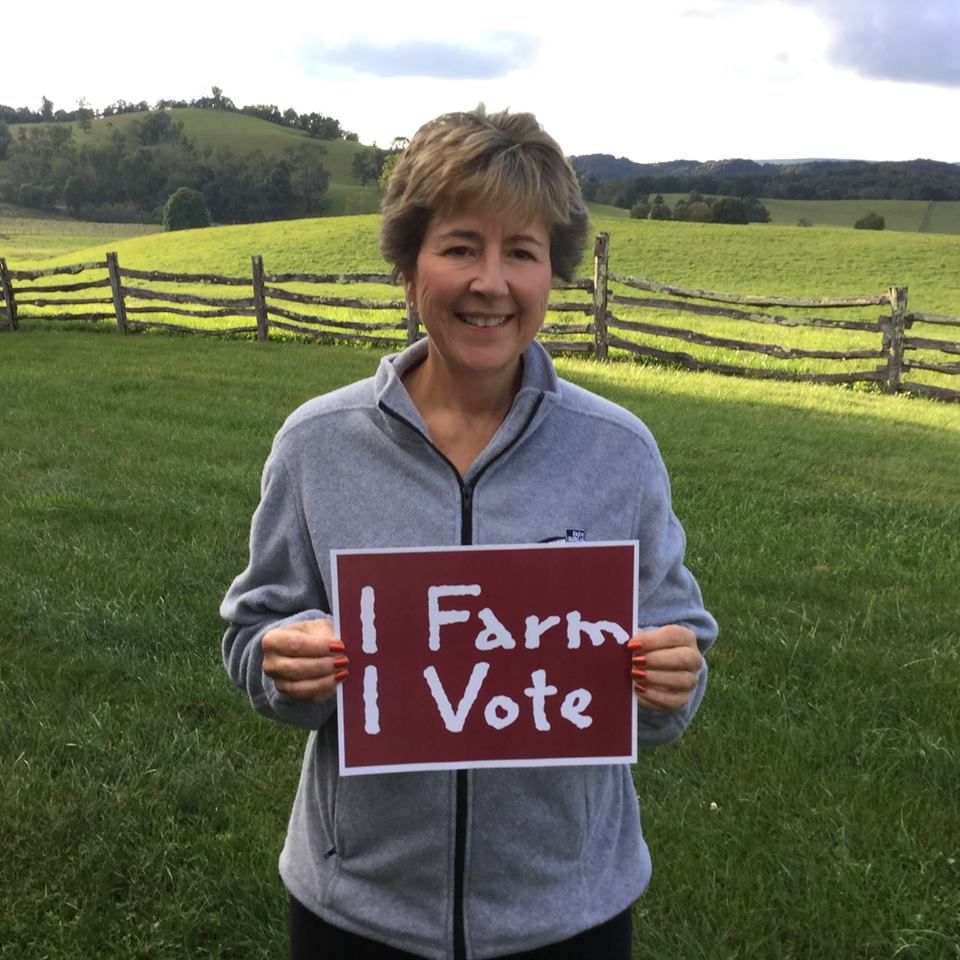
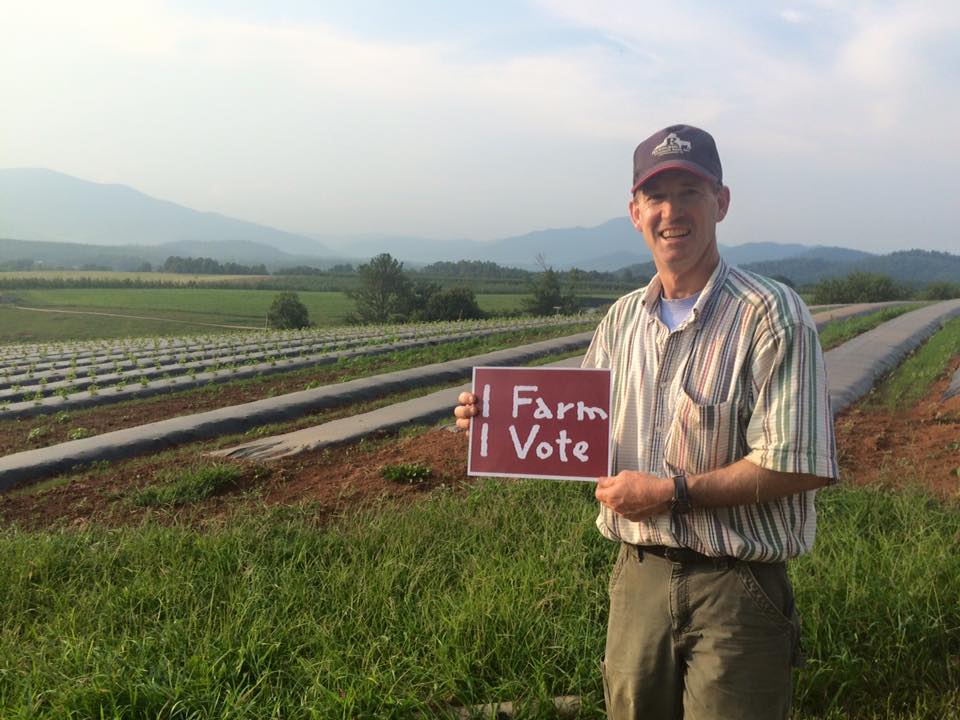
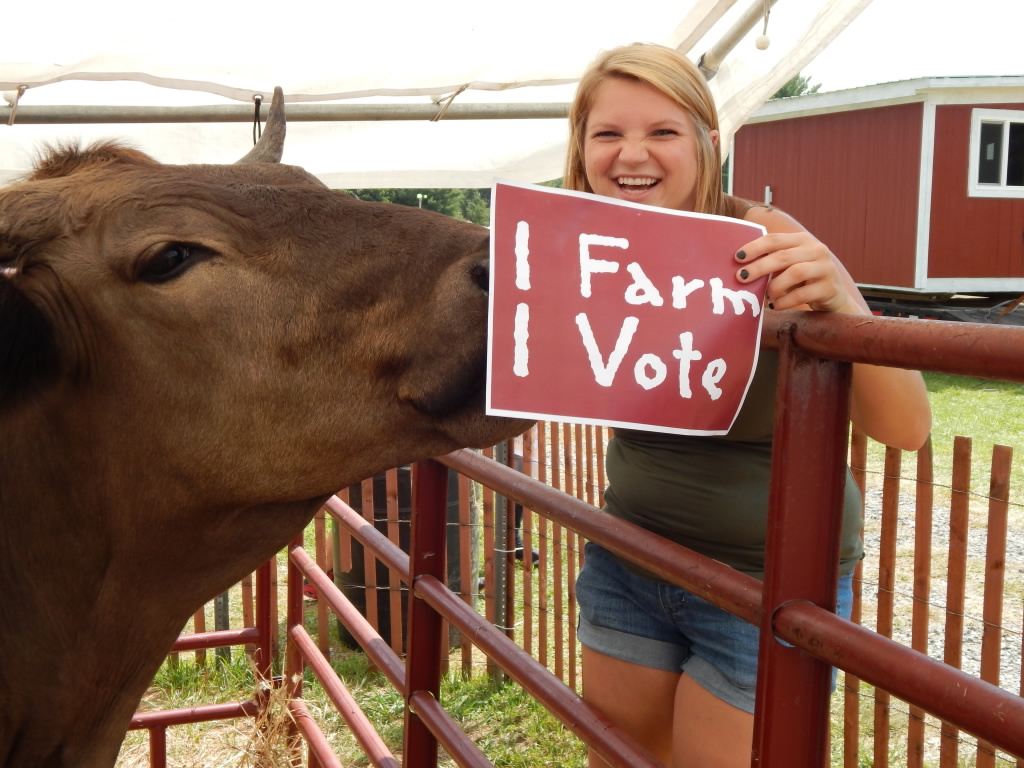
To that end, Virginia Farm Bureau Federation has launched its “I Farm I Vote” campaign.

“All 140 seats in the Virginia General Assembly are up for election this year. It’s crucial for farmers to let their voices be heard and elect people who will make decisions in agriculture’s best interests,” said Kelly Pruitt, VFBF grassroots coordinator.

This summer Farm Bureau will be encouraging rural voters to display “I Farm I Vote” signs on their property and take photos with their signs to post to social media with the hashtag #IFarmIVoteVA.

To participate, visit VaFarmBureau.org/PolicyAction/IFarmIVote.aspx to print a sign, or contact a county Farm Bureau office for more information.

Global Tobacco Reps Learn about Quality U.S. Leaf

Visitors from almost a dozen countries recently learned about tobacco grown in what several people referred to as “the greatest tobacco region in the world.”

Representatives from Brazil, Bulgaria, China, Greece, Jordan, the Netherlands, the Philippines and Greece, along with a few U.S. tobacco buyers, visited two Virginia tobacco farms and a tobacco receiving station Aug. 20. It was part of Tobacco Associates Inc.’s 2015 International U.S. Leaf Grading School Tobacco Farm Production and Industry Tour. The event was co-hosted by the Virginia Farm Bureau Federation, the Virginia Department of Agriculture & Consumer Services and the Virginia Tobacco Board.

Tobacco Associates is a trade organization funded by U.S. tobacco growers to promote their products. The tour, as well as a two-week training program, helps leaf buyers and tobacco manufacturers learn more about the raising, curing and blending of U.S. tobacco.

Kirk Wayne, president of Tobacco Associates, said students receive three days of intense classroom training about tobacco leaf quality before visiting farms and seeing the process up close. “They learn about our systems and how we produce quality tobacco,” Wayne said. “Part of the program is teaching them how we use U.S. tobacco to produce our special blends.”

The tobacco school is funded by flue-cured tobacco growers in Virginia, North Carolina, South Carolina, Georgia and Florida. “It’s grown each year over the past eight years,” Wayne said.

More than 80 U.S. tobacco blends are sold worldwide, and more than 60 percent of U.S. flue-cured tobacco, the type the group viewed Aug. 20, is exported, Wayne noted. Virginia farmers grow close to 21,000 acres of flue-cured tobacco annually, according to the U.S. Department of Agriculture’s National Agricultural Statistics Service.

At the Terry family’s Golden Leaf Farms in Keeling, students observed the farm’s tobacco leaf handling and grading systems that ensure tobacco bales consist of “the cleanest, best quality tobacco there is,” explained Stephen Barts, a Pittsylvania County agriculture and natural resources agent for Virginia Cooperative Extension. “The Terrys are some of the most meticulous growers there are.”

At JF Leaf Ltd. in Mecklenburg County, the students learned about grower Jim Jennings’ leaf grading system. They also learned that one researcher, Dr. David Reed, found that reducing fuel consumption in tobacco drying barns can also improve curing efficiency. Reed works at the Southern Piedmont Regional Agricultural Research and Extension Center.

Virginia Secretary of Agriculture and Forestry Todd Haymore said, “As far as I’m concerned, this is the greatest tobacco-producing region in the world.”

The tour concluded with a visit to Universal Leaf’s tobacco receiving station in South Hill.

VFBF AgPAC Endorses 115 Candidates for General Assembly Seats

Virginia Farm Bureau Federation AgPAC, the political action committee of Virginia Farm Bureau Federation, announced Aug. 21 its endorsement of 28 candidates for the Virginia Senate and 87 candidates for the Virginia House of Delegates.

The endorsements are based on the recommendations of local committees of farmers. Candidates who receive VFBF AgPAC endorsements “have demonstrated a clear understanding of the needs and challenges farmers are facing and/or have proven their support through their favorable voting records while holding positions in the General Assembly,” said Wayne F. Pryor, chairman of VFBF AgPAC and president of Virginia Farm Bureau. “We believe the endorsed candidates will help agriculture and forestry maintain its vitality as the No. 1 industry in Virginia.”

The non-partisan VFBF AgPAC was created by Farm Bureau in 1999 and employs in-kind contributions to support candidates who can best support agriculture and Farm Bureau issues.

The following candidates were endorsed (* indicates incumbent candidates):

Virginia Senate
3rd District – Thomas K. Norment, Jr.*(R)
4th District – Ryan McDougle* (R)
5th District – Kenneth Alexander* (D)
6th District – Lynwood Lewis* (D)
7th District – Frank Wagner* (R)
8th District – Bill R. DeSteph, Jr. (R)
10th District – Glen Sturtevant (R)
11th District – Amanda Chase (R)
12th District – Siobhan Dunnavant (R)
14th District – John Cosgrove* (R)
15th District – Frank Ruff* (R)
16th District – Rosalyn Dance* (D)
17th District – Bryce Reeves* (R)
19th District – David R. Suetterlein (R)
20th District – William M. “Bill” Stanley, Jr* (R)
22nd District – Thomas A. Garrett Jr.* (R)
23rd District – Steve Newman* (R)
24th District – Emmett Hanger* (R)
25th District – Creigh Deeds* (D)
26th District – Mark Obenshain* (R)
27th District – Jill Vogel* (R)
28th District – Richard Stuart* (R)
29th District – Harry “Hal” Parrish (R)
33rd District – Jennifer Wexton* (D)
35th District – Richard L. “Dick” Saslaw* (D)
36th District – Gerald “Jerry” Foreman (R)
38th District – Ben Chafin* (R)
40th District – Charles W. “Bill” Carrico* (R)

Virginia House of Delegates
1st District – Terry Kilgore* (R)
2nd District – Mark Dudenhefer (R)
3rd District – James W. “Will” Morefield* (R)
4th District – Todd Pillion* (R)
5th District – Israel O’Quinn* (R)
6th District – Jeffery Campbell* (R)
7th District – Larry N. “Nick” Rush* (R)
8th District – Greg Habeeb* (R)
9th District – Charles Poindexter* (R)
10th District – Randy Minchew* (R)
11th District – Sam Rasoul* (D)
12th District – Joseph Yost* (R)
14th District – Danny Marshall* (R)
15th District – Todd Gilbert* (R)
16th District – Les Adams* (R)
17th District – Christopher Head* (R)
18th District – Michael Webert* (R)
19th District – Terry Austin* (R)
20th District – Richard P. “Dickie” Bell* (R)
21st District – Ron Villanueva* (R)
22nd District – Kathy Byron* (R)
23rd District – Scott Garrett* (R)
24th District – Ben Cline* (R)
25th District – Steve Landes* (R)
26th District – Tony Wilt* (R)
27th District – Roxann Robinson* (R)
28th District – William J. “Bill” Howell* (R)
29th District – Christopher Collins (R)
30th District – Nicholas Freitas (R)
31st District – Scott Lingamfelter* (R)
32nd District – Thomas “Tag” Greason* (R)
33rd District – Dave LaRock* (R)
34th District – Kathleen Murphy* (D)
35th District – Mark Keam* (D)
37th District – David Bulova* (D)
38th District – Kaye Kory* (D)
40th District – Tim Hugo* (R)
41st District – Eileen Filler-Corn* (D)
42nd District – David Albo* (R)
47th District – Patrick Hope* (D)
48th District – R. C. “Rip” Sullivan* (D)
50th District – Jackson Miller* (R)
51st District – Richard Anderson* (R)
52nd District – Luke Torian* (D)
54th District – Robert “Bobby” Orrock* (R)
55th District – H. F. “Buddy” Fowler* (R)
56th District – Peter Farrell* (R)
57th District – David Toscano* (D)
58th District – Rob Bell* (R)
59th District – Matt Fariss* (R)
60th District – James Edmunds* (R)
61st District – Thomas C. Wright, Jr.* (R)
62nd District – Riley Ingram* (R)
63rd District – Lashrecse Aird (D)
65th District – Lee Ware* (R)
66th District – Kirk Cox* (R)
67th District – James LeMunyon* (R)
68th District – Manoli Loupassi* (R)
69th District – Betsy Carr* (D)
70th District – Delores McQuinn* (D)
72nd District – Jimmie P. Massie* (R)
73rd District – John O’Bannon* (R)
74th District – Lamont Bagby (D)
75th District – Roslyn Tyler* (D)
76th District – Chris Jones* (R)
77th District – Lionell Spruill, Sr.* (D)
78th District – J. A. “Jay” Leftwich* (R)
79th District – Steve Heretick (D)
80th District – Matthew James* (D)
81st District – Barry Knight* (R)
82nd District – Jason Miyares (R)
83rd District – Chris Stolle* (R)
84th District – Glenn Davis* (R)
85th District – Scott Taylor* (R)
86th District – Raul “Danny” Vargas (R)
88th District – Mark Cole* (R)
89th District – Daun Hester* (D)
90th District – Joseph Lindsey* (D)
91st District – Gordon Helsel* (R)
93rd District – T. “Monty” Mason* (D)
94th District – David Yancey* (R)
95th District – Pricillia Burnett (I)
96th District – Brenda Pogge* (R)
97th District – Christopher Peace* (R)
98th District – Keith Hodges* (R)
99th District – Margaret Ransone* (R)
100th District – Robert S. Bloxom* (R)