Get to Know GMOs Month to Feature Push for Voluntary Labeling Program

The Senate Agriculture Committee has announced an Oct. 21 hearing on biotechnology, and U.S. farmers soon will begin contacting their senators about legislation related to foods with genetically modified ingredients.

The American Farm Bureau Federation and the Coalition for Safe and Affordable Food plan to encourage Senate action on the Safe and Accurate Food Labeling Act, which was passed by the House of Representatives in July. While H.R. 1599 has not been introduced in the Senate yet, negotiations are under way among Senate Agriculture Committee principals.

If enacted, the bill would give the U.S. Food and Drug Administration authority on the use and labeling of foods containing genetically modified ingredients. It would create a voluntary labeling program run by the U.S. Department of Agriculture’s Agriculture Marketing Service. The AMS also administers the USDA Organic Program.

Earlier this year, AFBF President Bob Stallman asserted that state-led mandatory food labeling incentives “mislead consumers about the safety of genetically modified foods, even though there is no credible evidence linking a food-safety or health risk to the consumption of GM foods.”

Stallman said H.R. 1599 “would protect consumers from confusing and misleading GMO labels and create a national, voluntary labeling standard based on science and common sense.”

Lindsay Reames, Virginia Farm Bureau Federation assistant director of governmental relations, said prompt Senate action on the bill is critical. “The Senate needs to act quickly to preempt GMO labeling laws that go into effect next July—and give certainty to farmers, manufacturers and consumers. Inaction will create a state-by-state patchwork that threatens important production and environmental benefits.”

GMOAnswers.com, a website created by member organizations of the Council for Biotechnology Information to address consumer questions, is observing October as Get to Know GMOs Month.

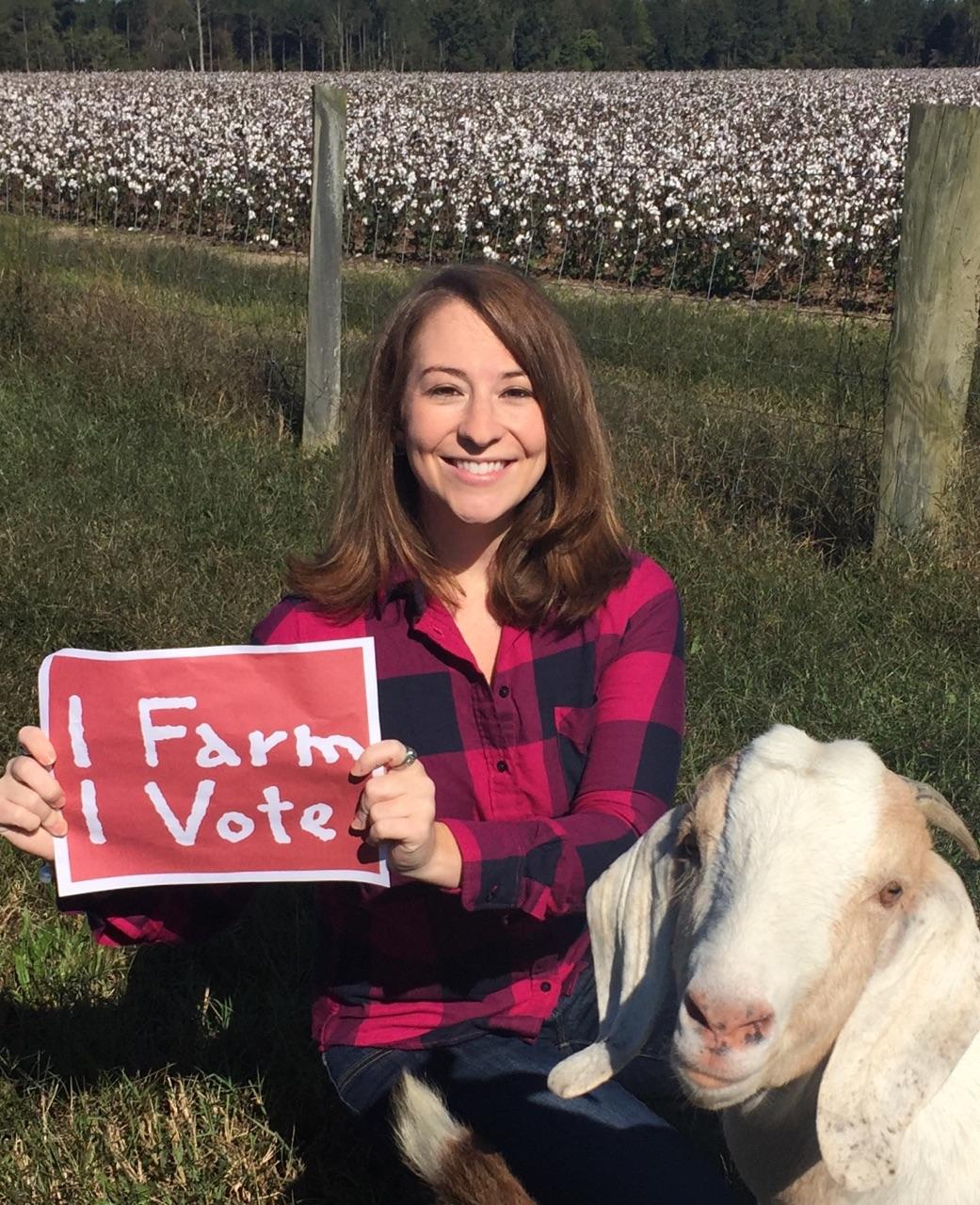
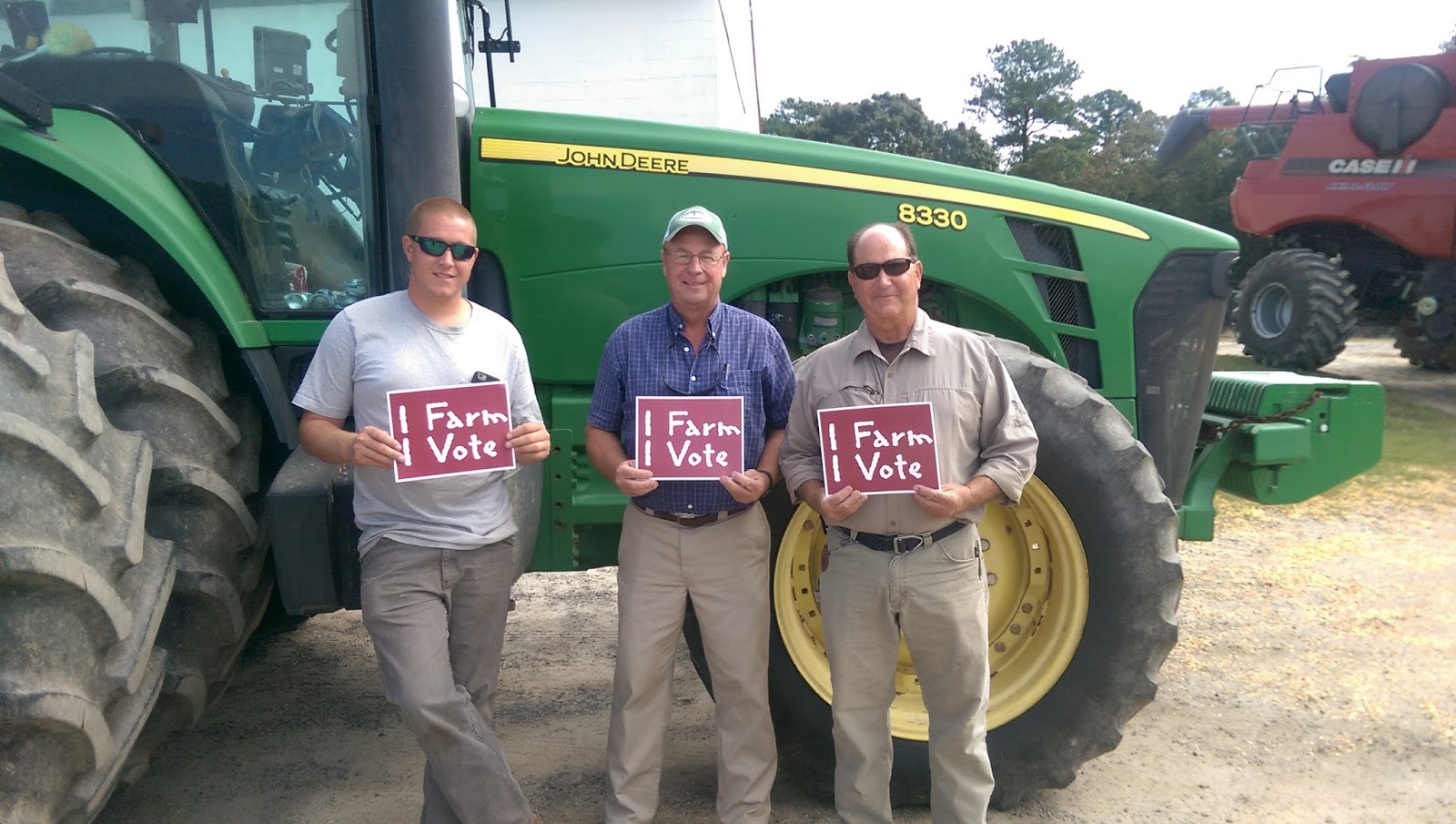
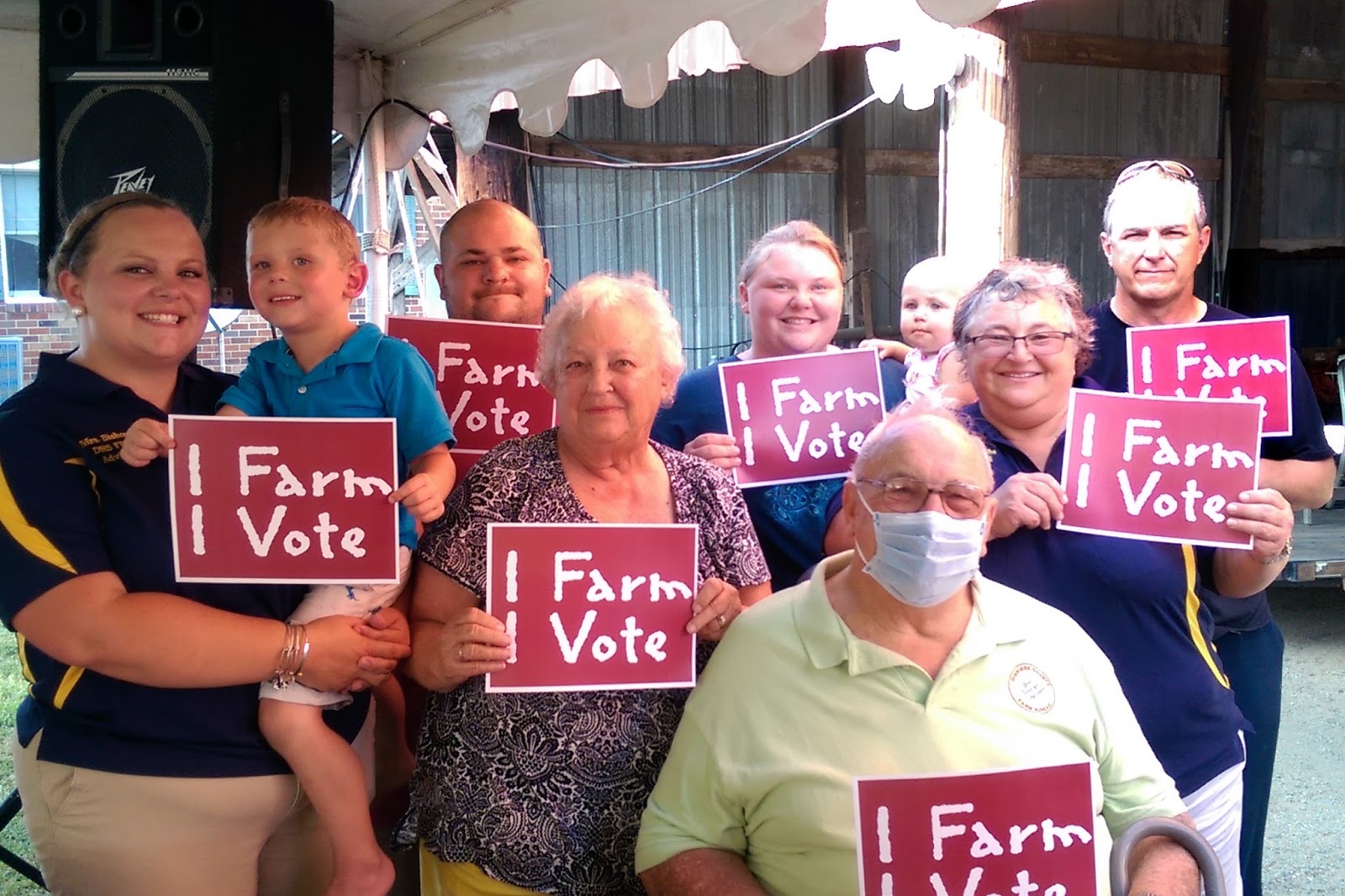
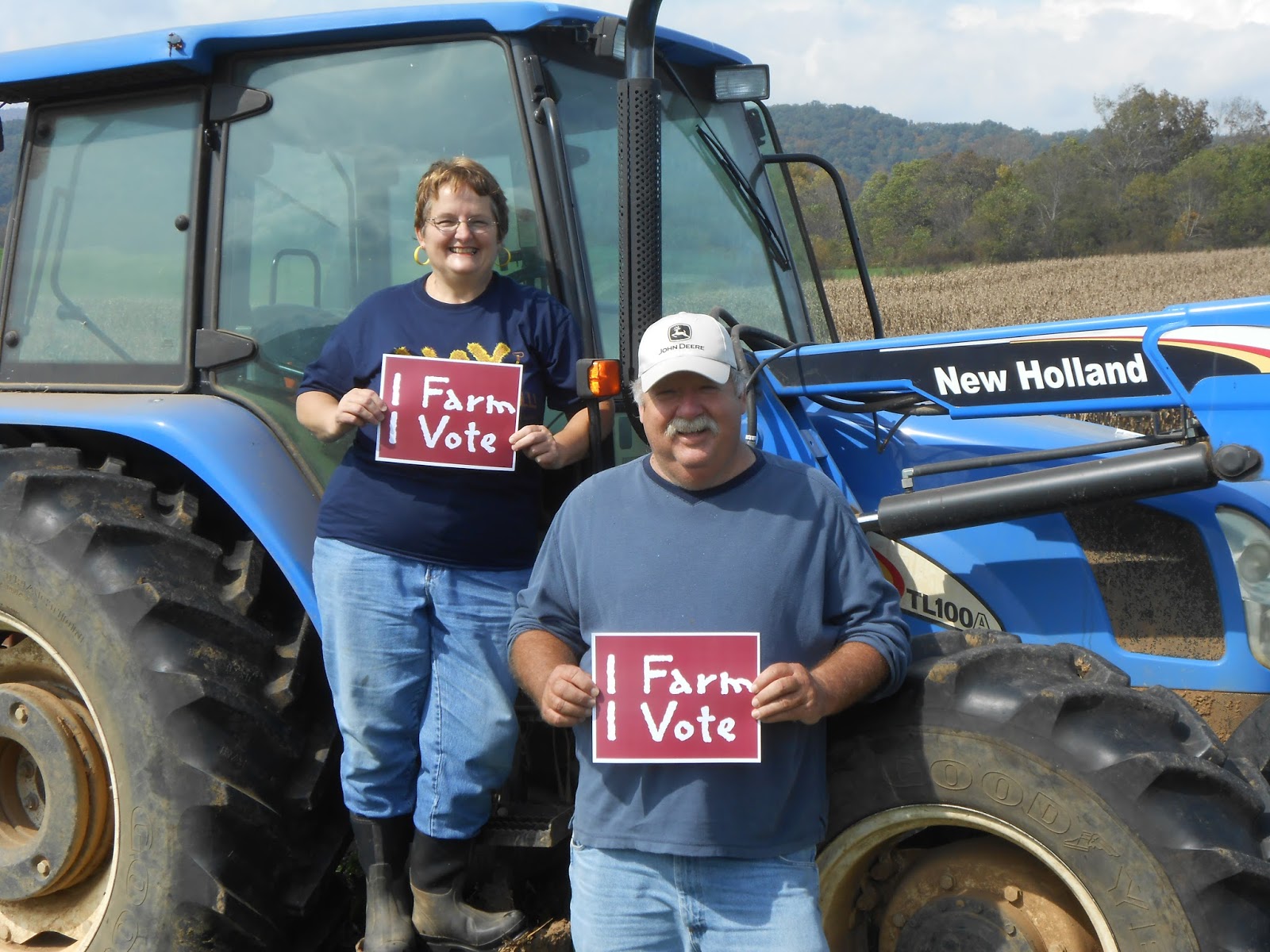
Don’t Forget to Take your "I Farm I Vote" Photos!

We’re almost a month out from Election Day! Have you posted your “I Farm I Vote” photo on your Facebook, Twitter and/or Instagram pages yet?

All 140 seats in the Virginia General Assembly are up for election this year. It’s crucial for farmers to let their voices be heard and elect people who will make decisions in agriculture’s best interests. Let them know rural votes matter!

Take a photo with the sign on your farm, and post them to your social media pages using the #IFarmIVoteVA hashtag. 

For more information, visit VaFarmBureau.org/PolicyAction/IFarmIVote.aspx to print a sign, or contact a county Farm Bureau office for more information.

Urban Agriculture Summit Set for Oct. 22 and 23

Organizers are getting ready for Virginia’s third Urban Agriculture Summit, which will be held Oct. 22 and 23 at the Crowne Plaza Hotel in Richmond. Summit speakers will address the current state and future of urban agriculture in the United States.

Speakers include Ben Greene from The Farmery in Raleigh, N.C.; Ben Flanner of Brooklyn Grange Farm in Brooklyn, N.Y.; and Margaret Morgan, CEO of Eco City Farms in Riverdale, Md. Also on the agenda are panel discussions on soil optimization, social enterprise and entrepreneurial development.

Participants may take two separate guided tours. On the morning of Oct. 22 a group will visit the Harding Street Community Agriculture Center in Petersburg. Following presentations at the conference in the afternoon, a group will visit Richmond’s Tricycle Gardens and Jerusalem Connection.

An agenda and hotel information are available at events.SignUp4.com/UrbanAgSummit2015, along with information on sponsorship and vendor opportunities.

Organizers of the summit are the Virginia Department of Health; the Federation of Virginia Food Banks; Shalom Farms; the Society of St. Andrew; Virginia State University; Virginia Tech; Virginia Cooperative Extension; the Virginia Department of Agriculture and Consumer Services; the Virginia Farm Bureau Federation; the Virginia Food System Council; the Virginia Foundation for Agriculture Innovation & Rural Sustainability; and the U.S. Department of Agriculture’s Rural Development agency.

National Farm Safety and Health Week: Combine Safety

Every year since 1944, when President Franklin D. Roosevelt signed a proclamation, the third week of September has been dedicated to National Farm Safety & Health Week. The recognition week is designed to educate farmers and help prevent injuries that occur on the farm.

Whether you’ve been harvesting for a lifetime, or 2015 marks your first time in the combine, remember: Safety first. “You’ve spent an entire year getting your crop from planting to harvest. Naturally you’re excited to get it out of the field as quickly as you can,” says Kelly Kravig, platform marketing manager for combines and headers at Case IH North America.

“But sleep deprivation is a real problem. Combine accidents can happen because guys get tired and aren’t paying attention. So get enough rest, slow down, and think about what you’re doing.”

Statistics back up Kravig’s suggestions. According to the Occupational Safety & Health Association, agriculture ranks among the most dangerous industries. Every day, about 243 agricultural workers suffer a serious lost-work-time injury.

Kravig also recommends daily combine inspections during harvest. “When you’re checking your oil and fluid levels, you should also clean out trash and debris so it’s not building up. Make sure the fire extinguishers are fully charged. And check the shields on the belts, pulleys and chains. There’s a good reason they’re shielded.”

Another Kravig recommendation: Check the torque on your wheel bolts. “With the size of today’s combines, there’s a lot of weight on the tires and rims – especially in muddy conditions. If the bolts weren’t fully torqued initially, they may loosen a little bit. At the ProHarvest Kickoff, we show custom harvesting crews how to put a little mark on the bolt with a Sharpie® so they can see if the bolt has moved.”

More tips from custom harvester safety training
For 30 years, Case IH has been supporting custom harvesters through its ProHarvest program, where Case IH service pros stock up on parts and follow custom cutters from the Texas/Oklahoma border up to Alberta, Saskatchewan and Manitoba. At the ProHarvest Kickoff – held every spring at the Great Plains Technical College in Frederick, Oklahoma, just before harvest begins – Case IH holds a half-day combine training for custom cutter crews.

“We have the same custom harvesters, but 70 to 80 percent of crew members are new every year, and many are new to combines,” Kravig adds. “They’re also young, between 18 and 25 years old.”

Kravig and other ProHarvest instructors cover everything from who to contact in an emergency, to properly attaching a header, to honking three times before you start a combine. (This alerts anyone who may be working on your machine that you’re about to start it.)

Another training topic is how to pull a stuck combine out of a muddy field. “We show them the proper attachment points on the chassis, and why they need to stay away from the tow ropes.
“ProHarvest training reinforces what custom harvesters are telling their crews about the importance of taking proper precautions. And it’s non-denominational training,” Kravig says. “We want you to combine safely, no matter what color combine you operate.”

Savings opportunity
In addition to helping keep harvest season safe and productive, Case IH has also partnered with Farm Bureau to save members’ money. Virginia Farm Bureau members save $500 per unit on Case IH Maxxum®  tractors, Farmall® C and U series utility and 100A series tractors, self-propelled windrowers and large square balers. A $300 per unit incentive is available for Case IH compact Farmall® B and C series tractors, Case IH Scout® utility vehicles and other hay tools, including round balers, small square balers, disc mower conditioners and sickle mower conditioners. Combine the Farm Bureau incentive with other discounts, promotions, rebates, or offers that may be available from Case IH or your Case IH dealer.

VT Ag Tech Program open house set for Nov. 27

Virginia Tech will hold an open house Nov. 7 for students interested in the Agricultural Technology Program in its College of Agriculture and Life Sciences.

The program was created to offer hands-on experience utilizing state-of-the art equipment and facilities, a practical education that enables you to “hit the ground running,” and gain industry experience with a required internship. Students who successfully complete the two-year program earn an associate’s degree, and they can specialize in applied agricultural management or landscape and turf management.

Ag Tech Program students use the same campus, labs, farms and other resources as students enrolled in four-year programs. Typically 95 percent of graduates find employment in their fields of interest within six months of earning their degrees.

The open house is 10 a.m.-2:30 p.m. at Litton Reaves Hall, Room 1870. A free lunch will be provided at West End Market (the first true marketplace-style dining operation on a university campus in the United States). More information can be found at www.dining.vt.edu/centers/westend/west_end.html.
Please register at www.agtech.vt.edu or email agtech@vt.edu

From the Field: Business and Fun Do Mix at County Farm Bureau Annual Meetings

From the Field is a bi-monthly column written by Mark Campbell, Farm Bureau Field Services Director for the Central District. He writes about Farm Bureau member benefits and County Farm Bureau activities.

Annual membership meetings of county Farm Bureaus are now in full swing across the state. These meetings have some required business that includes election of officers and directors and discussion and approval of resolutions (legislative stances).
While all counties share the same uniformity of required business, the other parts of the meeting can vary considerably from county to county. They include entertainment, auctions, tours, and taste testing contests; and there may be others that I am not aware of. So far this year, Elvis seems to be popular. An Elvis impersonator entertained at two counties in the Southeast district and one is scheduled later this month in the central district.

I always enjoy the tours. The tours are available when a county Farm Bureau holds their meeting at a farm or agribusiness. One tour that I especially remember was in Orange County at Battlefield Farms in 2008. Battlefield Farms is a large scale horticulture business with 30 acres of covered production and 20 acres of outdoor production. At that meeting, each attendee received a large potted chrysanthemum to take home. I am reminded of that every fall because I planted mine in front of my house and it has grown to a large size with beautiful blooms.
Appomattox has a pie contest for apple, pumpkin, and sweet potato. Winners are announced at the end of the meeting and receive cash prizes. The members enjoy the auctions, especially since they benefit the Virginia Ag in the Classroom Foundation.
The auction last night at the Orange County meeting topped all that I have seen. It brought in $1,725. Some of the items they sold were bird feeders, toy tractors, grass seed, home canned goods, and a local artist print. The local artist framed print usually sells in the $200 range and did again this year. But the one item that really took the cake, was a cake! It was a triple chocolate chunk cake with Bavarian cream filling and topped with fresh raspberries, and was homemade by a member. It sold for $260, which was then donated back to be resold. It sold the second time for $250, bringing it to a grand total of $510.
So you never know what you will encounter at a county Farm Bureau meeting, but you can count on having a good time. I encourage you to attend your county’s meeting this year if they have not already met yet.
Until next time,

Mark

Virginia Still on High Alert for Highly Pathogenic Avian Influenza

No cases in Virginia, but risk returns with cooler weather, return of migratory birds 
Dr. Richard Wilkes, State Veterinarian with the Virginia Department of Agriculture and Consumer Services (VDACS), says that Virginia has not yet seen a case of Highly Pathogenic Avian Influenza (HPAI) this year, as have many states in the West and Midwest. With cooler fall temperatures and the return of migratory birds along the nation’s flyways, however, the risk of finding a positive case is increasing.
“The strain of HPAI that was diagnosed in 22 other states last winter and spring does not like hot weather,” Wilkes explained, “and the USDA determined that the disease was introduced there by migratory birds. So after a very brief sigh of relief, we are ramping up our efforts to keep the disease out of Virginia. In order to do this, we need the assistance and cooperation of all of our state’s bird owners.”

Background on Current Outbreak
Dr. Wilkes noted that from December 2014 through June 2015, HPAI affected 48 million poultry on 223 premises in the West and Midwest. It has been the most costly and significant animal disease outbreak in U.S. history, with a total cost of about $1 billion to date.
The mortality among commercial turkeys is nearly 100 percent and the birds die within days of the introduction of the virus. It affects chickens less severely, although still dramatically. A majority of infected chickens typically die.
Droppings from migratory waterfowl can contain millions of infectious viral particles and can be introduced accidentally to susceptible poultry species. Poultry that become infected can incubate the virus for days before they show signs of infection. During this period, contact with seemingly healthy birds, equipment, clothing and boots from that farm can unknowingly introduce the virus into a flock. This is why biosecurity is vitally important and where VDACS needs cooperation from bird owners.
Biosecurity
The most important thing bird owners can do to prevent disease is to practice biosecurity at all times. This means taking measures to prevent the introduction of virus. These measures include the following actions:
·         Limit access – Do not allow visitors near poultry.
·         Keep it clean – Use dedicated footwear/clothing for feeding/handling poultry. Always wash hands and clean or disinfect clothing/footwear after handling poultry or eggs.
·         Do not allow poultry in areas where waterfowl could have left droppings.
·         Do not leave grain or feed in areas accessible to wild birds.
·         Do not bring the disease home – Only buy chicks from the National Poultry Improvement Program’s AI Clean hatcheries; isolate any new additions if unsure of AI Clean status and do not borrow or use equipment from neighbors that may harbor the virus
Researchers are working diligently on a viable vaccination for HPAI. Currently however, there is no available vaccine for poultry.
Finally, if you suspect a bird might be infected with HPAI, prompt testing is critical. For assistance with this, please contact VDACS at 804.786.2483.
For more information about biosecurity measures and plans, contact the State Veterinarian’s Office at 804.692.0601 or your local Office of Veterinary Services at the Regional Animal Health Diagnostic Laboratory in your area. See the Laboratory Services section at vdacs.virginia.gov/about/directory-ais.shtml

From Real Farmers, Real Food: Social Media: More Than Just a Post or Tweet

The following is a post from the Real Farmers Real Food, a blog by Casey Whitaker of the Animal Agriculture Alliance. Being present on social media is more important than ever. You can influence and educate thousands of people in a matter of minutes with a simple photo or video. We love sharing content from our producer members’ Facebook pages onto the Federation’s Facebook page. If you have content you’d like us to share with our followers, please contact Kelly Pruitt at 804-290-1293 or kprui@vafb.com.

We also have a closed Facebook group for Farm Bureau producer members. If you would like to be added, please contact Kelly Pruitt above.

When Facebook debuted I was a freshman in high school and the social media platform was all any one could talk about at the lunch table. Everything revolved around the conversations being held on Facebook. I found it quite annoying and was hoping it was just a fad. I held off joining the Facebook brigade until I was a senior in high school – the only reason I signed up for an account is because my mom insisted I get one since I was moving away for college.

Fast forward nine years and I manage social media for the Animal Agriculture Alliance. I won’t lie –  I still find social media to be annoying some days, but it is such a powerful communication tool that I find it to be more fascinating.

The Power of a Post
What’s amazing about social media is how many people one person is able to reach with one post – whether it’s with 140 characters, a graphic, video or blog post like I’m writing now. One person can potentially reach millions of people without leaving the comfort of their desk, couch or favorite coffee shop.  This can give someone a megaphone to get their message heard who may not have a voice otherwise.

In regards to agriculture, social media provides an outlet for producers, farmers and ranchers to share what they are most passionate about – providing a safe and affordable food supply for our great nation.

By managing the day-to-day social media at the Alliance, one of my favorite things to see, and hope to see every time I post, is engagement from not only consumers who are curious about modern agriculture, but having our posts provide an outlet for farmers and producers to chime in and either answer questions or share what they do on their farm. From what I can see, consumers generally appreciate when their questions are answered by farmers and this helps build on the trust that most people already have in America’s food supply.

Personally, my favorite platforms are Twitter and Snapchat. Some may argue that Snapchat isn’t a true social media platform, but it allows users to share a message like all the other platforms and I’d like to applaud them for one of their recent messages or “stories” as they are called. Snapchat is all about sharing quick photos or videos with your friends or followers. The trick is that the content disappears after just a few seconds. The platform sometimes features “stories” that combine posts from users at the same event, in the same place or with a theme in common.

Farm Life Snaps
A week or so ago, Snapchat put out a story titled “Farm Life” and it was awesome to say the least. The stories included farmers from across the country sharing a few seconds of their day. My favorite was the video of the cow giving birth – why? Imagine how many people have actually seen a cow give birth – not many I’d argue, but thanks to Snapchat they were able to see it whether they wanted to or not.

This story allowed people removed from agriculture to see just a few things that American farmers do every day to keep food on our plates.

In case you missed the snaps, I’ve included some screenshots throughout this blog post. The farmer from the last season of The Bachelor even made an appearance! The only part I didn’t like was when it all disappeared, but hey that’s Snapchat for you, right?
More than just a post, tweet…or snap!

If you’re not active on social media because you find it annoying or don’t want to listen to people complain, I understand (really I do), but there is so much more to FacebookTwitterInstagram and even Snapchat than just a post. Social media gives everyone a voice, but also an avenue to connect with people and ideas that he/she may not be introduced to otherwise. It is important that the agriculture community is one of the voices being heard.

We all know that the opposite side has a big voice and is more than happy to share their version of agriculture’s story so we need to be out there reaching the consumers and media that want a truthful, factual answer about where their food comes from and how it’s produced.

There are organizations, such as Farm Bureaus, checkoff organizations and even the Alliance that work to spread factual information and engage with the media and consumer groups about agriculture, but hearing from the individual farm families that are on the farm every day is what leaves a lasting impression on the public in my opinion.

If you’re just starting out on social media and could use a few pointers or would like to strategize on how you can be the best advocate, reference the Alliance’s social media guide which outlines all the major platforms and what types of messages are ideal for each.

Oh and Snapchat, feel free to do more “farm life” snaps!