From the Field: Farm Bureau Honors Farmers

Farm Bureau has a long history of having members that have been leaders and even trailblazers in the agriculture community.  While there have been numerous agriculture leaders over the years; there have been thousands of farmer volunteers that have volunteered their time for the betterment of agriculture and their community.  Several years ago, the VFBF board of directors decided to establish a monument to farmers.  This impressive statue of a farmer in the field stands today in the entrance lobby where everyone who enters the home office sees it.
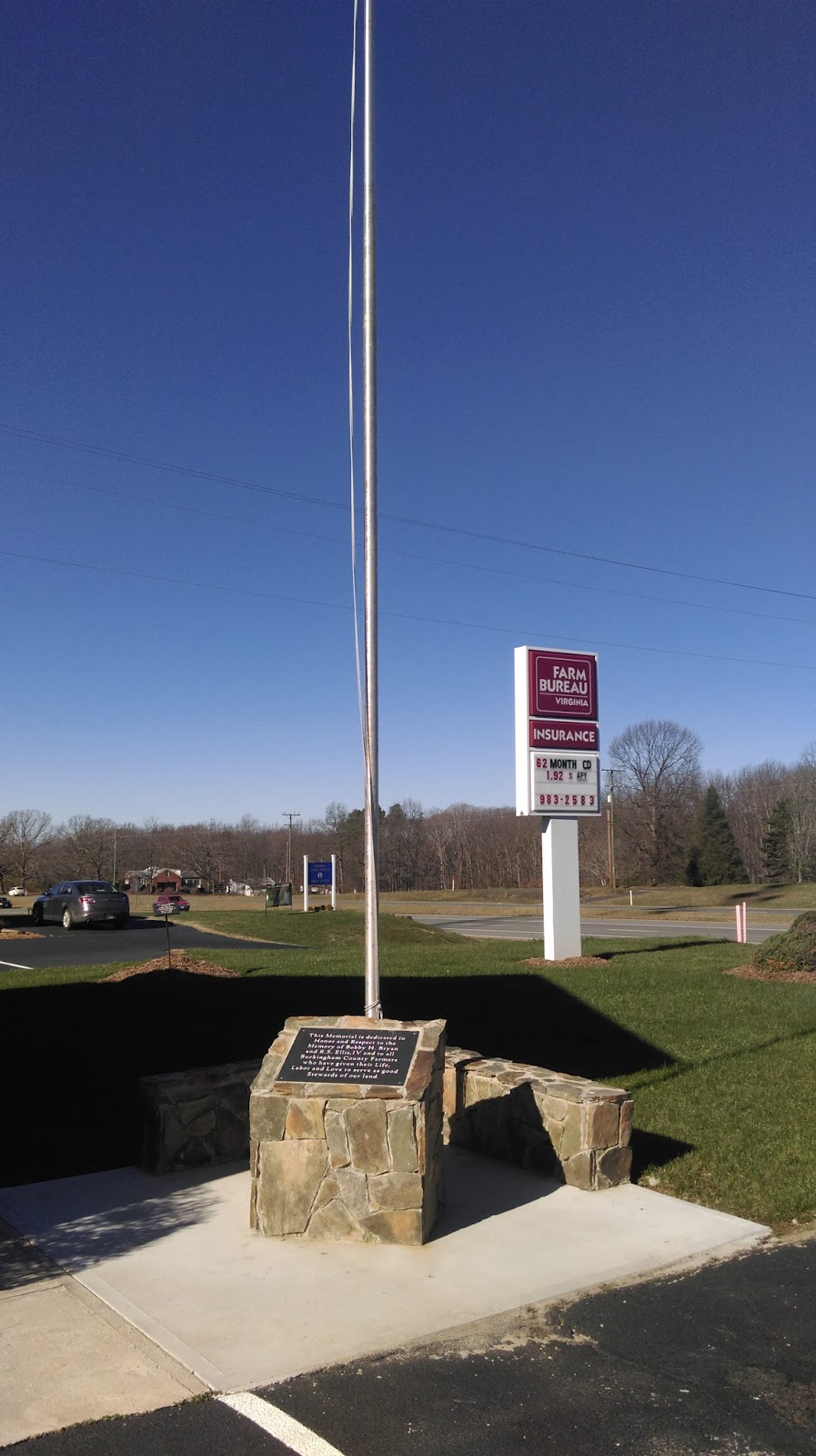
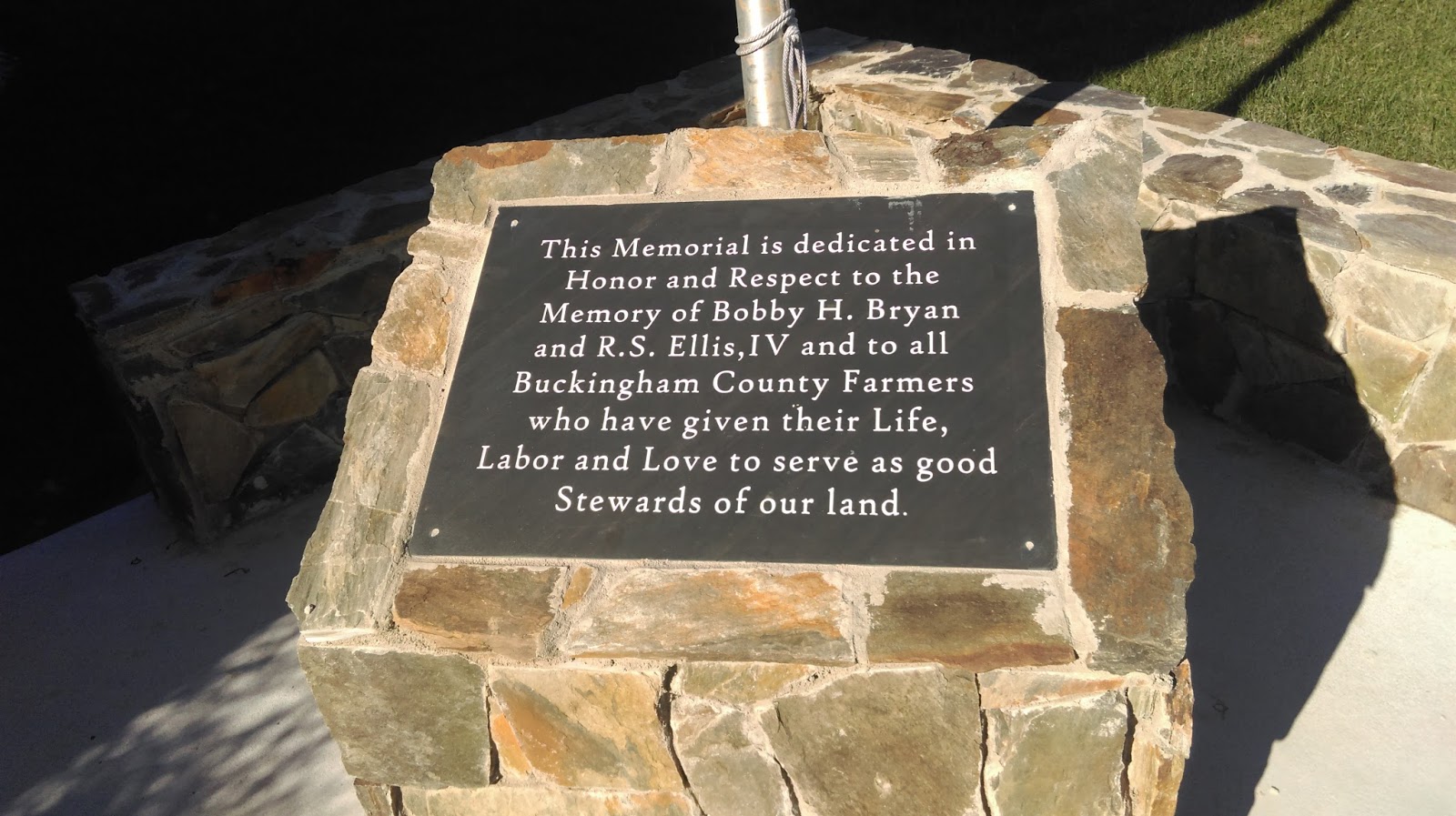
A few county Farm Bureaus have also placed honorariums at their offices to honor and recognize the work and leadership of farmers in their county.  Buckingham County Farm Bureau recently erected a flag pole with American flag and an engraved plaque at the base.  The plaque reads, “This Memorial is dedicated in Honor and Respect to the Memory of Bobby H. Bryan and R.S. Ellis, IV and to all Buckingham County Farmers who have given their Life, Labor and Love to serve as good Stewards of our land.”  Chesapeake Farm Bureau is installing something similar in memory of their past president and longtime Farm Bureau member, Lyle Pugh, Sr.; and Northumberland/ Lancaster Farm Bureau has a flag pole and flag.
The Farm Bureau that was started by farmers to work for improvements in agriculture and to solve problems still has that same purpose.  Farm Bureau has a proud history with numerous volunteers that made it successful. 
Remembering the past and the honoring past leaders while at the same time looking to the future and grooming future leaders is also a part of Farm Bureau’s program.  Thank you for being a member because every member contributes to the success of Farm Bureau.  If you would like to become more involved in Farm Bureau and are willing to share some of your talents, please let us know.  We have lots of opportunities for you. 
Until next time,

Mark

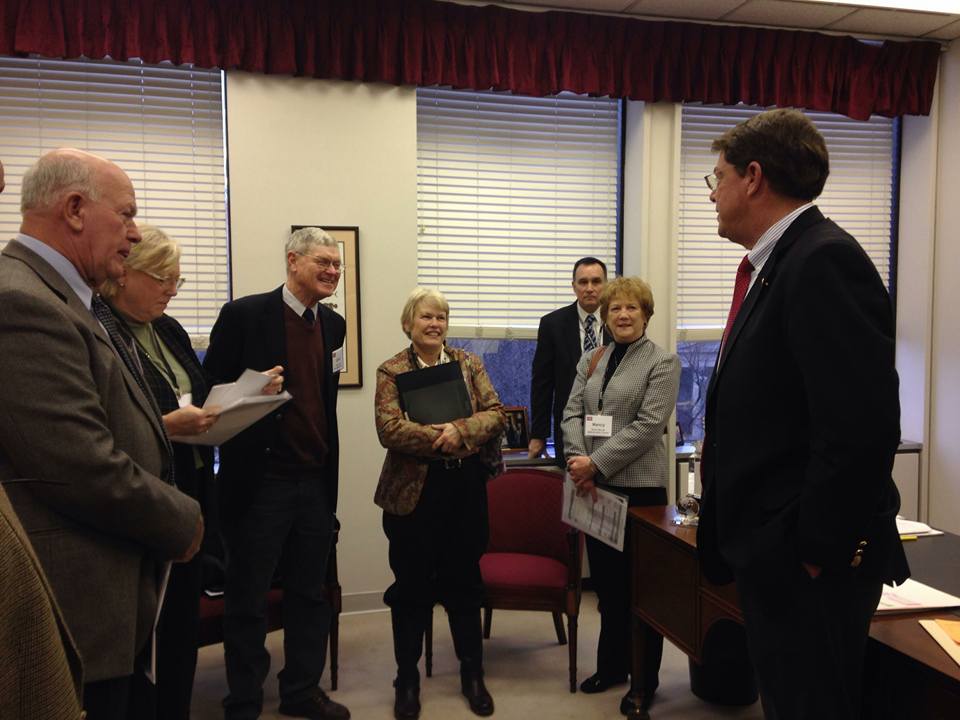
More than 140 Farm Bureau Members Attend Legislative Day

More than 140 Virginia Farm Bureau members headed to Richmond today for our annual Legislative Day at the Capitol. Here’s a summary of the issues members discussed with their legislators. Here’s a summary:

Strengthening Agriculture’s Economy
Virginia Farm Bureau is urging legislators to support investment in new crops, update code sections to reflect current industry practices and change laws to make it easier to procure more Virginia grown products.

Critical Budget Amendments for Agriculture
Virginia Farm Bureau is urging legislators to support the  critical budget amendments, inculduing funding for the Agtriculture Best Management Practices program, Soil and Water Conservation Districts, VDACS Weight and Measures program, and the Cooperative Wildlife Damage program.

Property Rights
Virginia Farm Bureau is urging legislators to:
• Support SB543 (Obenshain) to better protect landowners and align with the language in the property rights constitutional amendment that passed in 2012. The legislation seeks to direct the court to reimburse a plaintiff for the costs of an inverse condemnation proceeding for “damaging” property if a judgment is entered for the plaintiff. Under current law, the court is directed to award compensation only for the “taking” of property. This would make sure that if your farm is damaged by the taking of a property next to you, you will be compensated fairly.

• Support legislation to protect private property rights from the unauthorized use of drones that seek to take a photograph or a film your private property without your permission.

VFBF Board Member Testifies in Ag Committee

On Wednesday, January 20th during the first meeting of the House Agriculture, Chesapeake and Natural Resources Committee, a presentation on the structure and importance of commodity boards was made by Pittsylvania farmer and Farm Bureau state board member Robert Mills. We thank Robert for driving to Richmond to share with the committee members all the good work of our commodity boards, including education, research, and promotion.  Virginia Farm Bureau is supporting two pieces of legislation this year, HB1094 from Delegate Webert and HB115 from Delegate Knight.

HB1094 (Webert) updates the commodity board code sections to reflect current industry practices.  The bill repeals certain board-specific provisions related to appointments and creates in their place general provisions, applicable to a number of boards, which provide for four-year appointments, that a majority of the board constitutes a quorum, for the election of officers, and policies establishing no compensation for attendance at meetings but reimbursement for expenses of board members.  

HB115 (Knight) removes the authority of the General Assembly to disburse the unexpended balances in the special agriculture commodity funds for purposes other than each fund’s intended purpose. 

Veto of Joint Resolution on WOTUS Met With Disfavor from Farm Bureau

Calling President Barack Obama’s veto of a resolution (S.J. Res. 22) to disapprove of the Waters of the U.S. rule “salt in the wounds of farmers and ranchers,” American Farm Bureau Federation President Zippy Duvall said farmers and ranchers were mystified as to why Obama continues to support the fatally flawed rule.

“The Government Accountability Office found the rule was issued with the help of illegal ‘covert propaganda’ by EPA. Ninety-two members of Congress, 22 states, numerous cities and counties and dozens of industry groups have all stood up and said no to this rule. Courts have ordered the rule temporarily halted because of the harm it will cause. But, somehow, the president and the EPA just keep pushing. But we won’t stop either. We will not rest until this rule is gone,” Duvall said in a statement.

 On Tuesday, President Obama issued the ninth veto of his presidency Tuesday, rejecting a congressional resolution that would have overturned federal regulations on clean water. Read more here: www.usatoday.com/story/news/politics/2016/01/19/obama-vetoes-attempt-kill-clean-water-rule/79033958/

Meet New AFBF President Zippy Duvall

AFBF President
Zippy Duvall
Hello. I’m Zippy Duvall, president of the American Farm Bureau Federation. It’s an honor to introduce myself and share some of my goals as president.

My wife, Bonnie, and I have been Farm Bureau members for nearly 40 years. We raise broilers, hay and cattle on our farm in Greshamville, Georgia, an area about 70 miles east of Atlanta in the north-central part of the state. As proud as Bonnie and I are of our farm and our longtime involvement in Farm Bureau, we consider our family to be our greatest accomplishment. We have four children who are grown and doing great things on and off the farm, and we have three grandchildren.

I am dedicated to Farm Bureau because this organization stands for what I value most: faith, family and farming. The main reason I am honored to have been elected president of AFBF is because no other organization does more to protect farms, families and food.


Something else I can tell you about myself is that relationships are very important to me. I look forward to getting out into the countryside and meeting more farmers and ranchers face-to-face. The only way I can effectively speak for Farm Bureau members is if I sit down with them and come to understand their concerns and their goals.

I also look forward to working to achieve the policy goals that AFBF has established for this year. We will work to create a more-positive dialog about modern agriculture and food. We will work for a reasonable approach to government regulation, so that our farmers and ranchers have the freedom to operate. As more technological developments come along, we’ll work to ensure farmers and ranchers have access to the technologies that help them feed a growing world. One of our biggest priorities this year is congressional approval of the Trans-Pacific Partnership trade agreement to reduce tariffs and other barriers to U.S. farm exports, so that America’s farmers and ranchers have greater access to growing markets in the Pacific Rim.

We have a lot of work to do, and I can’t wait to get started! I hope to meet you if we haven’t met already, so we can work together to achieve our common goals.

Zippy Duvall
President

New Agricultural Conservation Program Exceeds First-Year Goal

Virginia is making strides with its Resource Management Plan program, an innovative approach to meeting Chesapeake Bay cleanup goals. The initiative encourages farmers to increase their use of agricultural conservation practices while crediting them for practices already in place.
Since the program’s launch in July 2014, 278 resource management plans have been developed for farms in the Chesapeake Bay watershed. This far surpasses the goal of 40 that was set for the program’s first year.
“Resource management plans are critical to Virginia’s strategy to protect and restore the health of rivers, streams and the Chesapeake Bay — and build a new Virginia economy in the process,” Governor McAuliffe said. “A major factor in this program’s success has been the support of both the agricultural and conservation communities.”

The program enables farmers to have a private-sector resource management plan developed for their property that incorporates a host of agricultural conservation practices that reduce to pollution to local waters and protect soil health. Once the plan is approved and the practices are implemented, the farm is deemed to be in compliance with state nutrient and sediment standards for the following nine years.
Participation in the program is voluntary for farms and landowners.
“I’m thrilled that the Resource Management Plan program has surpassed its first-year goal,” said Virginia Secretary of Natural Resources Molly Ward. “This is a true win for all the partners involved, and I commend everyone who worked together to achieve this important milestone.”
The Virginia Department of Conservation and Recreation manages the program in partnership with Virginia’s 47 soil and water conservation districts. Districts serve as the primary review authority for the plans.
RMPs enable the state to document practices that have been installed with or without financial incentives, providing verified data to validate the agricultural sector’s level of participation in conservation practices.
Better tracking of practices also gives decision makers more accurate data to determine funding needs for agricultural cost-share and other incentive programs.
“The RMP program has proven to be a valuable new tool for promoting conservation practices that improve farming operations and water quality,” said Kendall Tyree, executive director of the Virginia Association of Soil and Water Conservation Districts. “Soil and water conservation districts play an essential role in the delivery of this voluntary program and are supportive of the effort.”
A plan can cover all or a portion of a farm and include existing and needed best management practices such as stream buffers, fencing to keep livestock out of streams, soil conservation measures, and nutrient management plans.
These practices help curb the flow of sediment, nitrogen, and phosphorus that contributes to pollution in waterways and the Chesapeake Bay. They also can help farmers improve the health of their herds and the productivity of their soils.
The 278 plans that have been developed cover 48,500 acres of the Chesapeake Bay watershed in Virginia. On average, the typical plan covers 172 acres. A total of 47 farm owners or operators are participating.
“The success of this program is due to a significant number of farm leaders jumping in and working side by side with their local soil and water conservation districts in the first year,” said Ann Jennings, Virginia director of the Chesapeake Bay Commission. “The resource management plans developed will result in the documentation and implementation of thousands of best practices, enhanced farm management and an improved Chesapeake Bay.” 
The plans developed so far include 1,816 best management practices to protect soil and water resources.
For details about the RMP program and to read the report, go to http://www.dcr.virginia.gov/soil-and-water/rmp
Landowners who want to participate in the RMP program should contact their local soil and water conservation district.

Three Virginia Young Farmers Receive National Honors

For the first time ever, Virginia Farm Bureau Federation had finalists in all three Young Farmers & Ranchers competitions at the annual American Farm Bureau Federation convention.

Chris Van Vlack of Loudoun County took home top honors Jan. 12 in the Discussion Meet competition at the 97th annual AFBF event. Sam and Ashley Gardner of Bedford County were runners-up for the Achievement Award, Mindy McCroskey of Washington County was a runner-up for the Excellence in Agriculture Award.

The Discussion Meet simulates a committee meeting in which active discussion and participation are expected. Participants are evaluated on their ability to exchange ideas and information on a predetermined agricultural topic. The final-round topic was how Farm Bureau members can influence state and national policies in a political atmosphere that favors increased regulations on farmers.

“When creating Farm Bureau policies (regarding regulation), we have to have the public in mind,” Van Vlack said. “How will these policies appear to them? They have to be part of the conversation.”

Building coalitions with like-minded groups and being willing to raise and commit financial resources to legal challenges are tools Farm Bureau should consider, he said. “But it all starts with convincing the public … that we have their best interests in mind and we can address policy that benefits all of us in society.”

Van Vlack will receive his choice of a 2016 Chevrolet Silverado or a 2016 GMC Sierra courtesy of GM, plus free registration to the AFBF 2016 YF&R Leadership Conference next month in Kansas City, Mo.

The Gardners, who raise dairy heifers, were among three runners-up for the Achievement Award and will receive a Case IH Farmall 50A tractor courtesy of Case IH, along with $3,000 and Stihl Inc. merchandise courtesy of Stihl. The Achievement Award recognizes young farmers and ranchers who have excelled in their farming or ranching operations and exhibited superior leadership abilities.

McCroskey, a cattle farmer and vocational agriculture instructor, was among three runners-up in the Excellence in Agriculture competition and will receive a Case IH Farmall 50A tractor courtesy of Case IH, as well as $3,000 and Stihl merchandise courtesy of Stihl. The Excellence in Agriculture Award recognizes young adults who do not derive the majority of their income from farming but actively contribute and grow through their involvement in agriculture, their leadership ability and participation in Farm Bureau and other organizations.

“We are incredibly proud of all our national Young Farmer finalists,” said Grant Coffee, VFBF Young Farmers Committee chairman. “They’ve all worked hard for this—not just their presentations for the competitions, but also the years of hard work they’ve put into building their farm operations to be showcases for Virginia agriculture.”