Governor Announces New Agricultural Exports to Canada

Three Virginia specialty food companies are set to begin exporting their products into Canada.

Gov. Terry McAuliffe announced recently that over the past several months international marketing staff at the Virginia Department of Agriculture and Consumer Services and Virginia’s Toronto-based agricultural trade representative, Argyle Communications, have worked with several Virginia specialty food producers to achieve new international sales.
The Peanut Shop of Williamsburg, and Charlottesville-based Bone Doctors’ Barbecue Sauce and Montebello Kitchens will export products to Canada.

The trade deals represent new revenue streams from Virginia’s second-largest export market for farm and forestry products.

“This is great news and represents an opportunity for other Virginia food businesses,” said Tony Banks, a commodity marketing specialist for Virginia Farm Bureau Federation.

“Each year thousands of our northern neighbors travel to or through Virginia, where they are likely to eat and drink Virginia products. The greater presence and consumer awareness we have in foreign markets, the more opportunity there will be for all Virginia companies.”

Todd Haymore, Virginia’s secretary of agriculture and forestry, said more than 80 percent of the world’s consumer base lives outside of the United States, and every $1 in exports from Virginia generates about $1.30 within the state.

In addition to the new specialty food export deals, McAuliffe will continue efforts to increase exports of Virginia seafood, craft beer and wine to Canada.

Agricultural and forestry exports from Virginia reached a record high of $3.35 billion in 2014, an increase of more than 14 percent over 2013. The commonwealth exported more than $279 million in products to Canada last year.

Breaking News: U.S. Court Places Hold on Clean Water Rule Nationwide

\
A U.S. court on Friday issued an order temporarily blocking the implementation of a federal water rule across the country.

The U.S. Court of Appeals for the 6th Circuit granted a nationwide stay against the so-called Waters of the United States (WOTUS) rule, which is intended to clarify which bodies of water are covered by the Clean Water Act. The rule was finalized by the Environmental Protection Agency and the U.S. Army Corps of Engineers in May but still faces political and legal opposition.

Statement from Bob Stallman, American Farm Bureau Federation President:

“A federal court today ordered the EPA to stop enforcement nationwide of the Waters of the United States rule. The American Farm Bureau Federation is pleased the Sixth Circuit recognizes that this rule has serious flaws and cannot go forward until the courts have had an opportunity to understand its effect on farmers, ranchers and landowners of all kinds.

“The judges expressed deep concerns over the basic legality of this rule. We’re not in the least surprised: This is the worst EPA order we have seen since the agency was established more than 40 years ago. The court clearly understood our arguments.

“We are confident that the courts will strike down this rule. Unfortunately, we also know stays don’t last forever, and cases like this almost always take years to win. So we again ask the Senate to pass legislation to nullify this rule just as the House has already done. Farmers and ranchers cannot afford to wait.”

Get to Know GMOs Month to Feature Push for Voluntary Labeling Program

The Senate Agriculture Committee has announced an Oct. 21 hearing on biotechnology, and U.S. farmers soon will begin contacting their senators about legislation related to foods with genetically modified ingredients.

The American Farm Bureau Federation and the Coalition for Safe and Affordable Food plan to encourage Senate action on the Safe and Accurate Food Labeling Act, which was passed by the House of Representatives in July. While H.R. 1599 has not been introduced in the Senate yet, negotiations are under way among Senate Agriculture Committee principals.

If enacted, the bill would give the U.S. Food and Drug Administration authority on the use and labeling of foods containing genetically modified ingredients. It would create a voluntary labeling program run by the U.S. Department of Agriculture’s Agriculture Marketing Service. The AMS also administers the USDA Organic Program.

Earlier this year, AFBF President Bob Stallman asserted that state-led mandatory food labeling incentives “mislead consumers about the safety of genetically modified foods, even though there is no credible evidence linking a food-safety or health risk to the consumption of GM foods.”

Stallman said H.R. 1599 “would protect consumers from confusing and misleading GMO labels and create a national, voluntary labeling standard based on science and common sense.”

Lindsay Reames, Virginia Farm Bureau Federation assistant director of governmental relations, said prompt Senate action on the bill is critical. “The Senate needs to act quickly to preempt GMO labeling laws that go into effect next July—and give certainty to farmers, manufacturers and consumers. Inaction will create a state-by-state patchwork that threatens important production and environmental benefits.”

GMOAnswers.com, a website created by member organizations of the Council for Biotechnology Information to address consumer questions, is observing October as Get to Know GMOs Month.

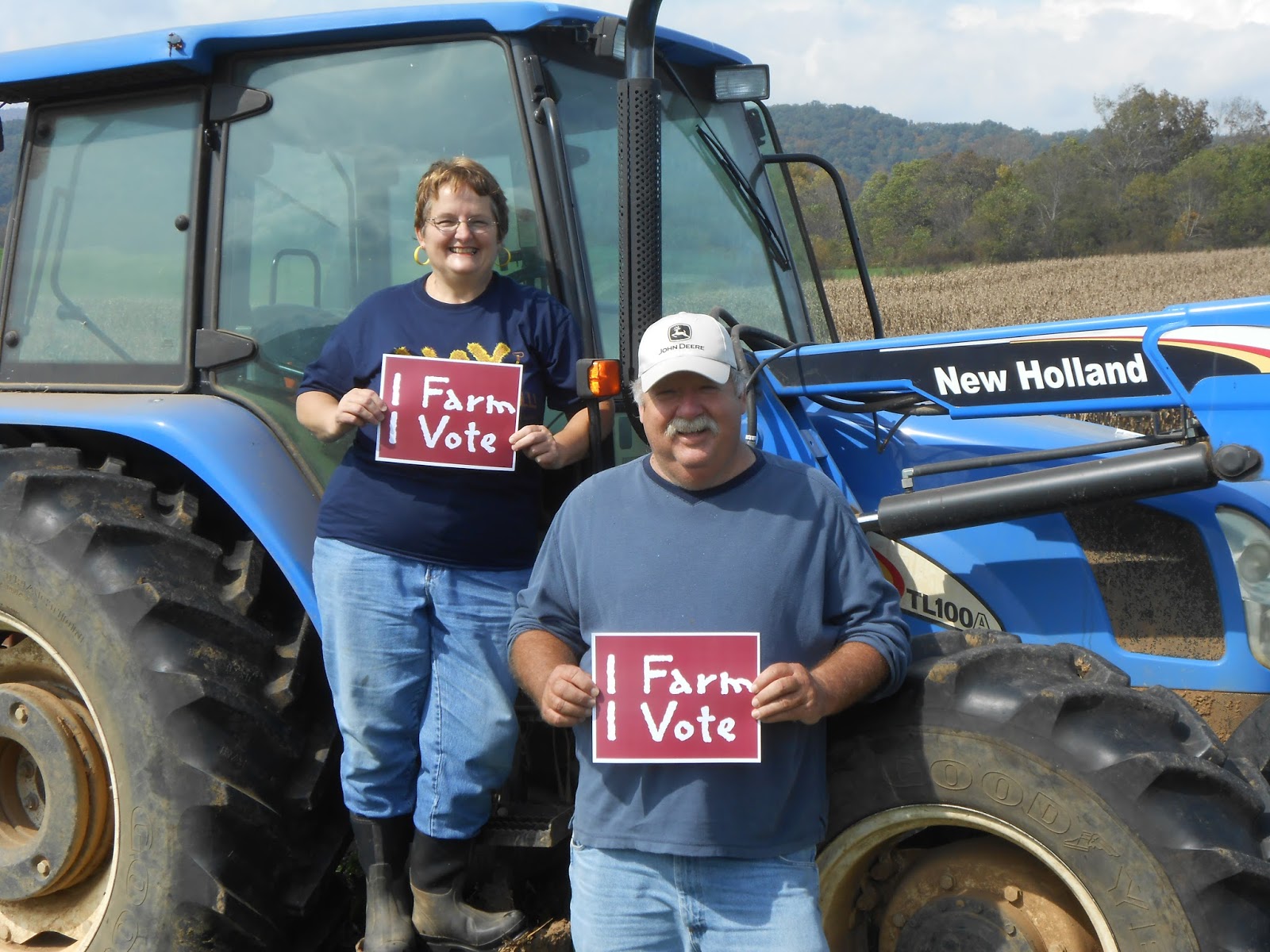
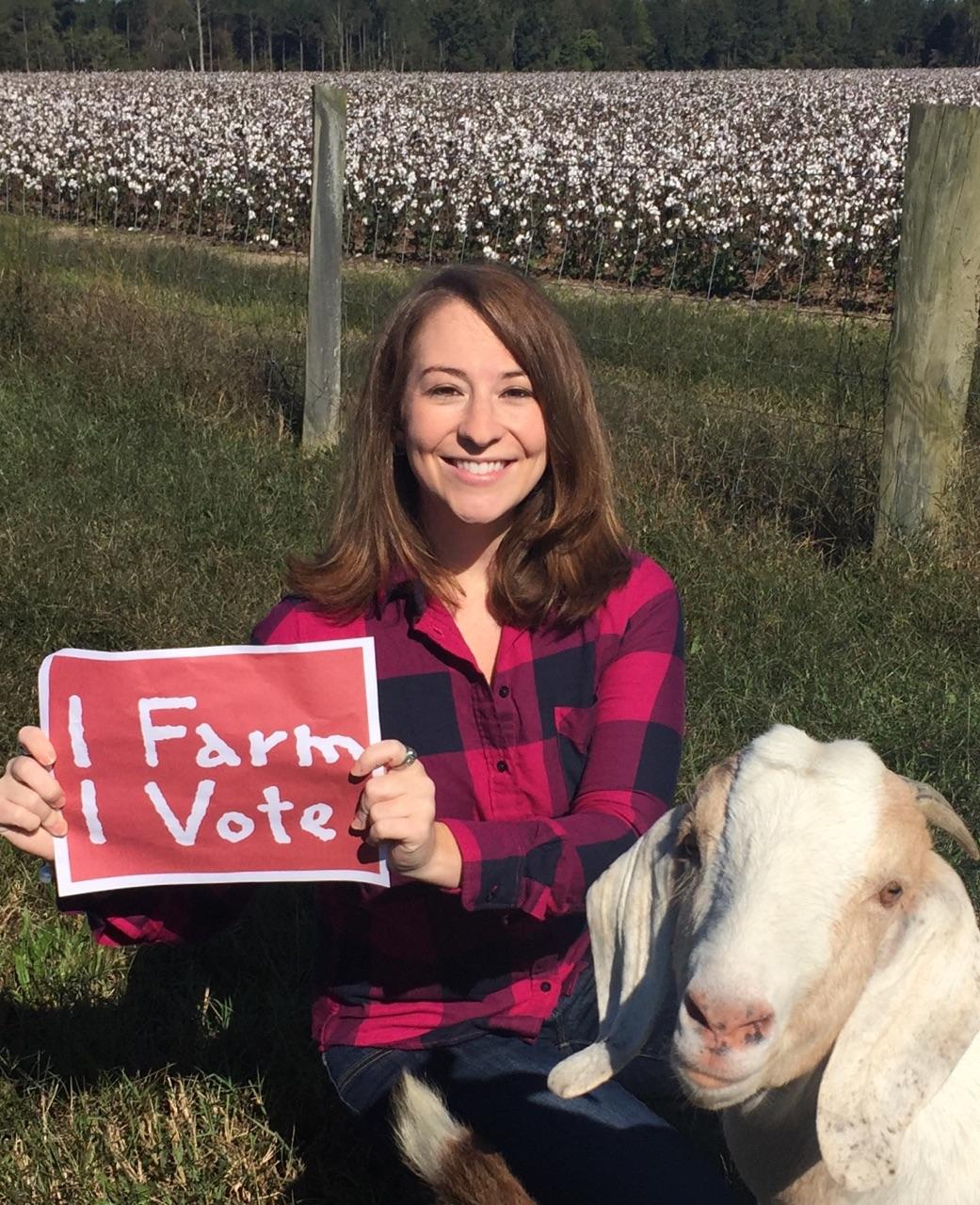
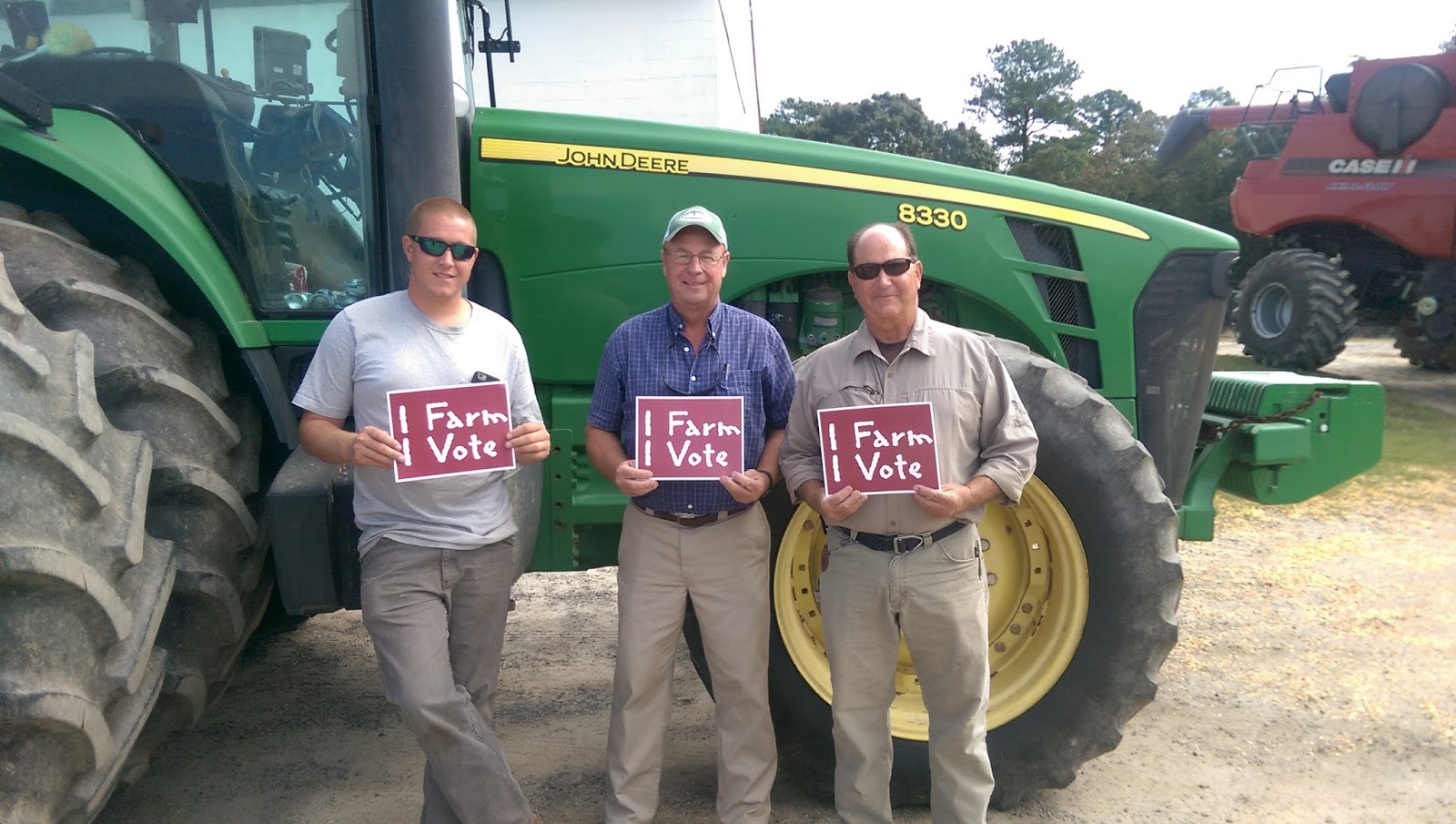
Don’t Forget to Take your "I Farm I Vote" Photos!

We’re almost a month out from Election Day! Have you posted your “I Farm I Vote” photo on your Facebook, Twitter and/or Instagram pages yet?

All 140 seats in the Virginia General Assembly are up for election this year. It’s crucial for farmers to let their voices be heard and elect people who will make decisions in agriculture’s best interests. Let them know rural votes matter!

Take a photo with the sign on your farm, and post them to your social media pages using the #IFarmIVoteVA hashtag. 

For more information, visit VaFarmBureau.org/PolicyAction/IFarmIVote.aspx to print a sign, or contact a county Farm Bureau office for more information.

Urban Agriculture Summit Set for Oct. 22 and 23

Organizers are getting ready for Virginia’s third Urban Agriculture Summit, which will be held Oct. 22 and 23 at the Crowne Plaza Hotel in Richmond. Summit speakers will address the current state and future of urban agriculture in the United States.

Speakers include Ben Greene from The Farmery in Raleigh, N.C.; Ben Flanner of Brooklyn Grange Farm in Brooklyn, N.Y.; and Margaret Morgan, CEO of Eco City Farms in Riverdale, Md. Also on the agenda are panel discussions on soil optimization, social enterprise and entrepreneurial development.

Participants may take two separate guided tours. On the morning of Oct. 22 a group will visit the Harding Street Community Agriculture Center in Petersburg. Following presentations at the conference in the afternoon, a group will visit Richmond’s Tricycle Gardens and Jerusalem Connection.

An agenda and hotel information are available at events.SignUp4.com/UrbanAgSummit2015, along with information on sponsorship and vendor opportunities.

Organizers of the summit are the Virginia Department of Health; the Federation of Virginia Food Banks; Shalom Farms; the Society of St. Andrew; Virginia State University; Virginia Tech; Virginia Cooperative Extension; the Virginia Department of Agriculture and Consumer Services; the Virginia Farm Bureau Federation; the Virginia Food System Council; the Virginia Foundation for Agriculture Innovation & Rural Sustainability; and the U.S. Department of Agriculture’s Rural Development agency.

National Farm Safety and Health Week: Combine Safety

Every year since 1944, when President Franklin D. Roosevelt signed a proclamation, the third week of September has been dedicated to National Farm Safety & Health Week. The recognition week is designed to educate farmers and help prevent injuries that occur on the farm.

Whether you’ve been harvesting for a lifetime, or 2015 marks your first time in the combine, remember: Safety first. “You’ve spent an entire year getting your crop from planting to harvest. Naturally you’re excited to get it out of the field as quickly as you can,” says Kelly Kravig, platform marketing manager for combines and headers at Case IH North America.

“But sleep deprivation is a real problem. Combine accidents can happen because guys get tired and aren’t paying attention. So get enough rest, slow down, and think about what you’re doing.”

Statistics back up Kravig’s suggestions. According to the Occupational Safety & Health Association, agriculture ranks among the most dangerous industries. Every day, about 243 agricultural workers suffer a serious lost-work-time injury.

Kravig also recommends daily combine inspections during harvest. “When you’re checking your oil and fluid levels, you should also clean out trash and debris so it’s not building up. Make sure the fire extinguishers are fully charged. And check the shields on the belts, pulleys and chains. There’s a good reason they’re shielded.”

Another Kravig recommendation: Check the torque on your wheel bolts. “With the size of today’s combines, there’s a lot of weight on the tires and rims – especially in muddy conditions. If the bolts weren’t fully torqued initially, they may loosen a little bit. At the ProHarvest Kickoff, we show custom harvesting crews how to put a little mark on the bolt with a Sharpie® so they can see if the bolt has moved.”

More tips from custom harvester safety training
For 30 years, Case IH has been supporting custom harvesters through its ProHarvest program, where Case IH service pros stock up on parts and follow custom cutters from the Texas/Oklahoma border up to Alberta, Saskatchewan and Manitoba. At the ProHarvest Kickoff – held every spring at the Great Plains Technical College in Frederick, Oklahoma, just before harvest begins – Case IH holds a half-day combine training for custom cutter crews.

“We have the same custom harvesters, but 70 to 80 percent of crew members are new every year, and many are new to combines,” Kravig adds. “They’re also young, between 18 and 25 years old.”

Kravig and other ProHarvest instructors cover everything from who to contact in an emergency, to properly attaching a header, to honking three times before you start a combine. (This alerts anyone who may be working on your machine that you’re about to start it.)

Another training topic is how to pull a stuck combine out of a muddy field. “We show them the proper attachment points on the chassis, and why they need to stay away from the tow ropes.
“ProHarvest training reinforces what custom harvesters are telling their crews about the importance of taking proper precautions. And it’s non-denominational training,” Kravig says. “We want you to combine safely, no matter what color combine you operate.”

Savings opportunity
In addition to helping keep harvest season safe and productive, Case IH has also partnered with Farm Bureau to save members’ money. Virginia Farm Bureau members save $500 per unit on Case IH Maxxum®  tractors, Farmall® C and U series utility and 100A series tractors, self-propelled windrowers and large square balers. A $300 per unit incentive is available for Case IH compact Farmall® B and C series tractors, Case IH Scout® utility vehicles and other hay tools, including round balers, small square balers, disc mower conditioners and sickle mower conditioners. Combine the Farm Bureau incentive with other discounts, promotions, rebates, or offers that may be available from Case IH or your Case IH dealer.

VT Ag Tech Program open house set for Nov. 27

Virginia Tech will hold an open house Nov. 7 for students interested in the Agricultural Technology Program in its College of Agriculture and Life Sciences.

The program was created to offer hands-on experience utilizing state-of-the art equipment and facilities, a practical education that enables you to “hit the ground running,” and gain industry experience with a required internship. Students who successfully complete the two-year program earn an associate’s degree, and they can specialize in applied agricultural management or landscape and turf management.

Ag Tech Program students use the same campus, labs, farms and other resources as students enrolled in four-year programs. Typically 95 percent of graduates find employment in their fields of interest within six months of earning their degrees.

The open house is 10 a.m.-2:30 p.m. at Litton Reaves Hall, Room 1870. A free lunch will be provided at West End Market (the first true marketplace-style dining operation on a university campus in the United States). More information can be found at www.dining.vt.edu/centers/westend/west_end.html.
Please register at www.agtech.vt.edu or email agtech@vt.edu