Farm Bureau Asks Supreme Court to Stop EPA Abuse of Clean Water Act Powers

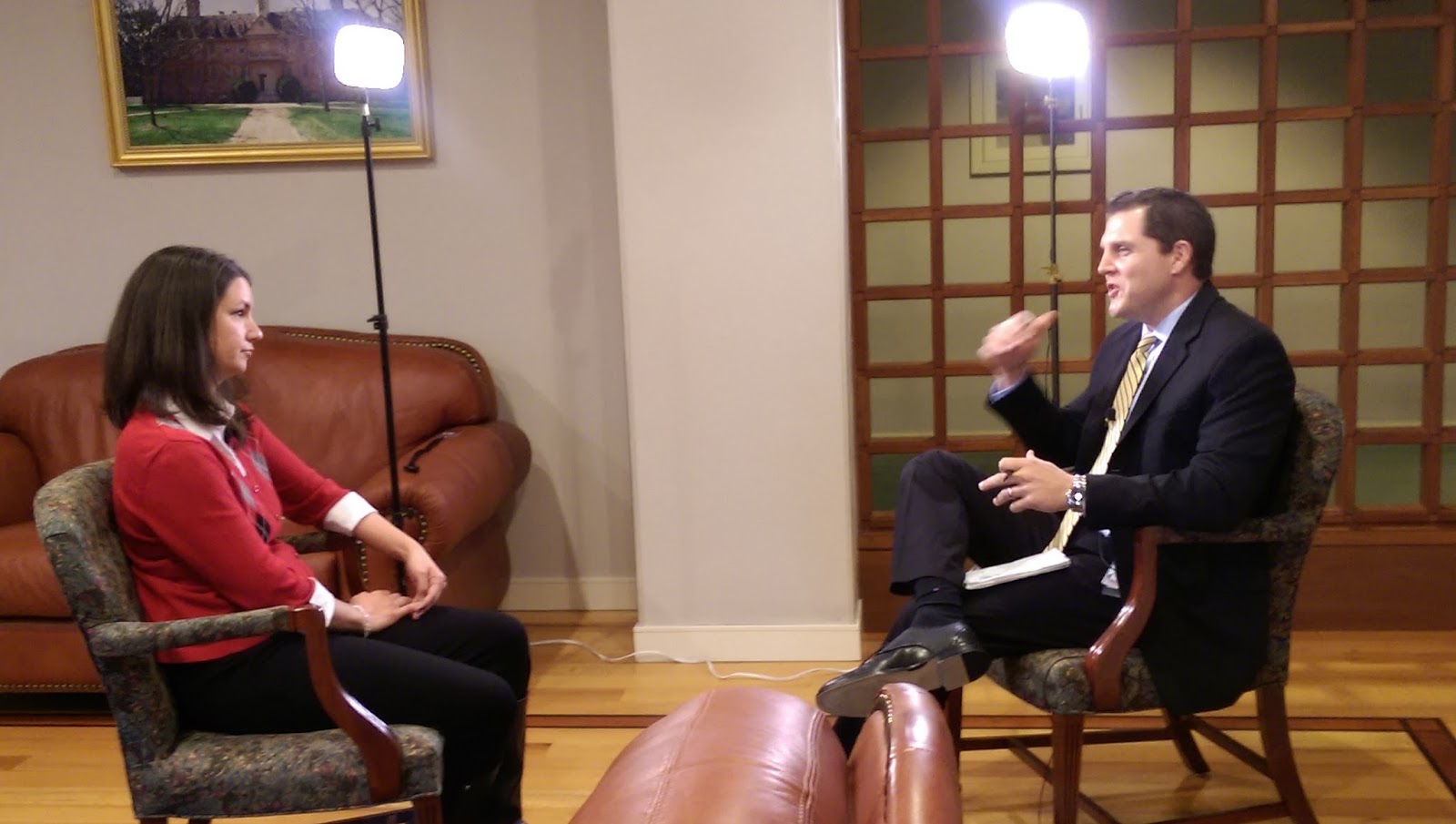
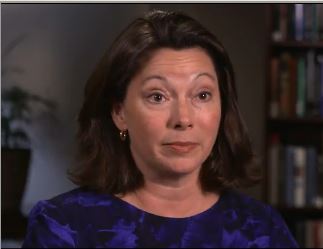
AFBF General Counsel Ellen Steen
The American Farm Bureau Federation and a coalition of agricultural and builder groups today asked the U.S. Supreme Court to review a lower court ruling that allows the Environmental Protection Agency to micromanage local land use and development decisions under the guise of implementing the federal Clean Water Act. The lower court’s ruling, according to the petition, “opens the door for a dramatic expansion of federal power” and must be overturned.

The lawsuit arose in the context of EPA’s so-called “blueprint” for restoring the Chesapeake Bay, but Farm Bureau points out that the issue at stake is national in scope.

“It’s about whether EPA has the power to override local decisions on what land can be farmed, where homes can be built, and where schools, hospitals, roads and communities can be developed,” said AFBF President Bob Stallman. “This is nothing less than federal super-zoning authority. As much as we all support the goal of achieving a healthy Chesapeake Bay, we have to fight this particular process for getting there.”

Twenty-one states, 39 members of Congress and a group of counties within the Bay watershed supported AFBF’s legal challenge in the lower courts.

“We certainly hope for even more support in asking for Supreme Court review,” said AFBF General Counsel Ellen Steen. “There has been a lot of attention to EPA’s recent rule expanding its jurisdiction under the Clean Water Act. EPA’s overreach in the Bay ‘blueprint’ is just as aggressive, and its impact on communities and businesses is just as dramatic. From the beginning, this was designed as a model that would be followed around the country.”

According to today’s court filing, the greatest practical, local harm of the Bay blueprint is that it “locks in” decisions made in 2010 and “deprives state and local governments of the ability to adapt their plans to take account of changes in societal needs, developing technologies, or new information. It prevents them from exercising their own judgment about the best and most efficient ways to achieve the goals for the Bay.” Implementation of the blueprint is expected to cost roughly $28 billion to $30 billion in Maryland and Virginia alone.

Senate Fails to Take Action on WOTUS

The Senate on Tuesday failed to achieve the necessary 60 votes for cloture on S. 1140, the Federal Water Quality Protection Act, which would have required the Environmental Protection Agency and Army Corps of Engineers to withdraw the final Waters of the U.S. rule and re-propose a new regulation.

The final vote was 57-41. Kaine and Warner were both nays.

“While the effort to send the flawed Waters of the U.S. rule back to the drawing board fell a few votes short, we applaud members of the U.S. Senate who today stood up for farmers and ranchers,” AFBF President Bob Stallman said in a statement. Stallman expressed disappointment in the vote but noted “We know this issue will remain a critical one for America’s farmers and ranchers, and we will continue our fight to protect them from federal regulatory overreach.” 


However, the Senate on Wednesday voted 53-44 to pass a resolution to disapprove the Environmental Protection Agency’s Waters of the U.S. rule. The resolution, introduced by Sen. Joni Ernst (R-Iowa) in September, now heads to the House for consideration, although the White House has already issued a veto threat to all WOTUS efforts.

Because the measure was a resolution considered under provisions of the Congressional Review Act, it only required a simple majority, rather than 60 votes, to advance. Sen. Kaine and Sen. Warner were, again, nays. 


Who Ya Gonna Call?

Andrew Smith
Senior Assistant Director
Governmental Relations
No, this isn’t an ad for the remake of the 1984 classic Ghostbusters movie, nor do I want this to be a scary topic.

One of the subjects I get the most calls about, and proposed resolutions this time of year is about maintenance issues that are handled by the Virginia Department of Transportation (VDOT). Trimming trees, mowing grass, controlling invasive plants, cleaning ditches –all are major issues to farmers. We need to have clear right-of-ways and less worry of weeds invading our crops migrating from the state’s right-of-way. Many can remember the day of knowing their local highway maintenance supervisor and being able to call them up and ask for something to be done. A few years ago VDOT went to a centralized system that is taking many folks a while to warm up to. I can’t say I blame them, we all like face-to-face service or know we are talking to someone we know.

As much as many may not like the centralized system used by VDOT for reporting highway maintenance needs, it’s got big advantages. Reporting is easier whether you do it over the telephone at 800-367-ROAD (7623) or enter a request through VDOT’s online submission form. You can also go back to track the progress of your request by calling or, my favorite, online. However, I find the biggest advantage is it being centralized, allowing headquarters to be able to seeing the needs of the various areas of the state and also monitor the progress of things being taken care of. Beats your number and request being lost by a sticky note being misplaced.

I encourage anyone that needs pot holes repaired, state highway right-of-ways being cleared, or any of the items listed below to go online and submit a request here. Don’t forget to keep your reference number handy to be able to check back on the progress should you need to. Remember there are over 8 million residents in the Commonwealth, VDOT is getting a lot of requests. They operate the third largest state-maintained highway system in the country, just behind North Carolina and Texas with 57,867-miles in the state-maintained highway system.

You can place a work request to assist VDOT in maintaining Virginia’s roadways. You should submit a separate form for each request for:

Bridge work
Culvert cleaning
Curb, gutter or sidewalk repairs
Dead animal removal
Ditch cleaning
Dust control
Grading
Gravel/stone placement
Guard rail replacement
Mowing
Pipes
Pothole filling
Snow removal
Traffic light repairs
Traffic study
Debris removal from roadway
Tree trimming/removal
Water drainage

Remember, once submitted you can use your Call Reference Number to check on the status of your work request by either call 800-367-ROAD (7623). However the easiest is to use their tracking system online by entering your Call Reference Number here.

So, who ya gonna call? Call VDOT!

Senate Action on WOTUS Expected Next Week

As early as next week, the Senate is expected to schedule debate and votes on legislation to undo the waters of the U.S. rule finalized by the Environmental Protection Agency and Army Corps of Engineers. The Senate is first expected to take up S. 1140, the Federal Water Quality Protection Act. This bipartisan legislation requires the agencies to withdraw the final WOTUS rule and re-propose a new regulation. If the bill fails to garner the necessary 60 votes for cloture, the Senate will likely take up S.J. Res. 22, legislation that provides for congressional disapproval of the WOTUS rule. That resolution will be considered under provisions of the Congressional Review Act and thus would require only 51 votes to procced with an immediate vote.  

The House previously passed H.R. 1732, the Regulatory Integrity Protection Act of 2015, which also requires withdrawal of the WOTUS rule.

Visit fbadvocacy.netto send a message to your senators urging them to support legislation that would halt the WOTUS rule.

Senate Agriculture Committee holds First Biotech Hearing in 10 years

On Wednesday, the Senate Committee on Agriculture, Nutrition, & Forestry held a hearing on the federal regulation of agriculture biotechnology with perspectives from producers and consumers.  A recording of the hearing along with witness testimony can be found here.
The hearing on agricultural biotechnology was the first in 10 years and American Farm Bureau Federation (AFBF) believes it builds momentum for passing a bipartisan legislative solution this year that would protect interstate commerce and prevent a patchwork of mandatory state labeling laws. Ranking Member Debbie Stabenow (D-Mich.) made the following commitment:
“In order to address legitimate concerns from our farmers, our food companies and consumers, I believe we need to work together, and I am committing myself, Mr. Chairman, to do that in a bipartisan way, to develop a bill that can pass the Senate by the end of this year.”

AFBF will continue to work with the Coalition for Safe and Affordable Food to find a federal solution by the end of the year to protect farmers’ ability to use biotech plant varieties and other innovative technologies.

For more information, visit getamoveon.fb.org.

Timber!!

Andrew Smith
Senior Assistant Director
Governmental Relations
I have written about this before, but it’s always an important thing to remember. I’ve been fortunate to have traveled the Commonwealth a great deal this year, and it seems everywhere I go I see timber harvesting being conducted. It’s a vital part of the cycle needed for healthy timber production. Over 77 percent of Virginia’s forest is privately owned, much of it in conjunction of farming operations across our state. Forestry generates $17 billion annually in total industry output In Virginia. It’s a great feeling seeing a healthy economy for timber these days, and it’s an awesome sight to see one of our greatest renewable resources being harvested and to begin its journey into forest products.

Whether you are planning to harvest your timber now or just managing your stand, it’s important to know where your boundary lines are, and, even more importantly, that they are clearly marked to help avoid any timber trespass to occur on your land. As I get older I realize that property I once walked often now becomes more of a chore, and I am relatively a “flat lander,” so I am sure it’s even more of a challenge for folks in the western part of the state to walk their property lines. It’s imperative to make sure not only yourself know your lines, but your neighbors do, and a potential harvester can clearly identify those property lines when it comes to the day those tress are cut. The Code of Virginia details how your property should be marked to prevent timber trespass/theft in § 55-334.1. The Virginia Department of Forestry has produced an excellent publication called Prevent Timber Theft. I encourage you to check this publication out.

The Virginia Farm Bureau Annual Meeting that will take place November 30 – December 3 in Norfolk, Virginia this year. One of the education workshops is entitled “Property Security Concerns for Landowners” conducted by Aaron Gilland, President, Dendro Resource Management, Inc. Aaron will give a presentation on the importance of knowing and monitoring  your property, not just for potential theft, but also what to look for in illegal activities on your property and steps to help stop problems from happening. I encourage you to attend the workshop if you are joining us in Norfolk this year.

In the meantime check out the below handouts/articles on the subject!

Making Sense of the Nationwide Stay of EPA’s WOTUS Rule

In a short video, AFBF’s Don Parrish explains why Friday’s temporary stay of EPA’s controversial Waters of the U.S. rule is welcome news for farmers. He also explains what needs to be done to quash the government agency’s regulatory overreach.