Virginia Still on High Alert for Highly Pathogenic Avian Influenza
From Real Farmers, Real Food: Social Media: More Than Just a Post or Tweet
New Plan Would Improve Internet Service in Rural Areas
Seventeen percent of Americans lack access to advanced broadband service, and the majority of them live in rural areas, according to the Federal Communications Commission. A full 53 percent of rural Americans lack access to service reaching the broadband benchmark speed set by the FCC. By comparison, only 8 percent of urban Americans lack access to the same service.
“So much of our rural areas are without access to dependable Internet services which, in today’s business environment, are crucial,” said Andrew Smith, Virginia Farm Bureau Federation senior assistant director of governmental relations. “That’s why Virginia Farm Bureau supports efforts to improve broadband access to all Virginians.”
Americans rely on farmers and ranchers to produce food for a rapidly growing population, and technology that can help them grow more with less is readily available. But without broadband access, farmers may not be able to take advantage of it.
“Often, many forget that our farms are businesses in rural areas that require the same infrastructure as those based in metropolitan areas,” Smith said. “Farmers need the Internet to run and market their operations.”
Farmers and other rural Virginians also stand to benefit from educational and medical resources that broadband service can provide, Smith added.
VFBF and the American Farm Bureau Federation are lauding a plan that would allow government subsidies for broadband carriers that provide stand-alone Internet access to rural communities. The legislation was proposed by FCC Commissioner Ajit Pai and is supported by 61 U.S. senators.
Currently, the FCC’s Universal Service Fund provides support only to rural carriers that supply telephone service. Rural telephone carriers are not investing in broadband access for their customers because of insufficient funding, but Pai’s plan is intended to remedy that.
Additionally, President Obama recently unveiled a pilot program called ConnectHome that would provide high-speed broadband access and digital services to more families at a lower cost. The program targets low-income families in both urban and rural areas.
This Week’s Commodity Comments: September 9, 2015
From Prince William Living: Farming In The Prince William Community Finding A Niche
Prince William County’s history is rooted in agriculture. And even before the county’s founding in 1731, the big cash crop was tobacco.
In the most recent USDA Agricultural Census taken in 2012, Prince William County listed 330 farms and a total of 35,638 acres of farmland. Although that is a loss of about 20 farms since 2002, it was a gain of a little more than 3,000 acres of farmland in 10 years. Farmland, however, only makes up about 16 percent of the county’s total of 222,615 acres and approximately 30 percent of the land in the county’s designated rural crescent. (For comparison, 56 percent of county land was agricultural in 1940.) The rural crescent covered approximately 117,000 acres and was created by the board of supervisors in the county’s 1998 Comprehensive Plan to preserve the rural area and to contain development sprawl. Much of that land lies within the A-1 Agricultural zoning district, which limits development to one single-family home per 10 acres and agricultural uses.
One of those niche farms is TrueFarms, which grows hydroponic lettuces and herbs—without soil, using water and nutrients and no pesticides or preservatives. The crops at TrueFarms are housed not on dirt fields, but in a computerized ½-acre greenhouse on Tom and Debbie Truesdale’s 11 acres near Haymarket.
“We have to do something like that to compete with these big corporate farms,” he added.
Historic Tobacco Barns Being Saved
|
Editor’s note: Billy Johnson is father to Martha Moore, Vice President of VFBF Governmental Relations.
Like many old rural buildings, tobacco curing barns often are left to collapse from old age. But unlike other old barns, tobacco barns also represent a business and a way of life that shaped Virginia for centuries.
Preservationists are working to prop up this important part of Virginia’s rural heritage. |
“They really have become an integral part of the landscape in this part of Virginia,” said Sonja Ingram of Preservation Virginia. She compared them to the windmills of Holland, which are regarded as iconic symbols of that country.
An old barn on the family farm of A.J. Nuchols in Pittsylvania County is a good example of tobacco structures that are still standing. Built in the early 19th century, the barn is frame-built with mortise-and-tenon joints. Most barns were built from short leaf pine trees, which are common in the area.
“These barns were built for cut tobacco,” Nuchols said. “Back then they cut the whole stalk. It was only, I think, in the 1920s that they actually started harvesting it, or pulling it, by stalk position. My grandpa said they put 1,200 sticks of tobacco in this barn.”
Nearby, another surviving tobacco barn looks much like a traditional log cabin with notched log ends. Retired tobacco grower Billy Johnson said he remembers keeping a fire going all night there to cure bright leaf tobacco.
“We cut the logs off the place. We had what you call an old-fashioned barn-raising,” Johnson said. “That’s where everybody in the community came and helped put your logs up and notch the corners like you see it. That was quite a day, because most of the time the people that had the barn raising, the family, would furnish dinner. That barn right there would hold 440 sticks of tobacco, hand-strung.
“It’s a part of history that we have in this area, and we need to keep it.”
But as with other old buildings, preserving tobacco barns requires special skills and money. For a second year, Preservation Virginia is offering mini-grants and free workshops on barn stabilization and maintenance. The organization also is surveying the locations of all known tobacco barns in Pittsylvania and has undertaken an oral history project to collect stories from tobacco farm families.
The grants come from a joint partnership between Preservation Virginia and Japan Tobacco International. A total of $100,000 was made available in 2014, and another $200,000 may be available in 2015 and 2016. More information about the tobacco barn preservation grant program is available at preservationvirginia.org.
This Week’s Commodity Comments: September 2, 2015
Farm Bureau, Caterpillar Inc. Announce New Partnership
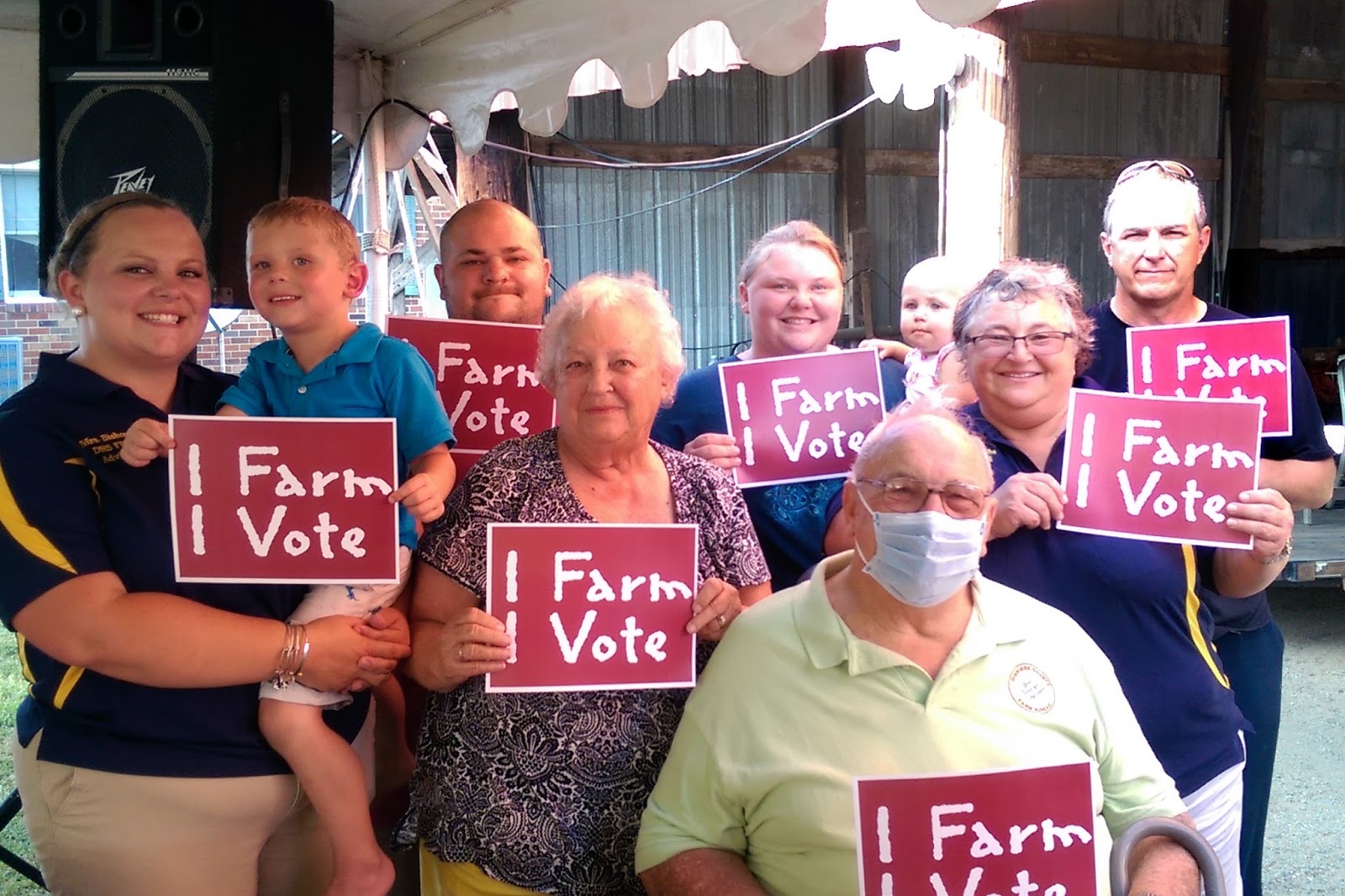
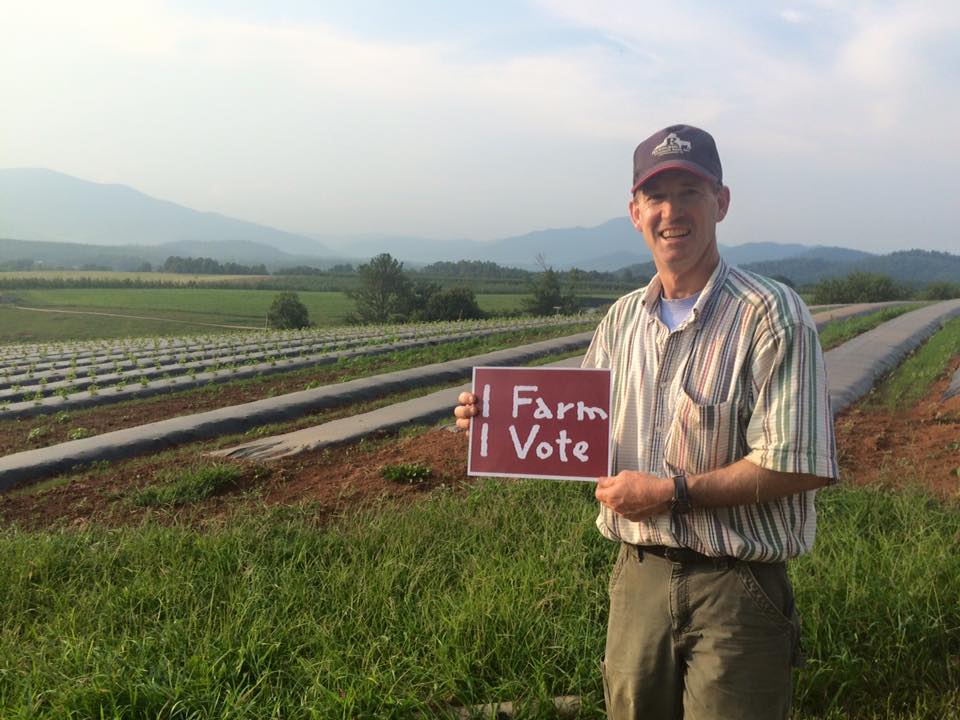
New Campaign ‘I Farm I Vote’ Encourages Farmers to Vote Nov. 3
To that end, Virginia Farm Bureau Federation has launched its “I Farm I Vote” campaign.
“All 140 seats in the Virginia General Assembly are up for election this year. It’s crucial for farmers to let their voices be heard and elect people who will make decisions in agriculture’s best interests,” said Kelly Pruitt, VFBF grassroots coordinator.
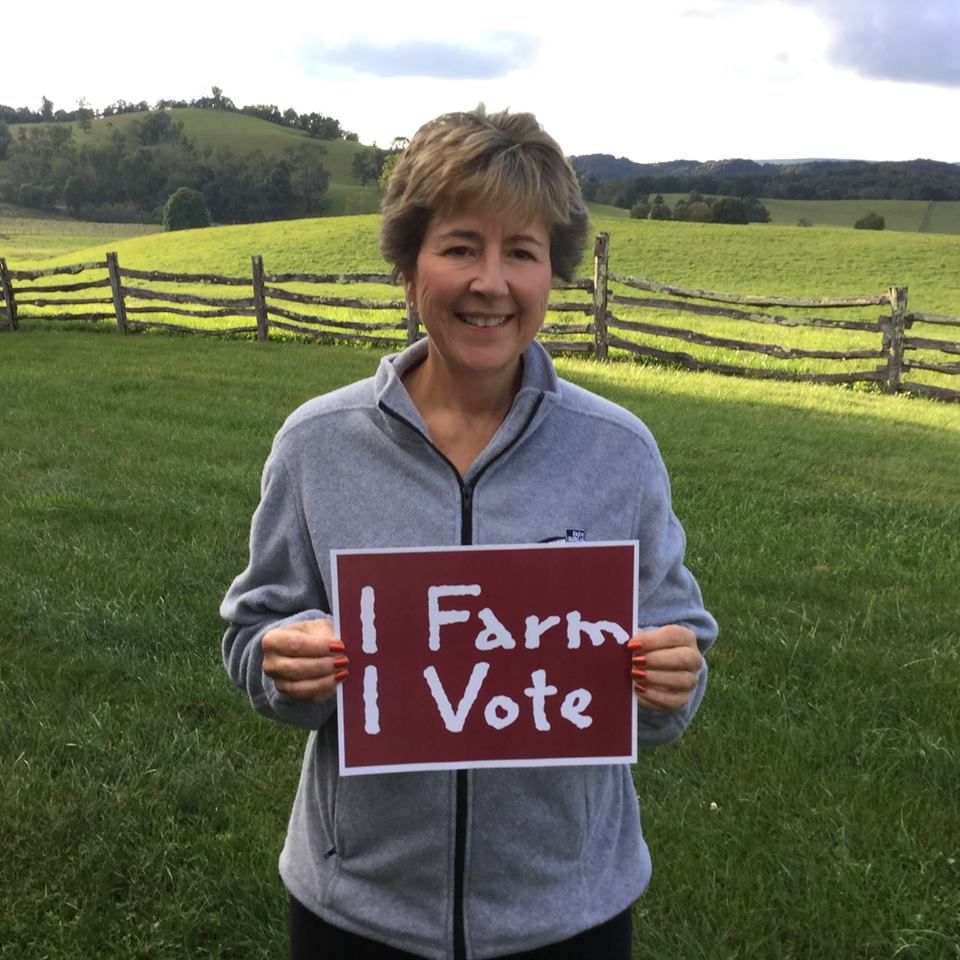
This summer Farm Bureau will be encouraging rural voters to display “I Farm I Vote” signs on their property and take photos with their signs to post to social media with the hashtag #IFarmIVoteVA.
To participate, visit VaFarmBureau.org/PolicyAction/IFarmIVote.aspx to print a sign, or contact a county Farm Bureau office for more information.