
Robert Harper with Virginia Farm Bureau’s grain division provides this week’s market updates.
#merchandiserminute #grainfuture #virginiafarmbureau
Robert Harper with Virginia Farm Bureau’s grain division provides this week’s market updates.
#merchandiserminute #grainfuture #virginiafarmbureau
Robert Harper with Virginia Farm Bureau’s grain division provides this week’s market updates.
#merchandiserminute #grainfuture #virginiafarmbureau
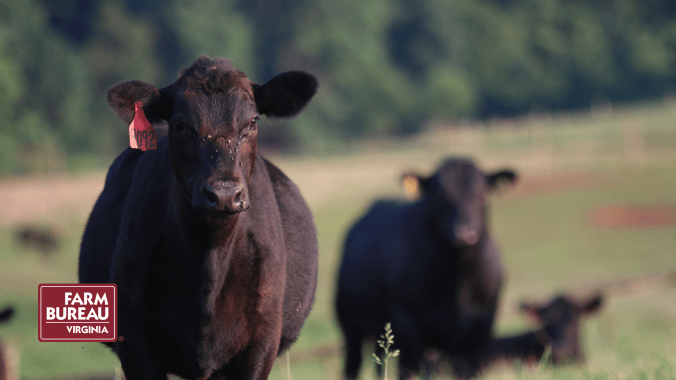
Rural communities across Virginia are about to see a boost in veterinary availability for their livestock, poultry and horses. Seven veterinarians have been awarded grants totaling $890,000 to expand critical services that keep farms running and rural economies thriving.
The shortage of large animal veterinarians isn’t just a Virginia problem—it’s a nationwide crisis affecting animal health, farm operations, food safety and agricultural economies from coast to coast, and Virginia is taking decisive action.
Through a newly launched partnership between the Virginia Department of Agriculture and Consumer Services (VDACS) and the Virginia Tobacco Region Revitalization Commission (TRRC), the commonwealth is making a strategic investment in the veterinary professionals who serve its agricultural backbone.
The Large Animal Veterinary Grant Program, which opened on July 1, 2025, attracted 43 applications from veterinarians across the state—clear evidence of both the demand for support and the commitment of practitioners to serve rural areas.
VDACS awarded four grants of up to $110,000 each, while TRRC provided three grants of $150,000 to veterinarians serving Southern and Southwest Virginia. The funds will support everything from opening standalone clinics and haul-in facilities to purchasing equipment, hiring technicians and even paying down student loans.
“We are committed in the commonwealth to helping large animal veterinarians succeed, so they can continue providing such vital services to our farmers and rural communities,” said Dr. Charlie Broaddus, VDACS State Veterinarian.
VDACS Large Animal Veterinary Grant Recipients:
TRRC Large Animal Veterinary Incentive Program Recipients:
For farmers who depend on healthy livestock for their livelihoods, access to veterinary care isn’t a luxury—it’s essential. When animals get sick or injured, quick access to skilled veterinary care can mean the difference between a minor setback and a devastating loss.
TRRC Chairman Delegate Will Morefield emphasized the economic importance of this initiative: “Livestock, especially cattle, are the primary drivers of the agricultural economy of Southern and Southwest Virginia. This is a prime example of the Commission listening to our producers and the communities we serve and utilizing our unique flexibility to generate solutions that will make a real difference.”
The program reflects a truly collaborative approach to solving agricultural challenges. Recipients were selected by a diverse panel including representatives from TRRC, Virginia Farm Bureau, Virginia Board of Veterinary Medicine, Virginia Cooperative Extension, Virginia Academy of Food Animal Practitioners and the Virginia Veterinary Medical Association.
Virginia Farm Bureau President Scott Sink noted the organization’s role in bringing the program to life: “Farmers have long struggled with a shortage of large animal vets—and we’ve been working hard to change that. Partnering with Senator Travis Hackworth and Delegate Alfonso Lopez, we helped create a grant program to support these vital professionals.”
The grants will be distributed over multiple years, ensuring veterinarians can build sustainable practices and remain committed to their communities for the long term. This strategic approach recognizes that solving the rural veterinary shortage requires more than one-time funding—it requires creating conditions where practices can thrive.
As Virginia continues to support its agricultural sector, this investment in large animal veterinary services represents a crucial step toward ensuring farmers have the resources they need to keep their operations healthy and productive for generations to come.
Robert Harper with Virginia Farm Bureau’s grain division provides this week’s market updates.
#merchandiserminute #grainfuture #virginiafarmbureau
Robert Harper with Virginia Farm Bureau’s grain division provides this week’s market updates.
#merchandiserminute #grainfuture #virginiafarmbureau
By: Jen S. Friedel, Director, Land Use-Value Assessment Program, Associate Professor of Practice, AAEC
This summer was a season of growth and opportunity for Virginia’s Land Use-Value Assessment (LUVA) program and an emerging ag law program in AAEC. LUVA will be undertaking the development of use-value estimates for open space in the Commonwealth in addition the continuing its work on agricultural and horticultural land use-values. LUVA will welcome a new postdoc to assist with its expanding research with expertise in natural resources, conservation, and non-market valuation of local open-space amenities. This growth will expand LUVA’s outreach capabilities and expertise. As the demand for expertise in land use rapidly increases across the Commonwealth from legal, policy, and practical perspectives, so goes the need for ag law programming for producers and professionals alike.
This October, VCE is sponsoring the Mid-Atlantic Regional Ag & Resource Law Conference in Shepherdstown, WV hosted in conjunction with universities across the region at which developments in land use issues such as solar siting, farmland loss, heirs’ property, conservation easements, and more will be covered by legal experts from across the mid-Atlantic and southeast. Virginia Tech’s Southwest Center has expressed interest in hosting similar programming, incorporating underground resource issues in the heart of Virginia’s wealth of mineral resources. Virginia’ s Department of Forestry, which currently houses Virginia’s Farm Link program, is hosting a conversation this fall about the future of the program and its administration. Fitting right into the ag law niche of heirs’ property and succession planning, VCE and AAEC’s ag law program will be joining the conversation about the future of this program. Recent presentation requests on agrivoltaics; collaboration inquiries from Virginia Mountain Lawyer’s Alliance; Virginia Tech’s Southwest Center, the Department of Forestry, and other land grant universities; legal publication requests for leasing, mineral ownership, and succession planning; and endless collaborative opportunities with organizations grasping with emerging land use issues demonstrate the growing need for a centralized hub of expertise, programming, and collaboration. VCE initiatives such as Innovative Leadership and Strengthening Your Facilitation Skills can support localities grappling with land use and complex issues affecting the societal fabric of communities will also complement this programming.
The LUVA program, AAEC’s ag law program, and VCE’s specialists and agents addressing critical land use issues are well positioned to provide the leadership and organization to address this critical need in a centralized hub of expertise. As Director of LUVA, a farmer, and attorney with a master’s in environmental law and policy with a concentration in land use law, I have a vision to create a unique program to meet the increasing needs of producers, landowners, policy makers, and legal expertise in land use. While the development of a centralized hub and collaborative space for land use expertise is very much in its infancy, I look forward to engaging with VCE specialists and agents, stakeholders, local governments, and producers and landowners to carefully outline the needs, scope, and goals of this developing program. I welcome your input, your insights, and your own visions for serving and addressing critical land use needs across the Commonwealth through this short survey.
By Katelyn Jordan, Assistant Director, Governmental Relations for the Virginia Farm Bureau
Local governments hold the key to farmland preservation. Through thoughtful land-use planning, zoning, and community engagement, our local leaders can safeguard the Commonwealth’s agricultural lands and reverse the concerning trend of rapid loss of farmland. We must empower our local leaders to act now – because protecting farmland starts at home.
The very real pressures of urban sprawl, population growth, deployment of renewable energy and development have had a direct impact on Virginia farms. Virginia’s farms are down 18% in 20 years—and over a third of a million acres of farmland have been converted due to development. If trends continue, the Commonwealth could lose another 800,000 acres by 2040.
While the forces driving this change may feel unstoppable, the reality is, we have choices.
Smart local land use planning can make all the difference. That’s why I’m proud to have contributed to the Planning for Agriculture in Virginia Toolkit, a new resource created by American Farmland Trust and partners to help counties, cities, and towns envision and prepare for a future where local farms can thrive.
Virginia Farm Bureau Federation (VFBF) is proud to partner with American Farmland Trust to ensure that the story of the backbone of Virginia’s economy is shared with local leaders. The reality is that many folks don’t know where their food comes from, or the hard work that went into getting it onto their plates. Educating community members on the importance of agriculture as well as the tools that are needed to ensure the industry’s vitality are critical.
This isn’t just about preservation. If you care about open space, food security or rural livelihoods, this matters. Virginia’s largest private industry, agriculture, is the cornerstone of the state and local economies. Among the nation’s most diverse farming sectors, it has a total economic impact of over $80 billion a year. If farmland is paved over, we don’t get it back. But with tools like use-value assessment, agricultural and forestal districts, and purchase of development rights (PDR) programs, we can chart a different course.
The Toolkit outlines these policies and shows how they’ve worked in Virginia. It’s full of fact sheets, resources and success stories, grounded in real-life applications.
We have the tools, let’s put them to work – for Virginia.
Visit the Planning for Agriculture in Virginia Toolkit here: farmlandinfo.org/planning-for-agriculture-in-virginia
Robert Harper with Virginia Farm Bureau’s grain division provides this week’s market updates.
#merchandiserminute #grainfuture #virginiafarmbureau

The IRS announced significant tax relief on September 22, 2025, for farmers and ranchers who were forced to sell or exchange livestock due to drought conditions. The relief extends to applicable areas across 49 states, the District of Columbia, and other regions that experienced exceptional, extreme or severe drought during the 12-month period ending August 31, 2025.
The new guidance, detailed in Notice 2025-52, allows eligible farmers and ranchers additional time to replace their livestock and defer tax on any gains from forced sales or exchanges. This relief recognizes the financial strain that drought conditions place on agricultural operations and provides crucial flexibility during recovery periods.
Under normal circumstances, livestock must be replaced within two years to defer capital gains. However, this relief extends that period to four years for drought-affected operations. The IRS is also authorized to further extend this replacement period if drought conditions persist.
The replacement period extension gives eligible farmers and ranchers until the end of their first tax year after the first drought-free year following the four-year replacement period to replace sold or exchanged livestock.
What this means in practice: If your drought-sale replacement period was scheduled to expire at the end of 2025, you will now have until the end of your next tax year to replace the livestock.
This extension applies if your region experienced exceptional, extreme or severe drought conditions during any week between September 1, 2024, and August 31, 2025, as determined by the National Drought Mitigation Center.
The tax relief generally applies to capital gains realized from sales or exchanges of livestock held for draft, dairy or breeding purposes.
To qualify for this relief, farmers and ranchers must demonstrate:
Notice 2025-52 lists applicable areas by county or jurisdiction across an expansive geographic range, reflecting the widespread nature of recent drought conditions. The fact that 49 states qualify for this relief underscores the severity and reach of drought impacts on American agriculture.
The IRS provides detailed information to help farmers and ranchers navigate this relief:
Drought forces difficult decisions on farmers and ranchers. When pastures dry up and feed becomes scarce or prohibitively expensive, selling breeding stock may be the only viable option to maintain operations. However, without tax relief, the immediate tax burden from those forced sales can compound an already challenging situation.
By extending the replacement period and allowing tax deferral, the IRS acknowledges that recovering from drought takes time. Farmers and ranchers need adequate time to rebuild their herds once conditions improve, and this relief provides that critical breathing room.
If you’re a farmer or rancher who sold livestock due to drought conditions:
This relief represents important recognition of the challenges facing America’s agricultural producers. Make sure you understand how it applies to your operation and take full advantage of the extended timeline to rebuild your herd when conditions allow.
For complete information, visit IRS.gov and search for Notice 2025-52 and Publication 225.
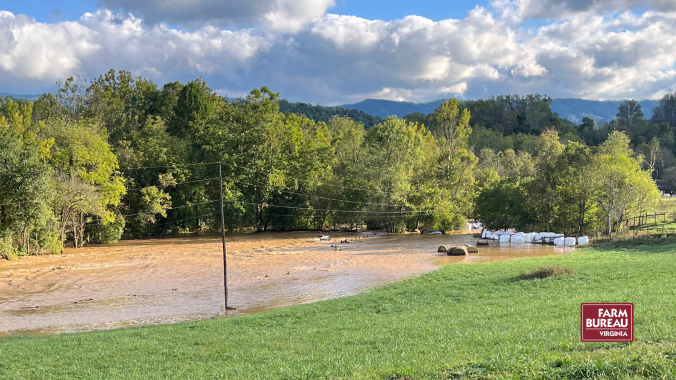
In a historic first for the nation, Governor Glenn Youngkin announced that Virginia has launched the USDA Farm Recovery Block Grant Program, becoming the first state to deliver operational disaster recovery assistance to farmers and timber landowners impacted by Hurricane Helene. Applications opened on Monday, September 22, 2025, marking a significant milestone in state-federal collaboration for agricultural disaster relief.
Virginia’s quick action in partnering with the U.S. Department of Agriculture (USDA) has transformed what was once an agreement on paper into tangible, on-the-ground relief for farmers and timber landowners still recovering from Hurricane Helene’s devastation. Through the leadership of the Youngkin Administration and the Virginia Department of Agriculture and Consumer Services (VDACS), the Commonwealth has set a precedent for how states can rapidly deploy federal disaster assistance.
“Virginia is proud to lead the nation in delivering recovery aid to farmers and timber landowners still recovering from Hurricane Helene,” said Governor Glenn Youngkin. “The opening of this program reflects the power of state and federal collaboration, providing meaningful support to communities that provide so much to our Commonwealth and our nation.”
VDACS is administering the Virginia Farm Recovery Block Grant Program, which will provide $60.9 million in disaster assistance through direct payments to eligible applicants across 27 designated localities in Southwest and Southside Virginia. These areas serve as the backbone of agricultural and forestry commerce in the Commonwealth.
The program covers the following counties: Bedford, Bland, Buchanan, Carroll, Craig, Dickenson, Floyd, Giles, Grayson, Lee, Montgomery, Patrick, Pittsylvania, Pulaski, Russell, Scott, Smyth, Tazewell, Washington, Wise and Wythe.
The following independent cities are also included: Bristol, Covington, Danville, Galax, Norton and Radford.
The block-grant funding is designed to assist with specific losses not covered by other federal disaster assistance programs, including:
Eligible producers can submit applications through Thursday, November 6, 2025 – a 45-day application window. The online application is accessible at www.vdacs.virginia.gov/about-farm-recovery-block-grant.shtml.
Important Note: Producers applying for certain losses—including market loss, future economic loss, plasticulture, and aquaculture claims—must agree to acquire and maintain USDA Risk Management coverage for two crop years to receive funding.
Recognizing that not all producers have easy computer access, VDACS staff and Virginia Cooperative Extension agents are ready to assist:
Applicants with limited or no computer access should reach out to their local Extension office for assistance in identifying options.
“Agriculture and forestry are vitally important to Virginia’s economy and serve as the backbone of commerce in the Southwest and Southside areas of the Commonwealth,” said Secretary of Agriculture and Forestry Matthew Lohr. “This grant funding provides critical, direct support to farmers and timber landowners in those areas and helps them restore their operations to be productive contributors to their communities and our state.”
Hurricane Helene’s impact on Virginia’s agricultural sector was severe, and this funding represents a crucial lifeline for producers working to rebuild their operations. By being the first state to operationalize this program, Virginia demonstrates its commitment to its agricultural communities and sets an example for responsive, effective disaster recovery.
Don’t wait—the application window closes on November 6, 2025. For complete program details, eligibility criteria, required documentation, or answers to your questions:
 Plows and Politics