BREAKING NEWS: Property Rights Constitutional Amendment Passes!

We did it!!!! Thank you, Virginia Farm Bureau producer members! Without your grassroots support, the property rights constitutional amendment wouldn’t have been a reality!

Once the votes are certified, the amendment will go into affect Jan. 1, 2013. 
From the Richmond Times-Dispatch:

Virginians overwhelmingly approved a constitutional amendment on Tuesday night that will restrict the state’s ability to take private property for commercial purposes.

The amendment – backed by almost 80 percent of voters — requires that private property be taken by the government only for a true “public use” and not given to another private landowner, such as a developer, even in the case of job creation. Exceptions would include utilities or the elimination of a public nuisance. 

The amendment ensures that property owners who have their land taken are properly compensated, including lost profits to businesses.

Governor McDonnell Announces Agriculture and Forestry Industries Development Fund Now Open to Applicants

Governor Bob McDonnell has announced  that guidelines for the newly created Agriculture and Forestry Industries Development (AFID) Fund have been finalized and localities are now able to apply for AFID grants that will enable them to support economic development and job creation efforts. With the release of these guidelines, Virginia, for the first time, has an economic development grant program designed specifically to support agriculture and forestry development projects.

“Agriculture and forestry are Virginia’s largest industries, but we learned that too often economic development projects within these important business sectors didn’t meet the necessary criteria for the Commonwealth’s major incentive programs,” said Governor McDonnell, who has made agriculture and forestry key components of his overall economic development and jobs creation agenda. “That’s an omission that we’ve addressed as the AFID clearly recognizes the sometimes unique aspects of agriculture and forestry projects. We hope this program will encourage local governments to work closely with these important industries to create new jobs and increased economic opportunity in communities throughout the Commonwealth.”

The creation of the AFID was part of Governor McDonnell’s jobs creation and economic development agenda during the 2012 session of the General Assembly. The Governor signed the AFID bill into law on May 9 at Cave View Farm in Weyers Cave. Senator Bill Stanley (R – Glade Hill) and Delegate Steve Landes (R – Augusta) sponsored the AFID legislation, which is funded at $1 million in each year of the biennium. AFID funds are broken into two categories with $750,000 going to large grants to assist local efforts in expanding current or attracting new agriculture and forestry processing/value-added facilities using Virginia grown products and $250,000 dedicated to small grants to assist localities in improving local economic development efforts relating to agribusiness. The guidelines being released today are for applicants seeking an AFID grant for a processing or value-added facility. Guidelines for the assistance to localities will be released later this year.

“The AFID is a powerful new tool in Virginia’s already impressive economic development and jobs creation portfolio of incentive options and will further enhance our ‘best for business’ reputation,” said Lieutenant Governor Bill Bolling. “The fund is particularly important to rural areas, regions of the state where the Governor and I pledged to focus significant attention and job creation efforts after we were elected in 2009. Agriculture and forestry typically are significant economic drivers in rural Virginia, so new investments in these industries will help to build on these region’s existing strengths.”

Under the processing/valued-added guidelines, program funds are now available to local governments and other political subdivisions as one to one matching grants of up to $250,000 to attract economic development prospects involving agriculture and forestry operations to locate or expand in Virginia. In order to qualify, a minimum of 30 percent of the agricultural or forestry products to which the facility is adding value must be grown or produced in the Commonwealth. Grant awards will be determined based on such factors as amount of private capital invested, projected state and local tax revenue generated as a result of capital investment and jobs created, anticipated amount of Virginia-grown product used by the project, projected impact on agricultural and forestal producers, a total return on investment analysis and an analysis of the impact on competing businesses in the area.

“The AFID’s ‘buy local’ provisions will encourage agricultural and forestry operations receiving grant funds to explore all the ways they can source a significant portion of their inputs from within the Commonwealth,” said Todd Haymore, Virginia’s Secretary of Agriculture and Forestry. “In addition to allowing investing companies to utilize and enjoy the benefits of Virginia’s high quality agricultural and forestry products, this provision expands existing markets or opens new ones for Virginia producers, helps preserve working farmland, and encourages investments in our rural communities.”

Businesses interested in an AFID grant should first contact their local economic development professional or other appropriate representative of the political subdivision to discuss the proposed project. If the political subdivision is interested in applying for the grant and providing the required local match, they should contact Stephen Versen, AFID program contact at the Virginia Department of Agriculture and Consumer Services (VDACS) at stephen.versen@vdacs.virginia.gov or 804.786.6911 to discuss the program and share initial project details. AFID Guidelines may be obtained on the VDACS website at http://www.vdacs.virginia.gov/agribusiness/afid.shtml.  Applications will be taken on a rolling basis. The AFID program will be administered by the Secretary of Agriculture and Forestry with assistance from VDACS and Virginia Department of Forestry staff.

Agriculture and forestry are Virginia’s largest industries, with a combined economic impact of $79 billion annually: $55 billion from agriculture and $24 billion from forestry. The industries also provide approximately 500,000 jobs in the Commonwealth according to the Weldon Cooper Center for Public Service at the University of Virginia.

Got Feral Hogs? VDGIF Sets Public Discussions for August

The Virginia Department of Game and Inland Fisheries is holding public discussions on feral hogs in Virginia, their impacts, and what other states are now doing to control them in August. They will be held:

August 15, 6:30 PM
Germanna Community College,
Locust Grove Campus
For more information, contact VDGIF at 540-295-7590

August 20, 6:30 PM
Halifax County – Scottsburg Vol. Fire Dept.
For more information, contact VDGIF at 434-525-7522

A third meeting is planned in the Southwest region of the state. Date and location to be determined.

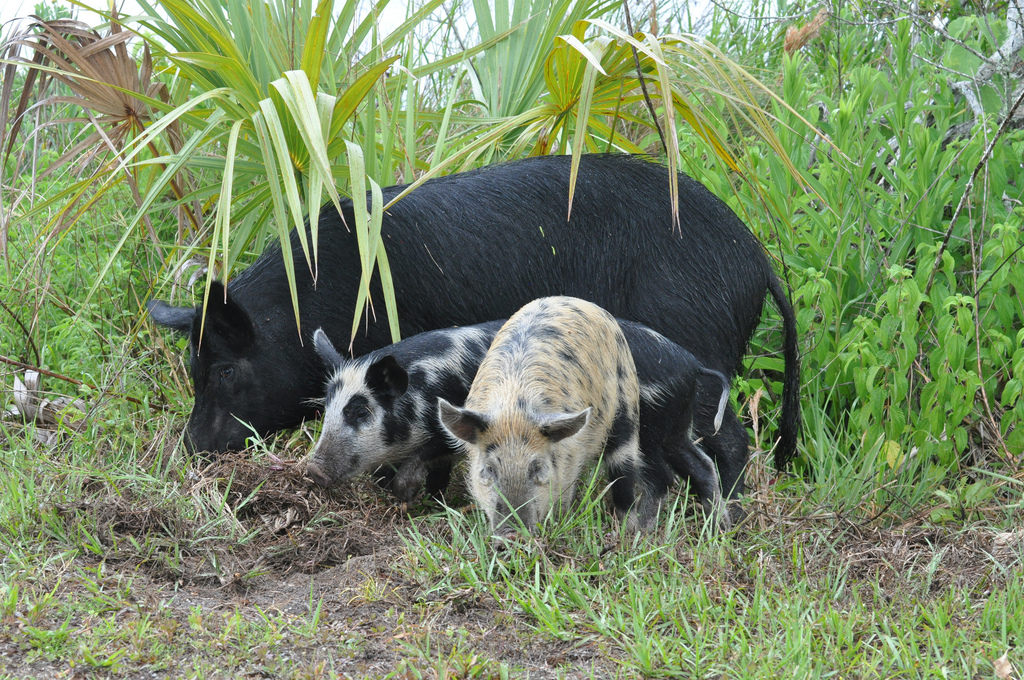
Feral hogs (also called wild hogs) are classified as a nuisance species in Virginia. Any pig that is outside of the property of its owner and cannot be claimed by its owner will be classified as a feral hog. They are an extremely invasive animal and cause damage to habitat wherever they exist. Feral hogs have been found to destroy turkey, grouse, and quail nests. They can also prey on deer fawns, destroy sensitive wetland habitat, and compete with our native wildlife for food resources. Feral hogs carry numerous diseases that can affect wildlife, domestic animals, and humans. The transmission of swine brucellosis and pseudorabies is a major concern to the commercial swine industry domestic animals, and humans. The transmission of swine brucellosis and pseudorabies is a major concern to the commercial swine industry.

Coyotes lose at the General Assembly

It’s bad news for coyotes this year at the General Assembly.

Both versions of the House and Senate budget restored $40,000 to a cooperative state and federal program to help landowners to learn how to control and abate coyote predation on livestock. This brings the program back to a minimal amount needed to continue.

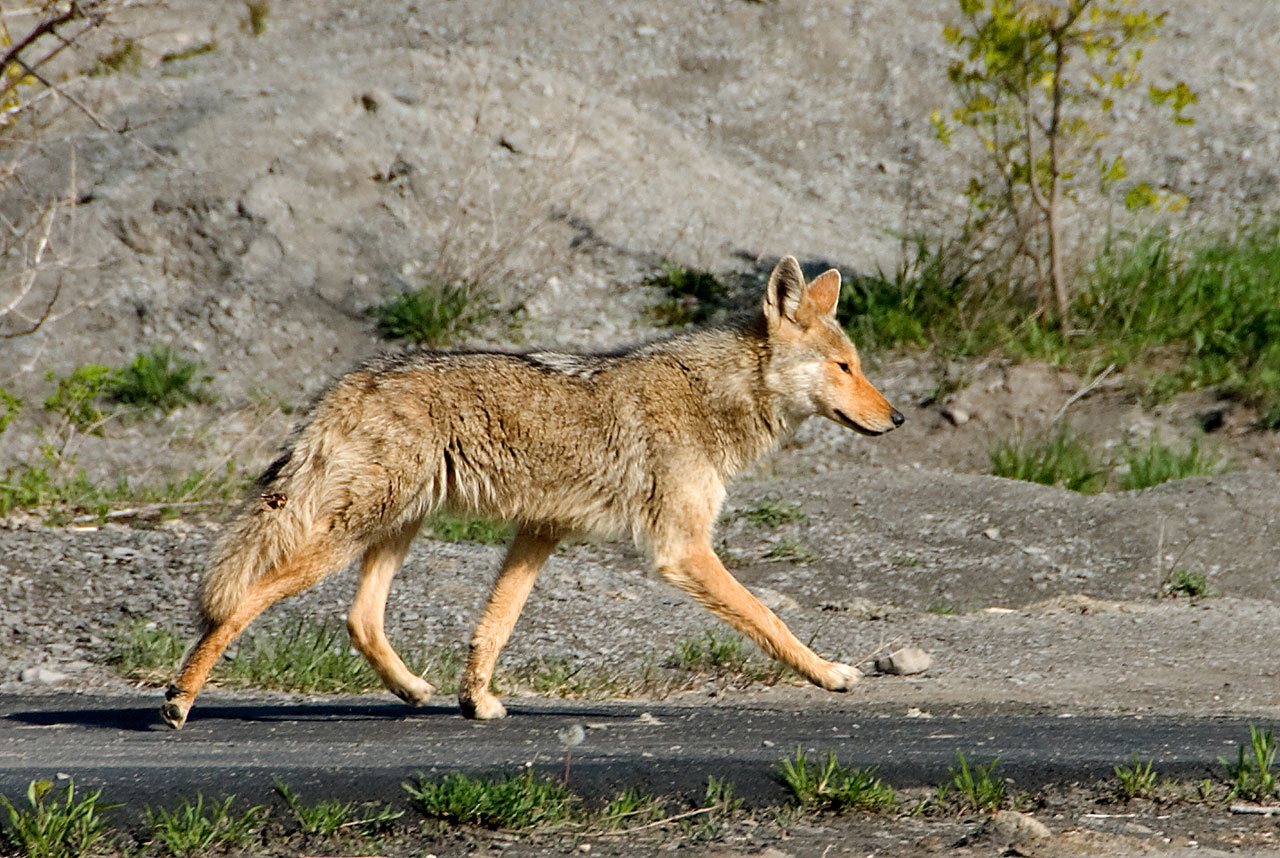
The coyote population has been escalating based on surveys by the Department of Game and Inland Fisheries. This is evidenced by a 32 percent increase in the reported sheep predation by coyotes and a 69 percent increase in calf predation by coyotes from FY2010 compared to FY2011.

This program was established in 1990. It is a cooperative service agreement between the Virginia Department of Agriculture and Consumer Services and USDA-APHIS-Wildlife Services (WS) established to provide necessary technical and operational assistance in identifying, controlling, and abating coyote predation to livestock. During FY2010, WS provided direct control services to 159 livestock farms in 24 western and southside counties in federal fiscal year (FY) 2010. During this period of time, 348 sheep, 35 calves, and 5 goats were reported and verified killed by coyotes in Virginia on these 159 farms. This level represents a 19 percent increase in reported sheep predation and a 6% increase in reported calf predation over the previous fiscal year. This only represents the number of farmers that were able to receive help. Many other farmers have suffered losses without assistance.

A big thank you should be extended to Delegate Poindexter and Senator Ruff and their General Assembly colleagues for tilting the scale back in the landowner’s favor by keeping tools in place to deal with coyotes’ depredation on the livestock industry.

Farm Bureau members attend Leglislative Day at the Capitol

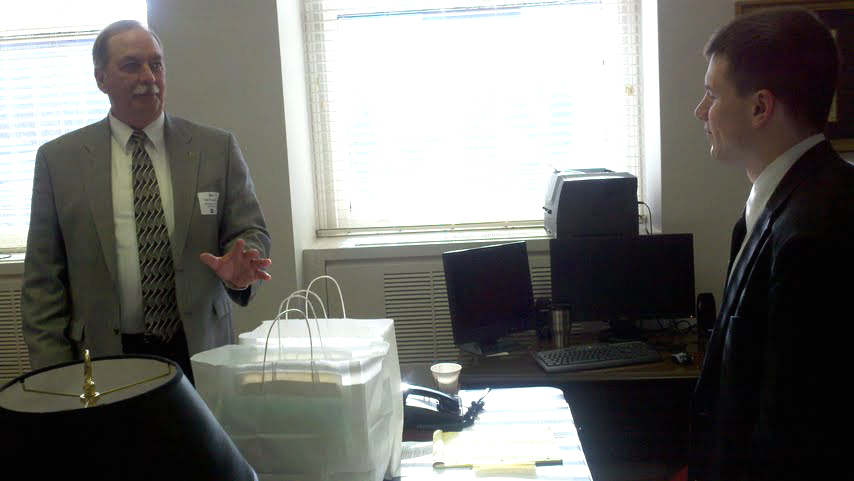
Bob Threewitts, a producer member in Rockingham County,
delivers postcards to Sen. Mark Obenshain’s office on
Legislative Day.

Thanks to everyone who attended Legislative Day! More than 150 producer members participated in the event, which included a training session by the U.S. Farmers and Ranchers Alliance on speaking effectively to the general public.

The training session was followed by lunch with Attorney General Ken Cuccinelli, who motivated members with a rousing speech about the property rights constitutional amendment before their visits with legislators at the Capitol.

“There is no substitute to being present…emails don’t compare to a good, solid handshake,” Cuccinelli said.

After lunch, Farm Bureau leaders made their way to the Capitol to deliver more than 14,000 signed postcards in support of the property rights constitutional amendment to their senators. They also met with their representatives in the House of Delegates as well as their adopted urban legislators.

In addition to eminent domain reform, county leaders urged lawmakers to uphold the state’s ban on Sunday hunting.

Farm Bureau has opposed Sunday hunting for decades. When deliberating on the policy, representatives cited faith-based beliefs as well as the ability of horse riders and landowners to use the outdoors one day a week without worrying about hunters.

Other issues discussed with legislators included cost-share money to implement conservation practices to comply with the U.S. Environmental Protection Agency’s Watershed Implementation Plan in the Chesapeake Bay region and total maximum daily load requirements in the Southern Rivers region.

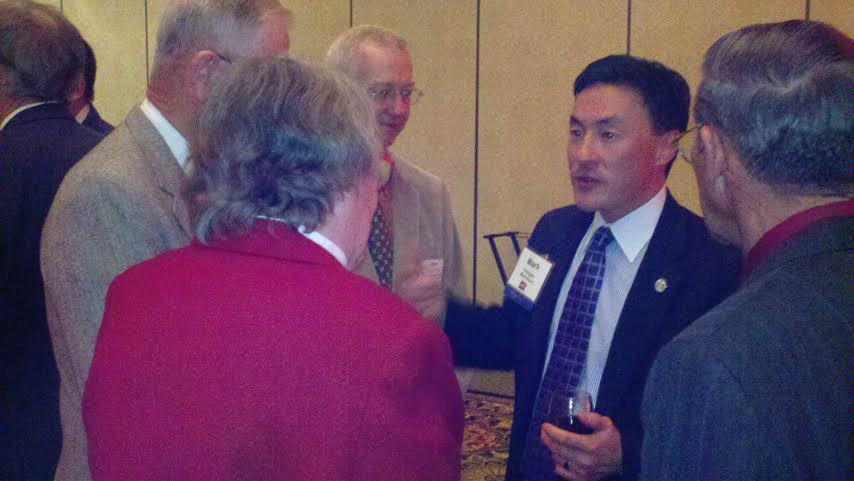
Del. Mark Keam of the 35th district in Northern Virginia met with
members of Albemarle County Farm Bureau at the legislative
reception.
Additionally, Farm Bureau representatives asked for funding for the state’s coyote damage control program. Virginia saw a 32 percent increase in coyote attacks on sheep and a 69 percent increase in attacks on calves last year.

That evening, the annual Farm Bureau legislative reception, hosted by the Virginia Farm Bureau Women’s Committee, was held at the Downtown Marriott. Along with county leaders, about 40 legislators attended the event, including Lieutenant Governor Bill Bolling.

Animal Agriculture Alliance wants to celebrate Food Day every day

The Center for Science in the Public Interest has proclaimed today “Food Day” to to raise awareness of raising food prices, world hunger the declining quality of the American diet. Unfortunately, the campaign downplays the importance of modern agriculture and unfairly criticizes the way of life of many food producers.

But the Animal Agriculture Alliance, a friend of Virginia Farm Bureau, recently released an op/ed piece from their chairman Chris Ashworth about celebrating “Food Day” every day and supporting American farmers and ranchers. Click to read the article:

 Real Farmers, Real Food

Celebrate Food Day – Every Day

You may have heard that October 24 has been designated Food Day. But the thing is, to farmers and ranchers, Food Day is every day. I feel honored to be among the less than two percent of Americans who help stock your local supermarket. I’m here to tell you that farming is not just a business; it is a way of life, no matter if you have ten cows or 10,000.

Farming is rewarding work, but it is also tiring, dirty, and sometimes heartbreaking. You don’t have to look further than this summer’s historic drought in Texas or the devastating floods in the Northeast to see that it takes a special sort of resiliency to put up with the uncertainty of Mother Nature.

Modern food production relies on a mix of technology and tradition. There is a reason why agriculture looks the way it does today. No, our industry is not perfect. But time and time again, American agriculture has shown a commitment to continuous improvement- be it for food safety or environmental stewardship. And as a veterinarian, I can tell you today’s farmers are able to provide better care for their animals than past generations ever could.

Although most of us are fortunate to spend just a small percent of our incomes on food, we shouldn’t forget that one in eight Americans has trouble getting enough to eat. The demand for safe, affordable food will only increase as our population grows worldwide – but I am confident that American farmers will rise to this challenge, if we let them.

Let’s use Food Day to celebrate the diversity of American agriculture. While we should enjoy and appreciate the taste of fresh seasonal products from the local farmers market, we can’t afford to deny the importance of large scale producers who provide the bulk of what we rely on in the grocery store. In many ways, agriculture is the backbone of our nation. We must protect it.

On October 24, take this opportunity to learn more about your food straight from the people who understand how it is produced best – farmers and ranchers.

Visit the Real Farmers, Real Food Web site for more information, including a message from Miss America 2011 Teresa Scanlan, an agriculture advocate, and to sign a petition in support of agriculture’s diversity and consumer choice.