From the Field is a bi-monthly column written by Mark Campbell, Farm Bureau Field Services Director for the Central District. He writes about Farm Bureau member benefits and County Farm Bureau activities.
District Leadership and Policy Development Meetings have already started and will continue through March. These meetings involve Governmental Relations staff providing a summary of what took place during the General Assembly session as it relates to Farm Bureau policies, and Farm Bureau producer members surfacing issues that they think Farm Bureau should do something about.
Usually, only state and national issues are requested. But this year, we asked the members to come up with local issues as well. Local issues are action items for the county Farm Bureaus, but Virginia Farm Bureau staff are available to provide information, research and advice.
The state and national issues that were surfaced provide county Farm Bureau members and staff a flavor for what the issues are and if some issues are concerns of multiple counties. These surfaced issues provide food for thought to county Farm Bureaus when they develop resolutions. Resolutions, or formal position statements, are voted on at the county Farm Bureau membership business meeting by the members, and then forwarded to the Virginia Farm Bureau Convention. Resolutions or existing policies that are approved by the voting delegates at the state convention become Farm Bureau policy.
Policies of a national scope are forwarded to the American Farm Bureau Convention, where they are voted on by voting delegates from across the country. As you can see all Farm Bureau policies start at the county level. That is why we often refer to Farm Bureau as a grassroots membership organization.
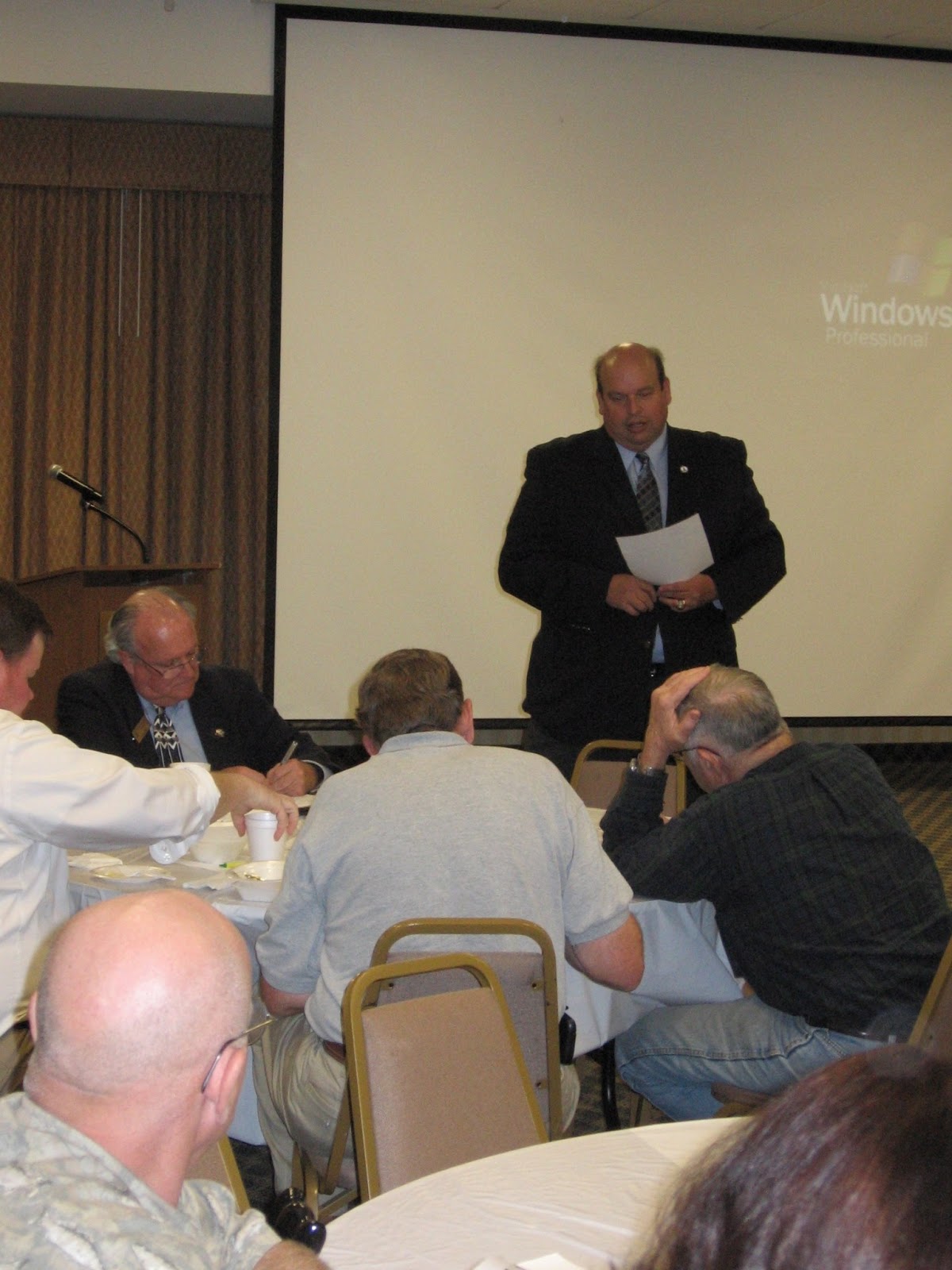
The central district meeting was on March 4th in Zion Crossroads. At this meeting, the main areas of concern were keeping the Land Use Assessment program, water issues, and transportation regulations. Since the housing market has been in the dumps, county reassessments are down as well. These lower property reassessments have resulted in some counties taking a closer look at the Land Use program and debating on keeping it or not. Thankfully, county Farm Bureau members have worked the issue in their county to encourage the board of supervisors to keep the program.
As money becomes harder and harder to come by for county governments; I encourage you and your county Farm Bureau to develop a long term strategy to keep the Land Use Assessment program viable in your county. I think this will be a critical local issue for years to come.
The water issues dealt with concerns with impacts to water flow and quality from urban development to farms downstream, looming EPA regulations, and funding for agriculture Best Management Practices (BMPs) cost share programs. The transportation issue drew concern with bureaucracy and lack of clarity when transporting products across state lines.
If you are a producer member and interested in attending, please call you county Farm Bureau office for dates of meetings in your area. There is no charge for the meeting or meal, and we would love to hear from you. Your input is critical to Farm Bureau continuing to be a successful grassroots membership organization.
Until next time,
Mark