From the Field: Legislative Day at the Capitol

From the Field is a bi-monthly column written by Mark Campbell, Farm Bureau Field Services Director for the Central District. He writes about Farm Bureau member benefits and County Farm Bureau activities.

Pittsylvania County Farm Bureau member Tommy Motley
and Andrew Smith from Governmental Relations meet with
Delegate Rick Morris at the Farm Bureau Legislative
Reception.
We finished another Legislative Day at the Capitol yesterday. Many Farm Bureau members and county FarmBureaus maintain communication with their legislators throughout the year.  However, Legislative Day is an opportunity for members to get right in the middle of the legislative process by visiting offices of their elected representatives and speaking directly with a delegate or senator about current bills.  

For many Farm Bureau members, preparation for this took one or two days of planning back home.  Before leaving their farms, either the night before or early the morning of; farmers had to put out hay for livestock, check water tanks and wells so they didn’t freeze, and numerous other things that had to be done in their absence.  These are things that most of the general public doesn’t have to worry about when they leave for a meeting.  So we, at Virginia Farm Bureau, thank you for your dedication and service.

For members that have not attended before, the process may sound a bit intimidating, but Virginia Farm Bureau makes it easy.  The day kicked off at lunch with a briefing of the issues by our Governmental Relations staff, and the registration packets had everything a person could want to make the visits.  There were bills that members lobbied in favor of or opposed in the areas of Trespass and Private property rights, Right to Farm, Soil and Water Conservation Governance, and Uranium mining. 

Next, members took advantage of the shuttle vans provided by Farm Bureau to get to the legislators’ offices on this very cold day.  One word of caution in the General Assembly Building, you must not be timid on jumping on the elevator when the doors open.  Because when the doors open, there can sometimes be a mad dash to the elevator depending on the time of day.

For those that still aren’t cozy to the idea of meeting with legislators one on one on their turf, consider this:  You can tag along with members from an adjoining county.  Odds are that they are in the same district.  What better way to learn than to watch another county do it?  Soon, your confidence will build and you will likely throw in a few comments of your own. 

To reward your hard work and going out on the front line, Farm Bureau had snack bags for pick up upon returning.  And if that is not enough incentive, a wonderful reception for legislators and members capped off the evening.  

All of our Field Staff made visits with members throughout the afternoon.  We really enjoyed seeing the members in action.  This year, I made visits with member Bob Massey from Spotsylvania.  Spotsylvania, like some counties large in size or containing a large urban area, has many legislators.  On our list were three senators and five delegates.  Plus we visited one urban legislator not representing Spotsylvania Countyto inform them of the issues affecting agriculture.  We had some good visits.  I especially enjoyed our meeting with Senator Bryce Reeves.  We accompanied members from Louisa and Orange counties.  There was a good discussion of the issues, and Senator Reeves asked good questions to better understand the issues and Farm Bureau’s position on the bills.

If you missed Legislative Day, we can still use your help.  We are always seeking members to make contacts to legislators on state and national bills throughout the year.  You District Field Services Director would be glad to help you get involved and show you how to best make your voice be heard.  We are here to help.  

Until next time, 
Mark

Shenandoah County man wins national Farm Bureau honor

Dana Fisher
Photo by Sara Owens

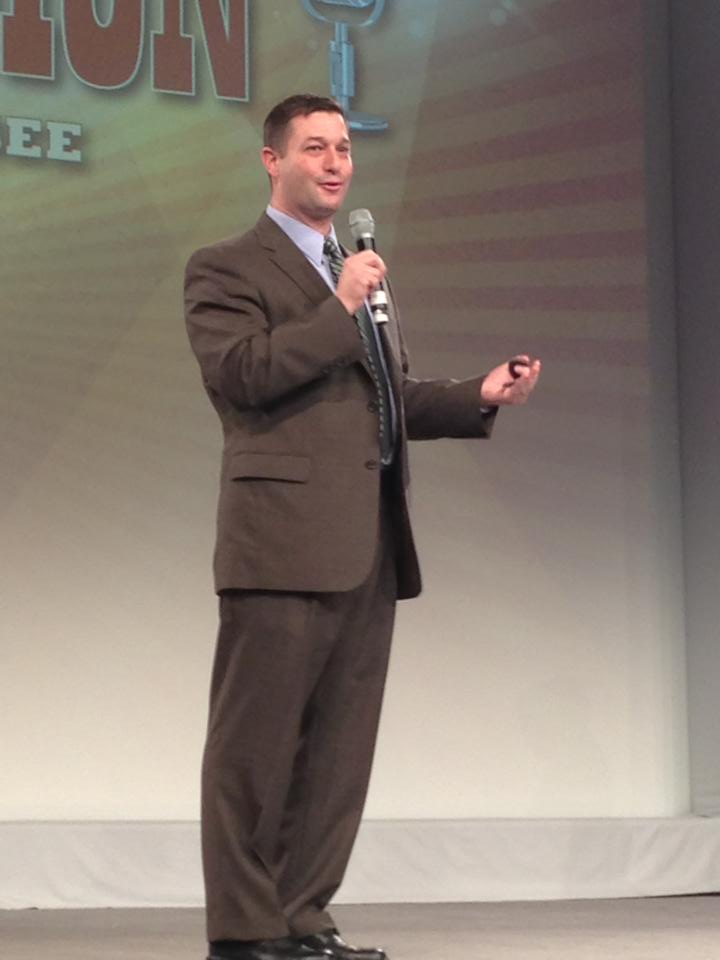
Dana Allen Fisher of Shenandoah County was named the winner of this year’s American Farm Bureau Federation Young Farmers and Ranchers Excellence in Agriculture Award. He was recognized Jan. 14 at the AFBF Annual Convention in Nashville, Tenn.

 “We couldn’t be more proud of Dana and all of our Young Farmers Program participants. It’s great to see that they are receiving national recognition for all of their hard work and accomplishments,” said Virginia Farm Bureau Federation President Wayne F. Pryor. “Young farmers and other young ag professionals are the key to agriculture’s future, and Dana is working hard to make sure agriculture prospers.”

 Fisher is an agriculture instructor who teaches classes in leadership, horticulture and natural resources. He also is an FFA advisor and has served on the FFA Foundation board in several roles. He chairs his county Farm Bureau’s Young Farmers Committee and has served on the VFBF Young Farmers Committee for the past three years.

 The Excellence in Agriculture Award recognizes young adults who do not derive the majority of their income from an agricultural operation but actively contribute and grow through their involvement in agriculture, their leadership abilities and participation in Farm Bureau and other organizations.

 Fisher will receive his choice of a 2013 Chevrolet Silverado or a 2013 GMC Sierra, courtesy of GM, and registration for this year’s AFBF Young Farmers and Ranchers Leadership Conference.

Virginia Farm Bureau supports current provisions of Right to Farm Act

Many of you have heard through the media or seen through e-mails information on HB1430 (Lingamfelter) which amends the Right to Farm Act.

Virginia Farm Bureau is opposed to HB1430 based on policy voted on by our farmer members through our grassroots process.  While the bill may seem appealing in sound bytes, it drastically expands the Right-to-Farm beyond its original purpose of protecting bona fide agricultural operations.  The Right-to-Farm Act is an agreement between local governments and the agricultural community; by expanding these protections without buy-in from all stakeholders, it increases the chances of losing the current protections that the Code section provides.
The provisions of HB1430 would allow:

-art, literature, artifacts, and any other items to be deemed part of an agricultural operation if they make up 50% or less of the gross sales. This opens the Right to Farm act to allow stores, restaurants, museums, and other buildings to be built by-right on agricultural land;

-the bill would undermine current zoning laws in localities where the county government has passed ordinances to promote agriculture and agritourism in the locality;

-citizen suits to be brought against county officials or employees where they would be held personally liable for enforcement of county ordinances; and,

-expand the Right to Farm beyond the intent of bona fide production of agricultural products. This is the intent of the agreement between the agriculture community and the localities to ensure that true agricultural production practices not be hindered by the locality. Since HB1430 allows essentially anything to be built on agriculturally zoned land, it would increase the chances of losing the protections we already have with the Right to Farm in the future.

We are working with the patron and representatives of local government to see if there is some common ground that can be found on language to amend this specific Code section. If not, we are committed to working throughout the year with all stakeholders involved to find compromise language that protects legitimate production agriculture and value-added operations that may occur on agriculturally-zoned land.

Vilsack Sounds off on Short-Term Farm Bill

Vilsack

Agriculture Secretary Tom Vilsack appeared on NPR’s Talk of the Nationthis week to discuss the short-term farm bill provisions that Congress passed last week. Vilsack said the nine-month extension leaves farmers with uncertainty.
“I think farmers are expressing some frustration about the fact that they were close to getting a five-year program that would have been comprehensive, that would have had a series of reforms, that would have assisted in dealing with the fiscal challenges the country is faced with,” said Vilsack. “They’re now faced with uncertainty in terms of what the policies are going to be, and they’re faced with uncertainty in terms of how much support there will actually be once a five-year bill is ultimately passed by Congress.”
Click the link above to listen to the audio or read the transcript. 

From the Field: Forestry is a Significant Industry in Virginia

 From the Field is a bi-monthly column written by Mark Campbell, Farm Bureau Field Services Director for the Central District. He writes about Farm Bureau member benefits and County Farm Bureau activities.


We have often heard governors, elected representatives, and agency personnel talk about the significant economic contribution of agriculture and forestry to the state of Virginia.  Forestry is included, but have you ever thought of the forestry industry by itself instead of the agriculture portion that tends to get most of the recognition?  

There is quite a bit of logging that takes place in the southern part of my field district, especially the counties of Appomattox, Buckingham, Cumberland, and Nelson.  I know other areas of the state have significant forestry economies.  However, it wasn’t until my family had two tracts of land harvested this fall that I gained a much greater appreciation and knowledge of the forestry business.  It is a big business.  

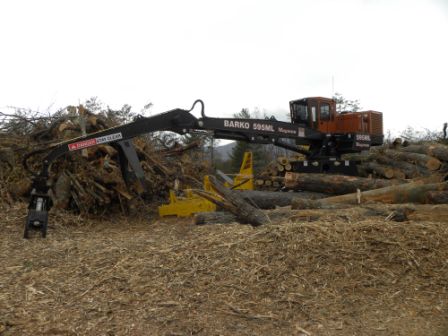
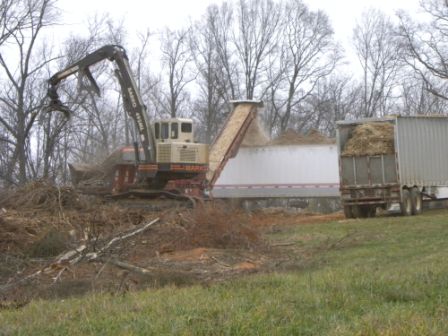
When the farming community thinks of expensive equipment, thoughts of new combines and tractors come to mind with shiny new paint and electronic command centers at the driver’s seat.  But when I consider the costs of skidders, feller bunchers, knuckle boom loaders, chippers, tractor-trailers; the asset value sitting on a logging deck is easily over a million dollars.  For two months, it was just plain fun and interesting to watch the progress of the tree harvest.  At the end, it was a sad day to see all of the equipment and trailers pull away.  But my sons continue on with logging in smaller fashion with their new logging toys that they got for Christmas.  

The two tracts of land were clear cut.  This was the best decision for us.  That decision included an assessment of the trees standing prior to harvest.  Factors of that assessment were tree maturity level, quality, species and growth potential.  The other assessment was a plan for after the harvest.  Approximately 70 percent of the land will be planted to Loblolly Pine and the remaining 30 percent will be converted to pasture.  This type of assessment and planning of our wooded land in consultation with the local Virginia Department of Forestry (VDOF) staff and logger had never been done on our farm.  This was a major milestone.  

For the past 70 years that I know of, the wooded land was just allowed to grow and flourish with no thought to management.  When previous generations thought some trees were ready to harvest, it was done.  This clear cut will, in essence, allow us to start from a clean slate and be able to actively manage our forest land.  

During the harvest, the logger had a market for every piece of wood there was except the stump.  There were saw logs, logs for railroad ties, pine chips, hardwood chips, and fuel chips.  All of these different wood products went to numerous sources in the area such as MeadWestvaco in Covington, RockTenn in Hopewell, Greif in Riverville, and Dominion Power in Hurt.  Forest products include paper, cardboard and containers, wood pellets, lumber, rail road ties, furniture, and electricity from burning of wood chips just to name a few.  Here is a cool video link (https://www.dom.com/about/stations/renewable/pittsylvania-power-station.jsp) to the Dominion Power plant in Hurt that burns wood chips to make electricity for up to 20,000 homes.  

This logging experience increased my knowledge and awareness of the forestry industry dramatically.  I just think about all of the businesses such as those mentioned above that are close to me plus other businesses that are directly and indirectly involved in forestry.  It becomes quite clear how the forestry industry is a major economic driver for localities and the state.

 Here are a few statistics from the Virginia Department of Forestry website.
  1. 62% of Virginia land area is in forest.
  2. Most of Virginia’s forest land is privately owned or 12.8 million of 15.9 million acres.
  3. Majority of forests are hardwood type trees, of which half of that acreage is over 60 years old.  Approximately 20% of the acreage is pine.
  4. Economic impact of 144,000 jobs and $23.4 billion to the economy.
  5. It is a renewable resource.
Other important benefits include wildlife habitat, carbon sequestration, and water quality protection, especially in light of the Total Maximum Daily Load (TMDL) and the Watershed Implementation Plan (WIP) for the Chesapeake Bay.  

The VDOF is looking to the future and changing with the times.  The Tree Improvement Program researches and develops more efficient and faster growing genetics, studies planting density, tree thinning and nutrient applications.  A planting of Loblolly Pine can now be ready for harvest in 22 years thanks to improvements of seedling genetics and research.  There are some challenges though.  Pests of Pine Bark Beetle and Gypsy Moth have been on the decline the past 10 years thanks to vigilant control methods.  But new threats include the Emerald Ash Borer and Thousand Canker Disease of Black Walnut trees.  Other challenges are poor economy, changing demographics, changing forest land ownership, loss of forestland, especially blocks of acreage, and changing forest markets.  

The forestry industry is exploring new products and markets from forest products as we move into the future.  I think Virginia is in a very good position to further enhance our forestry industry with our topography, climate, and access to a large export facility.  Next time you are traveling take a closer look at your surroundings.  You just might see more going on in the woods than you thought.  

Until next time, 
Mark

2013 Virginia General Assembly Convenes Wednesday

Tomorrow, the 2013 Virginia General Assembly will convene in Richmond. Here is what Virginia Farm Bureau will be focusing their efforts on this year:

Agriculture Best Management Practices Cost-Share Program

 Virginia Farm Bureau urges legislators to:
  • Adequately fund for the Agriculture Best Management Practices Cost-Share Program in order for farmers to be able to meet Virginia’s Watershed Implementation Plan goals by 2017 to avoid mandatory agriculture best management practice requirements
 Soil and Water Conservation Districts Funding

Virginia Farm Bureau urges legislators to adequately fund operational support and technical assistance for Soil and Water Conservation Districts to:

  • Administer Agriculture Best Management Practices Cost-Share Program
  • Assist farmers in developing Resource Management Plans
  • Track voluntary agriculture best management practices to help document water quality improvements for input into the Chesapeake Bay computer simulation model
 Predator Control

Virginia Farm Bureau urges legislators to:

  • Support increased funding for the state portion of the state/federal coyote control programs to expand technical assistance east of Blue Ridge
  • Support funding for the implementation of a central contact point for wildlife damage issues

 Property Rights and Trespass

Virginia Farm Bureau urges legislators to:

  • Oppose any attempts to weaken statutory changes to Virginia’s law that defined “lost profits” and “lost access”
  • Support legislation to amend the Code of Virginia to further protect landowners from trespassers and liability claims from those who trespass
General Assembly updates and action alerts will be sent every Wednesday and Friday, so if you haven’t joined the Capitol Connections Action Center, please send your email address to kelly.pruitt@vafb.com. You must be a producer member to receive action alerts. Plows and Politics will continue to be updated every Tuesday and Thursday.

We will also be sending out printed updates three times during this year’s session starting in February.

And don’t forget Legislative Day at the Capitol is on Tuesday, Jan. 22nd! We look forward to seeing those of you who have registered at the Hill!

Registration Open for 2013 Governor’s Conference on Agricultural Trade

Registration is now open for attending the 2013 Governor’s Conference on Agrcultural Trade to be held March 7 and 8, 2013, in Richmond.

The theme for this year is “Virginia and the Global Market”.  Speakers include Virginia Tech President Charles Steger, Chinese Ambassador Zhang Yesui, New Zealand Ambassador Mike Moore and Russian Deputy Trade Representative Oleg Slepov, who will address what recent events and other worldwide geo‐political and economic developments mean for agricultural trade moving forward into the future. Governor Bob McDonnell will be the keynote speaker.

Along with policy analysis and discussion the agenda will also again feature real‐life presentations from individuals and companies involved in exporting their products to international destinations. And as a special added bonus to this years’ program, the Virginia Department of Agriculture and Consumer Services international trade representatives will be available for one‐on‐one discussions with those that may want to discuss a particular market or product line (see program agenda and registration below for more information).

To register, please visit http://www.vafarmbureau.org/Portals/Fed/documents/registration_13_2nd.pdf

Breaking News: Congress Passes Fiscal Cliff Bill

Just before midnight last night the House passed H.R. 8, the American Taxpayer Relief Act of 2012.  The vote was 257-167.  
The president will sign the bill as soon as it reaches the White House.
TAX POLICY
The bill makes permanent, starting in 2013 unless otherwise noted, Farm Bureau supported tax provisions as listed below.
  • Estate Taxes – The estate tax exemption is $5 million per person indexed for inflation with any unused amount allowed to transfer to a spouse (portability.) The maximum rate will increase to 40 percent (up from 35 percent).  The estate and gift tax exemptions are unified. Stepped-up basis is already permanent law and will continue.
  • Capital Gains Taxes – The top rate will be 15 percent for taxpayers making under $400,000 (single person)/$450,000 (couple).
  • Income Taxes – Income tax rate brackets will be 10 percent, 25 percent, 28 percent, and 35 percent for taxpayers making under $400,000 (single person)/$450,000 (couple). There are no caps on personal exemptions or itemized deductions. The marriage penalty is eliminated for many taxpayers.
  • Alternative Minimum Tax (AMT) –The bill increases the AMT exemption for 2012 to $50,600  (individuals) and $78,750 (married filing jointly) and indexes it for inflation.

Expiring Provisions: The bill extends many “expiring tax provisions.” The following are Farm Bureau supported provisions:
  • Section 179 Small Business Expensing – The maximum amount that a small business can immediately expense when purchasing business assets instead of depreciating them over time will be $500,000 reduced dollar for dollar when expenditures exceed $2 million (2012 and 2013).
  • Bonus Depreciation – 50 percent bonus depreciation (2013).
  • Cellulosic Biofuel Producer Tax Credit (2013):
    • $1.01 per gallon income tax credit for cellulosic biofuel sold for fuel;
    • Additional first-year 50 percent bonus depreciation for cellulosic biofuel production facilities;
  • Alternative Fuel Refueling Property – 30 percent credit for installation costs (2012 and 2013);
  • Biodiesel Tax Incentives (2012 and 2013):
    • The biodiesel and renewable diesel $1.00 per gallon tax credit; 
    • The 10 cents per gallon small agri-biodiesel producer credit; and
    • The $1.00 per gallon tax credit for diesel fuel created from biomass;
  • Incentives for Renewable Electricity (2013):
    • The Production Tax Credit, which provides an income tax credit of 2.2 cents per kilowatt-hour for the production of electricity using wind energy (Sec. 45); and
    • The Community and Distributed Wind Investment Tax Credit, which gives the option to take an Investment Tax Credit in lieu of the Production Tax Credit (Sec. 48);
  • Taxation of non-profit, unrelated business income from tax rent, royalty, interest and annuity income (UBIT) only when it exceeds fair market value( Sec. 512(b)(13) (2012 and 2013);
  • Provision encouraging donations of conservation easements (2012 and 2013);
  • Fifty percent railroad track maintenance credit for short line railroads (2012 and 2013);
  • Enhanced deduction for donated food (2012 and 2013);
  • Deduction for state and local general sales taxes (2012 and 2013); and
  • Deduction for tuition and fees for higher education (2012 and 2013.
FARM BILL
The bill includes a nine month extension of the 2008 Farm Bill that will continue programs until September 30, 2013.  Major provisions include:
·         An extension through Sept. 30, 2013 for most provisions of the 2008 bill;
·         Does not include the new dairy gross margin/supply management program but rather extends the Milk Income Loss Contract (MILC) program and restores it to a 45 percent rate (from 35 percent) and a feed cost adjuster set at $7.35/cwt. Rather than the $9.50 level that was most recently in place.  These changes scored as $110 million and were paid for via cuts to the nutrition education program;
·         Authorizes $80 million for livestock indemnity payments; $400 million for the livestock forage disaster program; $50 million for emergency assistance for livestock, honey bees, and farm-raised fish; and $20 million for trees assistance. It is important to note, however, that these programs are authorized but not funded.  In order to have any funding, the Appropriations Committees would have to provide funding;
·         Authorizes, but as with the disaster provisions, does not fund any of the 37 expiring programs that lost their base; and
·         Importantly, does preserve the baseline for consideration of the farm bill this year.
With Congress unable to complete action on a new five-year farm bill, extension of current law was the only option remaining.  As a result, the new Congress that convenes tomorrow will have nine months to re-introduce, mark up and take to the House and Senate floor a new farm bill.  While we would expect many provisions to be very similar to the legislation passed by the Senate and the House Agriculture Committees in the summer of 2012, some things will very likely change when the Congressional Budget Office comes out with its new scoring of costs in early March.
RURAL HEALTH CARE
  • Extension of Low-Volume Hospital (LVH) Program – The LVH program assists small rural hospitals by offsetting the increasing cost of providing care to seniors.  A low-volume hospital is a hospital that is more than 15 road miles from another comparable hospital and has fewer than 1,600 Medicare discharges a year. This program provides financial assistance to LVH hospitals to help them cover fixed and operational costs.  Farm Bureau supported the extension of the LVH program. The extension expires on Dec. 31, 2013.
  • Extension of Medicare-Dependent Hospital (MDH) Program – The program provides MDHs greater financial stability and leaves them better able to serve their communities by simplifying billing procedures and creating incentives to develop local acute, primary, emergency and long-term care systems.  A hospital qualifies for the MDH program if it is located in a rural area, has no more than 100 beds, is not classified as a Sole Community Hospital and has at least 60 percent of inpatient days or discharges covered by Medicare.  Farm Bureau supported the extension of the MDH program. The extension expires on Oct. 1, 2013.
  • Extension of Medicare Physician Payment (Doc Fix) – This extension prevents the reduction of Medicare payment rates and guarantees seniors have continued access to their physicians.  This provision benefits rural America because of the large percentage of eligible Medicare recipients living in rural America.  The extension expires on Dec. 31, 2013. 
  • Permanent Tax Exclusion of National Health Service Corps Scholarships – The National Health Service Corps (NHSC) maintains a health care safety net by placing primary health care providers in the most underserved rural communities.  This provision permanently allows qualified NHSC recipients to exclude the scholarship from their income.  The bill extends the changes to this provision for taxable years beginning after Dec. 31, 2012.   
OTHER ISSUES: Farm Bureau does not have a position on  the following noteworthy items.
·         The bill does not extend reduced employment and self-employment taxes (payroll tax holiday);
·         The bill delays for two-months automatic across-the-board spending cuts (sequestration) that was scheduled to start on Jan. 1;
·         The bill extends unemployment insurance benefits for one year; and
·         The bill does not increase the debt limit.

More Good News: EPA Withdraws Order in the Face of Farmer’s Lawsuit

In a surprise about-face, the Environmental Protection Agency has withdrawn an order demanding that West Virginia poultry grower Lois Alt obtain a Clean Water Act discharge permit for stormwater runoff from her farmyard or face up to $37,500 per day in penalties. While the action is a great victory for Alt, it leaves unresolved a major legal issue with serious implications for other livestock and poultry farmers that must be addressed, according to the American Farm Bureau Federation.

The U.S. District Court for the Northern District of West Virginia ruled in October that AFBF and West Virginia Farm Bureau have the right to join Alt’s lawsuit. EPA had aggressively opposed the Farm Bureaus’ participation. EPA’s withdrawal of the order comes six months after Alt filed her legal action and a mere six weeks before Alt and AFBF are scheduled to file briefs challenging EPA’s interpretation of the law.

In withdrawing its order, EPA cited new management practices identified during a May 2012 re-inspection of the farm. However, EPA’s inspection report also states that dust, feathers and small amounts of manure were still observed on the ground at the farm – which was the very same basis of EPA’s original order, according to AFBF General Counsel Ellen Steen. “EPA still has not backed away from its position that any amount of pollutant on the ground at a livestock or poultry farm requires a Clean Water Act permit,” according to Steen. “The more likely reason for EPA’s withdrawal is that it does not want to defend its position in court.”

“This is a personal victory for Lois Alt, but it should not have taken a federal lawsuit to convince EPA to withdraw an order that was illegal from the start,” said American Farm Bureau Federation President Bob Stallman. “EPA’s withdrawal of the Alt order without correcting its legal position still leaves other farmers and ranchers hanging in uncertainty, vulnerable to the same threats that Ms. Alt faced.”

EPA’s November 2011 order threatened Alt with $37,500 in fines for each time stormwater came into contact with dust, feathers or small amounts of manure on the ground outside of her poultry houses as a result of normal poultry farming operations. EPA also threatened separate fines of $37,500 per day if Alt failed to apply for a National Pollutant Discharge Elimination System permit. Alt responded by filing her own legal challenge to the EPA order in June 2012.

“EPA says its withdrawal is based on a May 2012 re-inspection of the farm, but I can’t help but notice that EPA only withdrew the order after Farm Bureau was granted intervention in October,” Steen explained. “It’s like upsetting the chess board when you know you are in danger of losing. All signs are that EPA does not want to defend its position in court.”

“EPA knows very well that most farmers lack the resources to fight back when they face an EPA order – even if the order has no legal basis,” noted Stallman. “We are happy for Ms. Alt that EPA has flinched, but the principles for which she stood remain in danger.”

BREAKING NEWS: Maryland Judge Rules Against Environmental Activists in Waterkeeper Trial

The U.S. District Court of Maryland this morning found in favor of Perdue Farms’ grower Hudson Farms in a case filed against them by Waterkeeper Alliance Inc.

The lawsuit, filed in March 2010 by the Waterkeeper’s Alliance, accused in a civil suit that Berlin, Maryland, farmers Alan and Kristin Hudson and Perdue Farms, for whom the Hudsons are contract growers, violated the Clean Water Act. The violation was based on a pile of material on the property that was erroneously assumed to be chicken manure, but was instead municipal sewage sludge from Ocean City, Maryland, that was used to fertilize crops. The Maryland Department of the Environment inspected the farm, confirmed the pile was biosolids, asked the Hudsons to move the pile, and the Hudsons complied.

Lawyers for the Waterkeeper’s Alliance then argued manure leaving the poultry houses from ventilation fans and foot traffic polluted a ditch along the farm which leads to the Pocomoke River – a claim that Judge Nickerson denied today.


Perdue released the following statement after the ruling:

“We are thrilled with today’s ruling, which clearly is a resounding victory for Perdue and farm families everywhere,” said Julie DeYoung, Perdue’s spokesperson. “We congratulate the Hudsons on their long-overdue exoneration. We are also pleased that the judge upheld existing law that safeguards the contractor relationship and confirms the independence of thousands of family farms who choose to raise poultry and livestock. This is a good day for Maryland and for agriculture.”

“As Judge Nickerson pointed out in his Summary Judgment letter, they went looking for someone to sue, and when they found a large pile on the Hudson Farm that they thought was chicken manure, they thought they had their ‘bad apple’,” she said. “The pile turned out to be legal biosolids from nearby Ocean City. But the Waterkeepers persisted with their lawsuit anyway, changing their arguments throughout the case. Perdue and the Hudsons were convenient targets in the Waterkeeper Alliance’s national campaign against modern agriculture. The Assateague Coastal Trust and University of Maryland Environmental Law Clinic were enthusiastic partners in this reckless witch-hunt against Maryland farmers.”

DeYoung added that Perdue has a long history of investing in research, new technologies, equipment upgrades, awareness and training to address environmental issues. “Perdue is the only company that, through Perdue AgriRecycle, offers poultry growers across Delmarva an alternative to land application of chicken litter. We believe it is possible to preserve the family farm and provide a safe, abundant and affordable food supply, while protecting our communities and the environment. We look forward to continuing to work with responsible environmental groups that recognize agriculture’s role in preserving open spaces and protecting the Bay,” she said.

National Chicken Council President Mike Brown released the following statement in response to today’s ruling:

“Governor O’Malley said it best – that this unfair attack on a family farm represented an ‘ongoing injustice.’ The National Chicken Council and many other farm, agriculture, meat and poultry groups both inside and outside of Delmarva have stood solidly together in support of the Hudson’s during this case – a case that was based on frivolous assumptions rather than facts from the beginning.

“We feel like this was a lawsuit against all of us, and we are pleased that Judge Nickerson ruled that the Waterkeeper Alliance had not met the standard of preponderance of evidence in its argument.

“Today’s ruling is a win for Delmarva’s family farmers and against radical environmental activists who disregard the facts, sue first and ask questions later.”