Electric Cooperatives Sponsor Farm Efficiency Workshop on July 31

The cost of operating a farm ― from the fuel used to run equipment, to the expense of purchasing seed and fertilizer, to the time required to feed and care for livestock ― has never left much room for error. Coupled with variable prices for agricultural products, it’s no wonder many agricultural producers may end up seeking a secondary source of income.
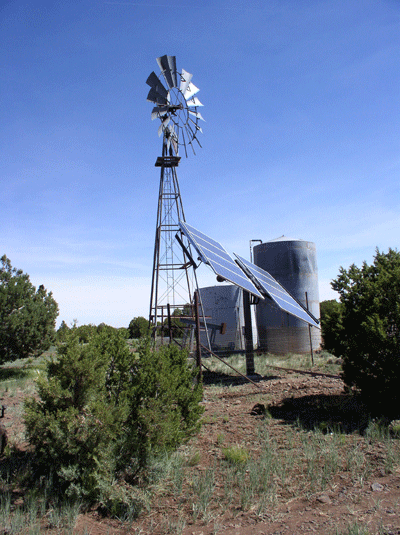
Now, a series of workshops being sponsored by Old Dominion Electric Cooperative (ODEC), a not-for-profit power supplier to 11 member-owned electric distribution cooperatives in Virginia, Maryland and Delaware, is offering farmers real-world information on new and emerging technologies available for more energy efficient operations and how to make use of current government programs and lower their energy bills.
The next Farm Efficiency Workshop will be held July 31 at the Tidewater Agricultural Research and Extension Center (TAREC) in Suffolk, Virginia. Speakers include:
  • Dr. Maria Papadakis, a Professor of Integrated Science & Technology at James Madison University
  • Dr. Jay Harmon, a Professor & Extension Ag. Engineer at Iowa State University
  • Stephen Versen with the Virginia Department of Agriculture & Consumer Services
  • Josh Ludgate of Exact Energy.

David Faulkner and Laurette Tucker with the U.S. Department of Agriculture’s Natural Resources Conservation Service (NRSC) will also prepare attendees for undergoing an NRCS audit that can make them eligible for federal grant funding to implement efficiency projects.
“This workshop is designed to help Virginia’s farmers, many whom live in rural areas served by electric cooperatives, learn about resources that will help them upgrade their farm’s overall energy efficiency,” said Erin Puryear, Manager of Member Services and Energy Innovation Planning for ODEC.

The free workshop will run from 9:00 a.m. to 3:00 p.m., with lunch provided. To register, call Deborah A. B. Estienne at (757) 657-6450, ext. 402 or email debritt@vt.edu by July 29, 2013.

Breaking News: House Passes Farm Bill

House Republicans successfully passed a Farm Bill Thursday by splitting apart funding for food stamps from federal agricultural policy.
Lawmakers voted 216 to 208 make changes to federal agricultural policy and conservation programs and end direct subsidy payments to farmers. But the measure says nothing about funding for the Supplemental Nutrition Assistance Program, or food stamps, which historically constitutes about 80 percent of the funding in a Farm Bill.
The American Farm Bureau Federation Board voted unanimously Wednesday to reaffirm the position taken two days ago to oppose splitting the nutrition title of the bill from the remainder of the Farm Bill.
AFBF President Bob Stallman has released the following statement:
“The American Farm Bureau Federation looks forward to moving ahead with fundamental farm policy legislation, following House passage today of H.R. 2642. While we don’t yet know what the next steps will be, we will be working with both sides of the aisle and both chambers of Congress to ensure passage of a new five-year farm bill.
“While we were hopeful the farm bill would not be split, nor permanent law repealed, we will now focus our efforts on working with lawmakers to deliver a farm bill to the president’s desk for his signature by September.”

Application Period Opening for Planning Grants from Agriculture and Forestry Industries Development Fund Announced

Applications are now being accepted for the Fiscal Year 2014 round of planning grants from the Governor’s Agriculture and Forestry Industries Development Fund (AFID).  The program, which encourages local governments to promote agriculture and forestry and incorporate the needs of these important industries into their economic development planning efforts, is part of the governor’s jobs-creation and economic development agenda.
“Over the course of my Administration, I have encouraged local governments to join me in focusing on creating jobs and opportunities for all Virginians,” said Governor McDonnell.  “Since agriculture and forestry are two of the Commonwealth’s largest industries and provide hundreds of thousands of jobs across the state, it is important that we support local and regional governments in their efforts to make these industries part of local governments’ plans for economic growth and prosperity.”
The competitive grant program allows individual localities to apply for up to $20,000 in matching funds, or up to $35,000 for multi-jurisdictional applications, to undertake efforts that support agriculture and forestry-based businesses.  These efforts might include developing a strategic plan for agriculture and forestry economic development, creating new local policies and zoning ordinances that better support these industries, or funding feasibility studies and predevelopment work for new facilities that bring significant and lasting benefits to the local agriculture and forestry sectors.

“We hoped the flexible funding the AFID planning grants program offers would generate a variety of innovative and thoughtful projects supporting the interests of the agriculture and forestry sectors, and we have not been disappointed.” said Todd Haymore, Secretary of Agriculture and Forestry.  “The eleven projects awarded funding in the last round of AFID planning grants are helping to facilitate new ideas and plans for productive economic development opportunities within the Commonwealth’s diverse agricultural and forestry industries.  We expect the same quality of applications in this round, as well.”

Applications for the FY 2014 round of funding are due September 16, 2013, with award announcements expected in October.  Two virtual application workshops will be held.  The first workshop will be on July 30, and the second on August 21.  Both will be from 10 – 11 a.m.  Localities interested in applying for an AFID planning grant should first reach out to their local and/or regional agricultural and forestry community to discuss potential projects, as well as local economic development professionals and other key stakeholders.  A two-page program description and the required grant application are available at: http://www.vdacs.virginia.gov/agribusiness/planning.shtml

For additional information about the program and the application workshops, e-mail Stephen Versen, AFID program contact at the Virginia Department of Agriculture and Consumer Services (VDACS) at stephen.versen@vdacs.virginia.gov.  

Breaking News: Farm Bureau Producer Members Invited to 2013 Gubernatorial Candidates’ Forum


Terry McAuliffe (D) and Ken Cuccinelli (R) will participate in the 2013
Agriculture and Forestry Gubernatorial Candidates’ Forum Aug. 2.

Virginia Farm Bureau Producer Members are Invited to:


The 2013 Agriculture and Forestry Gubernatorial Candidates’ Forum

Hosted by the Virginia Farm Bureau Young Farmers

When: Friday, August 2nd, 1:30 p.m. to 5:00 p.m.
Where: Wytheville Community College
1000 E. Main Street, Wytheville, Grayson Hall- Snyder Auditorium

The Forum is Sponsored by:
Virginia Farm Bureau Federation, Virginia Agribusiness Council, Virginia Forest Products Association, and Virginia Forestry Association

There will be viewings of the forum (if enough people RSVP) at community colleges around the state, including:

Eastern Shore- Main Building, Room A44
Southside- Alberta
Lord Fairfax- Warrenton (tentative)
Rappahannock- Essex (tentative)
J. Sargeant Reynolds- Goochland (tentative)

Schedule for Wytheville Location:
1:30 to 2:00 PM                Registration
2:00 to 2:30 PM                Meet and Greet with Terry McAuliffe
2:30 to 2:35 PM                Welcome and Introduction of Terry McAuliffe
2:35 to 3:15 PM                Questions for Terry McAuliffe
3:15 to 3:45 PM                Intermission
3:45 to 4:15 PM                Meet and Greet with Cuccinelli
4:15 PM to 4:20 PM         Welcome and Introduction of Ken Cuccinelli
4:20 PM to 5:00 PM                Questions for Ken Cuccinelli

Directions: Wytheville Community College is located approximately one mile off Interstate 81 in Wytheville. Park in Lots B and C. Lot D is available for handicapped parking.

From the East(Roanoke): Take Interstate 81 South to Exit 73 (Wytheville). Follow Main Street approximately one mile. The WCC campus is on the right.

From the West(Abingdon): Take Interstate 81 North to Exit 73 (Wytheville). Follow Main Street approximately one mile. The WCC campus is on the right.

From the North(Bland): Take Interstate 77 South to Interstate 81 North. Take Exit 73
(Wytheville). Follow Main Street approximately one mile. The WCC campus is on the right.

From the South(Galax): Take Interstate 77 North to Interstate 81 South. Follow I-81 for about 9 miles to Exit 73 (Wytheville). Follow Main Street approximately one mile. The WCC campus is on the right.

Schedule for Community College Locations:
2:00 to 2:30 PM                Registration
2:30 to 2:35 PM                Welcome and Introduction of Terry McAuliffe
2:35 to 3:15 PM                Questions for Terry McAuliffe
3:15 to 4:15 PM                Intermission and Local Networking
4:15 PM to 4:20 PM         Welcome and Introduction of Ken Cuccinelli
4:15 to 5:00 PM                Questions for Ken Cuccinelli

PLEASE RSVP:

RSVP: If you are a Virginia Farm Bureau Producer member and would like to attend the forum in Wytheville or one of the college locations by Friday, July 26. Contact Kelly Pruitt at kelly.pruitt@vafb.com or 804-290-1293 with your membership number. 


Also, if you have a question you’d like to ask the candidates, please leave it by posting a comment below. 

VSU Project Explores 1-acre Farming Model

By John Reid Blackwell
Cliff Slade is on a mission to prove that it doesn’t take a hundred acres of land to make a living farming.
One acre can do it, Slade insists, if you’re smart about it and you’re willing to put some serious elbow grease into it.
Slade and other researchers at Virginia State University are attempting to demonstrate that assertion at the school’s Randolph Farm, a 416-acre research and educational farm near the VSU campus.
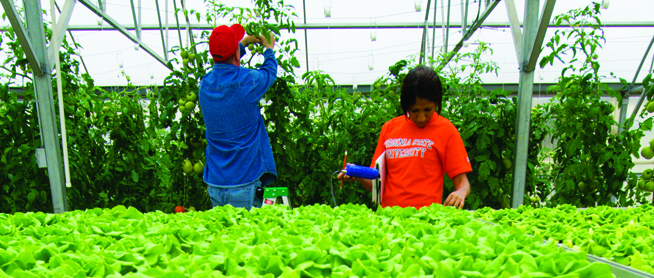
Researchers and students have planted a 1-acre plot at the Randolph Farm with a variety of vegetables and produce, including collards, kale and cabbage.
“This is not a get-rich-quick scheme, but it can be done if a person is willing to work,” said Slade, a 59-year-old retired agricultural extension agent who works the same land in Surry County that his father farmed.
“You have got to get off your butt and get out of bed early in the morning,” he said.

VSU calls it the 43,560 Project, because that’s the number of square feet in 1 acre. Slade wants to show that a farmer can gross $1 per square foot on 1 acre — or a total of $43,560 — which he said could be four times the return of a typical large-scale commercial vegetable production.
“This has the potential to create some great opportunities to bring profitability back to small farms,” said Slade, who is the vegetable/produce specialist for the small farmer outreach program at VSU.

“I am talking about the 2- or 5-acre farms,” he said. “It can be done. We have the model to show it. It is out here in the field.”

The average farm in Virginia is about 171 acres, based on the most recent data available from a 2007 census of agriculture.
The average per-acre market value of farm products was about $358, but that includes all types of products such as livestock. The value of production per acre can vary widely depending on what a farmer raises.
The VSU research is generating significant interest.
At the school’s open farm day on June 27, hundreds of farmers, extension agents and farmer hopefuls from across the state came to see the 43,560 plot and to hear Slade preach about the virtues and the potential pitfalls of small-scale farming. The practice is enjoying something of a renaissance as more American consumers, restaurants and grocery stores have jumped on the “local foods” and organic foods trend.
Speaking to the crowd at the open farm day, Slade was quick to point out that the kind of small-scale, intensive commercial farming being demonstrated at VSU is not for the hobbyist or lightweight.
“If you are lazy and have money, invest it in the stock market and do something else. This is not for you,” he said.
About half of the research plot is leafy vegetables, but researchers and students also are growing fruits, melons and tomatoes. The goal is to produce one vegetable head or stalk, or 1 pound of produce, per square foot.
That type of farming is intensive and expensive. Slade tagged the cost of production at about $10,000 for the 1 acre. The land was fertilized with pelletized chicken litter and mushroom compost.
“This is very interesting, because it seems like I could quadruple my production,” said Tracy Porter, a King and Queen County farmer who visited the 43,560 plot during the field day.
Porter said he farms 6 acres with his family, growing vegetables that he sells mostly to local customers.
The type of production being demonstrated by VSU is “doable,” Porter said.
Small farmers “can’t compete with the big commercial farms, but you can produce a quality specialty crop,” he said.
The hard part, and where many farms might fail, is in finding ways to sell the produce.
“The key challenge is marketing,” Slade said. “You have got to be a good salesperson.”
A 1-acre farmer cannot expect to compete by growing the same type of produce that large-scale commercial farms produce, he said. “Most of the time, you have to raise vegetables and varieties that are different than what you can raise out of the grocery store to make yourself successful.”
“I tell everyone they need to find a niche,” he said. “We have to go from field to retail” or direct to the consumer.
Slade identified four channels: on-farm sales to people who like to pick their own produce; sales at farmers markets; sales to independently owned restaurants; and sales to Community-Supported Agriculture organizations, or CSAs, which are networks of individuals who support local farms by paying at the start of the growing season for a share of the harvest.
Virginia has seen dramatic growth in the number of farmers markets in the state, from 88 markets in 2006 to 230 in 2013, according to the Virginia Department of Agriculture and Forestry.
The farmers market trend “is still growing,” said Mike Cullipher, who raises about 70 acres of vegetables and fruits on his family’s farm, Cullipher Farms in Virginia Beach.
“But it is like most things. When you see a trend develop, a lot of people who have not done it in the past will start to do it,” he said. “We have seen a lot of small farms start selling” at farmers markets.
Cullipher called the VSU project “ambitious.”
His farm raises a wide variety of crops from asparagus to strawberries, and he said strawberries typically have the highest yield, of around 15,000 pounds per acre.
“We are curious to see what they come up with,” Cullipher said of the 43,560 Project, which he has not visited, though he has read about it.
“I am not saying it can’t be done, but it takes an extremely high level of management to do it like that, and stay on top of it,” he said. “If they can do it, and it is successful, then we can all learn from it.”
The small-scale farming model won’t succeed without some preparation work long before the first seeds are planted, Slade told the crowd gathered for the open farm day.
For instance, farmers must make sure their land has the right pH chemistry to grow vegetables. They also need to invest in irrigation such as the drip-irrigation system being used at the Randolph Farm.
It may take several years of work for a 1-acre farm to produce a profit. Slade suggested starting out with a half-acre or a quarter-acre.
“A lot of people will jump in and want to do 2 acres,” he said. “They work themselves to death and try to sell a whole lot of produce that they have not marketed beforehand, and then they get disenchanted and quit.”
The model being explored at VSU “is viable for anyone who is willing to put in the time and effort that it is going to take — first of all to raise a crop and, two, to market that crop,” said Tony Banks, assistant director of the commodity marketing department for the Virginia Farm Bureau Federation.
“I don’t think it is something that somebody can decide today they are going to do next year and expect to achieve that revenue goal in year one,” he said. “It is a learning process, and they are going to have to work their way up to it.”
“There certainly have been plenty of folks and organizations over the years and even books written about making significant income on a small plot of land,” Banks said. “It is feasible, but most of those (farms) do require a lot of attention to marketing, which a lot of people are not necessarily too inclined to do.”
VSU is not selling the produce from the 43,560 plot. Instead, the food is being donated to food banks and gleaning organizations.
Part of the mission of VSU’s Randolph Farm is to experiment with alternative crops and farming methods that Virginia farmers could utilize, said Jewel Hairston, dean of the VSU School of Agriculture.
The 43,560 Project “focuses on producing things that farmers can also produce, to make money with a reasonable investment and high demand,” Hairston said.
“This is the land-grant mission at work,” she said.
Other research projects at the Randolph Farm include different types of alternative crops or livestock such as goats and aquaculture — or raising fish in farm ponds.
The school also is testing ways to grow chickpeas in Virginia as part of a partnership with Sabra Dipping Co., which has a factory in Chesterfield County that makes hummus spreads. It also has a research and development center next to the plant.
Slade says his goal is not to turn everyone into a backyard commercial farmer but to provide more ways for small farmers to produce income using a small piece of land.

“While this is not going to be for everybody, I think within a few years we will have well over 100 farmers (in Virginia) who will do well with this,” he said.
Governor McDonnell Announces Opening of Virginia Agricultural Trade Office in Europe

London

Governor Bob McDonnell has announced the formal opening of a representative office in Europe focused on increasing agricultural and forestry product exports to the region. With the opening, the Commonwealth is believed to be the only state in the U.S. to currently have a dedicated agricultural trade representative in the European market, one of the world’s largest economic regions.  Secretary of Agriculture and Forestry Todd Haymore attended the opening ceremony on behalf of the governor.

Speaking about the official opening of the Europe trade office in June, Governor McDonnell stated, “Today marks another major step forward in the agricultural and forestry product export growth initiative we began more than three years ago designed to promote job creation, economic development, and new agricultural production opportunities. The initiative is yielding solid results for the state’s two largest industries.  Exports have reached an all-time high the last two years, and we expect more export successes this year and beyond.  Europe has long been an important market for a number of Virginia agribusinesses, but we know we can grow our market share given our in-demand, high quality products and the close proximity of our world-class ports.  By having trade representatives on the ground, we can capitalize on new opportunities with proactive outreach strategies and by reacting quickly to market trends. Increased export opportunities for Virginia products abroad mean more jobs and economic opportunity here in the Commonwealth.”


Since 2010, Virginia has been implementing Governor McDonnell’s initiative to increase agricultural and forestry exports from Virginia to key markets in the world.  The initiative includes utilizing representatives in Europe and focusing on export growth opportunities for products such as wood fuel pellets, wine, seafood, specialty foods, soy products, grains, and other agricultural commodities.
         
At a ceremony in London today with U.S. Embassy officials and various importers, Secretary Haymore commented, “Increasing Virginia’s agricultural exports to the European continent helps support jobs in Virginia from farming, to forestry, to commercial fishing.  Everyone dollar in agricultural exports generate $1.40 of in-state business activity to process, package, finance, and ship these products.  Whether we grow our animal feed sales to Ireland, seafood shipments to France, wood pellet exports to the United Kingdom, or soybean meal trade with Poland, all these business opportunities help increase employment in the Commonwealth.”

Secretary Haymore added, “So far this year, six of Virginia’s top fifteen agricultural export destinations include European countries covered by the new trade offices.  Virginia’s European representatives have already started working on projects in the seafood, bio-fuels, specialty foods, and wine sectors.  The governor and I believe their work will help Virginia’s agricultural exports reach new records by cultivating trade opportunities in this important region of the world.”

The Virginia Department of Agriculture and Consumer Services (VDACS) has hired agribusiness consulting firm Andrew Brown and Associates (ABA) to represent Virginia’s agricultural and forestry interests in Europe. ABA, headquartered in Godalming, Surrey, United Kingdom, has more than 20 years experience in agribusiness market development in Europe and is currently active in more than 10 European countries.  An affiliate office of ABA located in St. Petersburg, Russia, will work with VDACS on agricultural export opportunities in that country.

Andrew Brown, owner of ABA commented, “We are very excited to work with Virginia-based agribusinesses and the McDonnell administration to promote the Commonwealth’s products and grow exports into the European marketplace. ABA will employ our extensive of database of European food and agribusiness buyers to help Virginia companies, and we are planning a number of promotions which will put Virginia products in front of influential buyers and media.”

New Virginia Laws In Effect as of July 1

Listed below are some of the new laws that took effect in Virginia on Monday, July 1, including one Virginia Farm Bureau advocated for this year.
Landowners are now protected from liability claims from trespassers as it codifies common law. Previously, landowners owe no duty of care to trespassers except in a very few circumstances. This law locks in those protections. This was a Farm Bureau success this year. 
Other laws that may be of interest:
The Governor’s Transportation Funding bill is now in effect, which includes the overhaul of Virginia’s transportation funding system, changing the fuel tax structure, raising sales taxes, imposing a fee on hybrid vehicles and authorizing regional tax increases for Hampton Roads and northern Virginia to generate more than $1 billion annually for repairing Virginia’s existing roads and bridges and new highway construction.
Farm Use mileage has been extended to 50 miles for everything.
Virginia law requires every moped driver to carry a government-issued photo ID (does not have to be a driver’s license) and every moped driver and passenger must wear a helmet. Drivers must also wear a face shield, safety glasses or goggles unless the moped has a windshield.

Virginia law now requires mopeds operated on Virginia roadways to be titled and registered by July 1,2014, but moped owners can jump start the process this summer. DMV will begin titling and registering mopeds on July 1, 2013. A moped title is $10. The annual registration fee is $20.25.

Police can now stop and ticket people for texting while driving and increasing fines for it from $20 to $125 for a first offense. It had been a secondary offense, meaning police could ticket it only if a driver is stopped for a superseding violation such as speeding. The law also provides for enhanced fines for texting drivers who are convicted of reckless driving.
School boards are required to define bullying and include policies and procedures for combating it in their student codes of conduct.
Doctors are now required to provide patients they test for the crippling, tick-borne Lyme disease with written information that the tests can sometimes fail to accurately detect the presence of the disease.

Circuit court clerks are no longer allowed to disclose who has a concealed gun permit issued in Virginia.
The state sales tax is increasing to 5.3%, but in many localities in Northern Virginia it will be 6%. 

Breaking News: Senate Passes Immigration Reform Bill

Today the Senate approved S. 744, the Border Security, Economic Opportunity, and Immigration Modernization Act with a vote of 68 to 32.  Farm Bureau strongly supported S. 744, including the agricultural provisions which were the result of a compromise agreement with the United Farmworkers Union.
Below is a statement from American Farm Bureau President Bob Stallman:
“The Senate’s passage today of a balanced immigration reform bill that includes a fair and workable farm labor provision is welcomed by America’s farmers and ranchers. A comprehensive agricultural labor plan that works for all sectors of agriculture and across all regions of our nation is long overdue. We commend the Senate for addressing this very important issue, which will help ensure the continued success of agriculture in our nation.
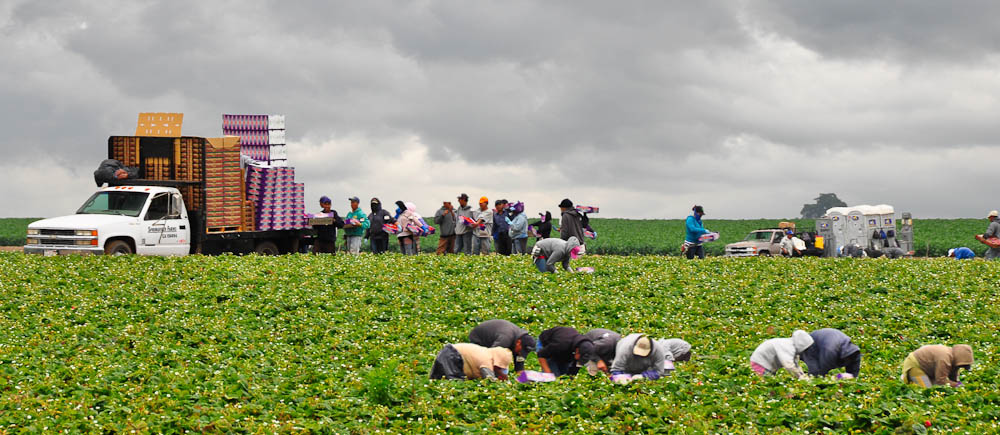
“America’s farmers and ranchers depend on the workers who show up every day to tend crops and raise livestock. The Senate-passed bill will help ensure an adequate supply of farm labor. It also provides increased surveillance of high-risk areas along our borders. One of the best ways to improve border security is to create a legal, workable way for farm workers to enter our country. With less time and resources wasted locking up lettuce harvesters, the focus can shift to where it properly belongs—keeping those with criminal intentions out of our country.
“The passing of S. 744, the Border Security, Economic Opportunity, and Immigration Modernization Act of 2013 is the first step in reforming our broken immigration system and ensuring agriculture has access to a stable and legal workforce. We look forward to working with members in the House of Representative to pass responsible immigration reform legislation that includes an earned adjustment for experienced undocumented agricultural workers and a new, flexible guestworker program. It is critical that both chambers pass legislation that can be reconciled in conference and signed into law.”

VDOT Working to Cut Grass and Vegetation on State Maintained Roads by Fourth of July

Governor Bob McDonnell has announced that the Virginia Department of Transportation (VDOT) will carry out a statewide mowing blitz through Tuesday, July 2nd to make traveling on Virginia roadways as safe and inviting as possible over the Fourth of July holiday.
“A clean, well-cut roadway enhances the state’s appearance for residents and visitors, but of greater importance is the effort to improve a motorist’s ability to see signs, guardrail and oncoming traffic, and to pull over during an emergency,” said Governor McDonnell. “Additional mowing will be ongoing throughout the year, but we wanted to make sure that our roads and highways are ready to welcome the public to the Commonwealth ahead of the holiday weekend.”
VDOT state and contractor forces have coordinated their work schedules to mow as many state maintained roads as possible before Independence Day. Leading up to the holiday, motorists will observe crews collecting litter and conducting mobile mowing operations on medians and shoulders.

VDOT will always mow an area where a sight distance hazard is reported or observed, regardless of the mowing schedule.
Generally, VDOT adheres to a mowing schedule that is dependent upon weather conditions, which affect the vegetation growth rate.  Virginia Tech advises VDOT on its mowing schedule and mowing practices to help the agency make decisions based on predicted weather patterns and the type of vegetation growing in each region of Virginia.
Keeping Crews Safe
VDOT’s maintenance crews and contractors mow in a slow-moving mobile operation, with tractors and workers on foot. To protect workers, motorists are asked to:
·         Watch for posted work zone signs, slow-moving equipment and crews along roadsides and in medians
·         Reduce their speed
·         If possible, move over to the adjacent travel lane when approaching a work zone
Reporting Potential Hazards
Motorists are encouraged to contact VDOT’s 24-hour Customer Service Center at 1-800-FOR-ROAD (800-367-7623) to report sight distance hazards on interstates or roadways.
Potential safety hazards may include grass, trees or other vegetation blocking highway signs, or blocking a motorist’s view of oncoming traffic.

From the Field: Patience and Safety on the Farm

From the Field is a bi-monthly column written by Mark Campbell, Farm Bureau Field Services Director for the Central District. He writes about Farm Bureau member benefits and County Farm Bureau activities.

Participants in Nelson County Farm Bureau’s safety program
There are many jobs on a farm, but planting, haymaking, and harvest seem to be the most stressful.  Often, farmers are dealing with a small time window regarding the weather and the calendar.  Weather has been challenging to say the least this year on making hay.  However, no one is really complaining because it has been a terrific year for growing grass and crops.  I dare go out on a limb and say that it is the best that I can remember.  Although I concede that many people claim a longer existence and memory.
During these busy times, patience and safely operating equipment are critical.  I am a pretty patient guy, but I don’t deal well with equipment breakdowns.  It seems that many of these equipment breakdowns occur during haymaking with acres of hay on the ground and storm clouds billowing in the distance.  I will say that time and experience have refined and strengthened my patience over the years. I love the story that my pastor sometimes tells on patience.  The more that he prays for patience; the more problems he seems to have.  He chalks that up to the Lord training him to be more patient. 
Why am I talking about patience in a blog about agriculture?  Well there are a couple of reasons.  First and foremost is that most farm accidents happen when people are in a hurry and taking short cuts.  Many accidents happen when people are fixing or repairing equipment out in the field.  The second is other people are watching.  No, I’m not talking about the NSA–I mean family members or employees.  My young sons are always watching, and as you parents know, they will soon model what they see and hear.  My sons, even at ages 8 and 10 are safety conscious and love to put on the tractor flashers and lights whenever they get the chance. 

Nelson CountyFarm Bureau recently held a safety program at the beautiful location of Dickie Brothers Orchard www.dickiebros.com in Massies Mill.  Fifty-five people attended the event.  Saunders Brothers www.saundersbrothers.com, a large scale nursery, brought 23 employees to the safety program.  Immediately after the safety program ended, Jim Saunders summarized the presentations in Spanish for the employees that he brought. 
Jimmy Maass, VFB Safety Manager, stresses the need to be safe first before being fast.  We all recognize the need to push it a little harder to get the work done.  But be safe first.
Jimmy, who spoke at the event, talked about tractor rollovers and the VFB incentive for placing a roll bar on your tractor.  The incentive is $400.  So visit your county Farm Bureau office if your older tractor does not have a roll bar, and pick up an application.  He also spent a good bit of time talking about power take-offs (PTOs).  He then demonstrated PTO entanglement with a dummy. 
With some of the farms in the county having multiple employees that operate equipment; I foresee more interest in having safety demonstrations.
Let’s hope that the good rains keep coming and everyone stays safe out there. 
Until next time,

Mark