![]() |
| Todd Haymore |
Uncategorized
USFRA Seeking Farmer and Rancher Input
The link to the survey is: https://hrgisurvey.com/survey/html.pro?ID=710
Was Your Holiday Dinner Hormone Free?
The article “Was Your Holiday Dinner Hormone Free?” appeared in the Bristol Herald Courier the week after Thanksgiving and was written by Phil Blevins, a Washington County Extension Agent. It has also been making the rounds on Facebook, and we think Phil did a great job dispelling some of the myths about hormones. The story is below:
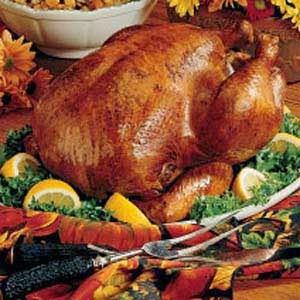
We hear a lot of talk about hormones and food and usually the discussion centers around meat. This causes many people to become concerned about the safety of the food they eat. Was your Thanksgiving meal or any other meal for that matter, hormone free? The short answer to that question is no. It is impossible to have a hormone free meal, because both plants and animals produce hormones as a natural part of growth and development.
When looking at promotional statements for some turkeys, for example, they will read something like this, ‘Our turkeys are raised without the use of hormones’. Did you know that all turkeys (including Butterball, etc.) and chickens are raised without the use of supplemental hormones? It is prohibited. However, to say a turkey was raised without hormones is somewhat of a contradiction since the turkey produces its own hormones. As stated earlier, even plants produce hormones but that doesn’t mean plants are dangerous either, just that it is part of living things.
People often criticize the beef industry because of implant use as if something sinister is involved. The products used have been tested rigorously and clearly pose no threat to human health. If you compare the beef we eat to the plant products we eat it is surprising to most how the hormone levels compare. For example, one ounce of cabbage has 1,061 times more estrogen than one ounce of beef from an implanted steer. If you compare the estrogenic activity of other common foods you find that defatted soy flour has 755 million ng/500grams, tofu has 113.5 million ng/500grams, beef from an implanted steer has only seven (7) ng/500 grams, and beef from a non-implanted steer has only five (5) ng/500 grams.
Have these plants been altered in some way to cause these high levels? The answer again is no. It is simply a natural part of life. Does it mean that cabbage and other plants are unsafe? Absolutely not! In fact, coleslaw on a hotdog is a favorite of many, especially if it is an all-beef hotdog.
We have a wonderful food system in this country and the technology has helped provide a safe wholesome food supply that is more economical than any other country in the world. This system also makes good nutrition more affordable to the poor, a luxury many countries only wish for. It seems we should worry less and be more thankful for the abundance we are privileged to have.
Report Shows that Farm Bill Conservation Practices Reduce Runoff of Nutrients, Sediment in Chesapeake Bay Watershed
VDACS Announces Top 20 VA Ag Commodities for 2012
One of the biggest changes from 2011 was the movement of soybeans. In 2011, the value of the soybean was $216 million and they placed 7th in the rankings. The revised number moved soybeans to number 6 and corn down to number 7. Cottonseed as a separate category entered at #18 with nearly $12 million in cash receipts. Cotton lint, ranking at #12, is a completely different product than cottonseed. They come off the same plant but are sold differently. The lint is what we traditionally think of as cotton; it’s white and puffy just as you’d expect. Within that boll of cotton are seeds about the size of a small pea. At the gin the cottonseed is extracted from the lint. The farmer gets paid for his lint fiber, then he or she either gets a check for his seed by weight or a credit for the seed by weight which is used against the ginning fees. Virginia sends some cotton to other states such as Pennsylvania to be used to feed dairy cows. Most of it is exported, however, to countries like Korea or Japan. Cottonseed was in high demand in 2012 due to higher grain prices, thus making it more valuable. Many farmers were able to export their 2012 production and command higher prices than selling it in the U.S.
2013 Virginia Farm Bureau Federation Annual Convention starts Tuesday
Almost 300 voting delegates representing 88 county Farm Bureaus statewide have gathered in Richmond to help shape Virginia Farm Bureau Federation’s state and federal policies for the coming year.
During this year’s VFBF Annual Convention, those delegates will discuss and vote on numerous policies that affect farmers and their livelihoods.
“This is the culmination of our grassroots policy development process,” said VFBF President Wayne F. Pryor, “and whatever is decided at the annual convention directs our lobbying efforts in the new year.”
Policy development is just one part of the convention, which will run Dec. 3-5 at the Richmond Marriott. The event’s theme is “Leading Agriculture into the Future.”
The convention kicked off Tuesday with a keynote address by Mark Gold, president, CEO and managing partner of Top Third Ag Marketing and a former member of the Chicago Board of Trade. Gold will speak on “Managing Risk in an Inherently Risky Business.”
“I’m very optimistic about farming, but there will be bumps in the road and farmers need to learn how to survive the cycles and not sell their land for parking lots or subdivisions,” Gold said.
His Top Third Ag Marketing’s mission is to help farmers manage the risks associated with producing commodities such as grains, livestock, milk, cotton and energy. The company’s goal is to help its customers market their products in the top third of prices available during a market year.
Gold also led an afternoon workshop titled “Get What’s Coming to You: Risk Management for Every Farmer.” A second workshop, “Things You Need to Know About Transporting Farm Products in Virginia,” featured speakers from the Virginia Department of Motor Vehicles and the Virginia State Police.
During the business sessions on Wednesday and Thursday, voting delegates will elect members of the VFBF board of directors to represent Districts 3, 6, 9 and 12.
Throughout the convention, members can take advantage of a “Cyber Café” to get help with any technology needs they might have.
Comment on Proposed Changes to DEQ Animal Feeding Operations General Permit Regulation
The Department of Environmental Quality is seeking comments on proposed changes to the general permit regulation for animal feeding operations. The permit will expire November 15, 2014, and DEQ is proposing changes before the permit is reissued for another 10-year period. The permit covers activities at AFOs such as dairy cattle, hog and beef cattle farms.
Any operation that confines animals for more than 45 days in a 12-month period with no ground cover during that period are affected by these regulations. Those operations that are greater than 300 animal units must maintain coverage by a permit. In addition, those farmers wishing to utilize the manure generated by these operations for fertilizer as an “end user” should closely review these proposals.
Virginia Farm Bureau supports the renewal of the “General Permit.” We also believe that transfers of manure to end users provides an alternative to producers with limited land application sites on their own farm. However, the program should not be so restrictive that it makes the option useless.
Public comment period: November 18, 2013 to January 21, 2014
Four public hearings on the proposed changes have been scheduled. There will be an information session for each meeting starting at 6:30 p.m., and the public hearings will begin at 7 p.m. The dates and locations are:
December 11, 2013 (Wednesday) – DEQ Valley Regional Office, 4411 Early Road, Harrisonburg, VA 22801 (540) 574-7800.
December 12, 2013 (Thursday) – DEQ Piedmont Regional Office, 4949-A Cox Road, Glen Allen, VA 23060 (804) 527-5020.
December 18, 2013 (Wednesday) – DEQ, Blue Ridge Regional Office, 7705 Timberlake Road, Lynchburg, VA 24502 (434) 582-5120.
December 19, 2013 (Thursday) – Culpeper County Library, 271 Southgate Shopping Center, Culpeper, VA 22701 (540) 825-8691.
AFOs may operate waste storage, treatment or recycling activities and may apply manure, wastewater, compost or sludges to the land. The current permit regulation requires that manure generated at an AFO is applied in accordance with a nutrient management plan approved by the Department of Conservation and Recreation. Where the land application of waste is limited by reasons such as elevated phosphorus soil test levels, the further treatment and transfer of waste off the farm is becoming necessary. New technology is making the transfer and possible marketing of manure-based products off the farm more common and also is prompting the consideration of importing other wastes to supplement treatment processes. The current permit regulation does not address manure transfer, the construction and operation of alternative manure treatment and storage facilities, or the management of waste materials generated offsite to be used to feed an on-farm digester or other manure treatment technology.
The changes are being proposed to address alternative waste treatment and storage, management of materials generated offsite, and end-users of waste that is transferred off farms covered by the general permit. The proposed end-user requirements are modeled after the requirements for the transfer of poultry waste.
How to comment: DEQ accepts written comments by hand-delivery, email, fax and postal mail. All written comments must include the full name, address and telephone number of the person commenting and be received by DEQ no later than on the last day of the comment period. Verbal and written comments will be accepted at the public hearings. Comments also may be submitted through the Public Forum feature of the Virginia Regulatory Town Hall web site at www.townhall.virginia.gov.
How a decision is made: After DEQ has reviewed the comments, the State Water Control Board will make the final decision. People who submit statements during the comment period may address the board at the meeting at which a final decision is made.
Contact information: Anyone wishing to submit written comments may do so at the public hearing or by mail, email or fax Betsy Bowles, P.O. Box 1105, Richmond, Virginia 23218, phone 804-698-4059, fax 804-698-4032 and betsy.bowles@deq.virginia.gov.
Comments may also be submitted through the Public Forum feature of the Virginia Regulatory Town Hall web site at www.townhall.virginia.gov.
Written comments must include the name and address of the commenter. In order to be considered comments must be received by DEQ by the close of the comment period.
Virginia Posts Largest Oyster Harvest Since 1987
2014 VFBF Critical Legislative Issue #5: Virginia Tech Dairy Research Facilities Replacement Funding
- Continue to support inclusion of $7.6 million for Phase-2 research dairy facilities at Virginia Tech (VT) in the capital expenditure authorization.
Phase 1 (herd barn) will be paid for by Virginia Tech. Planning funding for Phase 2 was approved by the 2013 General Assembly. Now, the funding for Phase 2 needs to be continued in the Commonwealth’s capital expenditure authorization process.
2014 VFBF Critical Legislative Issue #4: Private Property and Navigable Waters
- Protect the private property rights of landowners by resisting expansion of the term “navigable” to include all waters of the Commonwealth or the United States
- Maintain a minimal burden of proof of “Crown Grant” properties and their associated rights
Not matter how it is justified or what level of government executes the policy, an expanded definition of “navigability” will lead to further intrusion by the public and government in to our private property.