House Approves the Safe and Accurate Food Labeling Act of 2015

The House on Thursday approved H.R. 1599, the Safe and Accurate Food Labeling Act of 2015, on a 275 to 150 vote. Passage of this legislation is a priority issue for Farm Bureau.

“Congress stood with farmers and ranchers today in supporting innovation that helps the environment and keeps food prices down for everyone,” AFBF President Bob Stallman said in a statement. The legislation protects consumers from confusing and misleading GMO labels and will create a national, voluntary labeling standard based on science and common sense. 

Stallman Announces Departure in January

AFBF President Bob Stallman announced on Tuesday that he will not seek reelection in January 2016 following 16 years at the helm of the nation’s largest, most influential general farm organization. Stallman, a cattle and rice producer from Columbus, Texas, is the 11th president during AFBF’s almost 97-year history.

“It has been a tremendous honor to serve the nation’s Farm Bureau members and represent agriculture and rural America,” Stallman said. “After 16 years as AFBF president, six as Texas Farm Bureau president and several more in other Farm Bureau roles, it is time to hand over the reins of leadership—a decision that is made easier by knowing the great leadership and foundation that exist to continue moving Farm Bureau forward. I am as optimistic as ever about the future of American agriculture and Farm Bureau.”

Virginia Farm Bureau Responds to Lynchburg News & Advances’ Inaccurate Bay Op/Ed

On Sunday, July 5, the Lynchburg News & Advance ran an op/ed piece on the Chesapeake Bay that contained several inaccuracies. Virginia Farm Bureau Federation President Wayne Pryor responded with a letter to the editor. It reads below:

Just as it is the responsibility of all Virginians to protect our waterways, it is the responsibility of the media to accurately portray the state of our natural resources. 
In the July 5 editorial, “A degree of progress on the James and the Bay,” The News & Advance incorrectly reported that the “dead zone” in the Chesapeake Bay this year will be about 1.37 million cubic miles. It’s actually expected to be a much-less-dramatic 1.37 cubic miles, as reported on June 23 by the National Oceanic & Atmospheric Administration and the U.S. Geological Survey. 
It is my hope that some of your readers saw that figure, questioned its accuracy and were able to find the correct information online. It’s readily available. It’s also my concern that the astoundingly large error overshadowed the fact that the year’s dead zone is 10 percent smaller than the long-term average as measured since 1950. 
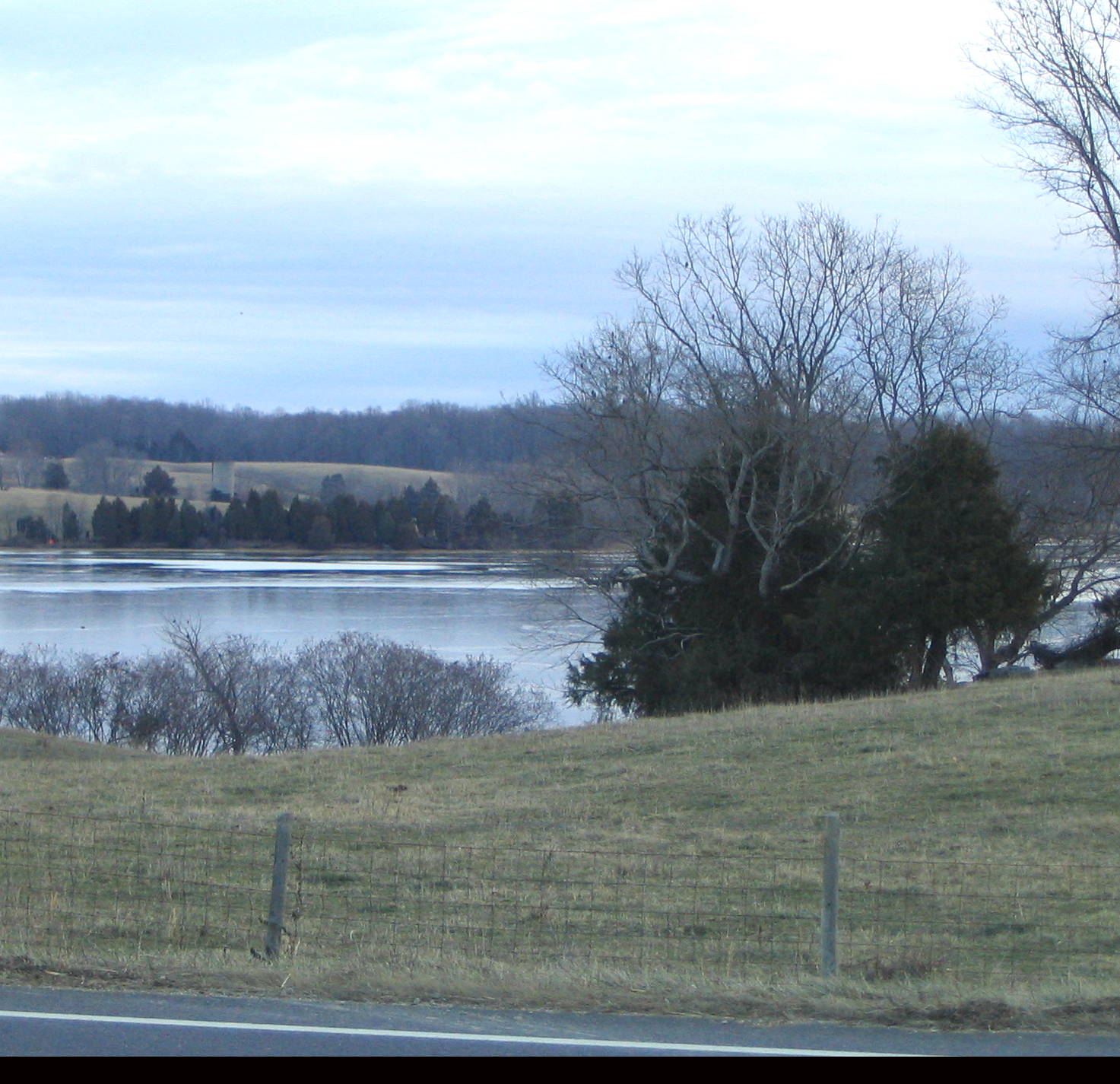
That decrease is due in part to efforts to decrease agricultural and other runoff into the bay and its tributaries. It’s a sign that progress is being made. The Environmental Protection Agency has acknowledged as much, noting recently that Virginia is among states on target to meet their goals for nitrogen and phosphorous runoff by 2025. 
I have to assume they checked and double-checked their math.

Lawsuit Regarding Additional Regulation of Large Livestock Farms Dismissed

A circuit court judge in Richmond rejected on July 9 a lawsuit aimed at declaring a cow a fertilizer applicator.

The suit by the Chesapeake Bay Foundation asserted that Virginia should prohibit large-scale livestock farmers from allowing their animals access to rivers and streams.

The state defines “large” cattle farms as those with 200 or more animals; there are fewer than 70 such farms in Virginia. State law mandates that “waste shall not be applied” in farms’ buffer zones along stream banks, and the lawsuit argued that waste dropped by animals near streams constitutes application.

The court, however, maintained that the language of existing law refers to farmers spreading manure for fertilizer—a regulated practice that requires a permit.

Virginia Farm Bureau Federation, the state’s largest farmers’ advocacy organization, was among agricultural groups that intervened in the case. VFBF President Wayne F. Pryor, a grain and beef cattle producer, said he was pleased with the outcome. “Pastured livestock are exempt from storm water regulations, but stream exclusion fencing is not a particularly new practice and livestock farmers are well aware of the need to protect water quality—both locally and downstream,” Pryor said.

“In recent decades, many, many Virginia farmers have voluntarily fenced their animals out of streams. And we know many more have applied for available cost-share funding to help them do likewise.”

GMO Labeling Bill Brings Greater Clarity

The House Agriculture Committee approved H.R. 1599 on Tuesday, a move that will bring greater clarity to food labeling, according to AFBF. H.R. 1599 empowers consumers by continuing to require warning labels for foods that may have adverse effects on the public, noted AFBF President Bob Stallman in a statement. “At the same time, it does away with labeling schemes that would stigmatize foods based on nothing more than the way in which they were developed,” he added.

Further, “H.R. 1599 restores reason to our food discussions and shows pseudoscience and food quackery the door,” said Stallman. “We look forward to passage by the full House in the very near future.”

From the Field: Farm Bureau Out and About

From the Field is a bi-monthly column written by Mark Campbell, Farm Bureau Field Services Director for the Central District. He writes about Farm Bureau member benefits and County Farm Bureau activities.


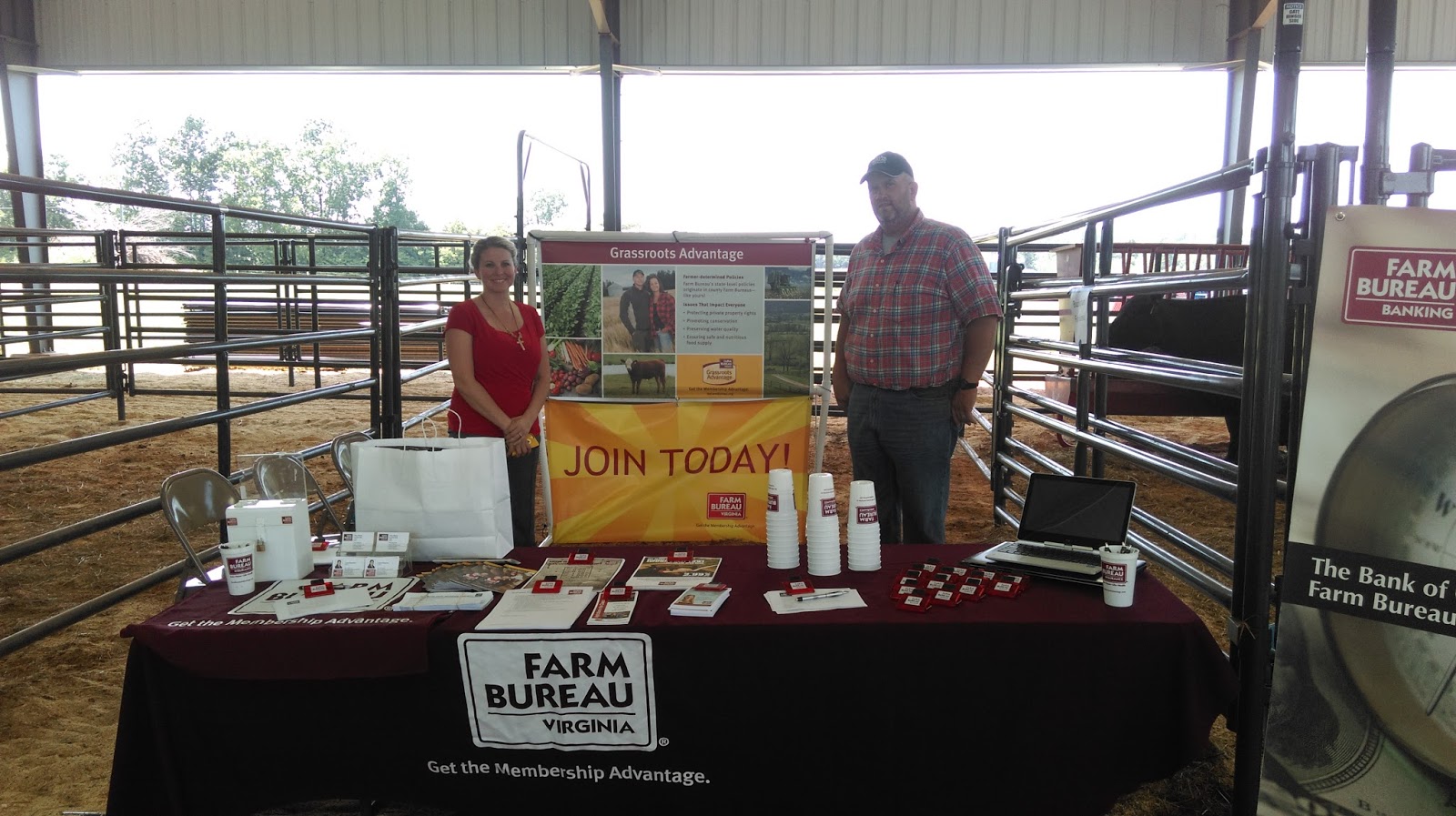
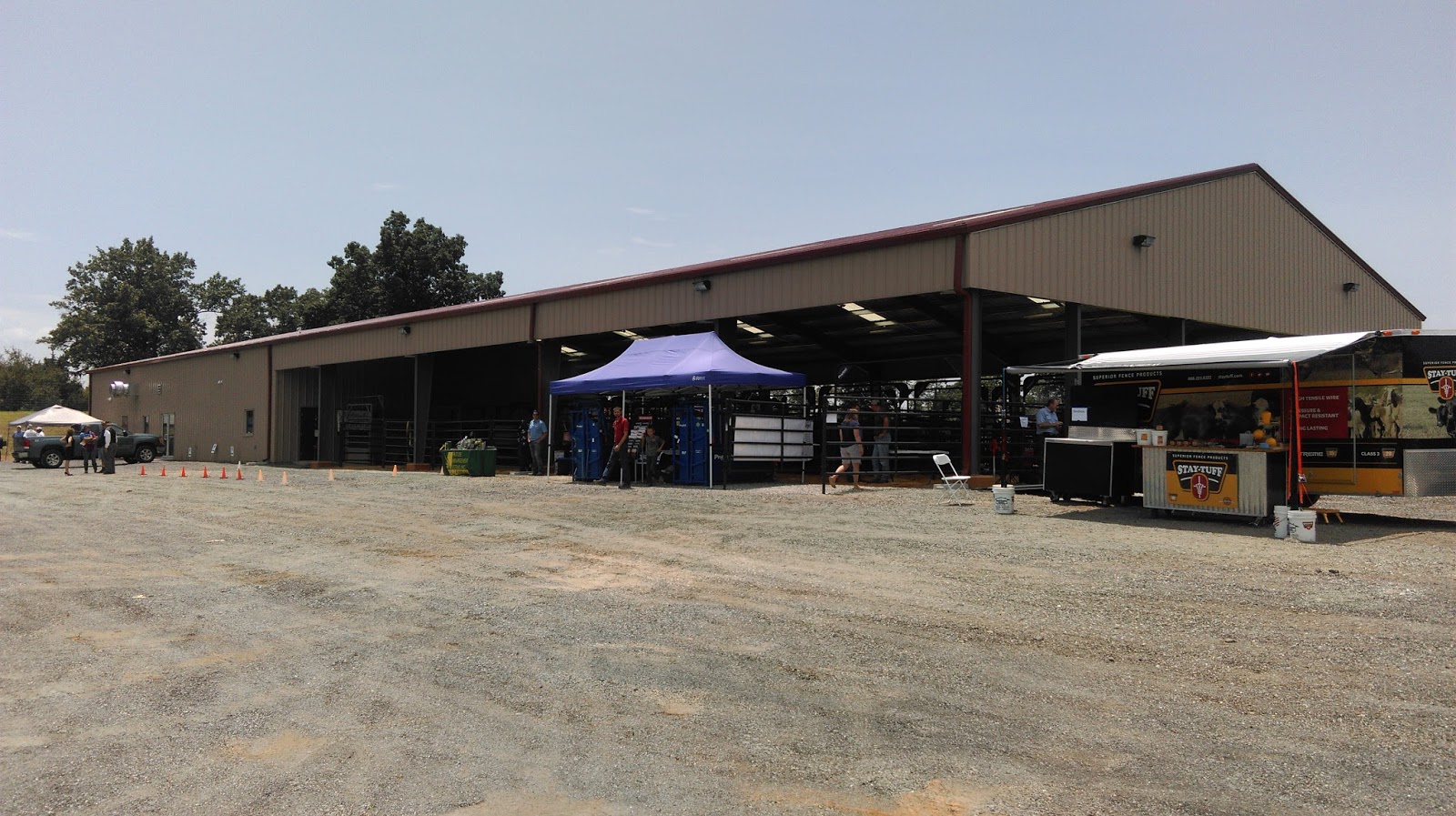
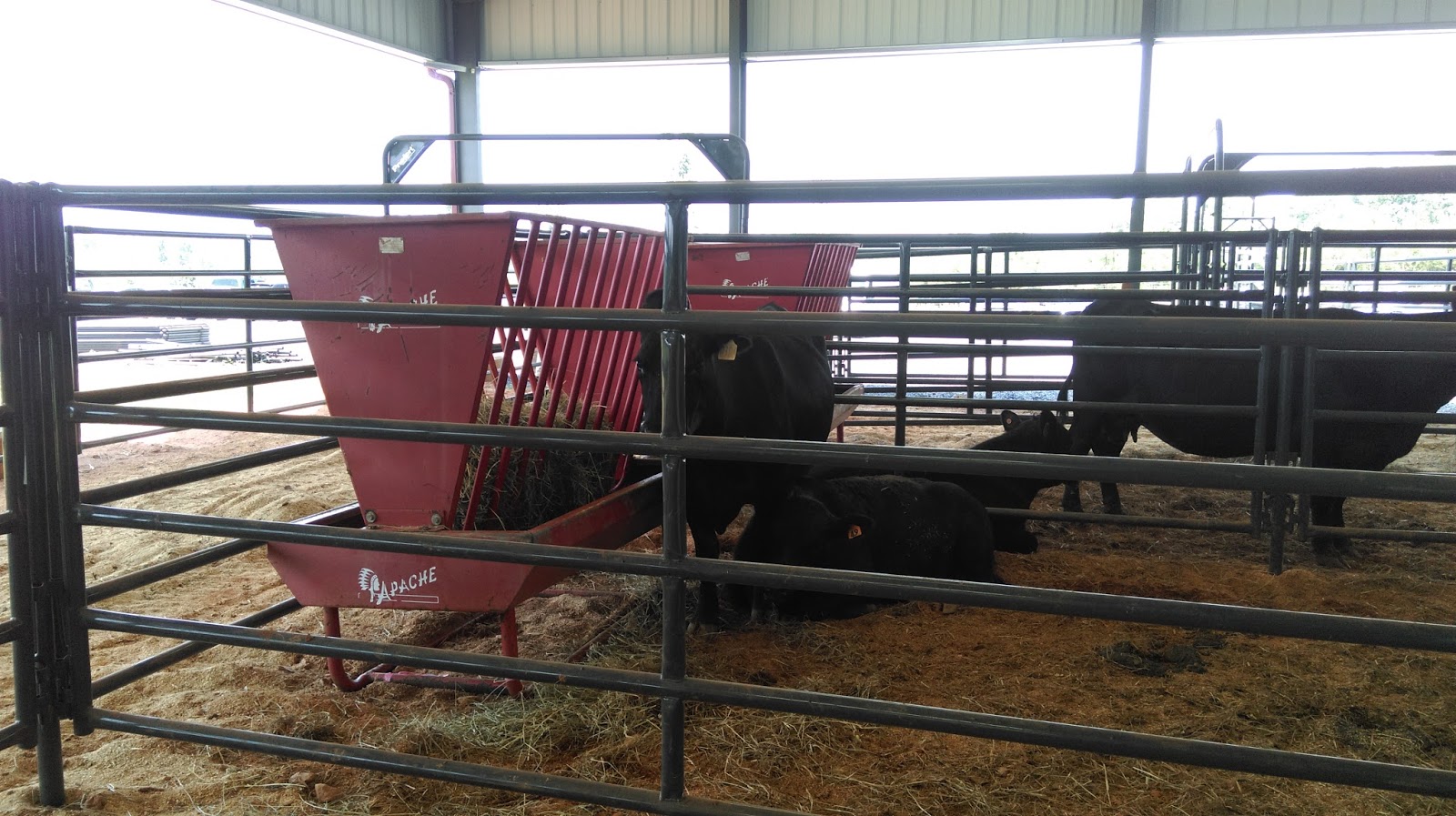
Last week, the agents at the Buckingham County Farm Bureau office and I had a booth at the open house for the “BARN” at Buckingham Courthouse. “BARN” stands for Buckingham Agriculture Resource Network, and it is a building facility comprised of cattle pens area and classroom space. This was a project primarily driven by the Buckingham Cattlemen’s Association, who is no stranger to the beef industry and is, in fact, nationally recognized for their preconditioned, value added feeder cattle and bred heifer sales.  

The purpose of our booth was to promote Farm Bureau. We interacted with a lot of Farm Bureau members, which were most of the attendees. There were only four people that we not members and we provided information about our organization and encouraged them to join. I think these opportunities are important for us as our presence helps strengthen our foundation in the agriculture community. It also builds a stronger relationship with the members and builds loyalty. The personalized service of the agents and MSSs helps with member retention, and the agents that worked the booth with me engaged every person that walked by. Several members even sat down and talked a while. It was obvious that the agents were well liked and respected by the members. It was a fun day, and I enjoyed seeing the facility and the fencing demonstrations.
Other agriculture infrastructure has been completed across the state over the past few years which has been beneficial to farmers and good for Virginia. Projects range from farmers markets and food hub facilities to livestock venues such as the Olde Dominion Ag Complex. The Olde Dominion Agricultural Foundation has an excellent video on their website http://www.theodac.com/that is very inspiring about the future of agriculture and describes the facility. It is worth watching. Let us also not forget the State Fair of Virginia grounds with more space and new buildings.
The next big event that I will be at with Farm Bureau will be the Ag Expo. The Ag Expo will be in eastern Orange County this year. I have never been to it before because it has traditionally been in eastern Virginia, but a few of my co-workers have, and they said that it is a big event that attracts a lot of farmers. We will have a presence there as we have had for years. So look for us there on August 6.
Until next time,

 Mark

EPA: Chesapeake Bay Clean-up Progressing in Virginia

A 2014-2015 interim report card on efforts by Virginia farmers to reduce pollutants reaching the Chesapeake Bay found producers are “generally on-track for meeting programmatic milestones” in a multi-year effort.

The report, prepared by the U.S. Environmental Protection Agency, “notes that many farmers are taking the steps required to reduce soil erosion and runoff of nitrogen and phosphorous,” said Wilmer Stoneman, Virginia Farm Bureau Federation associate director of governmental relations.

“Farmers have said all along that there’s no quick and easy fix to bay restoration. We’re pleased to hear that we’re on track to make that a reality.”

The Interim Evaluation of Virginia’s 2014-2015 Milestones and WIP Progress was published June 10. WIP stands for watershed implementation plan, a specific set of conservation improvements and benchmarks established for each watershed in the state by the EPA under the overall Chesapeake Bay Program partnership.

Conservation efforts in different sectors are being tracked by the Virginia Department of Conservation and Recreation, which supplied the numbers to the EPA for evaluation. They include activities related to agriculture, urban and suburban storm water, wastewater treatment plants and nutrient-reduction credit efforts. The EPA found that farmers are currently on track for reaching the overall 2017 target for reducing nitrogen and phosphorus runoff by 60 percent compared to levels measured in 2009.

“Virginia farmers are doing well in implementing best management practices to reduce erosion and pollutants, although the report said additional BMP steps may be needed in the future,” Stoneman said. “It also noted that the state of Virginia has committed or spent almost $25 million in the bay watershed since 2012 to help farmers install fencing to keep cattle out of waterways.

“Farmers are grateful for the assistance, but much more cost-share funding will be needed in order to continue with this good progress. It can cost tens of thousands of dollars to fence some properties—money that many producers just don’t have available to spend.”

The report noted that Virginia is expected to have 274 individual farm Resource Management Plans developed by the end of this year, well above the goal of 40 plans. The voluntary RMP program was introduced last year and entails plans developed by professional nutrient management specialists for participating farms.

“Farmers are eager to do their part to clean up the bay under voluntary programs like RMPs,” Stoneman said, “but we need the additional staff and financial resources to carry out these recommendations. And we will continue to ask the General Assembly to fully fund these efforts.”