Every four years, the American Farm Bureau Federation asks the Democratic and Republican presidential nominees to address the issues that concern farmers and ranchers the most. We asked Democratic nominee Hillary Clinton and Republican nominee Donald Trump the same questions.
 International trade was a major theme in the opening half hour of Monday night’s presidential debate between Hillary Clinton and Donald Trump. Selling more of our goods around the world is a great way to help farms and ranches, benefit rural communities, and keep the United States ahead of its global competitors. Farm Bureau seeks the successful conclusion and congressional approval of trade agreements and other measures to expand global markets for U.S. agricultural exports.
According to a U.S. International Trade Commission report released May 18, 2016, the Trans-Pacific Partnership (TPP) would reduce the U.S. trade deficit and increase jobs throughout the country, but some of the biggest gains would be for the agriculture sector.
 For farmers and ranchers, immigration reform must balance agriculture’s need for a dependable supply of agricultural labor with enhanced security at our nation’s border. It is a delicate balance that, at present, has not yielded a solution.
 Dr. Megan Seibel, President of Roanoke County Farm Bureau, has been appointed to the position of Assistant Secretary of Agriculture and Forestry. Prior to her appointment, Megan served as the Director of the Virginia Agriculture Leaders Obtaining Results (VALOR) Program at Virginia Tech. She also served as the Associate Director for the Center of Cooperative Problem Solving at Virginia Tech and an Associate Fellow of the Occupational Research Centre in the United Kingdom. An agricultural producer, Megan and her family manage a wine grape and beef cattle operation in Botetourt County. Megan graduated from James Madison University with her Bachelor’s of Science in Nursing, and received her Master’s in Career and Technical Education and her Doctor’s of Philosophy in Agriculture and Extension Education from Virginia Tech.
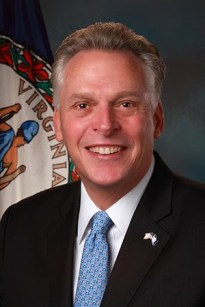 The combined shortfall fiscal year 2017 is $861.4 million. Some of the key strategies to address the shortfall include eliminating raises for state employees of $125.1 million; pulling $392.3 million from Rainy Day Fund; and cutting $70 million from state agencies. There will be additional cuts made by the Governor in his budget that he will introduce in December for the fiscal year 2018.
 Are you familiar with the Farm Bill? If you are like most Americans, you probably have a misconception about this important piece of legislation. While the bill is the primary agriculture and food policy tool of the federal government, the name is a misnomer. The Farm Bill is a comprehensive piece of legislation that encompasses commodity programs, crop insurance, nutrition programs, international trade, conservation, , forestry, energy and the well-being of rural communities. It might actually be more accurate to call it the Food Bill since 79 percent of the cost of the bill goes toward nutrition programs and only 21 percent goes towards programs that benefit farmers, ranchers and rural America.
 Ask any student studying agriculture or food policy about Norman Borlaug and you’ll get an immediate positive response. If you don’t know who he is, let me share this from the World Food Prize website. They do a better job that I could.
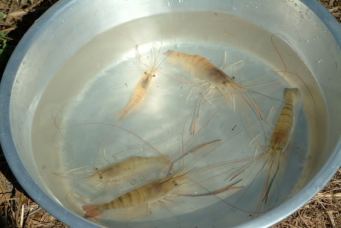 Virginia State University’s Aquaculture Program will hold its 29th annual Aquaculture Field Day on Oct. 20 beginning at 8:30 a.m. at Randolph Farm, 4415 River Road, Ettrick.
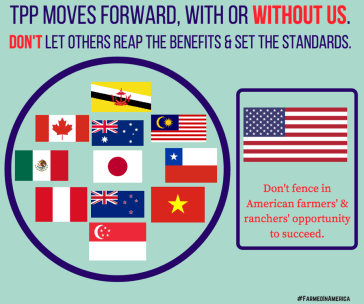 State and county Farm Bureau leaders are encouraging the nation’s farmers to urge Congress to pass the Trans-Pacific Partnership agreement this fall.
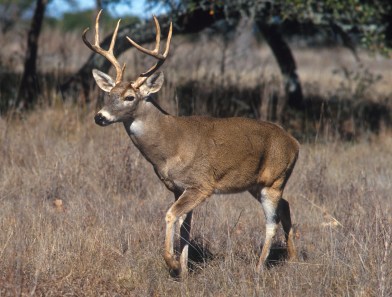 Hunters play a very important role in managing deer populations in Virginia. In addition to helping support management by purchasing a hunting license, hunters have a direct impact on the deer management goals in Virginia by hunting and harvesting deer. Landowners urban, suburban and rural alike; often have issues with deer damaging their property. In many cases there are simply too many deer to accommodate the landowner’s goals for the property.
