
Farm Security Tips During COVID-19

Stefanie2

Stefanie Kitchen, Assistant Director, Governmental Relations

With COVID-19 restrictions in place, many farmers are turning to direct marketing for new revenue streams. Given the uncertainty of the times, it is a good idea to be extra vigilant about farm security. While there are no reports of such activity in Virginia at this time, California and other states have seen animal activists trespassing on farms as part of a campaign to blame animal agriculture for the coronavirus pandemic. In addition, direct marketing operations in other states have seen increased instances of looting. Here are a few farm security measures to keep in mind:

  • Keep an eye out for suspicious activity. If you feel like you may be a target, notify law enforcement immediately.
  • Have a security plan or crisis management plan in place ahead of time, and prepare your family and employees to handle a situation.
  • Know where all possible points of entry are.
  • Maintain basic security: lock doors, gates, and cabinets; have proper lighting, alarms and cameras; post signs for restricted areas and no trespassing.
  • Establish check-in procedures for visitors at your farm and ensure all employees and family members know the steps to follow if a visitor shows up. Escort visitors at all times. 

Source: Animal Agriculture Alliance

For additional farm security tips and resources, contact Stefanie Kitchen at stefanie.kitchen@vafb.com.


The Rowe Report: So, What’s in the Stimulus Package for Farmers?

Ben final

Ben Rowe, National Affairs Coordinator

Congress loves acronyms. They take complex pieces of legislation and give them a clever acronym title to make us all feel better during difficult times. In 2008 they passed the Troubled Asset Relief Program (TARP) to give us shelter from the financial storm. In 2018 the House introduced the Robo Calls Off Phones (ROBO COP) Act to protect us from fraudulent cell phone calls. Now, as we face a global health pandemic, the House and Senate have both passed the Coronavirus Aid, Relief, and Economic Security Act to show that Congress C.A.R.E.S. about our health and financial wellbeing. The President has already committed to signing the bill, so, with a price tag north of $2T and bill text of several hundred pages, what all does the bill include and what does that mean for Virginia’s farmers?

Continue reading

Farm Bureau Creates COVID-19 Informational Webpage for Farmers

blur-call-cell-cellphone-346734Virginia Farm Bureau Federation has created a new resource on its website to provide farmers with current information relating to COVID-19 and its impact on their livelihoods.

“Virginia Farm Bureau remains committed to providing our producer members and all Virginia farmers with timely and relevant information related to farm operations during this public health challenge,” said Pam Wiley, the organization’s communications director.

Continue reading

Support for COVID-19 Impacted Businesses Announced

2000px-Seal_of_Virginia.svgFollowing a request submitted by Governor Northam on March 18, the U.S. Small Business Administration (SBA) today approved an Economic Injury Disaster Loan declaration for Virginia. Small businesses and nonprofit organizations throughout the Commonwealth affected by the COVID-19 public health crisis can now apply for low-interest federal disaster loans of up to $2 million from the SBA to pay fixed debts, payroll, accounts payable, and other expenses. To submit a loan application through the SBA Economic Injury Disaster Loan program, please visit disasterloan.sba.gov/ela/.

Businesses impacted by COVID-19 can also request to defer the payment of state sales tax due tomorrow, March 20, 2020, for 30 days. When granted, businesses will be able to file no later than April 20, 2020 with a waiver of any penalties.

The Governor has requested that the Department of Taxation to extend the due date of payment of Virginia individuals and corporate income taxes. While filing deadlines remain the same, the due date for individual and corporate income tax will now be June 1, 2020. Please note that interest will still accrue, so taxpayers who are able to pay by the original deadlines should do so.

Deadlines Extended for Young Farmers Contests

2020 YF WinnersThe Virginia Farm Bureau Young Farmers have extended their contest deadlines. Applications for the Young Farmers Achievement Award, Excellence in Agriculture Award and Outstanding Young Agriculturalist are now due April. 30. Signature requirements have been waived, and they are willing to work with people in special circumstances.

For more information, contact Ron Saacke at ron.saacke@vafb.com or visit https://www.vafb.com/membership-at-work/farmers-in-action/young-farmers


Virginia Agriculture in the Classroom Posts Online Activities for Teachers and Children

Ag in the ClassLooking for online learning activities for your kiddos? Virginia AITC is offering online programs to supplement students’ virtual learning for the next two weeks and beyond.

What you can expect:

– Read-aloud books with extension activities
– Demonstration labs with companion resources
– Ideas for labs that families can complete at home
– Materials that correlate with SOLs, mainly K-8

Follow Virginia AITC on Facebook, where most of the content will be published, at www.facebook.com/VirginiaAgintheClassroom/

To gain access to supplemental resources, please fill out this short Google Form:
http://bit.ly/2xMB1ux


Farm Bureau Highlights Immediate Challenges Facing the Agriculture Sector

98604-farmAmerican Farm Bureau has released its first assessment of the impact on farmers and ranchers in the wake of the national mitigation efforts to combat COVID-19.
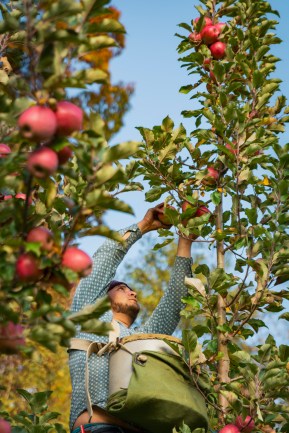
In a letter to Secretary of Agriculture Sonny Perdue, AFBF President Zippy Duvall pledged that “America’s farmers and ranchers will be with you every step of the way, doing all that we can to help you win this fight and to ensure the health, safety and prosperity of all America.” USDA invited Farm Bureau to convey agricultural issues or concerns arising as the pandemic mitigation efforts and impact advance. Duvall said labor, supply chain issues and possible price manipulation topped the list of immediate issues farmers are raising with the national organization.

Continue reading

Update on the Impact of COVID-19 on Agricultural Labor

SaundersFarm068On March 16, 2020, the U.S. Embassy and Consulates in Mexico announced that in response to COVID-19, routine immigrant and nonimmigrant visa services will be suspended starting March 18, 2020, until further notice. The suspension of services includes both visa interviews at the embassy and consulates as well as processing at the Centros de Atención a Solicitantes (CAS). This suspension will impact the arrival of H-2A workers to Virginia agricultural operations.
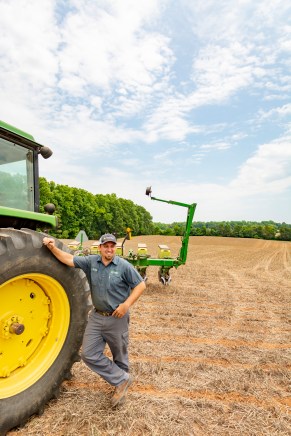
Visa activities for those who are “interview waiver eligible” will be prioritized by the State Department. Workers eligible for interview waivers include returning H-2A applicants whose visas have expired in the last 12 months and are now applying for the same visa classification and did not require a waiver the last time they applied for a visa. This clarification is an improvement from the original information received from the State Department but does not guarantee full workforce accessibility. It is also unclear at this time how many workers would qualify under this exception en route to Virginia.

Continue reading

USDA Stands Up New Team to Better Serve Beginning Farmers

GlennDye03The U.S. Department of Agriculture (USDA) is standing up a new team of U.S. Department of Agriculture (USDA) staff that will lead a department-wide effort focused on serving beginning farmers and ranchers.

“More than a quarter of producers are beginning farmers,” said USDA Deputy Secretary Stephen Censky. “We need to support the next generation of agricultural producers who we will soon rely upon to grow our nation’s food and fiber.”

To institutionalize support for beginning farmers and ranchers and to build upon prior agency work, the 2018 Farm Bill directed USDA to create a national coordinator position in the agency and state-level coordinators for four of its agencies – Farm Service Agency (FSA), Natural Resources Conservation Service (NRCS), Risk Management Agency (RMA), and Rural Development (RD).

Continue reading