More Trade News: New Soybean Export Deal with Japan and New Wine Export Deal with China

Last week Governor Bob McDonnell announced two new agriculture export deals with Asia. 
Soybeans
Montague Farms, a family-owned producer and exporter of specialty soybeans based in Center Cross, Virginia, reached a new agreement to supply food-grade soybeans to a customer in Japan. The specialty soybeans will be imported by Tokyo-based Sun-Tommy International Company and distributed to food processors in Japan. The soybeans will be used to make natto, a fermented breakfast food that is considered a traditional delicacy in Japan. Governor McDonnell met with executives of Montague Farms, Sun-Tommy, and a food processing company in Tokyo on Wednesday to thank Sun-Tommy for reaching an agreement with Montague and to discuss future export business from Virginia.

Commenting on the new export business, Governor McDonnell said, “New trade deals like this will help us build on our solid trade relationship with Japan and the all-time record $2.6 billion in agricultural exports from Virginia achieved last year.  I congratulate Montague on this new sales agreement, which will have a positive impact on the company’s operations and employees on the Northern Neck and in southeastern Virginia. I’m also pleased that this new export deal will benefit a broad network of family farms that contract with Montague Farms to supply specialty soybeans.”

The genesis of the trade deal between Montague and Sun-Tommy has roots in the governor’s trade and marketing mission to Asia in 2011, when Mr. Minoru “Tommy” Tominari, President of Sun-Tommy International Company met with Governor McDonnell and other Virginia representatives to discuss future export opportunities. Since that time, Mr. Tominari has worked with Montague Farms and Virginia agricultural trade representatives in Asia and Virginia to develop new sales opportunities for Virginia’s food-grade soybeans in Japan.  The specific financial terms of this new sale are confidential due to the specialized and highly competitive environment for this unique farm product, but the deal is valued at approximately one million dollars. 
“The governor’s strategic decision to focus on growing agricultural exports from Virginia continues to yield results for our producers and the overall economy,” said Secretary of Agriculture and Forestry Todd Haymore.  “Export sales, which now are responsible for about 30 percent of total farm income, continue to grow in importance for our family farms. Beyond that, exports are creating opportunities and supporting jobs in non-agricultural sectors between our farms and ports, such as transportation, storage, and finance, as they generate approximately $1.40 in-state for every $1.00 exported.”
The specifications for the soybeans to be exported by Montage Farms to Sun-Tommy International are strict.  The soybeans supplied by Montague must meet strict requirements for size, shape, color, moisture content, and several other physical properties.  The soybeans also must be certified as not having been genetically modified (non-GMO).  Montague Farms contracts with a network of farmers in Virginia and surrounding states to grow and ship specialty soybeans. 
Wine
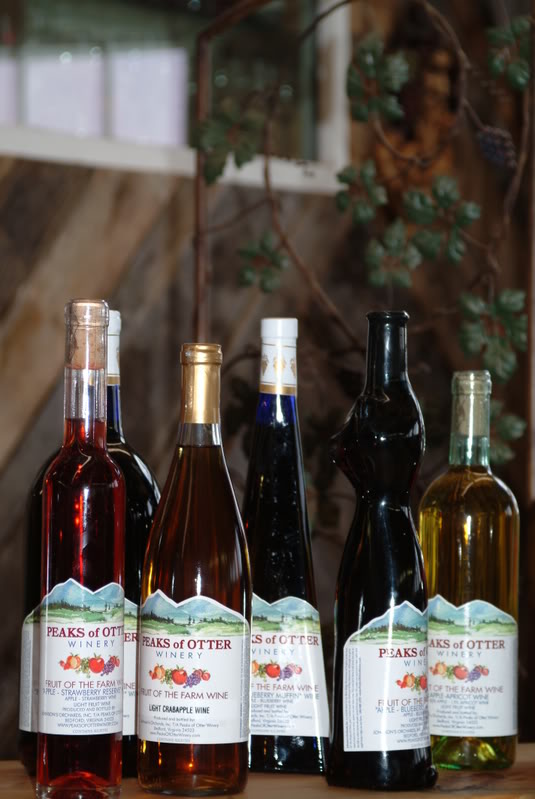
Chateau Morrisette and the Tianjin Commodity Exchange Company Limited (TJComex) have reached a five-year agreement to export Chateau Morrisette wines to China.  The inaugural sale of more than 1,150 cases of wine from Chateau Morrisette was scheduled to arrive in Tianjin, China’s fourth largest city, during the Governor’s mission to Asia. 
In Beijing, Virginia Secretary of Agriculture and Forestry Todd Haymore met with leadership of the commodity exchange to recognize formally the sale of Chateau Morrisette wines after meetings in Virginia late last year and to discuss future wine purchases.  Haymore and TJComex leadership also agreed to explore potential export opportunities of other agricultural products.
Chateau Morrisette is located in Floyd County and is regarded as one of the oldest and largest production wineries in Virginia.  The winery produces more than 60,000 cases of wine per year from its scenic location on the Blue Ridge Parkway.
“The Tianjin partnership is an integral step toward implementing our long-range strategy of increasing distribution both domestically and internationally,” says Chateau Morrisette General Manager George Weldon.  “A five-year contract firmly positions Chateau Morrisette on the global stage as Virginia’s premier winery and it serves as a testament to the quality wines produced by our winery.”
TJComex was founded as China’s fourth commodities exchange and the first in the country to be funded privately.  The company provides a trading platform for a wide range of materials and commodity products, ranging from wood products to iron ore, and now high-value agribusiness products such as wine.  The exchange began operations in December 2009 and is developing its portfolio of commodities along with opportunities generated by consumer demand in China.
Dr. Chuanliu Ni, President and Chief Executive Officer of TJComex said, “We are very pleased to have found wine of such superb quality in Virginia.  The Chinese market for wine is growing rapidly and we hope that by beginning a long-term relationship with Chateau Morrisette, we will expand wine culture in Tianjin and open our city and country to future purchases of Virginia wines.  We also would like to thank Governor McDonnell, Secretary Haymore, and Virginia’s agribusiness development team for their help in introducing Virginia wine to consumers and investors in China.”
Leading up to this sale, Virginia Department of Agriculture and Consumer Services (VDACS) international marketing staff partnered with the Advocom Group to introduce TJComex members to various Virginia wineries.  Advocom and VDACS staff worked together to coordinate a trade visit by TJComex members to Virginia, during which members of the exchange met with Virginia companies producing wine, wood products, and other agribusiness commodities.  Founded by Virginia residents Lane Bailey and A.J. Donelson, the Advocom Group is a global consulting firm with offices in Washington, DC and Beijing.
“We were pleased with this initial purchase and we look forward to helping TJComex with future purchases and investments in Virginia wines and other products,” said Donelson.
Domestic and international promotion of the Virginia wine industry is one of Governor McDonnell’s top economic development and jobs creation initiatives.  Since 2010, the McDonnell administration worked with the General Assembly to establish a reimbursable tax credit program for the establishment or expansion of vineyards and wineries and to almost triple the amount of funds placed in the Virginia Wine Promotion Fund for research, education, and marketing programs. Governor McDonnell also promotes the sale of Virginia wines in Virginia, around the country, and during foreign trade and marketing missions.
Virginia currently ranks fifth in the number of wineries in the nation with more than 230.  Virginia is also the nation’s fifth largest wine grape producer.  According to a 2012 economic impact study, the Virginia wine industry employs more than 4,700 individuals and contributes almost $750 million to the Virginia economy on an annual basis. In addition, more than 1.6 million tourists visited Virginia wineries in 2011.

Governor McDonnell Officially Opens Virginia Agricultural Trade Office in Shanghai

Governor Bob McDonnell announced Tuesday part of his trade and marketing mission to Asia the formal opening of a representative office in mainland China dedicated to increasing agricultural and forestry product exports to China, the world’s most populous country.  Over the last three years, Virginia has been implementing the governor’s initiative to increase agricultural and forestry exports. The initiative includes the utilization of a representative in mainland China, which has one of the world’s fastest growing economies, to develop and pursue new sales opportunities for Virginia’s agribusiness producers and exporters.
 At a ceremony in Shanghai yesterday with U.S. Consulate officials, including Consul General Robert Griffiths, and leading Chinese agricultural importers, distributors and processors, Governor McDonnell commented, “Today’s announcement is key for Virginia’s agriculture and forestry producers and exporters as we now have a dedicated trade representative working in China, our largest agricultural export customer. Fifteen years ago, Virginia’s agricultural exports to China were negligible. Today, business is booming. China purchased almost $640 million in agricultural goods last year from the Commonwealth, more than doubling the amount from 2011.  I’ve seen firsthand during my two trade missions to China that the country holds huge growth potential for future export business from Virginia. We intend to capitalize fully on those opportunities. More exports to China equals more good jobs in Virginia.”

Governor McDonnell added, “With more than $2.6 billion in total agricultural exports last year, Virginia’s rural communities benefit from the jobs and revenues generated by export sales. One of my top economic development priorities is the development of new export sales, which translate into farm revenue and employment opportunities from our farms, to processing facilities, to trucking and transportation providers, to our world-class ports.”
With this portion of the governor’s international agricultural trade initiative implemented, Virginia now has the only dedicated agricultural trade office in Shanghai, China’s economic and commercial capital. The Commonwealth joins North Carolina as the only other state with a dedicated agricultural trade office in China. North Carolina has an office in Beijing.
“The total value of Virginia’s agricultural exports reached an all-time high last year, driven largely by new exports that Virginia has facilitated to China over the last three years under the governor’s agricultural trade initiative,” said Secretary of Agriculture and Forestry Todd Haymore.  “Opening this office will greatly enhance our efforts to develop new trade opportunities with China.  In fact, we expect that this year’s agribusiness exports to China will exceed last year’s record high as we are able to respond to market trends and actively recruit new customers for Virginia’s high quality products.”
The Virginia Department of Agriculture and Consumer Services (VDACS) has hired Annie Kang to represent Virginia’s agricultural and forestry interests in mainland China. Kang is the founder and president of Shanghai Rui Nian Investment Management Company, a Shanghai-based firm. She has more than 15 years experience working in the shipping and logistics business. Her company has extensive experience working with major agricultural commodities.
Kang, who began representing Virginia’s agricultural and forestry interests shortly after funding was approved, is tasked with facilitating dialogue between Virginia exporters and importers in China, which has a large customer base and a rapidly growing economy.  Virginia also is in position to become a market leader in China by taking advantage of significant new opportunities that arise from improved shipping channels between Virginia and China when the Panama Canal expansion project is completed in early 2015.
In 2010, Governor McDonnell implemented a strategic plan to grow the state’s agricultural and forest product exports.  Working in close partnership with Virginia’s producers, agribusinesses, and exporters, Secretary Haymore and VDACS Marketing and Development staff focus on retaining strong market presence in mature and established markets like Canada and Japan, pursuing new opportunities in emerging markets such as China, India and Mexico, and developing business in unconventional markets, such as Cuba and Venezuela.  This team also works with state government partners, including the Secretary of Commerce and Trade, the Virginia Port Authority, and the Virginia Economic Development Partnership, to find more export opportunities.
To supplement the strategic effort, the governor secured new international marketing funds from the General Assembly over the course of his administration for VDACS to open agricultural trade offices in India, China, Latin America, and Europe, all regions that contain some of the world’s largest and fastest growing economies. Later this year, Virginia will have an agricultural trade representative in Canada.  VDACS has had a trade office in Hong Kong for more than 20 years.
Since taking office in 2010, Governor McDonnell has led overseas trade missions to Canada, Great Britain, Ireland, Switzerland, the Netherlands, Sweden, Germany, Japan, China, South Korea, Israel, and India.  These missions and the work of VDACS’ new international marketing staff with Virginia’s private sector exporters have resulted in more than $500 million in new agricultural exports from Virginia so far.  Overall agricultural exports from Virginia reached just over $2.61 billion in 2012, an all-time high.
Agriculture and forestry are Virginia’s largest industries, with a combined economic impact of $79 billion annually: $55 billion from agriculture and $24 billion from forestry. The industries also provide approximately 500,000 jobs in the Commonwealth according to the Weldon Cooper Center for Public Service at the University of Virginia.

From the Field: Helping You is What We Do Best

From the Field is a bi-monthly column written by Mark Campbell, Farm Bureau Field Services and County Farm Bureau activities. Director for the Central District. He writes about Farm Bureau member benefits and County Farm Bureau activities.

The title is a former Virginia Farm Bureau motto that had been around for a long time.  I think it describes the Membership and Field Services Department well.  As most of you know, Virginia FarmBureau has regional fieldmen, as they are often called.  The official title is District Field Services Director, but most of the time we are referred to as fieldmen.  There are nine of us in the field, each working a district of 10 counties, plus a staff person devoted to membership marketing. 
Our Membership and Field Services Department has three other staff members plus the vice president of the department that work in the home office.  Our department focuses on leadership development and support, serving as a liaison between Virginia FarmBureau (VFB) and the 88 county Farm Bureaus, managing membership benefit programs, and membership as a whole.
While we all have similar job duties, we each have different specialties that benefit Farm Bureau and the agriculture community.  Most of our staff have farm backgrounds and have developed some of their skills, knowledge and talents on the farm.  Others have gained experiences through in-depth work on Farm Bureau issues or in associations or volunteer work.  I intended to highlight each person with their special niche, but it was getting too long.  Instead, I want to let you know about a few areas of specialty that we have.

Our field staff have extensive knowledge in several farm products including row crops, beef cattle, agronomy, fruit and vegetables, and tobacco.  As for policy issues, the staff have become specialized in Land Use Tax, zoning, conservations easements, water quality, Best Managements Practices (BMPs) programs, and working with state regulatory agencies.  This has been accomplished through years of working on these issues and by serving on county planning commissions, board of supervisors, and other local commissions and associations.  One of our field staff even managed the Virginia Techfootball and baseball fields.
These specialties have been beneficial in working with county Farm Bureaus on issues or helping a member on an individual basis.  I am proud to say that there is a wealth of knowledge among the staff and years of experience, with some having been with VFB for over 30 years.  I can confidently say that all of them, including myself, have a passion for agriculture and enjoy helping farmers and people in the agriculture community continue to build and strengthen the industry and way of life.
If there is anything that we can help you with; we will be glad to try and help.  If we don’t know the answer, we can definitely put you in touch with the right person.  The easiest way to contact us is through your local county Farm Bureau office.  Thanks for being a member.  We have several membership benefits for you to utilize, and we hope that our service adds value to your membership as well. 
Until next time,
Mark

Court Refuses to Dismiss Poultry Farmer’s Suit Against EPA

Poultry and livestock farmers scored a win Monday when a federal court rejected efforts by the Environmental Protection Agency to dismiss a case brought by West Virginia poultry farmer Lois Alt, according to the American Farm Bureau Federation.
Alt had challenged an EPA order demanding that she obtain a Clean Water Act discharge permit for ordinary stormwater runoff from her farmyard. Despite EPA’s recent withdrawal of the Alt order, the U.S. District Court for the Northern District of West Virginia ruled that the case should go forward to clarify for the benefit of Alt and other farmers whether, as EPA contends, discharge permits are required for “ordinary precipitation runoff from a typical farmyard.”

“EPA seems to have believed if it withdrew the order against Ms. Alt, the court would dismiss her lawsuit,” said AFBF President Bob Stallman. “The tactic failed because the court recognized EPA wasn’t changing its underlying legal position, but just trying to avoid having to defend that position.”
Alt filed suit against EPA in June 2012 after the agency threatened her with $37,500 in fines each time stormwater came into contact with dust, feathers or small amounts of manure on the ground outside of her poultry houses as a result of normal farm operations. EPA also threatened separate fines of $37,500 per day if Alt failed to apply for a National Pollutant Discharge Elimination System permit for such stormwater discharges.
Alt responded with a lawsuit challenging the EPA order. AFBF and the West Virginia Farm Bureau intervened as co-plaintiffs with Alt to help resolve the issue for the benefit of other poultry and livestock farmers. EPA withdrew its order in December 2012, about six weeks before briefing on the legal issues was set to begin. The same month, five environmental groups, including Waterkeeper Alliance, Center for Food Safety and Food & Water Watch, moved to join the lawsuit on the side of EPA.
In opposing EPA’s motion to dismiss, Alt and Farm Bureau argued that farmers remain vulnerable to similar EPA orders, because EPA stands by its contention that the Clean Water Act statutory exemption for “agricultural stormwater” does not apply to stormwater from the farmyard at a concentrated animal feeding operation. The court agreed, noting that “[t]his Court’s ultimate decision on the merits will benefit all parties, including EPA and many thousands of farmers, by clarifying the extent of federal CWA ‘discharge’ liability and permit requirements for ordinary precipitation runoff from a typical farmyard.”
“Ms. Alt has courageously taken on EPA not just for her own benefit, but for the benefit of other farmers,” said Stallman. “She refused to back down from her principles despite the best efforts of EPA and environmental groups. We are pleased that the court agreed that the stakes are high for all poultry and livestock farmers and this issue should be resolved.”

In addition to denying EPA’s motion to dismiss, the court allowed the environmental groups to intervene and ordered briefing on the Alt and Farm Bureau claims to begin by June 1. 

Immigration Reform Bill a Big Deal for Agriculture

It has a long way to go to become law, but the recent introduction of a bipartisan immigration reform bill in the Senate is a big deal for U.S. agriculture. Within the long-awaited legislation are provisions for a new agricultural guestworker program. American Farm Bureau Federation President Bob Stallman says that’s extremely important for the future of agriculture in this country.

“We have to have workers to tend to, harvest, plant our crops. Now, without that what will happen, and what has happened to some extent when there have been worker shortages, is some operations move into another country, so we’re importing products.” Stallman said.
Stallman says the new guestworker program would provide a stable, legal workforce for U.S. agriculture.

“What we proposed was basically a two-prong program. One was a “at-will” program. That means a worker could come across the border with a legal visa and work wherever he could find work for a designated agricultural employer. So he can move from job to job as work demands dictated. Another part is the contract provisions where a worker can come across, with a proper visa, and then work under a contract much like the H2A program now only the bureaucratic requirements would be much less for the ag employers and would make it much easier for them to use the program,” Stallman said. “The Farmworkers agreed with us on this approach. One of their biggest concerns was what do you do with those farmworkers who are already here and who are improperly documented or undocumented. They need to have a status. There’s a separate program called “the blue card” to allow those workers if they have can prove they have worked in agriculture, to continue to work in agriculture for some period of time and then move forward and apply for a green card.”
Stallman says it all adds up to a much better program than what currently exists.
“One of the major problems with the H2A program was the bureaucratic nightmare, if you will, of the regulatory process to get approval for workers to come in when you needed them, when the crops were ripe and needed to be picked. Delays in the process meant that the workers wouldn’t show up when there were needed. They would show up maybe two weeks later, but that was after the crop was already ripe and you know if it’s not picked when it’s ripe, you basically lose it.”
  
But Stallman says this legislation is a win-win for everyone…including consumers.
“Americans, I think, have a greater comfort level with the fact that their food is produced here and subject to all the rigorous requirements we have for food safety. So consumers are better off with us having a strong agricultural industry in this country.”

To view a summary of the bill, click here: https://docs.google.com/file/d/0Bwdwqn87Kb-9MFVhYkRSR3VvZ00/edit?usp=sharing

Individual tax code reform a must for farmers, ranchers

From the latest FB News
With more than 96 percent of farms and 75 percent of farm sales taxed under IRS provisions for individual taxpayers, as congressional lawmakers consider tax reform they must address the individual tax code and not focus exclusively on corporate tax provisions, Farm Bureau last week told Reps. Vern Buchanan (R-Fla.) and Allyson Schwartz (D-Pa.). Further, the new tax code should be simple, transparent, revenue-neutral, and fair to farmers and ranchers.
Buchanan and Schwartz are leading a House Ways and Means Committee tax reform working group on small business. There are 10 other working groups within the committee looking at the many layers of the tax system.
Although broadening the tax base and lowering the rate are important parts of tax reform, lawmakers should note that lowering rates will impact farms and ranches differently than other businesses because farmers’ and ranchers’ income can swing so wildly as a result of unpredictable weather and uncontrollable markets, American Farm Bureau Federation President Bob Stallman cautioned.
In fact, IRS data shows that in 2010 nearly three out of every four farm sole proprietors reported a farm loss, and since 1980 farm sole proprietors as a group have reported negative aggregate net farm income for tax purposes. In light of this, a lower individual tax rate may not adequately compensate farmers for lost tax provisions and over time could result in a higher effective tax rate, which is why Farm Bureau is urging lawmakers to allow farmers and ranchers to apply the tax benefits of excess deductions and credits to previous and/or future tax years.

Among the tools farmers need to cash-flow their businesses and even out their taxable income is cash accounting-the deferral of commodity and product receipts and prepaying the cost of livestock feed, fertilizer and other farm supplies.
Farm Bureau supports the continuation of unrestricted cash accounting for farmers and ranchers who pay taxes as individuals and cautions against reducing the number of farms classified as corporate that are eligible to use it.
Another important instrument farmers and ranchers use to reduce income swings and manage tax liabilities is farm income averaging. Growers would be even better served by this provision if the averaging period were extended from the current three-year period to a five-year period, Stallman wrote to the working group. Allowing farmers the flexibility to determine how much eligible farm income to assign to a specific prior year would be beneficial, too.
    
Expensing and depreciation options are also important to capital-intensive businesses like farms and ranches. For example, the organization is calling on Congress to maintain the $500,000 Sec. 179 small business expensing limitation and not reduce the $2 million acquisition limit. This helps with the single, large purchases farmers and ranchers make, particularly for equipment.

From the Field: Spring is Finally Here

From the Field is a bi-monthly column written by Mark Campbell, Farm Bureau Field Services Director for the Central District. He writes about Farm Bureau member benefits and County Farm Bureau activities.

From small town country stores to the national nightly news; winter’s long lasting grip has been the topic of discussion this year. Just less than one week ago, some parts of the state experienced several inches of snow. Today, the temperature is in the upper 80s. Which leads me into the topic of this blog.

For a while now, row crop farmers have had all the equipment greased and prepared for planting. Fields were prepared and the seed corn was in the sheds. So when the weather turned warm and sunny, the planters were turned loose. Some county Farm Bureau meetings were lacking a quorum earlier this week, but for good reason. We have had good moisture so far this year and soil conditions seem really good. These high temperatures will raise soil temperatures in a hurry.

For the livestock folks, the warm weather has been a blessing. Hay feeding lasted longer this year because pastures weren’t really growing until we got some warm days. Needless to say, the grass has turned multiple shades greener and is growing. Most livestock producers had a surplus of hay from last year which allowed extra feeding days without a problem.

Fruit producers have fared well so far as the trees didn’t bud out too early to get snapped by a late season freeze. One fruit grower mentioned that strawberry production may be on the light side this year since the cold weather lasted into April and has now turned hot. She thinks the season will be a little shorter than normal.

Spring really is a miraculous time of year. Just taking a few minutes to observe nature really makes me appreciate the grand design of things. Trees, flowers, grass and other plants seem to have an internal clock that signals them when to wake up from their long winter’s nap. The animals are more active and almost seem to have a pep in their step. Just this morning, I saw a flock of wild turkeys on the back part of the farm with a tom strutting and spreading his tail feathers in the most impressive display of poultry bravado you ever saw. I know that in June and July I will see some baby turkeys as a result and their mothers chasing grasshoppers and June bugs.

One of the best things that I like about spring is seeing baby calves stretched out soaking up the sun on a vibrant green pasture without a care in this world. It truly is amazing how everything in nature works together in a symbiotic relationship. I am so thankful that we as farmers and ranchers are able to care for and be an integral part of nature and the cycle of life.

Even in rural America, technology has sped up the pace of life. My wish for you is to take a few minutes this week and stop. Stop and take in the sunrise. Listen to the peepers down at the creek. Listen to the quiet yet rhythmic sound of cows grazing on new pasture after you opened up the gate. Spring is a wonderful season when everything makes a grand proclamation of life. Here’s hoping that you get to enjoy nature’s display. If you read my last blog post, then I encourage you to share some pictures of your farm in the Spring on social media such as Facebook. Our fellow citizens that don’t live on farms would especially love seeing some of the sights you get to see every day.

Until next time,
Mark

Farm Bureau Sends Farm Bill Proposal to Capitol Hill

AFBF President Bob Stallman

The American Farm Bureau Federation is sent a farm bill proposal to Capitol Hill yesterday. Approved this weekend by the AFBF Board of Directors, the proposal offers a diverse mix of risk management and safety net tools to benefit a wide range of farms and it saves $23 billion compared to the cost of continuing the current program.
The American Farm Bureau farm bill proposal helps reduce the nation’s budget deficit, provides an adequate economic safety net for the nation’s farmers and is based on several core policy principles, according to AFBF President Bob Stallman.
The Farm Bureau proposal:
  • Offers farmers a choice of program options.
  • Protects and strengthens the federal crop insurance program and does not reduce its funding.
  • Provides a commodity title that works to encourage farmers to follow market signals rather than making planting decisions in anticipation of government payments.
  • Refrains from basing any program on cost of production.
  • And, ensures equity across program commodities.

“There is far less money this year than last with which to secure an adequate safety net for the many family-owned farms that make up the bulk of America’s agricultural system,” Stallman said. “Last year, Congress merely extended the old 2008 farm bill until Sept. 30 of this year. Now, while unfortunately we have less money to work with, it is vital that Congress complete a new five-year farm bill this year. Doing so is in the economic interest of our entire nation.”

Stallman said the goal of the American Farm Bureau proposal is to provide a measure of fairness among regions and crops, while providing each commodity sector a workable safety net provision for farmers who grow that crop.
“Farm policy should provide a strong and effective safety net and viable risk management programs for farmers that do not guarantee a profit but, instead, protect them from catastrophic occurrences,” Stallman said. “We also want to ensure that terms of our farm programs do not affect a farmer’s decision of which crop to plant. The program must comply with our World Trade Organization agreements.”
Farm Bureau supports a program that reduces complexity while allowing producers increased flexibility to plant in response to market demand.
Farm Bureau supports a safety net that allows farmers to purchase insurance products to further protect individual risk. The program should be delivered by private crop insurance companies.
We support producers being allowed a choice of program options.
Specifically, the AFBF proposal calls for a three-legged safety net for program crop farmers that includes: a stacked income protection plan commonly called STAX; an improved crop insurance program; and target prices and marketing loans. Under the proposal, all program crop farmers would have access to the marketing loan and crop insurance provisions and they would then select between a target price program and STAX to round out their safety net option.
The AFBF proposal also supports extending provisions of the STAX program for apples, potatoes, tomatoes, grapes and sweet corn. Covering these five specialty crops will benefit fruit and vegetable producers in 44 states. Eventually, Farm Bureau would like to cover all crops under a STAX program in the future.
“While we would have liked to have provided a STAX program for all commodity programs under the same terms as those provided to cotton last year in the Senate bill, funding is insufficient to do so,” Stallman explained.
Because of funding limits, AFBF is proposing modifications be made to STAX for all eligible commodities. Those modifications would: reduce the crop insurance premium subsidization to 70 percent from 80 percent; not offer the multiplier option; not offer a harvest price option; allow STAX to be based on yield or revenue at the discretion of the producer; and allow purchase only as a buy-up policy with a 10-25 percent deductible rather than also providing for a stand-alone policy. In addition, under the STAX program suggested by Farm Bureau, no payments would be made until the county average revenue or yield fell by 10 percent from the historic amount. 
A target price program for all program commodities would be available except for cotton. Due to terms of Brazil’s WTO cotton case against the United States, cotton farmers would likely not be eligible for a marketing loan at the current level or any target price.
For other crops, target price levels would be based on the marketing-year average price from the past five years (2007 through 2011) and those projected by the Congressional Budget Office for the next five years (2012 through 2016). To establish the actual target prices and provide general equity across crop sectors, these 2007-2016 average prices are reduced by 25 percent for corn and soybeans, 15 percent for wheat and 10 percent for rice and peanuts. Wheat has an adjustment of only 15 percent because it is produced mostly in the larger counties, making area yields less representative of individual producer experience and therefore less effective as a risk management tool.
The smaller 10 percent adjustment is applied to peanuts and rice as both crops lack insurance products that function as well as those available to the major grain and oilseed commodities. AFBF suggests the same 10 percent loss threshold be used to determine appropriate target price levels for rice and peanuts. The target price will be based on 85 percent of planted acres, but not to exceed a producer’s historical base acreage. This provides a safety net more accurately addressing the risks associated with current production decisions and eliminates the present mismatch between payments and actual production or market conditions. Capping the payment acres at the historical base minimizes any potential distortion of a target price system.
The Senate Agriculture Committee will likely begin markup of a comprehensive, long-term farm bill this month, while the House Ag Committee is considering moving a bill after the Senate Ag Committee completes its mark up.

From USDA: How to Manage Vulture Damage

Virginia is blessed with an abundance of agricultural and natural resources.  At times, this bounty can result in conflicts between farmers or homeowners with the wildlife that share our farms and neighborhoods.  Vultures have adapted well to human habitats and are increasingly involved in these conflicts.  Native scavengers, they play an important role in the ecosystem, but in some situations they can also cause damage to property and livestock.
Two different species are native to Virginia: Black Vultures and Turkey Vultures.  Populations of both have increased in abundance and range in the past 30 years. Vultures often form large roosts and loafing groups numbering from a few dozen to hundreds of individuals. 
Conflicts arise when these congregations form in close proximity to people.  Both Turkey and Black Vultures normally eat carrion, or dead animals.  However, Black Vultures can also attack and kill calves, lambs, piglets, and other vulnerable animals.  This predatory behavior often results in serious injury to livestock, as vultures target the eyes and soft membranous tissues.  These domestic animals often must be euthanized due to the extent of their injuries.

Large groups of vultures may roost or occupy woodlots near people’s homes and farms. They can damage homes and commercial buildings by tearing window caulking, roof shingles, vent seals, rubber roof liners, and pool covers.  Damage to vehicles parked at these locations includes scratched paint, removal of rubber seals and wipers, and ripping of vinyl seat covers from boats and tractors. 
Conflicts can be managed effectively under certain conditions.  Vultures are migratory birds, regulated by the U.S. Fish and Wildlife Service and protected by the Migratory Bird Treaty Act, State laws, and regulations.  It is legal to use non-lethal approaches to disperse vultures from situations where they are causing damage, though some tools may be regulated by local governments. A federal permit is needed to kill or destroy the birds, their nests or eggs.
The USDA Wildlife Services Program, a federal program, offers help with human-wildlife conflicts including vulture damage.  Technical assistance may include information on habitat management, husbandry, and tools for dispersing vultures from areas where conflicts occur.  Wildlife Services biologists also can help document vulture damage and start the depredation permit application process.
For more information about managing vulture damage, contact the USDA Wildlife Services Program at 804-739-7739 or any WS office in Virginia:

Food Safety Modernization Act Teleconferences Start

The Produce Safety Alliance, in collaboration with the Food and Drug Administration, is hosting a series of question and answer teleconferences to discuss FDA’s new produce safety regulations.

Dr. Jim Gorny, senior advisor for produce safety and Dr. Erick Snellman, policy analyst, will be available from FDA.
The teleconferences are as follows:
Mar 18     Understanding Exemptions (Recording)

Mar 25     Agricultural Water  (Recording)

April 22    Soil Amendments                          11 a.m.
April 25    Domestic and Wild Animals            11 a.m.
TBA         Growing, Harvesting, Packing; Holding  
               Activities
TBA         Equipment, Tools, Buildings & Sanitation
TBA         Health, Hygiene and Training of Workers
TBA         Recordkeeping, Compliance & Enforcement
Farm Bureau encourages states to participate in the teleconferences to learn more about the proposed rule and better determine how they may impact producer members in their respective states.
The teleconference dial-in number is (866) 906-9888. The passcode is 8140591.
For more information on the Proposed Produce Safety Rule, visit:
Proposed Produce Safety Rule at a Glance:
Proposed Produce Rule Subpart Fact Sheets: