CattlePulse is a monthly update from Virginia Farm Bureau on the Virginia feeder cattle markets, the national trends that affect them and stories of cattle producers across the commonwealth.
In this month’s episode of CattlePulse, host Elijah Griles sits down with Dr. Josh Maples from Mississippi State University to unpack the July Cattle Inventory report and explore what it means for producers. With feeder cattle futures hitting all-time highs, Elijah and Dr. Maples discuss actionable strategies cow-calf producers can consider to manage price risk.
Feeder cattle prices are at historic highs — but challenges are mounting. In this month's episode, host Elijah Griles breaks down the latest futures markets, unpacks what a softening choice-select spread could mean for beef demand, and shares drought conditions across the Commonwealth. Plus, Elijah talks with Gene Copenhaver, newly elected president of the National Cattlemen's Beef Association and a Washington County native at the Virginia Beef Expo.In this episode:Feeder cattle futures are trading in the low $370s, with May at $372, August at $373, and September at $371 — all up roughly 1% from a month agoThe April Cattle on Feed report showed 11.6 million head on feed as of April 1st, down 1% from a year ago, with placements down 7% and marketings down 6%Heifers on feed came in at 37.3% — slightly above the 20-year average — with a downward trend over the last 2–3 years that may signal early heifer retentionThe choice-select spread has narrowed significantly in 2026, hovering between $0–$10 and even turning negative at points, raising questions about softening consumer demand for higher-quality beef grades80% of Virginia is in severe drought, with 18% of the state in extreme droughtVirginia feeder calf prices surged again — the six-market average for 500 lb. Medium & Large #1 steers hit $469/cwt, up 3.1% from last month, with Winchester approaching $500/cwtNCBA President Gene Copenhaver shares his priorities: supporting the next generation of cattle producers, easing farm transition costs, and navigating the ongoing drought and border reopening questionsResources mentioned:Kenny Burdine's Cattle Market Notes weekly newsletter (University of Kentucky)USDA Cattle on Feed Report (April 2026)NOAA Climate Prediction Center May outlookU.S. Drought MonitorAgriStress helpline: call or text 833-897-2474CattlePulse is produced by Virginia Farm Bureau. Have a question or topic suggestion? Email Elijah at elijah.griles@vafb.com.
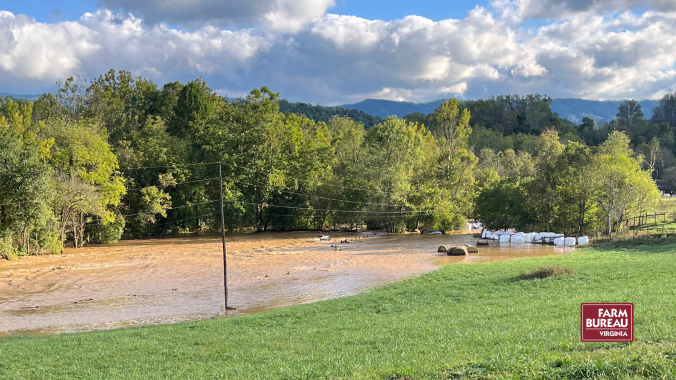
Governor Glenn Youngkin has announced the launch of the Virginia Farm Recovery Block Grant Program, a new federal partnership designed to help agricultural and forestry operations recover from Hurricane Helene’s devastation in September 2024.
Program Overview
The program, funded through a USDA block grant authorized by the American Relief Act 2025, targets farmers and forestland owners who sustained damage not covered by other federal disaster assistance programs. The Virginia Department of Agriculture & Consumer Services (VDACS) will administer direct payments once federal funding is allocated and the state workplan receives USDA approval.
Eligible Areas
The program covers 27 designated localities in Southwest and Southside Virginia, including:
Independent Cities: Bristol, Covington, Danville, Galax, Norton, and Radford
Required Documentation
Farmers and forestland owners should begin gathering these documents now:
Basic Information:
W-9 Form
Federal Tax ID information for all owners/shareholders
Tax Parcel ID and Parcel Map
FSA Farm Number and FSA 578 Form
Schedule F tax documentation showing farming income
Damage Documentation:
Photos of damaged farm infrastructure (greenhouses, barns, silos, packing houses)
Photos of damaged commercial aquaculture infrastructure
Photos of damaged farm roads, bridges, or culverts providing crop/livestock access
Evidence of destroyed harvested crops or unharvested crops due to market loss
Documentation of timberland ownership (minimum 10 contiguous acres) with storm damage
Financial Records:
Insurance adjustment reports and proof of payments
Invoices for replacement costs or repair estimates
Documentation of other USDA program applications or payments
Records of salvage payments or tax deductions from agricultural damage
Important Requirements
Producers receiving funding for market loss, economic loss, plasticulture, and aquaculture claims must maintain USDA Risk Management coverage for two crop years.
Virginia Cooperative Extension agents and Department of Forestry representatives will provide technical assistance and help publicize the program. For those without computer access, local VCE offices will be available during the application window.
Next Steps
Eligible producers should begin collecting required documentation now. VDACS will launch a promotional campaign announcing specific registration and application dates once federal approval is received.
For updates and program details, visit the VDACS website at the link above.
CattlePulse is a monthly update from Virginia Farm Bureau on the Virginia feeder cattle markets, the national trends that affect them and stories of cattle producers across the commonwealth.
In this month’s episode, host Elijah Griles unpacks the factors fueling the feeder cattle futures rally. He also shares positive developments in the battle against the New World Screwworm fly. Plus, Franklin County cattle producer and meat processor Chase Scott shares his motivation to use the new Virginia Verified Beef label.
Feeder cattle prices are at historic highs — but challenges are mounting. In this month's episode, host Elijah Griles breaks down the latest futures markets, unpacks what a softening choice-select spread could mean for beef demand, and shares drought conditions across the Commonwealth. Plus, Elijah talks with Gene Copenhaver, newly elected president of the National Cattlemen's Beef Association and a Washington County native at the Virginia Beef Expo.In this episode:Feeder cattle futures are trading in the low $370s, with May at $372, August at $373, and September at $371 — all up roughly 1% from a month agoThe April Cattle on Feed report showed 11.6 million head on feed as of April 1st, down 1% from a year ago, with placements down 7% and marketings down 6%Heifers on feed came in at 37.3% — slightly above the 20-year average — with a downward trend over the last 2–3 years that may signal early heifer retentionThe choice-select spread has narrowed significantly in 2026, hovering between $0–$10 and even turning negative at points, raising questions about softening consumer demand for higher-quality beef grades80% of Virginia is in severe drought, with 18% of the state in extreme droughtVirginia feeder calf prices surged again — the six-market average for 500 lb. Medium & Large #1 steers hit $469/cwt, up 3.1% from last month, with Winchester approaching $500/cwtNCBA President Gene Copenhaver shares his priorities: supporting the next generation of cattle producers, easing farm transition costs, and navigating the ongoing drought and border reopening questionsResources mentioned:Kenny Burdine's Cattle Market Notes weekly newsletter (University of Kentucky)USDA Cattle on Feed Report (April 2026)NOAA Climate Prediction Center May outlookU.S. Drought MonitorAgriStress helpline: call or text 833-897-2474CattlePulse is produced by Virginia Farm Bureau. Have a question or topic suggestion? Email Elijah at elijah.griles@vafb.com.
The Virginia Department of Agriculture and Consumer Services (VDACS) is hosting its 2025 Pesticide Collection Program in Southeastern Virginia, offering farmers, dealers, and homeowners a free and safe way to dispose of unwanted pesticides.
Who Can Participate
The program is open to:
Farmers and pesticide dealers
Pest control firms and certified applicators
Homeowners and golf course operators
Anyone with unwanted, outdated, or banned pesticides
Collection Dates and Locations
All collection sites operate from 9 a.m. to 1 p.m.:
August 2025:
Aug. 5 – Chesapeake Mosquito Control Commission, 332 Saint Bride’s Rd. E., Chesapeake
Aug. 6 – Prince George County Extension, 6380 Scott Memorial Park Rd., Prince George
Aug. 7 – Courthouse Convenience Center, 7232 Courtland Farm Rd., Hanover
Aug. 19 – Nutrien Ag Solutions, 18432 Wachapreague Rd., Melfa
Participants must transport their own pesticides to collection sites. For those unable to safely containerize pesticides for transport, VDACS may provide assistance on a case-by-case basis.
Since 1997, Virginia’s Pesticide Collection Program has safely collected and destroyed more than 1.9 million pounds of outdated and unwanted pesticides. The program rotates through Virginia’s five regions annually and is funded through pesticide fees collected by VDACS.
Questions?
Contact your local Virginia Cooperative Extension agent or the VDACS Office of Pesticide Services at marlene.larios@vdacs.virginia.gov or 804.371.6561.
The USDA Farm Service Agency (FSA) is offering the Supplemental Disaster Relief Program (SDRP), providing $16 billion in assistance to agricultural producers who suffered crop losses from natural disasters in 2023 and 2024.
Who Can Apply
Farmers with eligible crop, tree and vine losses caused by natural disasters including wildfires, hurricanes, floods, tornadoes, winter storms, drought and excessive heat can now apply for Stage One assistance. To qualify, producers must have received payments through crop insurance or the Noninsured Crop Disaster Assistance Program (NAP) during the disaster years.
How to Apply
Applications opened July 10, 2025, at FSA county offices. The USDA has streamlined the process by mailing pre-filled applications to eligible producers on July 9. Farmers need to submit Form FSA-526 along with other required FSA documentation.
Payment Details
Stage One payments are calculated based on coverage levels and existing insurance payouts, with a 35% payment factor applied. Total SDRP payments cannot exceed 90% of losses. If funds remain available, FSA may issue second payments.
Future Requirements
Producers receiving SDRP payments must purchase federal crop insurance or NAP coverage at 60% coverage level or higher for the next two crop years. Failure to maintain coverage requires repayment of SDRP funds plus interest.
What’s Next
Stage Two applications for uncovered losses, including shallow losses and quality losses, will open in early fall. This program is part of $30 billion in total disaster assistance being distributed this year.
The USDA has already distributed over $7.8 billion through the Emergency Commodity Assistance Program and more than $1 billion through the Emergency Livestock Relief Program.
For more information and to access the Disaster Assistance Discovery Tool, visit farmers.gov or contact your local USDA Service Center.
Agricultural producers across the nation have a unique opportunity to shape how federal farm programs are delivered in their communities. The U.S. Department of Agriculture (USDA) Farm Service Agency (FSA) is now accepting nominations for farmers and ranchers to serve on local county committees, and the deadline is approaching fast.
Why County Committees Matter
FSA county committees aren’t just administrative bodies; they’re the backbone of local agricultural decision-making. These committees have real power to influence how disaster recovery, conservation, commodity support, and price support programs are implemented in your area. They also make decisions about county office employment and tackle other pressing agricultural issues that directly affect your operation.
With more than 7,700 dedicated agriculture community members currently serving nationwide, these committees represent the voice of local producers in federal program administration. It’s democracy in action at the grassroots level of American agriculture.
Who Can Serve?
The eligibility requirements are straightforward and designed to be inclusive:
You can be nominated if you:
Participate in or cooperate with a USDA program
Live in a Local Administrative Area (LAA) that’s up for election this year
Don’t worry if you’ve never received program benefits—being a “cooperating producer” simply means you’ve provided information about your farming or ranching operation to FSA. This broad definition ensures that producers at all levels of engagement can participate.
The Nomination Process Made Simple
Getting involved is easier than you might think. Here’s what you need to know:
Who Can Nominate:
You can nominate yourself
You can nominate other qualified producers
Qualifying organizations can also submit nominations
Key Requirements:
Complete and sign FSA Form 669A
Ensure the form is postmarked or received by your local FSA office by August 1, 2025
Be registered with your local FSA office
The USDA actively encourages all eligible producers to participate—whether that’s nominating candidates, voting in elections, or serving in office themselves.
Understanding Local Administrative Areas
Local Administrative Areas (LAAs) are the electoral districts for FSA committees. These can cover:
Single counties
Multi-county jurisdictions
Urban or suburban focused areas
Not every LAA holds elections each year, so your first step should be contacting your local FSA office to determine if your area is up for election in 2025. You can also use the geographic information system locator tool at fsa.usda.gov/elections to find your specific LAA.
Urban and Suburban Agriculture Gets a Voice
The FSA recognizes that agriculture isn’t limited to rural areas. Urban county committees specifically focus on promoting urban, indoor, and other emerging agricultural production practices. These committees serve 27 cities nationwide and work to:
Provide outreach to urban producers about USDA programs
Serve as advocates for urban agricultural communities
Assist in implementing programs that meet the unique needs of urban farming operations
Urban producers elect their own committee members, ensuring that the specific challenges and opportunities of urban agriculture are properly represented.
What Committee Service Involves
Serving on an FSA county committee is a significant commitment that offers real influence over agricultural policy implementation. Committee members serve three-year terms on panels that range from three to 11 members, depending on the size and needs of the area.
The role involves regular meetings, program oversight, and serving as a liaison between local producers and federal agricultural agencies. It’s an opportunity to directly impact how programs are administered in your community while gaining valuable insights into agricultural policy and program management.
Take Action Now
With the August 1 deadline approaching, interested producers should act quickly. Here’s your action plan:
Contact your local FSA office to confirm your LAA is holding elections this year
Register with FSA if you haven’t already
Obtain and complete FSA Form 669A
Submit your nomination before the August 1 deadline
Remember, election ballots will be mailed to eligible voters in November 2025, so the nomination period is your chance to ensure qualified candidates are on the ballot.
More Resources
For additional information about FSA county committee elections, nomination forms, and to access the LAA locator tool, visit fsa.usda.gov/elections. Urban agriculture information is also available at farmers.gov/urban.
Your local USDA Service Center can provide personalized guidance about the nomination process and answer questions about serving on county committees.
The Bottom Line
Agricultural producers have a voice in how federal farm programs are administered—but only if they choose to use it. Whether you’re interested in serving yourself or know someone who would make an excellent committee member, the nomination process is your opportunity to strengthen agricultural representation in your community.
Don’t let this chance pass by. Get involved, nominate qualified candidates, and help ensure that local agricultural voices are heard in federal program administration.