Have you seen the latest Virginia Farm Bureau Real Dirt video? It features Attorney General Ken Cuccinelli talking about something very near and dear to our hearts: the property rights constitutional amendment. Feel free to share it with your friends through email or even display it on your Facebook page by clicking the Share button at the top of the video. If you need help doing so, please contact me at kelly.pruitt@vafb.com or 804-290-1293. And don’t forget to Vote Yes for Question 1 on Nov. 6!
VLCF Announces New Round of Grants for Land Conservation Projects
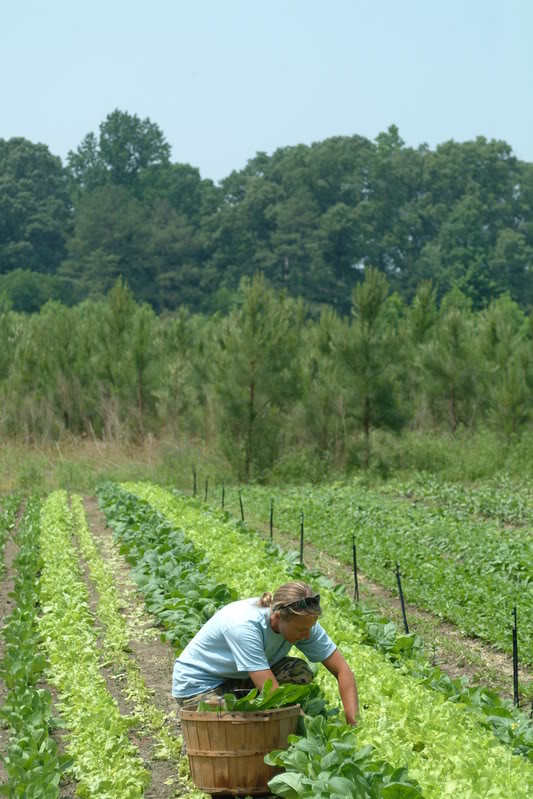
At its meeting on Aug. 20, 2012, the Virginia Land Conservation Foundation board approved the launch of a new grant round, with approximately $1.5 million to be awarded to land conservation projects. The grant round started on Aug. 24, 2012, and the deadline for grant applications is 5 p.m. on Oct. 24, 2012.
Applications may be submitted by public bodies (localities, regional park authorities, Soil and Water Conservation Districts) and registered tax-exempt nonprofit organizations.
Grant awards are based on applications for 50 percent or less of total project costs, and 100 percent or less of total project costs for state agencies.
Application projects must be for a minimum of $10,000 in total cost or a grant amount of no less than $5,000.
Proposed projects must be for specific sites that meet the criteria for one or more of the application categories:
• Natural area protection.
• Open spaces and parks.
• Farmlands and forest preservation.
• Historic area preservation.
Two-hour workshops to explain the grant process and scoring criteria will be held on:
• Sept. 5, 2012, from 10 a.m. to noon at the Main Public Library, 2315 Memorial Avenue, Lynchburg, VA 24501.
• Sept. 14, 2012 from 10 a.m. to noon at the Fredericksburg Historic District Marriott, 620 Caroline Street, Fredericksburg, VA 22401.
The Grants Manual is posted at http://www.dcr.virginia.gov/virginia_land_conservation_foundation/.
Approval of grant awards will take place at a VLCF Board meeting on Dec. 6, 2012. Contact Sarah Richardson, 804-225-2048, sarah.richardson@dcr.virginia.gov, for more information.
NRCS receives feedback on the ‘Field Office of the Future’

In the spring of 2012, the National Resources Conservation Services (NRCS) took a bold step to plan for the agency’s future based on projected impacts of environmental challenges, customer needs, budget constraints, and new technology.
Chief Dave White issued the call to action during a national video conference with NRCS State Conservationists and partners, asking each state to develop a plan for structuring the field office of the future to deliver efficient and effective services over the next three to five years.
In Virginia, NRCS sought input from a broad cross section of individuals using a variety of methods. NRCS employees, soil and water conservation districts and state partners provided comments through an online questionnaire while landowners sent their responses through the mail. NRCS and district employees, members of the State Technical Committee, and Soil and Water Conservation Districts leaders provided their input during facilitated discussions at regional and state meetings. Virginia Farm Bureau also hosted three facilitated meetings for farmers. In addition to comments from the various sessions, NRCS received 323 responses from individuals.
Here are the top responses from landowners, partners and employees.
The most important service that NRCS provides is technical assistance. Environmental regulations and the complexity of modern agriculture have led to a need for high quality, reliable technical assistance. Landowners need a locally trained and highly qualified person (regardless of the agency) who has a high level of decision making authority and is:
- Equipped with appropriate technology and equipment
- Knowledgeable about agriculture and government programs
- Accessible and able to build a relationship of trust with clients
- Networked with other technical experts
The top three resource concerns are: water quality, soil quality degradation and soil erosion.
Need to reduce paperwork and bureaucracy. Field staff and landowners are overwhelmed with paperwork and bureaucracy. Thirty-five percent of respondents indicated that contract paperwork was complicated, time-consuming and, in many cases, redundant.
- Keep boots on the ground and the staff who support those boots.
- Limit or eliminate paper files if security and privacy can be maintained. Provide electronic files and let the cooperator choose if he or she wants to print them.
- Electronic data sharing can save time for USDA and the client.
- Flexibility is important. Landowners, employees and partners feel results are more important than rigid standards.
A physical office is beneficial to maintaining programs but is secondary as a financial priority.
- The number one choice for landowners (28 percent) and partners (50 percent) is to establish regional offices with staff working part time from alternate work sites.
- The number one choice for employees (27 percent) is to have fewer offices with more staff.
- Offices should be strategically located to reduce travel time and centrally located for meeting and administrative activities.
- Regional offices can provide support staff such as agronomists, soil scientists, engineers, and administrative assistants.
- Mobile staff with communications technology is acceptable if there is a regional office.
- Vehicles fitted with office equipment for mobility are an acceptable option if the equipment is functional.
- Staff working part-time out of their homes to cut costs is an option but not preferred.
Technology – While 86 percent of farmers feel that NRCS currently has the information technology to move into the future, 57 percent of our employees have significant IT concerns. Top issues are listed below.
- Internet and cell service is not available everywhere and operates very slowly in rural areas.
- Agencies need to be on the same computer system to be effective.
- Backup systems and increased IT support are lacking.
- Younger customers are more likely to use computers, so NRCS needs to keep pace with the customer on IT services offered or required.
Division of Staff Time – NRCS field staff need to spend more time in the field. About 70 percent of field employees indicate they spend less than 25 percent of their time in the field because of administrative and contracting responsibilities. As a result, follow-up with landowners suffers. Most field employees think they should spend 55-85 percent of their time in the field.
Suggestions for Cost Savings – If budget cuts occur, they need to be across the agency, not just at the field level; we need boots on the ground. Other comments included:
- Individualize each office based on location, workload, census data, and cost effectiveness.
- Provide electronic files and allow electronic signatures if data can be protected.
- Consolidate and/or reduce the number of programs; keep those that provide the most “bang for the buck.”
- Establish a USDA kiosk in every county staffed by a knowledgeable local Ag agency person to report and update USDA records, enter technical service requests, and explain and take applications for programs.
- When making farm visits, assemble all decision makers at the site and prepare in advance to improve efficiency for technical service providers and the landowner.
Technical Service Providers – Producers are willing to pay small amounts for technical assistance. If cuts must be made to landowner services, customers prefer for NRCS to continue to provide conservation planning, soils and engineering; let the landowner pay TSPs to install and supervise installation of practices. Other concerns include:
- Uncoordinated service could lead to biases, different standards and lack of uniformity.
- An accreditation program is needed for non-government TSPs.
Ask members of Congress to act on Farm Bill through new Web site
More than 35 agricultural organizations, including the American Farm Bureau Federation, have united to urge congressional lawmakers to pass a five-year farm bill before the current programs expire in September.
“Calling the farm bill the ‘farm bill’ suggests its impact is limited only to farms and to the rural areas to which they are so closely tied. It’s really a jobs bill. A food bill. A conservation bill. A research bill. An energy bill. A trade bill. In other words, it’s a bill that affects every American,” the groups say in emphasizing the legislation’s reach beyond farming and ranching.
The full statement is available on the coalition’s website, FarmBillNow.com, where visitors to the site can also contact their members of Congress.
Along with a listing of the coalition members and key points about the farm bill and why immediate action is critical, the site makes it easy for farmers, ranchers and consumers to tell their lawmakers how important the farm and food bill is to them.
Click below for a list of organizations that make up the Farm Bill Now coalition.
• Agricultural Retailers Association
• American Beekeepers Federation
• American Farm Bureau Federation
• American Feed Industry Association
• American Pulse Association
• American Seed Trade Association
• American Sheep Industry Association
• American Soybean Association
• American Sugar Alliance
• Biobased Products Coalition
• Council of State Governments East
• Council of State Governments Midwest
• Farm Credit Council
• National Association of Wheat Growers
• National Barley Growers Association
• National Cattlemen’s Beef Association
• National Corn Growers Association
• National Cotton Council
• National Council of Farmer Cooperatives
• National Farmers Union
• National Milk Producers Federation
• National Potato Council
• National Sorghum Producers
• National Sunflower Association
• Northharvest Bean Growers Association
• Northeast State Association for Agricultural Stewardship
• Produce Marketing Association
• Southern Peanut Farmers Federation
• Specialty Crop Farm Bill Alliance
• State Agriculture and Rural Leaders
• United Dairymen of Arizona
• United Fresh Produce Association
• U.S. Canola Association
• U.S. Dry Bean Council
• USA Dry Pea and Lentil Council
• USA Rice Federation
• Western Growers Association
• Western Peanut Growers Association
Governor McDonnell Announces Agriculture and Forestry Industries Development Fund Now Open to Applicants
Governor Bob McDonnell has announced that guidelines for the newly created Agriculture and Forestry Industries Development (AFID) Fund have been finalized and localities are now able to apply for AFID grants that will enable them to support economic development and job creation efforts. With the release of these guidelines, Virginia, for the first time, has an economic development grant program designed specifically to support agriculture and forestry development projects.
“Agriculture and forestry are Virginia’s largest industries, but we learned that too often economic development projects within these important business sectors didn’t meet the necessary criteria for the Commonwealth’s major incentive programs,” said Governor McDonnell, who has made agriculture and forestry key components of his overall economic development and jobs creation agenda. “That’s an omission that we’ve addressed as the AFID clearly recognizes the sometimes unique aspects of agriculture and forestry projects. We hope this program will encourage local governments to work closely with these important industries to create new jobs and increased economic opportunity in communities throughout the Commonwealth.”
The creation of the AFID was part of Governor McDonnell’s jobs creation and economic development agenda during the 2012 session of the General Assembly. The Governor signed the AFID bill into law on May 9 at Cave View Farm in Weyers Cave. Senator Bill Stanley (R – Glade Hill) and Delegate Steve Landes (R – Augusta) sponsored the AFID legislation, which is funded at $1 million in each year of the biennium. AFID funds are broken into two categories with $750,000 going to large grants to assist local efforts in expanding current or attracting new agriculture and forestry processing/value-added facilities using Virginia grown products and $250,000 dedicated to small grants to assist localities in improving local economic development efforts relating to agribusiness. The guidelines being released today are for applicants seeking an AFID grant for a processing or value-added facility. Guidelines for the assistance to localities will be released later this year.
“The AFID is a powerful new tool in Virginia’s already impressive economic development and jobs creation portfolio of incentive options and will further enhance our ‘best for business’ reputation,” said Lieutenant Governor Bill Bolling. “The fund is particularly important to rural areas, regions of the state where the Governor and I pledged to focus significant attention and job creation efforts after we were elected in 2009. Agriculture and forestry typically are significant economic drivers in rural Virginia, so new investments in these industries will help to build on these region’s existing strengths.”
Under the processing/valued-added guidelines, program funds are now available to local governments and other political subdivisions as one to one matching grants of up to $250,000 to attract economic development prospects involving agriculture and forestry operations to locate or expand in Virginia. In order to qualify, a minimum of 30 percent of the agricultural or forestry products to which the facility is adding value must be grown or produced in the Commonwealth. Grant awards will be determined based on such factors as amount of private capital invested, projected state and local tax revenue generated as a result of capital investment and jobs created, anticipated amount of Virginia-grown product used by the project, projected impact on agricultural and forestal producers, a total return on investment analysis and an analysis of the impact on competing businesses in the area.
“The AFID’s ‘buy local’ provisions will encourage agricultural and forestry operations receiving grant funds to explore all the ways they can source a significant portion of their inputs from within the Commonwealth,” said Todd Haymore, Virginia’s Secretary of Agriculture and Forestry. “In addition to allowing investing companies to utilize and enjoy the benefits of Virginia’s high quality agricultural and forestry products, this provision expands existing markets or opens new ones for Virginia producers, helps preserve working farmland, and encourages investments in our rural communities.”
Businesses interested in an AFID grant should first contact their local economic development professional or other appropriate representative of the political subdivision to discuss the proposed project. If the political subdivision is interested in applying for the grant and providing the required local match, they should contact Stephen Versen, AFID program contact at the Virginia Department of Agriculture and Consumer Services (VDACS) at stephen.versen@vdacs.virginia.gov or 804.786.6911 to discuss the program and share initial project details. AFID Guidelines may be obtained on the VDACS website at http://www.vdacs.virginia.gov/agribusiness/afid.shtml. Applications will be taken on a rolling basis. The AFID program will be administered by the Secretary of Agriculture and Forestry with assistance from VDACS and Virginia Department of Forestry staff.
Agriculture and forestry are Virginia’s largest industries, with a combined economic impact of $79 billion annually: $55 billion from agriculture and $24 billion from forestry. The industries also provide approximately 500,000 jobs in the Commonwealth according to the Weldon Cooper Center for Public Service at the University of Virginia.
From the Field: Farm Bureau staff and volunteers cover a lot of ground on eminent domain campaign
From the Field is a bi-monthly column written by Mark Campbell, Farm Bureau Field Services Director for the Central District. He writes about Farm Bureau member benefits and County Farm Bureau activities.
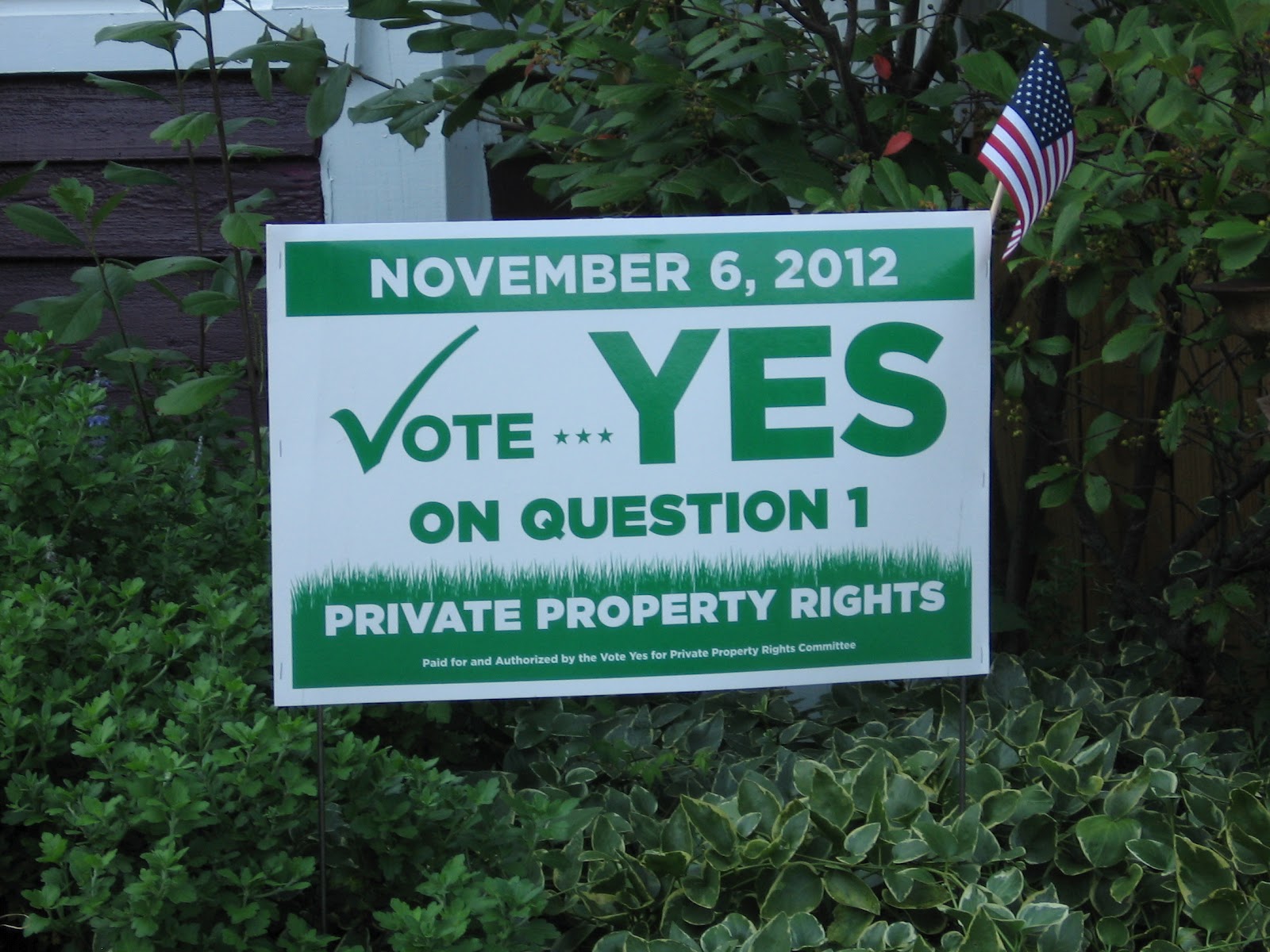
Virginia Farm Bureau’s campaign in support of a constitutional amendment on eminent domain is in full swing mode. Farm Bureau staff and volunteers have been using every opportunity available to inform members, the agriculture community, and general public about the eminent domain constitutional amendment and the importance of voting yes on question 1 on the Nov. 6 ballot. Things really picked up the first of August. The volunteers are pumped up about promoting this.
The Field Services and Governmental Relations staff have been promoting all of the available promotional and educational tools available to county Farm Bureaus, and the county Farm Bureaus have acted quickly in ordering supplies. There are a lot of events happening around the state now, and even more will be taking place going into the fall season. Farm Bureau is utilizing all of these venues to get the message out to the public.
Just to give you an idea of how many people we have reached from August 1-20; I surveyed our Field Staff about events and meetings were the campaign has been presented. The message has reached approximately 5,405 people at events such as county Farm Bureau annual meetings, county fairs, Virginia Ag Expo, field days, and meetings with county supervisors. This is only in three weeks. The message will reach even more people as we approach Election Day.
We have had a clear and concise message that is resonating with people. I am sure that those that have heard about the campaign will tell their friends and neighbors to support it with a Yes vote. The campaign signs arrived in county Farm Bureau offices this month. In some counties, signs have already been distributed to members.
So plan to hear and see more about the eminent domain constitutional amendment, and don’t be shy about spreading the message to your circle of friends and family. Also, don’t hesitate to ask them to join Farm Bureau, an organization that has done a tremendous amount on protecting private property rights.
Until next time,
Mark
Video: Ag and Forestry U.S. Senate Candidates Forum Wrap-Up
In case you missed the Agriculture and Forestry U.S. Senate Candidates Forum last month in Lynchburg with George Allen and Tim Kaine and hosted by the Virginia Farm Bureau Young Farmers Committee, watch the video below. Thanks to Farm Bureau’s Communications Department for the great footage!
http://c.brightcove.com/services/viewer/federated_f9?isVid=1
New VDIF hearings on feral hogs added
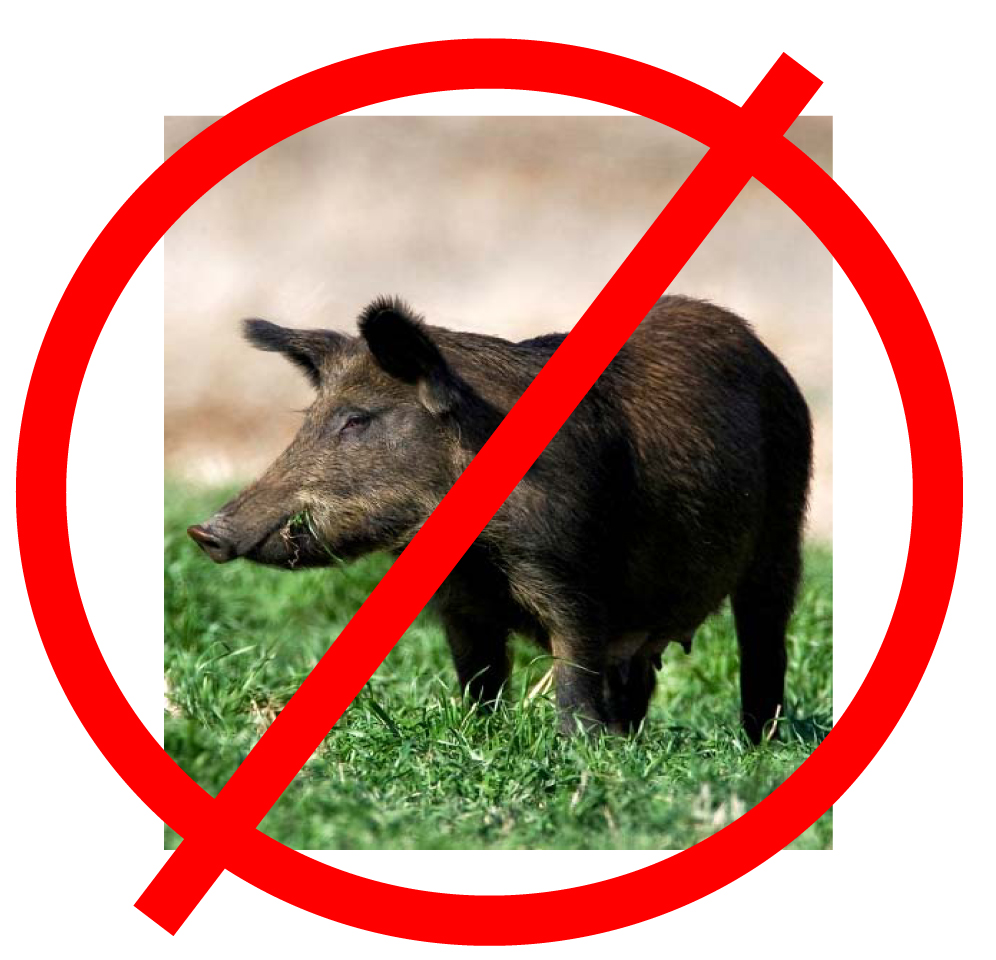
The Virginia Department of Game and Inland Fisheries has added two more dates for their public discussions on feral hogs in Virginia, their impacts, and what other states are now doing to control them in August. They will be held:
Wise County
6:00-7:30 p.m. Wednesday, August 22
US Forest Service office
9416 Coeburn Mountain Road, Wise, VA 24293
Bland County
6:00-7:30 p.m. on Thursday, August 23nd
Bland County Public Library
697 Main Street, Bland, VA 24315
As previously reported, VDGIF is holding another public hearing:
Halifax County
6:30 p.m. Monday, August 20
Scottsburg Vol. Fire Dept.
For more information, contact VDGIF at 434-525-7522
Feral hogs (also called wild hogs) are classified as a nuisance species in Virginia. Any pig that is outside of the property of its owner and cannot be claimed by its owner will be classified as a feral hog. They are an extremely invasive animal and cause damage to habitat wherever they exist. Feral hogs have been found to destroy turkey, grouse, and quail nests. They can also prey on deer fawns, destroy sensitive wetland habitat, and compete with our native wildlife for food resources. Feral hogs carry numerous diseases that can affect wildlife, domestic animals, and humans. The transmission of swine brucellosis and pseudorabies is a major concern to the commercial swine industry domestic animals, and humans. The transmission of swine brucellosis and pseudorabies is a major concern to the commercial swine industry.
Young Farmers and VDACS unveil Farm Seekers program

Have you ever wanted to break into farming, but didn’t have the resources to begin? Or maybe you already have farming experience, but are looking for land to expand your operation? Agriculture remains a diverse and challenging industry, and farmers exist at all different experience levels. As older farmers retire and look to transition their farms, steps must to be taken in order to preserve Virginia’s number one industry. This principle paved the way for the Certified Farm Seekers program.
The Certified Farm Seekers program is a collaboration between Virginia Farm Bureau Young Farmers and Virginia Department of Agriculture and Consumer Services, funded by the Virginia Beginning Farmers and Ranchers Coalition Project. It is a self-guided program that strives to provide individuals seeking farming opportunities with the tools needed to successfully demonstrate their farming commitment and vision to interested landowners. After completion, participants will be expected to produce a resume, business plan, and demonstrate on-farm experience. Five modules are available as resources to assist in accomplishing these goals: Introduction to Whole Farm Planning, Business Management, Land Acquisition and Tenure, Marketing, and On-Farm Experience. This is NOT a course to teach people how to farm, but is designed for all farmers, including beginning, transitioning, and established.
The benefits for beginning farmers are apparent, but as a transitioning or established farmer, you may wonder if you have any need for this program. The answer is a resounding “Yes.” One of the most exciting incentives is elevation in the Virginia Farm Link Database. Farm Link is an online database designed to bring those landowners interested in passing land on to the next generation together with those interested in gaining access to farmland and farming operations in Virginia. Those who are dubbed “certified” will receive special designation in the database, thereby increasing their chances of being contacted by a landowner. Other incentives include a one- time professional business plan review, social/networking opportunities with other farmers/landowners, and possibly cost-share in time with a transition mediator or attorney.
For more information, visit http://www.vdacs.virginia.gov/preservation/seeker.shtml or contact:
Stefanie Kitchen
certifiedfarmseekers@gmail.com
(804) 290-1030
Ron Saacke
ron.saacke@vafb.com
(804) 514-4202
Kevin Schmidt
kevin.schmidt@vdacs.virginia.gov
(804) 786-1346
State Veterinarian Announces Implementation Of New Requirements For Livestock Entering Virginia

According to Dr. Richard Wilkes, State Veterinarian with the Virginia Department of Agriculture and Consumer Services (VDACS), effective August 15, 2012, breeding-age cattle coming into Virginia from other states must be tuberculosis (TB) test negative and properly identified. Imported cattle over 18 months of age without negative TB test results and proper identification will be quarantined until negative TB tests are conducted and official identification have been applied to each animal and submitted to the VDACS’ regional Office of Veterinary Services (OVS). Acceptable TB tests include individual animal testing within 60 days prior to entering Virginia, or an annual whole herd test for cattle originating from TB accredited herds.
On January 18, 2012, updated regulations regarding the health requirements for importing animals into Virginia became effective. Bovine tuberculosis (TB) testing on cattle that do not originate from a TB accredited free herd, as well as official individual identification, are now required on all cattle greater than 18 months of age coming into Virginia. Between January and now, VDACS has been educating cattle producers who import breeding-age cattle of the requirement for a TB test and official identification.
Once the most prevalent infectious disease of cattle and swine in the United States, bovine TB caused more losses among U.S. farm animals in the early part of the 20th century than all other infectious diseases combined. Since 1917, cooperative efforts of the states and USDA have nearly eradicated bovine TB from the nation’s livestock population. This disease’s presence in humans has been reduced as a result of the eradication program, advances in sanitation and hygiene, the discovery of effective drugs and pasteurization of milk.
Although bovine TB has been nearly eradicated, it is at this stage that surveillance and identification of infected cattle becomes most difficult. Within the last several years, TB has been newly diagnosed in at least ten states that were previously considered to be free. In order to continue to keep the disease out of Virginia’s livestock, reliable identification and assurance that imported cattle are TB-negative are essential. It is critical that potentially infected animals from out-of-state be permanently identified so that they will not jeopardize Virginia’s ability to market animals as coming from a TB-free state.
For additional information on the animal import regulations, see vdacs.virginia.gov/animals/adm-cattle.shtml

