Governor McAuliffe Announces First Shipment of Poultry Exports to China from Virginia in Seven Years

Virginia Governor Terry McAuliffe has announced that after almost seven years Virginia poultry exports resumed to the People’s Republic of China, with the first shipment leaving Perdue Foods Incorporated’s cold-storage export facility in Norfolk.  This shipment from Perdue’s facility includes chicken wing tips, which will leave the Port of Virginia on Friday, and is expected to arrive in Shenzhen, Guangdong State, China on August 3rd.  The Governor, who witnessed the poultry products being loaded at the Perdue facility, was joined by Perdue Foods Vice President, International Carlos Ayala and Secretary of Agriculture and Forestry Todd Haymore.  Perdue anticipates increasing its volumes shipped from Virginia by roughly 35% this year as a result of the ban being lifted.

 Commenting on the now-resumed poultry export business to China, Governor McAuliffe said, “I am thrilled to see poultry products being exported from Virginia to China for the first time since 2007.  I made having the long-standing ban removed a top economic priority of my administration, so I wanted to be in Norfolk to witness firsthand the vessel being loaded.  The resumption of business means more trade and revenue generation opportunities for Virginia’s poultry industry and the many related businesses that work to move product from our family farms into the global marketplace.  This will also bring significant benefits to the Port of Virginia, an entity that I want to become the East Coast capital for agricultural and forestry product exports.”

In 2007, following an isolated case of low pathogenic avian influenza (LPAI) reported on a single farm in Virginia, China placed a ban on all poultry produced in Virginia, poultry transiting through Virginia, and poultry that is exported from any port in Virginia.  Virginia and federal officials contended that China’s ban was not justified by scientific data, as the isolated LPAI occurrence did not pose a food safety or poultry health risk.  Because of the ban, Virginia had been excluded from taking advantage of business in this high growth market.  China is currently one of the top foreign markets for U.S. poultry, purchasing more than $416 million last year, with Georgia, Mississippi, and North Carolina as leading suppliers. 
Secretary Haymore noted, “Today’s shipment marks a great day for Virginia’s poultry industry and Virginia’s growing relationship with China, our largest export customer of agricultural and forestry products.  We estimate conservatively that Virginia will see at least $20 million in poultry exports to China during the first full year the market is open, but we’re hoping to far exceed that number. We have great assets that will allow us to accomplish that goal including: Virginia’s existing business with China; the Governor’s commitment to expanding that business; our agricultural trade representative in Shanghai working to generate new sales leads; and an aggressive poultry industry producing high quality and wholesome products. I am confident that we have the infrastructure in place to quickly re-establish Virginia as one of China’s top poultry purchasers.”
On May 5, Chinese and U.S. officials notified the McAuliffe Administration that the ban, instituted in July 2007, was rescinded by China’s General Administration of Quality Supervision, Inspection and Quarantine (AQSIQ) and China’s Ministry of Agriculture (MOA).  From January until late April, Governor McAuliffe and Secretary Haymore met and worked with numerous partners to lift the ban, including: Chinese Ambassador to the U.S. Cui Tiankai; U.S. Ambassador to China Max Baucus; U.S. Secretary of Agriculture Tom Vilsack; and U.S. Trade Representative, Ambassador Michael Froman.  The McAuliffe administration’s focus on resolving this trade issue built upon work that Virginia officials, including former Governor Bob McDonnell, Senator Mark Warner, Senator Tim Kaine, Congressman Eric Cantor (R-VA 7th), Congressman Bob Goodlatte (R-VA 6th), and Congressman Robert Hurt (R-VA 5th), among others, did over the last seven years to re-open the Chinese market to Virginia poultry.  Hobey Bauhan of the Virginia Poultry Federation and Jim Sumner of the U.S.A. Poultry & Egg Export Council were also instrumental in Virginia’s work with U.S. authorities and Chinese government officials.
China ranked as the number one market for Virginia’s agricultural exports in 2013 with more than $580 million in purchases.  However, the country’s market has remained closed to Virginia poultry products for the past seven years.  The total value of Virginia poultry exports exceeded $186 million in 2013, with China absent as a major potential market for Virginia.  Agricultural and forestry exports from Virginia reached a record high of $2.85 billion in 2013.

The poultry industry is the largest individual sector of Virginia’s agriculture industry.  With annual farm cash receipts in excess of $950 million, poultry accounts for more than 30 percent of all Virginia’s cash receipts from agriculture.  Virginia’s poultry industry depends on fair access to foreign markets in order to support continued prosperity.

Largest Chinese Greenfield Economic Development Project in U.S. Coming to Chesterfeld

Governor Terry McAuliffe has announced at the Virginia State Capitol that Shandong Tranlin Paper Co., Ltd., a leading Chinese pulp and paper company will invest $2 billion over five years to establish its first U.S. advanced manufacturing operation in Chesterfield County. The investment represents the largest Chinese investment and job creation project in Virginia history and is the largest Chinese greenfield economic development project in the United States. Virginia successfully competed against several other states for the project, which will create 2,000 new jobs by 2020.
Speaking at today’s announcement, Governor McAuliffe said, “An investment of this magnitude, with the creation of 2,000 new jobs by 2020, represents the largest Chinese greenfield economic development project in the United States, and shows how Virginia is leading the way in attracting innovative businesses to the Commonwealth. Advanced manufacturing jobs are the heart of a strong and growing 21st century economy, and this investment symbolizes the economic recovery taking place across the nation, and will be transformational for the economy of Chesterfield County and the surrounding region. The opportunity to welcome a leading, global company’s first U.S. manufacturing operation and simultaneously strengthen Virginia’s relationship with China is invaluable. Economic development is a team effort, and it is the collaboration of the entire team that helped to convince Tranlin that Virginia is the best site for its U.S. operation. We are therefore partnering with the Major Employment and Investment Commission, and are confident this project will bring international attention to the thriving advanced manufacturing industry in the Commonwealth.” 

“The Tranlin operation in Chesterfield County represents a project of historic proportions for Virginia,” said Maurice Jones, Virginia Secretary of Commerce and Trade. “This global pulp and paper company is a national leading R&D Center for straw-based pulp and paper in China, among many other awards for innovation and invention, and will enter the U.S. market with its new paper and fertilizer manufacturing facility in Chesterfield County. The new 850-acre campus offers the potential for Tranlin to eventually produce its full product lines and continue to grow its operation and customer base while using Virginia’s natural resources. Attracting companies like Tranlin to Virginia is how we will build a 21st Century Virginia economy.”
“As we work to grow and diversify our economy, it is vital that we continue to build relationships with our largest agricultural and forestry trade partner, China, through both exports into Chinese markets and Chinese investments in business ventures here,” said Todd Haymore, Virginia Secretary of Agriculture and Forestry. “Tranlin represents a tremendous opportunity for Virginia’s corn and small grain producers by creating a lucrative new market for agricultural residuals that are typically left in the field. Based on the agricultural supply chain opportunities associated with the project, the economic benefit to farmers in this region alone could exceed $50 million per year once the project is complete and operating at full capacity. I look forward to working with Tranlin as they begin to procure needed agricultural products from our growers, to help them succeed and continue to expand their investment in Virginia.”
Tranlin’s new manufacturing facility in the paper and fertilizer sectors will be located on an 850-acre campus in the James River Industrial Center. Based on analysis performed by the U.S. Department of Agriculture, the Virginia Department of Agriculture and Consumer Services, and Virginia Tech Cooperative Extension, the economic benefits of this operation will be felt throughout the agriculture sector, from new demand for agricultural equipment, to new jobs for direct and indirect agricultural jobs. In addition, this project will help preserve farmland by providing farmers a new opportunity to derive additional economic return from their land and equipment, creating positive economic pressure to maintain it in farming use. The harvest of straw in the spring and corn stalks in the fall for use by Tranlin will be two new cash crops for Virginia producers, in addition to other fibrous products from the surrounding area. From an environmental standpoint, the harvest of these agricultural residuals is compatible with the Chesapeake Bay-friendly no-till crop production practices these producers are already using. In addition, Tranlin prides itself on a process that leads to an environmentally friendly effluent, resulting in the discharge of quality, clean water.

Founded in 1976 and based in Liaocheng, China, Shandong Tranlin Paper Co., Ltd., formerly known as Shandong Tralin Paper Co., Ltd., is centered on the pulp and paper industry, with an annual productivity of 400,000 tons of refined pulp, 700,000 tons of machine-made paper, 400,000 tons of organic fertilizers, and 2.4 billion food and medical packaging boxes. The company has established a diversified product structure centered on the natural products and a marketing network in accordance with demands of internationalization. The main products, with more than 100 varieties and five categories, include refined natural pulp, natural culture paper, natural household paper, food and medical packaging box and organic fertilizers. The products are sold in more than 30 provinces, municipalities and autonomous regions of China, and some products have been exported to the United States, Europe, Japan and South Korea.
“We are pleased that Virginia and Chesterfield County will be the site of our first U.S. advanced manufacturing operation,” said Mr. Hongfa Li, Chairman and President, Shandong Tranlin Paper Co., Ltd. “Virginia has abundant resources of agricultural stalks, power and water supply, manpower, and a strong transportation system—all necessary tools that guarantee Tranlin’s future development. More importantly, the Virginia team’s flexibility, patience, teamwork, cooperation, and above all, passion for foreign investment, factored into our decision. After an in-depth feasibility study that occurred over the past year, we have all the reasons to say “Yes, Virginia.”
“We are very excited about joining the welcoming community of Virginia and Chesterfield County,” said Jerry Z Peng, Chairman and CEO of Tranlin, Inc., Tranlin group’s recently established US entity. “We are even more excited about the opportunity to apply our innovative technologies in building an industry-leading production base in central Virginia. We are confident this will not only provide U.S. consumers with clean and eco-friendly paper products, but also serve U.S. agricultural interests and home owners with all-natural and highly effective organic fertilizers.” Mr. Peng also noted his ties to Virginia, having received his MBA from UVA’s Darden School and currently serving on its foundation board.
The Virginia Economic Development Partnership worked with Chesterfield County, the Virginia Department of Agriculture and Consumer Services, the Virginia Department of Environmental Quality, the Greater Richmond Partnership, Dominion Virginia Power, and the Virginia Port Authority to secure the project for Virginia. Governor McAuliffe approved a $5 million grant from the Governor’s Opportunity Fund to assist Chesterfield County with the project. Funding and services to support the company’s employee training activities will be provided through the Virginia Jobs Investment Program.
The company may be eligible to receive a Major Employment and Investment (MEI) custom performance grant, subject to approval by the General Assembly. An MEI project is defined under current law as a regional economic development project in which a private entity is expected to make a capital investment exceeding $250 million in the Commonwealth and to create more than 400 new full-time jobs. As part of its review, the Commission may endorse certain incentive packages for approval by the General Assembly.
“What a great and historical day for Virginia, the region, and Chesterfield County,” said Jay Stegmaier, County Administrator for Chesterfield County. “We have worked diligently within the county, and with our partners at the state, regional, and local levels, to build an environment that is attractive for this record-breaking announcement of $2 billion with 2,000 new, quality jobs. Additionally, this announcement comes from a leading company that manufactures great products while staying focused on the environment, recycling, and sustainability, which will contribute to the long-term success of Chesterfield County. The scope and reach of this project is enormous and has significant impacts on both the business and agriculture communities.  We enthusiastically welcome Tranlin as the newest international member of our corporate family.”
“This announcement is the largest in the history of Chesterfield County,” said Jim Holland, Chairman of the Chesterfield County Board of Supervisors. “It is very fitting that our county was founded on an international investment and now, over 400 years later, we are still celebrating why we continue to be a great location for companies from around the world. Welcome Tranlin, to Chesterfield County. We look forward to your continued growth and success.”  
“The Major Employment and Investment (MEI) Project Approval Commission was established in 2009 to help Virginia better compete for major economic development projects that require General Assembly approval for incentive packages,” said Senator Walter Stosch and Delegate Chris Jones, members of the MEI Project Approval Commission. “The Tranlin project is significant for Virginia and is critically important to win. These jobs and related revenues are important to our ability to fund education, health care and other core priorities. The MEI Commission is fully supportive of this transformational project and we are pleased that the MEI Commission could play a role in ensuring that the Commonwealth of Virginia is home to Tranlin’s first U.S. operation.”

4-H’ers Honor the History of 4-H While Working Toward a Better Future at the 2014 State Congress

More than 500 teens, volunteer leaders, and Virginia Cooperative Extension agents will gather on Virginia Tech’s Blacksburg campus this week for the 94th annual 4-H State Congress.

This year’s theme, “Celebrating the Past, Making It Last,” draws on the history of 4-H and demonstrates the power of 4-H to assist teens in developing leadership, citizenship, and life skills through hands-on educational programs.

Special this year, State 4-H Congress will host a Centennial Celebration Luncheon to honor the 100-year anniversary of Cooperative Extension. Delegates will deepen their understanding of 4-H and Extension by viewing displays, a slideshow, and interviews of people whose lives have been impacted by 4-H. Special guest speakers, as well as 4-H alumni, retirees, and former employees, will join the luncheon.

“I think the most exciting thing we’re incorporating this year is a centennial celebration. Although 4-H is more than 100 years old, we have an exciting opportunity to celebrate 100 years of Extension, which is being celebrated nationally,” said Mike Martin, Extension 4-H specialist. “4-H is the youth development organization of Cooperative Extension and has served an important role in the history of Extension.”

During the Congress, 4-H delegates will also participate in the Great Summer Showcase — a series of fun and innovative educational workshops taught by Virginia Tech faculty members covering topics such as animal science, communications and expressive arts, healthy living, environmental education, technology, engineering, and math.

Participants will have exciting, hands-on workshops to choose from, including fashion merchandizing and horticulture. Another workshop will let 4-H’ers explore art and computer graphics while working at the DREAMS Lab on campus, which houses a 3-D printing station. The workshops are designed to introduce the students to interesting subjects and engender a love of learning.

4-H Congress will continue a program introduced in 2013 that gives participants the opportunity to explore college and career tracks at Virginia Tech; Virginia State University, the commonwealth’s other land-grant university; and the Edward Via College of Osteopathic Medicine with an in-depth look at their departments and programs.

The service learning project this year benefits the nonprofit Project Linus, an organization that donates new, handmade blankets to children in need. Delegates are encouraged to bring two yards of fleece fabric to Congress. Finished blankets will be sent home with local units to distribute to area chapters of Project Linus.
Congress participants will also have an opportunity to compete for awards in dozens of areas, such as culinary arts, forestry, soil and plant science, and drama. In some competitions, winners will advance to regional and national contests.

Delegates will also enjoy a welcome picnic and mixer, dances, a carnival, a mid-week pizza party, and an All-Star ice cream social hosted by the 4-H All Stars.

“State 4-H Congress provides teens the opportunity to build on positive experiences in their county programs. Through structured interactions, teens gain new skills, provide service to the community, and have the opportunity to expand their vision for their future, whether they choose to go to college or enter the workforce,” said Cathy Sutphin, associate director of 4-H youth development.

As the youth development service for Virginia Cooperative Extension, Virginia 4-H engages youths ages 5 to 19 in hands-on educational programs and activities designed to help them gain the knowledge, life skills, and attitudes needed to further their development as self-directing, contributing, productive members of society.

For information about 4-H State Congress or other 4-H activities in your community, locate your county or city office on the Virginia Cooperative Extension website.

Stop EPA Overreach, Farm Bureau’s Stallman Tells Congress

The EPA’s proposal to regulate everyday farming practices isn’t just impractical; it’s illegal, American Farm Bureau Federation President Bob Stallman told the House Subcommittee on Water Resources and Environment this morning.

“The EPA ‘Waters of the U.S.’ proposal broadly expands federal jurisdiction,” Stallman said. “It threatens local land-use and zoning authority, and is an end-run around Congress and the Supreme Court.”

The EPA claims that farmers would face less regulation under its latest proposal. In fact, the rule would micromanage farming via newly-mandated procedures for fencing, spraying, weeding and more. Permitting, meanwhile, could delay time-sensitive tasks for months, potentially ruining crops in the process.

“EPA is deliberately misleading the regulated community about the impacts on land use. If more people knew how regulators could use the proposed rule to require permits for common activities on dry land, or penalize landowners for not getting them, they would be outraged,” Stallman said.


The Clean Water Act was signed into law in 1972 with the clear purpose of protecting the nation’s waters from pollution of all sorts. Congress gave states, not the EPA, the primary responsibility to oversee land use. The latest proposal would turn that relationship on its head.

In a statement issued yesterday, Stallman said EPA’s decision to extend the time available to comment on the proposed rule is a victory for farming families and a clear signal that America’s farmers know how to stand up and be counted.

“The new schedule gives us until October 20 to comment on the Waters of the United States rule, and until July 7 to comment on the accompanying interpretive rule. Rest assured we will use that time to its best advantage. We will ditch this rule,” Stallman said.

To help Farm Bureau members and others express the need for EPA to “Ditch the Rule,” Farm Bureau has launched a website at ditchtherule.fb.org. Focused on topics and analysis related to the “waters of the U.S.” proposed rule, the easy-to-navigate site includes several sections: Take Action, Go Social, Find Answers and Get Resources. Visitors may also sign up to learn more, comment on the proposed rule and send tweets using the hashtag #DitchTheRule.

EPA Extends Waters of the U.S. Comment Period

The Environmental Protection Agency (EPA) and the Army Corps of Engineers have extended the public comment period for a proposed rule that defines the Waters of the U.S. that fall under the jurisdiction of the Clean Water Act.

The extension was in response to a number of requests received by the agencies involved with the rule, EPA said. Originally slated to end July 21, the extension gives the public an additional 91 days – or until Oct. 20 – to submit comments.

According to the EPA, the rule is designed to clarify protection under the Clean Water Act for streams and wetlands. Farm Bureau has carefully analyzed the proposal. Simply put, EPA and the Corps are now attempting to regulate virtually all water, something Congress has explicitly chosen not to allow and which two U.S. Supreme Court decisions have rejected.

The EPA proposal also includes an interpretive rule that the agency says ensures that 56 specific conservation practices that protect or improve water quality and are conducted in conformance with the standards of USDA’s Natural Resources Conservation Service will not be subject to Clean Water Act Section 404 permitting requirements for discharges of dredged or fill material. The comment period on the interpretive rule has also been extended by 30 days, until July 7.

American Farm Bureau Federation (AFBF) President Bob Stallman released the following statement regarding the extension of the comment period.  

“The American Farm Bureau Federation is pleased the EPA has extended the time available to comment on new and highly burdensome clean water rules. This is a victory for farming families and a clear signal that America’s farmers know how to stand up and be counted.

“EPA has misled the regulated community about the rule’s impacts on land use. If more people knew how regulators want to require permits for common activities on dry land, or penalize landowners for not getting them, they would be outraged.

“This latest rule broadly expands federal jurisdiction and threatens local land-use and zoning authority. Simply put, it is an end-run around Congress and the Supreme Court. I look forward to expanding on our position in testimony tomorrow before the House Subcommittee on Water Resources and the Environment.

“The new schedule gives us until October 20 to comment on the Waters of the United States rule, and until July 7 to comment on the accompanying interpretive rule. Rest assured we will use that time to its best advantage. We will ditch this rule.”

Breaking News: Sandy Adams Named VDACS Commissioner

Governor Terry McAuliffe has announced Sandra “Sandy” J. Adams as Commissioner of Virginia Department of Agriculture and Consumer Services.
Sandy Adams most recently served as Acting VDACS Commissioner.  This was Adams’ second time serving as Acting Commissioner. 
Prior to leading VDACS in an acting capacity, Adams served for three and a half years as the agency’s Deputy Commissioner.  
In her new role as VDACS Commissioner, Adams is responsible for managing an agency that promotes the economic growth and development of agriculture, provides consumer protection, and encourages environmental stewardship.  
Prior to serving as Deputy Commissioner, Adams served ten years as VDACS Director of Administrative & Financial Services and three years as the agency’s Financial Director.  In addition to her almost 20 years at VDACS, Adams served 12 years in a number of positions at the Department of Taxation.  
Adams received her Bachelor of Arts degree in Economics from Mary Washington College and a post-baccalaureate Certificate in Accounting from Virginia Commonwealth University.

VFLEP Newsletter Now Available on Plows and Politics

Andrew Smith
Senior Assistant Director, GR
A majority of Virginia’s forestland is privately own, much in conjunction with farms. The Virginia Forest Landowner Education Program (VFLEP), develops a newsletter to inform landowners of information and opportunities to best manage their forest resources. We plan to begin sharing this newsletter as it’s available on Plows and Politics. You can read the latest issue here. June 2014 issue

From the Field: County Farm Bureaus Provide Big Time Incentives for Advanced Education

From the Field is a bi-monthly column written by Mark Campbell, Farm Bureau Field Services Director for the Central District. He writes about Farm Bureau member benefits and County Farm Bureau activities.
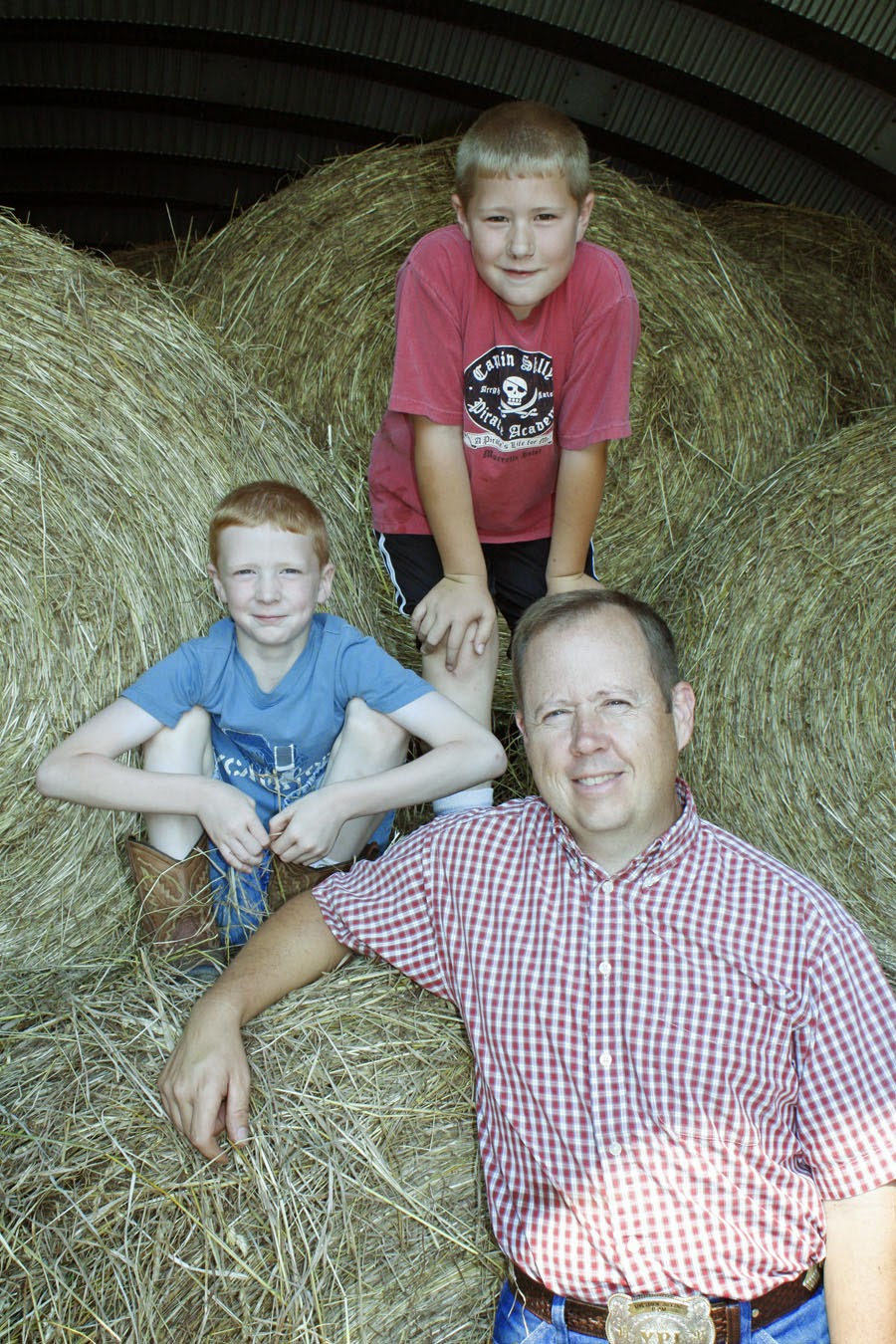
In my last post, I discussed the major financial support of youth livestock shows and exhibitors by county Farm Bureaus.  Since graduation time has just now wrapped up around most of the country, I wanted to enlighten you on another major area of youth support.  This area is scholarships, and they are offered in many styles and amounts. 
The most common type is for high school students entering college and pursuing a degree in agriculture.  The agriculture field being very broad these days allows numerous students to be eligible.  Some counties don’t restrict eligibility to agriculture only.  One county Farm Bureau that I know of even budgets a certain amount of scholarship money for advanced educational courses that farmers want to take. 
The typical scholarship amount is $1,000, and counties may offer one or more.  Some counties extend the scholarship every year for the full four years of a college degree as long as certain criteria are met.
The county Farm Bureaus advertise their scholarships through the county Farm Bureau newsletter, website, newspaper, high school guidance department, ag teacher/FFA advisor, and any other way they can think of to get the word out.  Once the scholarships are awarded, many counties have a representative make a presentation of the scholarship at the awards ceremony that most high schools have.  This gets some recognition for the county Farm Bureau.
Now here is the amazing part.  Total scholarship money offered by county Farm Bureaus state wide is an astounding $157,400.  So if you have any family members that will be entering college next year, it is definitely worth checking with the county Farm Bureau office for available scholarships.
The county Farm Bureaus are very dedicated to supporting the next generation of agriculturalists and dedicate some serious funding to back up their commitment.  This is another reason to join Farm Bureau or renew your membership.
The county Farm Bureaus do a ton of good things in the local communities.  Your membership dues pay dividends back into your own county.  With more members, think of how much more could be done.  So ask your friends and family to join if they are not members. 
Until next time,

Mark