Franklin County Farm Bureau Receives Ag Literacy Mini-Grant

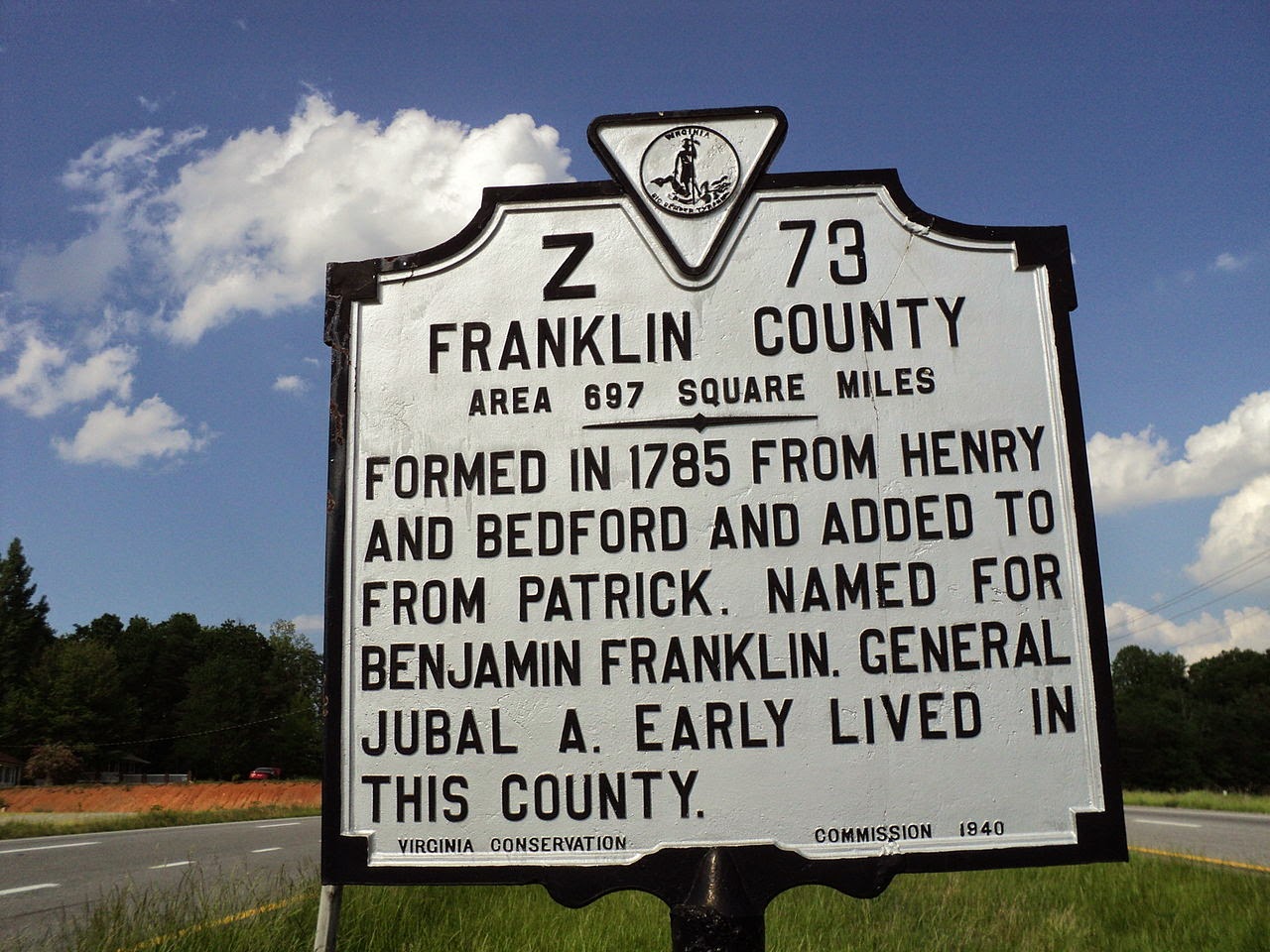
Franklin County Farm Bureau has received one of 11 $500 mini-grants from The American Farm Bureau Foundation for Agriculture. The grants are awarded through the Foundation’s White-Reinhardt Fund for Education program to communities across the nation.
The grants are allocated through county and state Farm Bureaus and are used to create new agricultural literacy projects or expand on existing agricultural literacy efforts.
Criteria for selecting winners included: the effectiveness of demonstrating a strong connection between agriculture and education; how successfully the project enhances learner engagement in today’s food, fiber, and fuel systems; and the processes and timelines for accomplishing project goals.

Franklin County won for its “What’s in the Garden?” project which educates pre-K-5 students on how food grows from soil to table through hands-on activities, interactive labs and age-appropriate printed materials.
“The mini-grant program was developed to help Farm Bureau members provide free tools to share with educators in their communities,” said Julie Tesch, executive director of the Foundation. “Our primary overall goal is to help teach young rural and urban students about the importance of agriculture and the vital role it plays in our everyday lives.” 

The White-Reinhardt Fund for Education is a project of the Foundation in cooperation with the American Farm Bureau’s Women’s Leadership Committee. The fund honors two former committee chairwomen, Berta White and Linda Reinhardt, who were trailblazers in early national efforts to expand the outreach of agricultural education and improve agricultural literacy.

Bills Address Farm Concerns with EPA ‘Waters’ Proposal


Three bills that have bipartisan support in Congress address serious concerns voiced by the American Farm Bureau Federation about the U.S. Environmental Protection Agency’s proposed “Waters of the U.S.” rule.

Issued earlier this year, the rule would give the EPA broad jurisdiction over dry land features and farming practices that historically has been relegated to individual states under the Clean Water Act.

H.R. 5078, the Waters of the United States Regulatory Overreach Protection Act of 2014, was introduced by Rep. Steve Southerland, R-Fla., and has been approved by the House Transportation and Infrastructure Committee. It would prohibit the EPA and the Army Corps of Engineers from implementing a rule that broadens the scope of the Clean Water Act and would effectively block the proposed “Waters of the U.S.” rule. The Senate version of this bill is S.2496.

A third bill addresses concerns about common farm practices that have been exempt from Clean Water Act regulation but could lose that status under the proposed rule.

In March the EPA and Army Corps of Engineers issued an interpretive rule to clarify how “Waters of the U.S.” would affect normal farming, ranching and forestry exemptions. AFBF analysis determined that the interpretive rule narrows the list of existing exemptions and would require compliance with otherwise voluntary U.S. Department of Agriculture Natural Resources Conservation Service standards. The proposal puts the USDA in the unprecedented position of enforcing Clean Water Act compliance.


Reps. Chris Collins, R-N.Y.; Bob Gibbs, R-Ohio; Frank Lucas, R-Okla.; Collin Peterson, D-Minn.; Reid Ribble, R-Wis.; Kurt Schrader, D-Ore.; and Glenn Thompson, R-Pa., have introduced H.R. 5071, The Agricultural Conservation Flexibility Act. The bill clarifies that existing Clean Water Act exemptions for normal farming, ranching and forestry apply to all conservation activities without regard to the interpretive rule. 

The bill further states that no soil and water conservation practices will be treated as new uses of areas of navigable waters, impairments of the flow of navigable waters or reductions in the reach of those waters under recapture provisions in Section 404 of the Clean Water Act. The bill also clarifies that normal farming, ranching and forestry activities will be treated as such without regard to their date of commencement.

The AFBF has assembled articles and analysis relevant to the proposed rule at ditchtherule.fb.org. The organization asserts that the EPA proposal exposes U.S. farmers and ranchers to potential fines and penalties for ordinary farming activities.

AFBF President Bob Stallman called the rule “an end-run around Congress and the Supreme Court. … If more people knew how regulators could use the proposed rule to require permits for common activities on dry land or penalize landowners for not getting them, they would be outraged.”


Please check your email for the latest action alert on these bills. If you are a producer member and would like to start receiving action alerts, contact Kelly Pruitt at 804-290-1293 or kprui@vafb.com.  

AFBF President’s Bob Stallman Reports on Ditch the Rule in Ag Agenda Column

AFBF President
Bob Stallman
Americans expect straight talk from their government. If our government says something, you ought to be able to take it to the bank, as the saying goes.

The Environmental Protection Agency is not meeting that expectation. Instead of making things clear when it comes to how the proposed “Waters of the U.S.” rule would affect farmers and other landowners, the EPA is muddying the waters.

It’s Complicated
Two Supreme Court rulings have limited EPA’s and the Corps of Engineers’ authority under the Clean Water Act to waters that are navigable or have a “significant nexus” to navigable waters. EPA claims the rulings “complicated” the permitting process. The reality is not all that complicated: The agencies dislike the rulings and are simply trying to write regulations that allow them to do what the Supreme Court has said they cannot do—regulate nearly all waters.

EPA has said that it only wants to bring “clarity and consistency” to the process. That sounds reasonable. Good talking point. The only problem is the statement does not reflect what is in the proposed rule. The regulation will automatically regulate countless small and remote so-called “waters” that are usually dry and, in fact, look like land to you and me. This is far more than a “clarification.” It is a dramatic expansion of federal power. Expanding the federal government’s jurisdiction under the guise of bringing clarity and consistency to the process is the opposite of straight talk.

We Read the Fine Print
When regulators show up on farms and ranches, they won’t be looking back at talking points to decide whether farming requires an expensive federal permit. They will use the regulation. So let’s take a look at the fine print.

Ditches—The rule regulates ditches as “tributaries.” EPA claims that the rule would exclude ditches, but the so-called ditch exclusion only covers ditches dug entirely in “uplands.” The rule doesn’t define “uplands” (so much for clarity), but we know that uplands are not wetlands, and most ditches are “wetland” at some point along their length. That’s just one reason Farm Bureau believes the narrow ditch “exclusion” will be meaningless.

Farming exemptions—EPA offers assurances that all farming and ranching exemptions are being preserved under the rule. But those exemptions are extremely limited when it comes to activities in jurisdictional waters. That’s why the exemptions will not protect most ordinary farming and ranching from permit requirements if ditches and low spots in farm fields are regulated, as they will be under the proposed rule.

Under the rule, federal permits would be needed for common farming activities such as applying fertilizer or pesticides, or moving cattle, if materials that are considered pollutants would fall into regulated low spots or ditches. Farmers can’t wait for federal permits to fertilize or protect their crops from pests and diseases. Permits also would be required for activities such as plowing, planting and fencing in these new “waters of the U.S.” unless a farmer has been farming the same land for decades, raising hurdles for beginning farmers.

Landowners could be in for a rude awakening—faced with penalties or lawsuits for the very things EPA says the rule doesn’t cover. Farm Bureau is dedicated to preventing that from happening, and we thank those leaders in the House and Senate who, in a bipartisan manner, are standing up for farmers and other landowners.

We hope EPA officials will read the fine print. We have, and that’s how we know it’s time to Ditch the Rule!


VDOT Holding Rt. 460 Town Halls

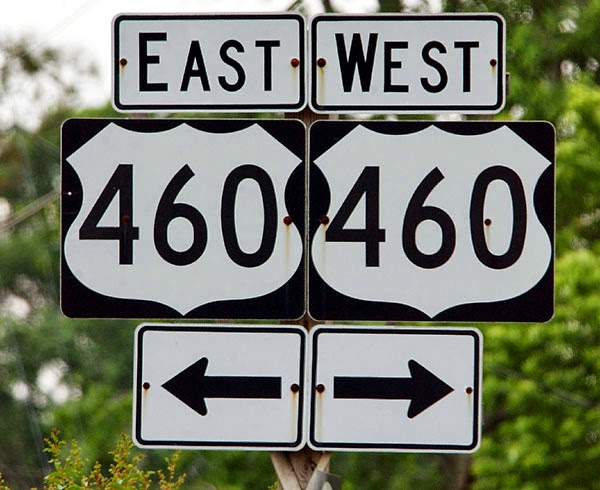
The Virginia Department of Transportation (VDOT) has scheduled five town hall meetings in communities along the U.S. Route 460 corridor between Suffolk and Petersburg to discuss the current work on the U.S. Route 460 Corridor Improvements Project.

Town hall meetings are scheduled for:
Bell Avenue, Ivor VA 23866

(pending approval)

The five town hall meetings offer residents information in an informal setting, ahead of formal hearings expected to be held this fall as part of the environmental impact statement process. Each meeting will take place from 6 to 7:30 p.m., and include a brief presentation followed by a question and answer session with project team members.

From the Field: Several County Farm Bureaus Celebrate 70th Anniversaries

From the Field is a bi-monthly column written by Mark Campbell, Farm Bureau Field Services Director for the Central District. He writes about Farm Bureau member benefits and County Farm Bureau activities.

The year was 1944, and the United States was involved in World War II. Franklin D. Roosevelt was president. The U.S. population was 138,397,345. The national debt was $204.1 billion. A stamp cost $0.03. Sunscreen was created to protect soldiers from sunburn, which later became the Coppertone Company. Gasoline was $0.21/gallon. Milk was $0.62/gallon. While World War II was a major event, life still went on at home.
Lots of things have changed since then. The U.S. population is now 318,455,000. The U.S. national debt is 17.83 trillion. A stamp now costs $0.49, and milk is $3.73/gallon. Average U.S. gasoline price is $3.59/gallon.

While many things have changed, the need for farmers to work together for the good of their industry has not changed. Several county Farm Bureaus have endured and prospered over the past seven decades. The year 1944 was a year when several county Farm Bureaus were officially created as an organization being certified by the Virginia State Corporation Commission. County Farm Bureaus have their original articles of incorporation in their file folders in county offices. I know in my district Albemarle and Cumberland are celebrating their 70thanniversaries.
Thumbing through some of these files is a step back in time. It is interesting to see when county Farm Bureaus got their official start and who the initial board of directors were. As annual membership meetings take place from August to October, some counties will celebrate 70 years of working to improve agriculture and representing their members.
Many county Farm Bureaus were organized in 1944 and earlier, but some had to be reorganized in later years. For more specific Farm Bureau history, you can refer to “The Virginia Farm Bureau Story” by J. Hiram Zigler. Read The Virginia Farm Bureau Story online at http://archive.org/details/virginiafarmbure00ziglMake plans to attend the annual membership meeting of your county Farm Bureau this year. It may just be a special anniversary party as well.
Until next time,
Mark

Madison County Farm Bureau Member Featured in Wegmans Video

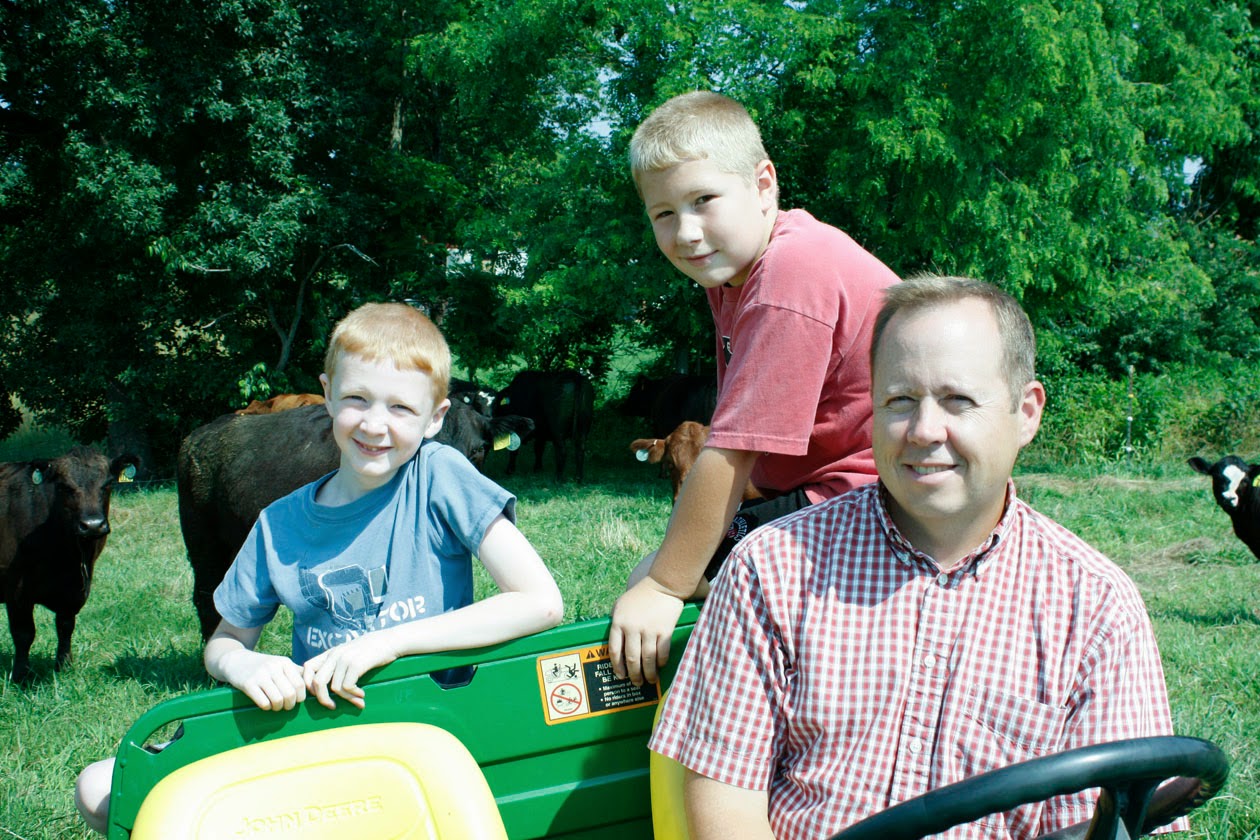
In 2014, Wegmans Food Markets began to source more beef raised without antibiotics or added hormones from family farms near their stores.  They have partnered with Madison County Farm Bureau member Clay Jackson’s operation Senterfitt Farms. Above is a closer look at their partnership. 

Leading Online Grocer Relay Foods to Invest $735,000, Increase Sales of Virginia-Sourced Agricultural Products

Relay Foods (www.relayfoods.com) will expand its corporate headquarters and Charlottesville fulfillment center to accommodate increased local demand for its products and to support the company’s entry into new markets, including those beyond Virginia.  The company, a leading online grocery store and farmers market, will invest more than $735,000, create 25 new jobs in the City, and increase its Mid-Atlantic sales of Virginia-sourced meats, produce, dairy products, and value-added foods by $3 million over the next three years.  The Commonwealth of Virginia is partnering with the City of Charlottesville and Relay Foods on this project through the Governor’s Agriculture and Forestry Industries Development Fund (AFID).
Speaking at the company’s site in Charlottesville about the announcement, Governor Terry McAuliffe said, “We continue to realize the benefits of fully integrating agriculture and forestry into the state’s strategic economic development platform.  Relay Foods’ announcement today not only creates quality new job opportunities for residents of Charlottesville, it strengthens the ties that this innovative and fast-growing company has to the Commonwealth.  Supporting entrepreneurs with unique and exciting business models is another way for Virginia to grow and diversify our economy, especially with the variety of agricultural producers across the Commonwealth.”

Relay Foods seamlessly integrates more than 200 local farmers and artisan, organic, and conventional producers to deliver high quality, local and gourmet foods and groceries directly to customers.  The company offers a unique and powerful resource for small food producers in Virginia trying to access the market by providing ready access to consumers in the Washington D.C., Richmond and Charlottesville metro areas.  This expansion will allow the company to further meet the growing demands of its consumers.
“I am pleased to see the continued success of the AFID program working with localities and businesses such as Relay Foods, a company that is so focused on promoting Virginia’s fresh, locally-sourced agricultural products, to create new jobs at its operations and new revenue streams for our growers,” said Todd Haymore, Virginia Secretary of Agriculture and Forestry. “This project will allow Relay Foods to enjoy an even wider reach to markets where the exposure of Virginia-grown products will increase and Virginia’s agricultural producers will continue to benefit from new sales opportunities.”
The company, in partnership with Virginia and Charlottesville, will invest in updates to its Charlottesville corporate facility and fulfillment center, the main location for the aggregation, storage, packaging and distribution of all local Virginia meat, cheese and dairy products.   These improvements will strengthen the company’s competitive position in the fast-growing online grocery market.
“Relay Foods has rapidly developed a new approach to putting food on the table here in Charlottesville and beyond,” said Satyendra Singh Huja, Mayor of Charlottesville.  “We are proud of the company’s success and its ability to deliver innovation to the marketplace.”

Governor McAuliffe approved a $50,000 grant from the Agriculture and Forestry Industries Development Fund (AFID) to assist the City of Charlottesville with the project.  Relay Foods is also committing to purchase at least $350,000 worth of meats, produce, dairy products and other foods from Virginia producers over the next three years.  Through the Virginia Jobs Investment Program, Relay Foods will receive additional funding and services to support its training and retraining activities.
“At Relay Foods, our goal is to strengthen the local food economy in every community we serve, and we have been able to grow and thrive in Virginia based on our strong partnerships with producers across the state,” said Zach Buckner, Co-founder and CEO of Relay Foods. “We look forward to using this AFID grant to continue exploring innovative ways to connect our customers with the fresh and local foods produced by Virginia growers and artisans.“
“Coming from bucolic Virginia, I know the importance of a strong agricultural supply chain and appreciate the dedication to local, small producers in this region,” said Senator Creigh Deeds, D- Bath County.  “The Governor’s continued support and partnership on economic development opportunities like the AFID program help communities across Virginia, and I am particularly pleased about the positive regional impact this announcement has today.”
Delegate David Toscano, D-Charlottesville, added, “Today’s announcement is a testament to the work the Governor and my colleagues in the General Assembly have done to diversify our economy and foster strong companies like Relay Foods in Virginia.  Their continued investment in Charlottesville and the ripple effect to the agricultural community and regional customer base are an exciting win for Virginia today.”
According to a 2013 economic impact study conducted by the Weldon Cooper Center for Public Service at the University of Virginia, agriculture and forestry are two of Virginia’s largest industries with a combined economic impact of $70 billion annually.  Agriculture generates more than $52 billion per annum, while forestry induces over $17 billion.  The industries also provide more than 400,000 jobs in the Commonwealth.
About the Agriculture and Forestry Industries Development Fund

The AFID Fund was created during the 2012 session of the General Assembly and is being embraced by the McAuliffe Administration as an important tool in growing the Commonwealth’s agriculture and forestry sector and helping to make Virginia the leading exporter of agricultural and forest products on the East Coast.  More information about the AFID grant, which has the flexibility to assist projects large and small throughout Virginia, can be found at http://www.vdacs.virginia.gov/agribusiness/afid.shtml.