Agriculture Mediation Services Available for Farm-Related Disputes

Mediation is a valuable tool for resolving the occasional agriculture-related dispute before it ends up in court. The Virginia Department of Agriculture and Consumer Services (VDACS) announces that agricultural mediation services are now available to Virginia’s agriculture community through a partnership with the North Carolina Agriculture Mediation Program (NCAMP), which operates out of Western Carolina University.
Known as FARM-VA, the program is certified through the U.S. Department of Agriculture (USDA) Farm Service Agency. Although the Virginia agricultural mediation program is based in North Carolina, mediations are held in the county where the parties work or reside.
“Conflicts often result from a lack of communication,” said Jayne Zanglein, Executive Director of NCAMP and FARM-VA. “We cultivate a resolution by providing a trained mediator to guide discussions and help settle agricultural disputes quickly, confidentially and amicably, saving everyone involved time and money.”

FARM-VA helps settle disputes between USDA agencies and their customers and clients. Those disputing USDA actions that directly affect them are offered the opportunity to request mediation services as part of the department’s informal appeals process. No fee is charged for USDA-related mediations. In addition, FARM-VA services are available to help resolve agricultural-related disputes between producers and suppliers, vendors, lenders and others. These mediations are subject to a fee based on the mediator’s time and travel.
NCAMP, the administrating organization of the FARM-VA program, offers trained and certified agricultural mediators. Since its inception in 2006, NCAMP has successfully mediated more than 130 North Carolina cases affecting more than 400 individuals.
To request mediation services or additional information on FARM-VA, contact 336.303.0466 or farmva@att.net. The NCAMP website is http://ncamediation.org.

From the Field: Helping You Is What We Do Best

From the Field is a bi-monthly column writtenby Mark Campbell, Farm Bureau Field Services Director for the Central District. He writes about Farm Bureau member benefits and County Farm Bureau activities.

It has been a while since my last blog post of “From the Field.”  Some of the critical and urgent Farm Bureau duties, activities, and events of the past few months plus my father’s death in late November 2014 simply crowded out any time for the bi weekly postings.  I enjoyed bringing stories and educational information about Farm Bureau and/or agriculture to you, and I look forward to getting back to it.
First, I have to comment on the people in Farm Bureau and the agriculture and rural communities.  One of the old slogans that Virginia Farm Bureau (VFB) had when I started working for VFB was “Helping you is what we do best”.  While I’m not sure why that slogan went by the way side, I see it exemplified on a continual basis.  Whether it be some of the insurance staff or someone in one of the federation departments, they have the mentality to serve and help the member or fellow employee. 


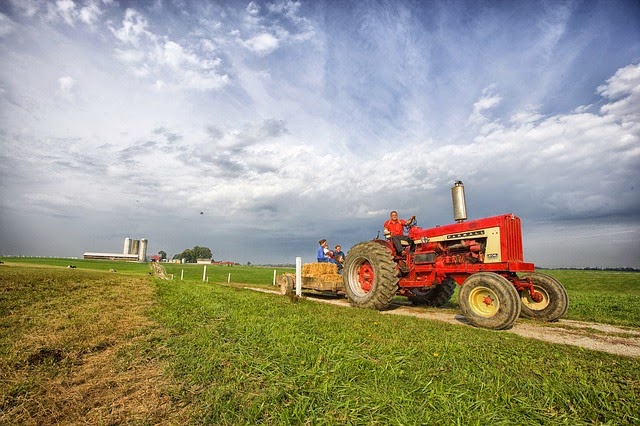
When my father passed away, several of my co-workers and Farm Bureau volunteers offered help on the farm, some from a couple of counties away.  A farming neighbor helped load up my hay feeder this winter when my tractor was in the repair shop.  Another neighbor split some firewood for me.  I can’t say for sure that this outpouring of generosity doesn’t happen in the city or suburbs, but it is prevalent in small rural communities.  The patchwork of small rural communities with agriculture woven in is one of our country’s greatest assets and qualities.
During the past few months, the Membership and Field Services has been diligently working on making your membership in Farm Bureau the best value that it can be.  Over 300 recommendations for new vendors to the Member Deals Plus program have been received from employees and volunteers, and we hope that many of them will participate.  This will increase the number of discounts available to you.  The GM discount on new vehicles continues to be a success story with many members utilizing the program. 
The Grainger discount also offers savings to members.  Farm Bureau members who register on Grainger.com using the Farm Bureau account code get at least a 10% discount and free shipping on all on line orders.  The discount can be much higher on many items.  Members can also get discounts at the store if you have an account set up.  I see a lot of potential growth in the Grainger program if more farmers use it. 
We also have a discount program with Case-IH and Polaris with discounts ranging from $300 to $500.  For GM, Case-IH, and Polaris, the member must apply the discount at the time of purchase.  It is not valid after the purchase.  Farm Bureau offers many other discounts, which you can learn more about by visiting www.vafarmbureau.orgor a county Farm Bureau office. 
A Farm Bureau membership is one of the best investments that you can make.  For $40 per year, you get legislative representation on your issues in Washington, D.C and Richmond, savings of more than $40 by utilizing our programs, and one on one personal service in your county.  Plus your membership helps support and strengthen agriculture and rural communities. 
Until next time,

Mark

Farmers: Closing elk hunting would put farms, drivers at risk; Make Comments Until May 22

A proposal by the Virginia Board of Game and Inland Fisheries to close the elk hunting season in 31 counties west of the Blue Ridge is cause for concern among farmers.

In 2012, the game department re-established about 75 elk in Buchanan County, and elk hunting was prohibited in Buchanan, Dickenson and Wise counties. Closing the elk season in the Blue Ridge would add those counties to the state’s Elk Management Area.

“I’m distressed to see this proposal,” said Emily Edmondson, a Tazewell County cattle producer and member of the Virginia Farm Bureau Federation board of directors. She represents Farm Bureau producer members in Buchanan, Dickenson, Lee, Russell, Tazewell and Wise counties on the board.

“The damage elk can do to crops and fences and infrastructure on farms is concerning to me,” Edmondson said. “The diseases that they carry can affect our livestock and cattle populations too.”

Chronic wasting disease, tuberculosis and brucellosis are among diseases that can accompany a re-established elk population.

Edmondson said she understands that Buchanan County wanted elk and respects their decision, but she noted that the animals could have an impact on surrounding counties that did not want them reintroduced.

“This proposal is in effect saying, ‘We don’t care what you say. We aren’t going to allow you to hunt elk.’ The elk are going to breed and grow, and essentially we won’t be able to do anything about it. I object to this.”

Edmondson said she also is concerned about the potential for damage to vehicles that hit elk on roadways. “These are 800- to 1,000-pound animals. I’m concerned that people will be hurt or killed. Elk can’t read. They don’t know they aren’t supposed to be in certain places.”

Currently hunters with a valid deer tag may hunt elk anywhere in the state except in the Elk Management Area. That hunting policy was established primarily to limit the risk of reintroduced elk—or deer—transmitting diseases to agricultural livestock and the white-tailed deer population.

The public can submit comments about the proposal to VDGIF between April 8 and May 22 at https://www3.dgif.virginia.gov/web/comment-2015/expand.asp?VAC=090-085.

Farm Bureau Members Making a Difference on WOTUS

Stallman

The vigilant outreach efforts of Farm Bureau members across the nation are making a difference, with key votes in the Senate this week delivering a resounding message that the proposed Waters of the U.S. rule is flawed in both substance and process.

“Senators indicated they will not tolerate outlandish regulatory actions that disregard established law, and by their action put federal regulators on notice that the rule is simply unacceptable,” said AFBF President Bob Stallman in a statement. Further, said Stallman, “The Senate action amplifies the spirit our farmers and ranchers have conveyed over the past year of the need to ditch the egregious WOTUS rule. We thank senators for their understanding that America’s farm and ranch families care deeply about clean water and their recognition that the ill-advised WOTUS rule is flawed to the core.”

Earlier this month, Stallman had the following to say praising Farm Bureau members for their continued fight against the proposed WOTUS rule:

It can be difficult to keep energized about an issue when it drags on for months. That is certainly the case with Farm Bureau’s opposition to the EPA’s and Corps of Engineers’ Waters of the U.S. rule. Farm Bureau members and many others around the nation were mobilized like never before during last year’s comment period on the proposed rule, and their message was loud and clear: DITCH THE RULE!

Despite efforts by some to use every tweet, robo-email and signature on a petition as a bona fide comment, about two-thirds of the approximately 20,000 substantive comments were in opposition to the WOTUS proposed rule. That is outstanding! As proud as I am of what Farm Bureau members have accomplished—and I have never been prouder—we still have a lot of work to do.

The agencies most likely will release the final rule in just a few weeks, after which it will be reviewed by other federal agencies. While the energy and urgency of the comment period ended last November, we must use this relatively silent time between then and the coming final rule to continue letting Congress know that we need their help, because EPA is not addressing agriculture’s concerns. There is legislation in the works that would send EPA and the Corps back to the drawing board on WOTUS, and we need members of Congress to support farmers and ranchers by supporting that legislation, as well as other efforts to prevent WOTUS from going forward as originally proposed.

“Keep calm and carry on,” was the message of a famous British poster during World War II, and Americans lately have enjoyed adapting that in a seemingly endless variety of ways: “Keep calm and farm on” is my personal favorite. I am reminded of that because we need to do the exact opposite on the WOTUS issue. We can’t afford to keep calm.

USDA Implements 2014 Farm Bill Provision to Limit Payments to Non-Farmers

Vilsack
The U.S. Department of Agriculture (USDA) today announced a proposed rule to limit farm payments to non-farmers, consistent with requirements Congress mandated in the 2014 Farm Bill. The proposed rule limits farm payments to individuals who may be designated as farm managers but are not actively engaged in farm management. In the Farm Bill, Congress gave USDA the authority to address this loophole for joint ventures and general partnerships, while exempting family farm operations from being impacted by the new rule USDA ultimately implements.

“We want to make sure that farm program payments are going to the farmers and farm families that they are intended to help. So we’ve taken the steps to do that, to the extent that the Farm Bill allows,” said Agriculture Secretary Tom Vilsack. “The Farm Bill gave USDA the authority to limit farm program payments to individuals who are not actively engaged in the management of the farming operation on non-family farms. This helps close a loophole that has been taken advantage of by some larger joint ventures and general partnerships.”

The current definition of “actively engaged” for managers, established in 1987, is broad, allowing individuals with little to no contributions to critical farm management decisions to receive safety-net payments if they are classified as farm managers, and for some operations there were an unlimited number of managers that could receive payments.

The proposed rule seeks to close this loophole to the extent possible within the guidelines required by the 2014 Farm Bill. Under the proposed rule, non-family joint ventures and general partnerships must document that their managers are making significant contributions to the farming operation, defined as 500 hours of substantial management work per year, or 25 percent of the critical management time necessary for the success of the farming operation. Many operations will be limited to only one manager who can receive a safety-net payment. Operators that can demonstrate they are large and complex could be allowed payments for up to three managers only if they can show all three are actively and substantially engaged in farm operations. The changes specified in the rule would apply to payment eligibility for 2016 and subsequent crop years for Agriculture Risk Coverage (ARC) and Price Loss Coverage (PLC) Programs, loan deficiency payments and marketing loan gains realized via the Marketing Assistance Loan program.

As mandated by Congress, family farms will not be impacted. There will also be no change to existing rules for contributions to land, capital, equipment, or labor. Only non-family farm general partnerships or joint ventures comprised of more than one member will be impacted by this proposed rule.

Stakeholders interested in commenting on the proposed definition and changes are encouraged to provide written comments at www.regulations.gov by May 26, 2015. The proposed rule is available at http://go.usa.gov/3C6Kk.

Farm Bureau Celebrates Virginia Agriculture Week and Ag Literacy Week

Lindsay Reames, assistant director of Governmental Relations, reads to ABC
Preschool for Ag Literacy Week
Happy National Ag Day and happy Virginia Agriculture Week! Thank you to all our producer members:
  • for persevering despite drought and flood, freezing temperatures, parching sun, fluctuating prices and constantly changing markets;
  • for seeking better ways to do their jobs – using new techniques and advances in technology to simplify tasks, increase yields and lower prices;
  • for feeding the world – in the 1960s, one farmer supplied food for about 25 people in the U.S. and abroad; today, the number has increased to 155 people;
  • for their spirit of innovation – always looking for new products and changes that increase the quality and add value to the products they produce;
  • for valuing our land and water resources and for making their preservation and enhancement top priorities;
  • for adapting to change – expanding to meet the demands of a global marketplace while still satisfying consumers’ shifting tastes and desire for low fat, high nutrition products at home and abroad, in 2014, exports from Virginia set a record of more than $3 billion;
  • for supplying Americans with an abundant and safe food supply at a low price, enabling U.S. consumers to spend less than 7 percent of their income on food compared with more than 9 percent in Canada, 25 percent in Brazil, 28 percent in Russia and 45 percent in Kenya*;
  • for providing the basis for numerous products including medicines, cosmetics, printing supplies, fuel, lubricants, lumber, paints and sports equipment;
  • for enduring; on March 1 this year, 1,312 Virginia farms have been recognized as Virginia Century Farms, which means they have been owned by the same families for one hundred years or more.

To mark the occasion, employees at Virginia Farm Bureau’s home office collected food all week to mark National Ag Week. The food will go to the Food Bank of Wise County. The food bank’s roof collapsed in late February after a snow storm. More than $30,000 worth of food was inside, and none of it was salvageable. Employees from county Farm Bureau offices and Farm Bureau volunteers also donated to their local food banks.


We are also celebrating the Virginia Agriculture in the Classroom program’s fifth annual Agriculture Literacy Week.

Volunteers from county Farm Bureaus, the Virginia Department of Agriculture and Consumer Services, Farm Credit of the Virginias, Colonial Farm Credit, Southern States, Tyson Foods, James River Equipment and several 4-H and FFA chapters, along with AITC board members and staff and Virginia Farm Bureau Federation board members and staff, will mark the week by reading books about agriculture to children across the state. Each year more than 50,000 children learn about agriculture, food and where their basic needs come from through the Agriculture Literacy Week initiative.

Many volunteers read the 2015 Virginia AITC Book of the Year, My Virginia Plate, written by Tammy Maxey and illustrated by Greg Cravens and Kevin Pitts, and donated copies to school and classroom libraries. My Virginia Plate is a story of students learning about nutrition through preparing a Virginia-grown meal as part of a classroom assignment.

The children’s book was written to teach readers about nutrition and show how Virginia farmers produce a wide variety of foods that are a part of a healthy diet.