American Farm Bureau Announces Get a Move On for GMOs Campaign
![]() |
| AFBF President Bob Stallman |
While GMO opponents want labeling mandates, Farm Bureau and food makers support a more reasonable approach. The Safe and Accurate Food Labeling Act (H.R. 1599) would establish that FDA is the nation’s foremost authority on food safety and create a voluntary labeling program run by USDA—similar to the USDA Organic Program. With a growing and troubling patchwork of state and local labeling requirements, we believe it’s time for a national approach—one that does not amount to putting warning labels on safe and wholesome foods. Get a Move On gives farmers and ranchers a way to oppose the multiple, varied state and local initiatives with the click of a mouse.
Members of Congress have told us that they are hearing plenty from the anti-biotech crowd, making it difficult for them to stand with agriculture. They know that GMO opponents are engaging in alarmism and opportunism. Lawmakers say they MUST hear from us. We have to Get a Move On, or else our vocal opponents will drown us out.
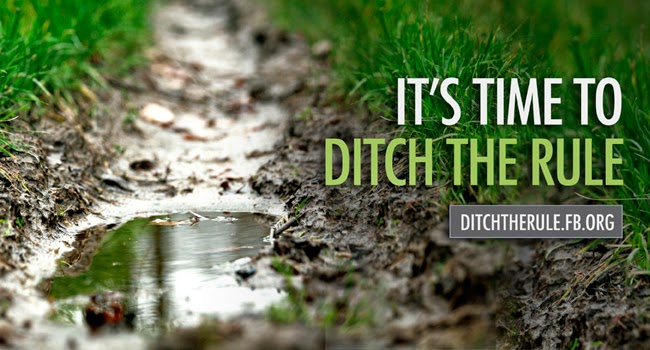
Last year, Farm Bureau surprised a lot of people with our Ditch the Rule campaign. In a fight against EPA and vocal environmental activist groups, we helped generate thousands of comments on the Waters of the U.S. proposed rule. Farmers and ranchers showed up, big-time! The Ditch the Rule campaign demonstrated what is achievable when we motivate the grassroots and deploy smart tools to make it easy to take action. We need to build on that success. It’s time to Get a Move On for GMOs! Check out the new website. Let us know what you think. And please keep your eyes peeled for more Get a Move On resources to come.
New Specialty Poultry Production, Processing Facility to Locate in Albemarle County
This Week’s Commodity Comments: April 29, 2015
Vote for Roanoke County Farm Bureau Member Megan Seibel for Farm Mom of the Year
From the Field: Farm Bureau Coordinates Career Fair
This Week’s Commodity Comments: April 22, 2015
Governor McAuliffe Announces Major Conservation Initiative
The administration’s goal is to identify, conserve and protect at least 1,000 treasures by the end of the governor’s term. Criteria for what constitutes a treasure have been developed by the Commonwealth’s natural resources staff. Treasures could fall into one of two defined categories: land conservation or natural, cultural and recreational.
The Virginia Department of Conservation and Recreation is the lead agency charged with tracking Virginia Treasures. Multiple state agencies, land trusts, local governments and private groups are involved in the initiative.
House Passes Bill to Eliminate Estate Taxes
“Farmers’ and ranchers’ assets are tied up in the land, not sitting in a bank. And farm families certainly don’t have cash on hand to pay a double tax at death,” Stallman said in a statement. “This leaves many surviving family members with few options other than selling off part or all of their land to pay estate taxes. Too often, cashing in these assets can cripple their business.”
Many farmers have benefited greatly from previous congressional action that increased the estate tax exemption to $5 million indexed for inflation, provided portability between spouses, and continued stepped-up basis, Stallman noted in a letter urging House lawmakers to approve the repeal bill. Instead of spending money on life insurance and estate planning, many farmers today can expand their businesses, upgrade buildings and purchase needed equipment and livestock.
“And more importantly, they can continue farming when a family member dies without having to sell land, livestock or equipment to pay the tax,” Stallman wrote.
Still, estate taxes continue to be a problem for farmers and ranchers for a couple of reasons. First, the indexed estate tax exemption is still working to catch up with the increase in farmland values over the past several years. Second, the value of family-owned farms and ranches is usually tied to illiquid assets, such as land, buildings and equipment.
“When estate taxes on an agricultural business exceed cash and other liquid assets, surviving family partners have few options other than to sell off farm and ranch assets, jeopardizing the viability of their business,” Stallman explained.