USDA Expands Safety Net for Dairy Operations

U.S. Secretary of Agriculture Tom Vilsack announced April 12 that dairy farms participating in the Margin Protection Program can now update their production history when an eligible family member joins the operation.

The voluntary program, established by the 2014 Farm Bill, protects participating dairy producers when the margin—the difference between the price of milk and feed costs—falls below levels of protection selected by each participant.

The U.S. Department of Agriculture’s Farm Service Agency published a final rule making the change effective April 13. Any dairy operation already enrolled in the MPP that had an intergenerational transfer occur will have an opportunity to increase the dairy operation’s production history during the 2017 registration and annual coverage election period. The next election period begins July 1 and ends Sept. 30. For intergenerational transfers occurring on or after July 1, notification must be made to the FSA within 60 days of purchasing the additional cows.

Each participating dairy operation is authorized one intergenerational transfer at any time of its choosing until 2018.

For more information, visit fsa.usda.gov/dairy or a local FSA office.

Agriculture Literacy Project Activities Reached 35,000 students

As many as 35,000 elementary school students learned how their favorite breakfast foods arrive on their plates during a two-week celebration of agriculture.

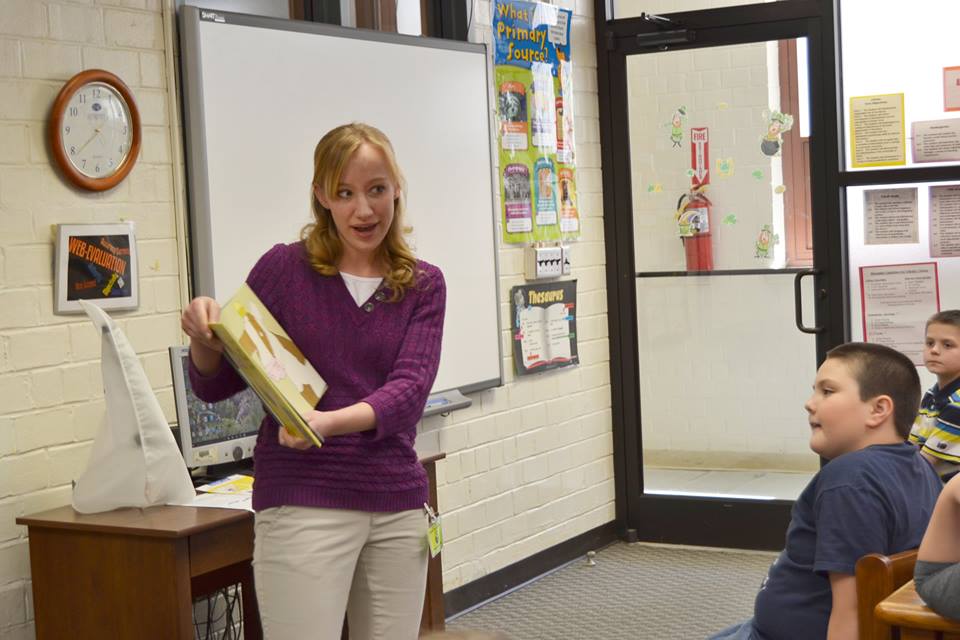
About 950 volunteer participants in Virginia’s sixth annual Agriculture Literacy Project visited 1,500 local classrooms and libraries between March 14 and March 31. Many of them read The Cow in Patrick O’Shanahan’s Kitchen, a children’s book by Diana Prichard that was named the 2016 Virginia Agriculture in the Classroom Book of the Year.

Some of the readings coincided with National Ag Week, which was celebrated March 14-20. That observance encourages Americans to understand how food and fiber are produced; appreciate the role agriculture plays in providing safe, abundant and affordable products; and value the essential role of agriculture in maintaining a strong economy.

Volunteers from 80 county Farm Bureaus, along with FFA chapters, 4-H club members and employees of Farm Credit, Southern States Cooperatives, soil and water conservation districts and the Virginia Department of Agriculture and Consumer Services read at their local schools. They also donated 1,783 copies of the Book of the Year to classrooms, schools and local libraries.

The Agriculture Literacy Project previously was known as Agriculture Literacy Week. Virginia Agriculture in the Classroom expanded the program to two weeks due to its popularity and increased demand for volunteer readers. Virginia AITC is part of a nationwide effort to help teachers and students understand and appreciate agriculture, which is Virginia’s and the nation’s largest industry.

“This project provides an opportunity for volunteers from the agriculture community to connect children to agriculture,” explained Tammy Maxey, AITC senior education manager. “The stories our volunteers share after visiting the schools show the need for agricultural education in the classrooms.”

For example, she said, Charlotte County volunteers said children asked why cows moo, and they wanted to know why there are no baby chicks in the eggs purchased at grocery stores.

Freezing Temperatures Affect Farmers Across State

There’s risk every spring that a hard freeze will kill tender fruit blossoms. Virginia apple and peach growers are familiar with that risk; most are in mountainous areas in the western part of the state, where cold temperatures linger into spring.

But growers across Virginia saw some losses from two hard freezes the week of April 3.

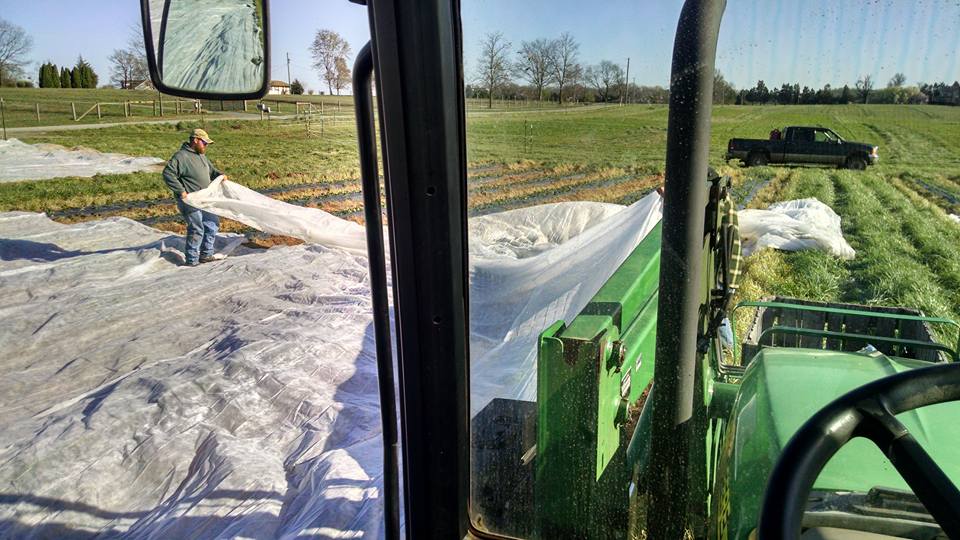
“We had row covers on all our strawberries and a few blueberry bushes Tuesday night, and we irrigated on Saturday night,” reported Jay Yankey, owner of Yankey Farms, a pick-your-own operation in Prince William County. He’s also a former Virginia Farm Bureau Federation board member. “We lost about 30 percent of our strawberry blooms. We had them covered, but it got down to 22 degrees, and the row covers only offer about 4 degrees of protection. So anything below 28 degrees means you start losing blossoms.”

The April 11 crop weather report from the Virginia office of the National Agricultural Statistics Service noted concerns about cold weather throughout the state. Snow showers hit many counties, and freeze warnings went into Southeast Virginia, where the strawberry crop ripens first.

“Saturday we ran irrigation over the row covers from 11 p.m. to 9 a.m., and by doing so we were able to keep the temperature under the covers at about 33 degrees. And we didn’t suffer any additional losses,” Yankey said.

Apple, cherry, nectarine, peach, strawberry and wine grape crops were hit by freezing temperatures in Nelson County, according to the report. Fruit trees in Carroll and Patrick counties also suffered a hard freeze. The cold weather delayed corn planting for growers across the state, and winter grain farmers in Eastern Virginia may have lost some yields.

“The barley crop was about two weeks ahead of wheat, and the timing was all wrong” for the freeze, said David Moore, a Virginia Cooperative Extension agent in Essex County. “We’ll see some buggy-whipping and burnt ends, and now that the barley is starting to head out we’re seeing some empty heads.

“I expect wheat may have some white heads too when it starts to head out, but not nearly as bad as the barley crop. There’s not a whole lot you can do about it except tell your crop insurance agent.”

As frustrating as freeze losses are to growers, Yankey said he’s accustomed to hauling out his fabric row covers or setting up his sprinkler system.

“It’s probably more unusual to have a year where there’s no need to protect from freezes,” he said. “Some of the larger fruit growers have wind machines. … Elevation and just a little bit of a breeze can make a big difference on how much frost damage you get.”

Issues and Trends for Food and Agriculture in an Election Year

In an election year, especially a presidential election year, congressional and executive branch activity slows down and often comes nearly to a complete stop. This year will be no different, although there are several important food, agriculture, trade and environmental issues that will likely receive significant attention before activity wanes after Memorial Day. These issues include normalizing relations with Cuba, approval of the Trans-Pacific Partnership trade agreement, labeling of GMO food products, precision agriculture, use of drones and implementation of the Food Safety Modernization Act.

AFBF President Responds to Consumer Reports Column

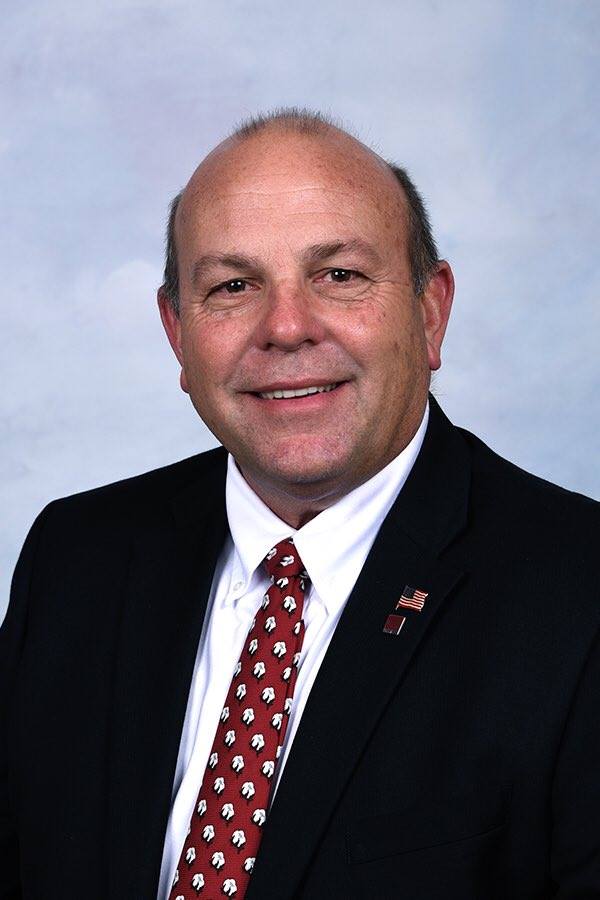
AFBF President
Zippy Duvall
Our nation’s food system starts with America’s farm and ranch families, who own and operate 97 percent of the farms in our country. We enjoy a food supply that is among the world’s best, one that delivers a diverse bounty of affordable, nutritious and delicious food options—a horn o’ plenty that our ancestors could only dream about. But a recent Consumer Reports column (Eric Schlosser, “A Safer Food Future, Now,” May 2016), with its numerous, random gripes lodged against today’s food system, is a little like the story of the ungrateful son who turns away from his father, even though he showers the son with riches.

Our food riches include choice. Whether America’s eaters want grassfed or grainfed beef, freerange or sheltered poultry and pork, or tofu and sprouts, America’s farmers and ranchers work to provide it all. They harness a team of workhorses that includes everything from time-honored methods used by our grandparents to new crop and data technologies that would spin the brightest heads in Silicon Valley. We can apply nutrients and crop protection products precisely when and where needed, reducing impacts to our environment and to the farmer’s balance sheet. According to the Field to Market Alliance for Sustainable Agriculture, farmers are growing more with less—less land use, less labor, less water, less soil erosion, less energy use, less greenhouse gas emissions—but with more safety.

These achievements are driven by scientific advancements, but they have their roots in the farmer’s personal values—the desire to serve and a commitment to constantly improve. While others merely talk, farmers are producing plentiful, healthy food, caring for their animals and conserving natural resources. That’s a triple bottom line our society can be proud of, and I would put their performance up for comparison with anyone’s, anywhere.

So when it comes to our food system, I take issue with the naysayers. Today’s tools, seeds and methods, and the men and women who use them, make our food system healthier, safer and more affordable than it has ever been. The key to that success is our farm and ranch families, who uphold a tradition and a pledge to sustain our nation and nourish its citizens—season in and season out, all year long.

Track your Tractor Usage and Raise Money for Agriculture in the Classroom

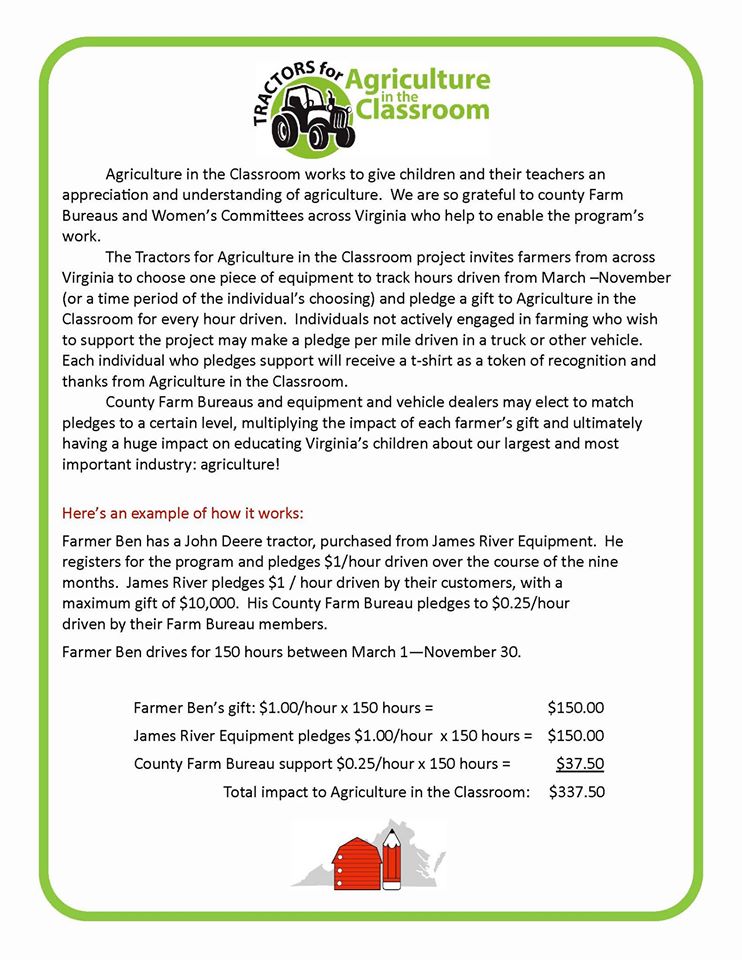
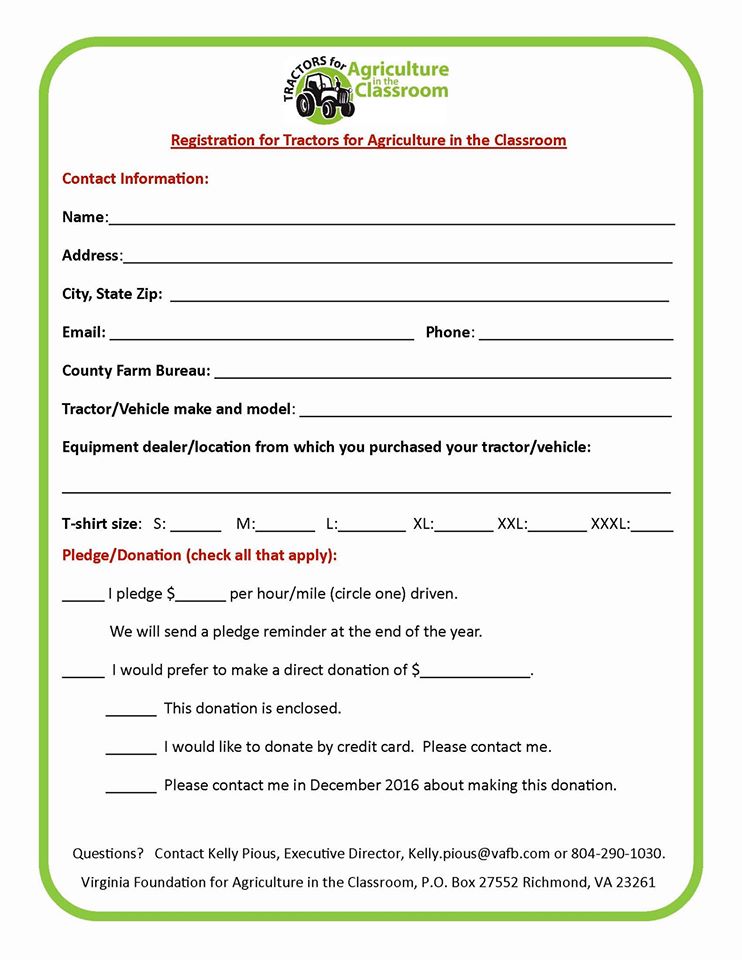
Spring is here and supporting Agriculture in the Classroom is as easy as operating a tractor on your farm! Just choose one piece of equipment (or a vehicle) to track hours of use from March through November (or a time period that fits you best) and pledge a gift to Agriculture in the Classroom for every hour of operation. If you are interested in participating, have questions or need a pledge form, please contact Agriculture in the Classroom at 804-290-1034.

What Virginia Farmers are Planting in 2016


The Virginia Department of Agriculture and Consumer Services today announced the planting intentions of Virginia farmers as of March 1 surveys by the USDA’s National Agricultural Statistics Service. 
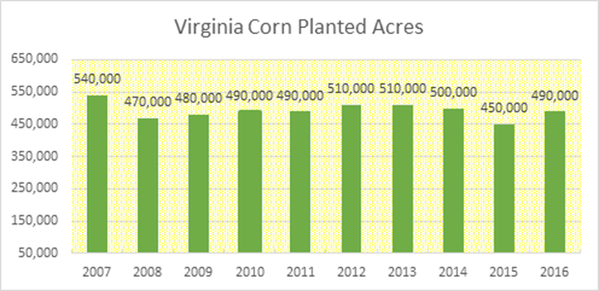
Farmers in Virginia intend to plant 490,000 acres of corn, 40,000 higher than 2015. U.S. corn growers intend to plant 93.6 million acres for all purposes in 2016, up 6 percent from last year and 3 percent higher than 2014. 
Soybean acreage in Virginia is expected to total 630,000 acres, unchanged from the previous year’s acres. U.S. soybean planted area for 2016 is estimated at 82.2 million acres, down 1 percent from last year. 
Upland cotton acreage to be planted in Virginia is forecast at 80,000, down 5,000 acres from 2015. The U.S. total upland cotton acreage is estimated at 9.35 million acres, up 11 percent from the previous year. 

Peanut acreage in Virginia is expected to total 19,000 acres, unchanged from the previous year’s acres. U.S. peanut planted area for 2016 is estimated at 1.48 million acres, down 9 percent from last year. 

Flue-cured tobacco growers in Virginia intend to harvest 21,000 acres, down 500 acres from 2015. For flue-cured producing states, growers intend to harvest 209,000 acres, 4 percent below last year. 
Producers intend to harvest 250 acres of dark-fired tobacco in Virginia, unchanged acres from the previous year. Burley tobacco was estimated at 1,200 acres, down 100 acres from 2015. 
Barley seeded by Virginia farmers in the fall of 2015 totaled 44,000 acres, down 2,000 acres from previous year. U.S. seeded acreage was 3.14 million acres, down 12 percent from the previous year. 
Winter wheat seeded by Virginia farmers in the fall of 2015 totaled 240,000 acres, down 20,000 acres from previous year. Seeded acreage for the nation was 36.2 million acres, down 8 percent from the previous year. 

Farmers in the state intend to harvest 1.18 million acres of all hay, up 5,000 from 2015. U.S. farmers intend on harvesting 54.3 million acres of hay in 2016, down slightly from last year.