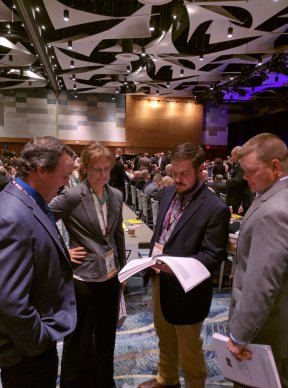
 Delegates to the American Farm Bureau Federation’s 2017 Annual Convention today approved a host of public policy measures designed to help assure a prosperous future for farmers, ranchers and everyone who depends on them for food, fuel and fiber.
Delegates covered the full range of agriculture policy over the day-long session. Resolutions passed included important measures covering regulatory reform, crop insurance, the inclusion of food assistance in the upcoming farm bill, school nutrition, biotechnology, energy and more.
“The actions taken today by our farmer and rancher delegates from across the nation represent the culmination of our year-long grassroots policy process,” said AFBF President Zippy Duvall. “It also provides us a roadmap for actions AFBF will take to implement our policies throughout this year, and I am optimistic about those prospects.”
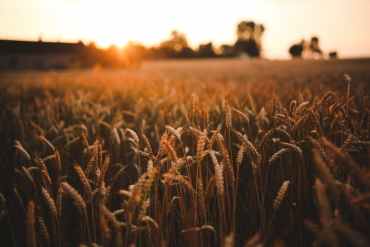 Virginia barley and winter wheat harvests have been on a downward trend for several years, and 2016 was an especially disappointing one for growers. But
 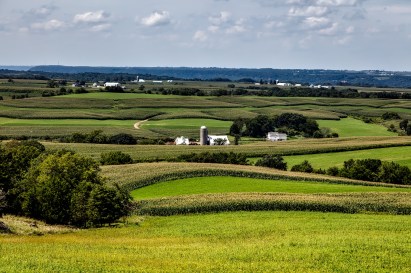 Governor Terry McAuliffe today announced the fiscal year 2017 farmland preservation grant recipients. The Virginia Department of Agriculture and Consumer Services’ (VDACS) Office of Farmland Preservation has awarded a total of $500,000 to six localities. Localities must use the grants to permanently preserve working farmland within their boundaries through local Purchase of Development Rights (PDR) programs. PDR programs compensate landowners who work with localities to permanently preserve their land by voluntarily securing a perpetual conservation easement.
 Virginia’s
  Conservation, forestry and wildlife control have all taken huge hits in Gov. Terry McAuliffe’s reductions to the state budget.
 Dr. M. Ray McKinnie, who has been serving as the Interim Dean and 1890 Extension Administrator of the College of Agriculture at Virginia State University, has been formally appointed to the position. The appointment is effective immediately.
 It came close, but no cigar. The current world record for corn production yield remains in Virginia.
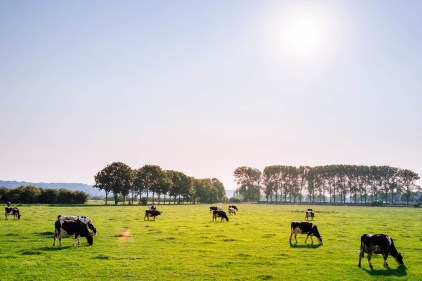 Beginning in January, representatives of the U.S. Department of Agriculture’s National Agricultural Statistics Service (NASS) will visit dairy farms across the nation, as the agency begins collecting data for the final phase of the 2016 Agricultural Resource Management Survey (ARMS).
 Plows and Politics