Join us for the Virginia Farm Bureau Products Warehouse Spring Open House Friday, Feb. 28. See the details below.

Join us for the Virginia Farm Bureau Products Warehouse Spring Open House Friday, Feb. 28. See the details below.
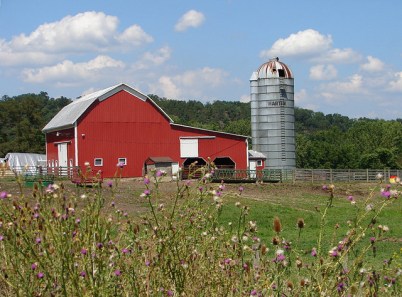 Farm bankruptcies in 2019 increased nearly 20 percent nationwide, but there was no significant increase in the number of Chapter 12 filings in Virginia.
Chapter 12 bankruptcy filings allow family farmers and fishermen to avoid liquidation or foreclosure. According to an analysis by the American Farm Bureau Federation, there were 595 Chapter 12 family farm bankruptcies in the U.S. last year. That number reflects an increase of nearly 100 filings from 2018 and the highest number since 2011, when they reached 637. Only six Chapter 12 farm bankruptcies were listed for Virginia, the same as in 2018.
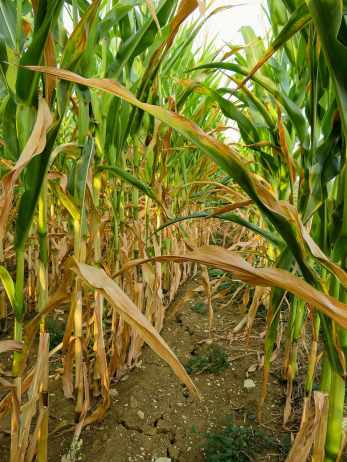 Farmers in 49 Virginia counties who suffered losses from last year’s excessive heat and drought may be eligible for U.S. Department of Agriculture Farm Service Agency emergency loans.
U.S. Secretary of Agriculture Sonny Perdue recently designated localities affected by the extreme weather as primary natural disaster areas, allowing recovering farmers to apply for emergency credit.
The loans can be used for replacing livestock, equipment and other essential items; refinancing debt; and reorganizing farming operations.
Crossover is finally here! Check out this week’s General Assembly update with Stefanie and Andrew.
Check out this week’s Merchandiser Minute!
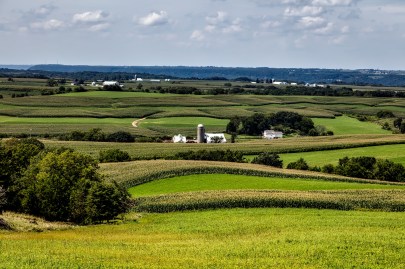 Last year was a “terrible production year,” but Dr. John Anderson predicted that farmers will be able to recover in 2020.
Anderson, agribusiness economist and department chair of the College of Agriculture at the University of Arkansas, shared his perspective on the farm economy future during a workshop at the American Farm Bureau Federation annual convention last month.
 The number of farmers affected by stress, anxiety and depression is growing as they face bankruptcy, selling out or leaving lifelong careers in agriculture.
A 2016 Centers for Disease Control and Prevention study found those working in agricultural industries were 3.4 times more likely than other American workers to die by suicide. With operating costs skyrocketing, commodity prices dwindling and debts accumulating, tough times are mounting for farmers.
 Virginia Agriculture in the Classroom has awarded 20 STEM grants to schools and a 4-H chapter for spring 2020.
The grants total $9,000 and will provide 8,000 youth in 19 localities with agriculture experiences incorporating science, technology, engineering and mathematics. Projects include topics like hydroponics, animal agriculture and leadership development.
Grants were made possible through funding from the Virginia Foundation for Agriculture in the Classroom.
“Agriculture in the Classroom STEM grants provide an opportunity for educators to integrate science, technology, engineering, agriculture and mathematics,” explained Tammy Maxey, Virginia AITC senior education manager. “The spring STEM grants enable students to have an agricultural experience while integrating higher-level STEM concepts.”
Thanks to all our members for attending the Senate and House Ag Committee meetings this week in Richmond! Here’s an update for week 5 of the 2020 General Assembly.
This column written by VFBF President Wayne Pryor ran in the Richmond Times-Dispatch on Friday, Feb. 7.
 For years, Virginia’s farmers, conservation groups, and soil and water conservation districts have worked diligently to address legitimate barriers to farmers being able to adopt on-farm conservation practices. Those include stream exclusion fencing and nutrient management plans.
And because good stewardship is part of good citizenship, farmers have made great strides in voluntarily introducing those practices and others.
Barriers to the practices have included a lack of adequate cost-share funding in recent years; a lack of funding for soil and water conservation districts to provide adequate technical assistance; and a lack of flexibility to address legitimate site-specific issues that farmers encounter.

