
Robert Harper with Virginia Farm Bureau’s grain division provides this week’s market updates.
#merchandiserminute #grainfuture #virginiafarmbureau
Robert Harper with Virginia Farm Bureau’s grain division provides this week’s market updates.
#merchandiserminute #grainfuture #virginiafarmbureau
Robert Harper with Virginia Farm Bureau’s grain division provides this week’s market updates.
#merchandiserminute #grainfuture #virginiafarmbureau

Candidates for governor, lieutenant governor and attorney general have partnered with Virginia Farm Bureau Federation AgPAC, a nonpartisan political action committee, to present their stances on agricultural and forestry issues that align with Farm Bureau policy.
While endorsements will not be issued for individual candidates for the top spots in state leadership this year, farmers serving on the AgPAC board of trustees met with all six campaigns and briefed them on important agriculture and forestry issues. Candidates were then given the opportunity to present their agriculture and forestry platforms to the full AgPAC board of trustees.
In-kind contributions were offered to candidates who presented positions that help promote specific agriculture and forestry issues aligned with Farm Bureau policy.
Both gubernatorial candidates, Democrat Abigail Spanberger and Republican Lt. Gov. Winsome Earle-Sears, embraced the opportunity to share their ideas on issues important to farmers.
Spanberger’s top priorities included expanding access to markets for Virginia farmers, preserving working farm and forest lands, promoting rural economic development, ensuring farmers have access to labor, fully funding voluntary conservation programs and expanding agricultural education and support for Virginia’s land grant universities and Virginia Cooperative Extension programs.
“I worked with Virginia’s farmers to amplify their voices when I was in Congress by moving legislation that addressed their issues,” Spanberger said. “I was proud to receive awards from Farm Bureau and Virginia Cattlemen’s Association recognizing this work. I will do the same as governor and ensure that agriculture and forestry have a seat at the decision-making table.”
Earle-Sears emphasized her commitment to reducing taxes, supporting job creation, and preserving Virginia’s farmland and forestry through clean energy solutions like biomass. She voiced strong support for broadband expansion, and maintaining right-to-work and right-to-farm laws, while opposing increased pesticide regulations and minimum wage hikes. Earle-Sears also pledged to establish a governor’s office in Southwest Virginia to ensure accessibility and representation for rural communities. On environmental issues, she praised Virginia farmers for their efforts to protect the Chesapeake Bay, and called on neighboring states to uphold their responsibilities.
“I want you to know that I want to invest in you, but I think more importantly, I trust our farmers,” Earle-Sears said. “I trust our farmers and foresters, and our entire commonwealth benefits because of you. I will fight for your interests in Richmond. I will continue to fight for you. As governor, that is my promise.”
Four other statewide candidates agreed to meet with the AgPAC board—lieutenant governor candidates Democrat Sen. Ghazala Hashmi and Republican John Reid, and candidates for attorney general, Republican Attorney General Jason Miyares and Democrat Jay Jones.
“These candidates valued the opportunity to have meaningful conversations with farmers, exploring ways they might support agriculture through their roles if elected,” said Martha Moore, senior vice president of VFBF governmental relations. “We’re excited to assist these six statewide candidates in sharing their perspectives on key agriculture and forestry topics with farmers throughout Virginia. We believe that working together will bring attention to issues that matter in rural communities and help farmers make informed decisions ahead of the Nov. 4 election.”
Hashmi recognizes that agriculture and forestry are more than just industries; they are a way of life for many Virginians. Her vision centers on economic growth, workforce development and land stewardship, including strengthening the Virginia Agricultural Best Management program and promoting voluntary conservation practices to preserve Virginia’s working lands. She is committed to closing the broadband gap to ensure rural communities can thrive in the digital age and supports climate innovation through smart solar development on existing infrastructure. “I want to use this opportunity to elevate rural voices and build lasting support for the vital work happening in our agricultural and forestry communities,” Hashmi said.
Reid says he is committed to sustaining family farms and securing our food supply because a stronger agricultural foundation means a stronger Virginia. He supports increased funding for BMPs, empowering farmers to meet Virginia’s water quality goals while protecting our natural resources. Reid opposes reinstating the estate tax, recognizing the burden it places on landowners and the threat it poses to farm viability. He advocates for preserving farmland through strategic solar siting, and stands strong in defending Virginia’s right to farm—ensuring agriculture remains a cornerstone of Virginia’s economy and way of life.
Miyares reaffirmed his commitment to protecting Virginia’s right-to-work law, emphasizing its importance in attracting businesses and supporting the state’s workforce, including agribusiness. He pledged to oppose efforts that would hinder employment opportunities or burden farmers with unnecessary regulations, including those promoting animal rights. Miyares also voiced strong support for local authority in solar siting decisions, noting that wind and solar alone cannot meet Virginia’s energy needs over the next two decades. His focus remains on getting Virginia back to work and back to business—especially in vital sectors like agriculture.
Jones says he understands the economic challenges facing agriculture today and is committed to offering predictability and stability to support farmers and small business owners across the commonwealth. He believes that regulations play a vital role in protecting the environment and ensuring food safety. However, Jones advocates for science-based policies that are flexible, cost-effective, and adaptable to local conditions—so farmers can thrive without unnecessary burdens. Jones supports simplifying regulations to foster entrepreneurship and competitiveness in both national and global markets. He is especially focused on reducing barriers for beginning farmers, helping them build sustainable businesses and contribute to Virginia’s agricultural legacy.
The nonpartisan VFBF AgPAC was created in 1999 and employs in-kind contributions and endorsements to support candidates who can best support agriculture and Farm Bureau issues.
Robert Harper with Virginia Farm Bureau’s grain division provides this week’s market updates.
#merchandiserminute #grainfuture #virginiafarmbureau
Virginia Farm Bureau Federation AgPAC, Farm Bureau’s political action committee, has announced its endorsement of 85 candidates for seats in the Virginia House of Delegates. Endorsements are based on recommendations by local farmer committees and approved by the AgPAC board.
“The mission of the Virginia Farm Bureau Federation AgPAC is to support candidates who recognize the vital role agriculture and forestry play in Virginia’s economy and communities,” said Scott Sink, VFBF president and chair of the VFBF AgPAC Board of Trustees. “We evaluate their understanding through their voting records in the General Assembly and their willingness to engage directly with farmers to grasp the real-world impact of these industries.”
Throughout the year, VFBF members actively connect with legislators from both urban and rural areas. These efforts foster collaborative relationships that support the long-term viability of Virginia’s leading industry. By engaging directly with members of the General Assembly through farm tours, legislative roundtables and in-person meetings, members have gained more opportunities to advocate for agriculture and offer valuable insights to policymakers.
Endorsement decisions are based solely on candidates’ positions related to agriculture and forestry, without consideration of unrelated policy views.
“We look forward to working with these candidates to help protect the agriculture and forestry industries and ensure that they remain the No. 1 industries in the commonwealth,” Sink continued.
Martha Moore, senior vice president of VFBF governmental relations, noted that friendly incumbents have a track record of working with farmers in their districts.
“The new candidates endorsed for the House have demonstrated an understanding about specific challenges facing Virginia’s farmers and foresters,” she explained.
The nonpartisan VFBF AgPAC was created in 1999 and employs in-kind contributions and endorsements to back candidates who can best support agriculture and Farm Bureau issues.
Although not formally endorsed, additional candidates were recognized as open-door candidates. VFBF will continue to engage with these individuals, fostering relationships and sharing key agricultural policy priorities.
The following candidates were endorsed (* indicates incumbent candidates):
| House District | Candidate |
|---|---|
| HD1 | Patrick Hope* (D) |
| HD3 | Alfonso Lopez* (D) |
| HD4 | Charniele Herring* (D) |
| HD5 | Elizabeth Bennett-Parker* (D) |
| HD6 | Rip Sullivan* (D) |
| HD8 | Irene Shin* (D) |
| HD9 | Karrie Delaney* (D) |
| HD10 | Dan Helmer* (D) |
| HD11 | David Bulova* (D) |
| HD12 | Holly Seibold* (D) |
| HD14 | Vivian Watts* (D) |
| HD16 | Paul Krizek* (D) |
| HD17 | Mark Sickles* (D) |
| HD18 | Kathy Tran* (D) |
| HD20 | Michelle Maldonado* (D) |
| HD21 | Josh Thomas* (D) |
| HD22 | Ian Lovejoy* (R) |
| HD24 | Luke Torian*, (D) |
| HD25 | Briana Sewell* (D) |
| HD27 | Atoosa Reaser* (D) |
| HD28 | David Reid* (D) |
| HD29 | Fernando Martinez* (D) |
| HD31 | Delores Oates (R) |
| HD32 | Bill Wiley* (R) |
| HD33 | Justin Pence, (R) |
| HD34 | Tony Wilt* (R) |
| HD35 | Chris Runion* (R) |
| HD36 | Ellen Campbell* (R) |
| HD37 | Terry Austin* (R) |
| HD38 | Sam Rasoul* (D) |
| HD39 | Will Davis (R) |
| HD40 | Joe McNamara* (R) |
| HD41 | Chris Obenshain* (R) |
| HD42 | Jason Ballard* (R) |
| HD43 | Will Morefield* (R) |
| HD44 | Israel O’Quinn* (R) |
| HD45 | Terry Kilgore* (R) |
| HD46 | Mitchell Cornett (R) |
| HD47 | Wren Williams* (R) |
| HD48 | Eric Phillips* (R) |
| HD49 | Madison Whittle (R) |
| HD50 | Tommy Wright* (R) |
| HD51 | Eric Zehr* (R) |
| HD52 | Wendell Walker* (R) |
| HD53 | Tim Griffin (R) |
| HD54 | Katrina Callsen* (D) |
| HD55 | Amy Laufer* (D) |
| HD56 | Tom Garrett* (R) |
| HD57 | David Owen* (R) |
| HD58 | Rodney Willett* (D) |
| HD59 | Buddy Fowler* (R) |
| HD60 | Scott Wyatt* (R) |
| HD61 | Michael Webert* (R) |
| HD63 | Phillip Scott* (R) |
| HD64 | Paul Milde* (R) |
| HD66 | Bobby Orrock* (R) |
| HD67 | Hillary Pugh Kent* (R) |
| HD68 | Keith Hodges* (R) |
| HD69 | Chad Green* (R) |
| HD70 | Shelly Simonds* (D) |
| HD71 | Amanda Batten* (R) |
| HD72 | Lee Ware* (R) |
| HD73 | Mark Earley Jr.* (R) |
| HD74 | Mike Cherry* (R) |
| HD75 | Carrie Coyner* (R) |
| HD78 | Betsy Carr* (D) |
| HD79 | Rae Cousins* (D) |
| HD80 | Destiny Bolling* (D) |
| HD81 | Delores McQuinn* (D) |
| HD82 | Kim Taylor* (R) |
| HD83 | Otto Wachsmann* (R) |
| HD86 | A.C. Cordoza* (R) |
| HD88 | Don Scott* (D) |
| HD89 | Mike Lamonea (R) |
| HD90 | Jay Leftwich* (R) |
| HD91 | Cliff Hayes* (D) |
| HD92 | Bonita Anthony* (D) |
| HD93 | Jackie Glass* (D) |
| HD94 | Phil Hernandez* (D) |
| HD95 | Alex Askew* (D) |
| HD98 | Barry Knight* (R) |
| HD99 | Anne Ferrell Tata* (R) |
| HD100 | Rob Bloxom Jr.* (R) |
Robert Harper with Virginia Farm Bureau’s grain division provides this week’s market updates.
#merchandiserminute #grainfuture #virginiafarmbureau
CattlePulse is a monthly update from Virginia Farm Bureau on the Virginia feeder cattle markets, the national trends that affect them and stories of cattle producers across the commonwealth.
In this month’s episode of CattlePulse, host Elijah Griles sits down with Dr. Josh Maples from Mississippi State University to unpack the July Cattle Inventory report and explore what it means for producers. With feeder cattle futures hitting all-time highs, Elijah and Dr. Maples discuss actionable strategies cow-calf producers can consider to manage price risk.
Want to get in touch? Contact Elijah at 804-290-1713 or elijah.griles@vafb.com.

Robert Harper with Virginia Farm Bureau’s grain division provides this week’s market updates.
#merchandiserminute #grainfuture #virginiafarmbureau
Robert Harper with Virginia Farm Bureau’s grain division provides this week’s market updates.
#merchandiserminute #grainfuture #virginiafarmbureau
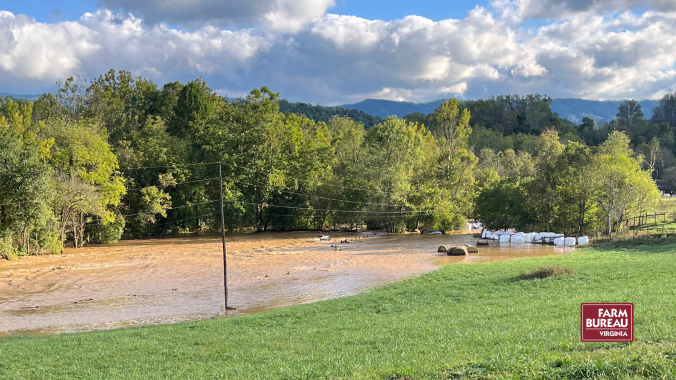
Governor Glenn Youngkin has announced the launch of the Virginia Farm Recovery Block Grant Program, a new federal partnership designed to help agricultural and forestry operations recover from Hurricane Helene’s devastation in September 2024.
The program, funded through a USDA block grant authorized by the American Relief Act 2025, targets farmers and forestland owners who sustained damage not covered by other federal disaster assistance programs. The Virginia Department of Agriculture & Consumer Services (VDACS) will administer direct payments once federal funding is allocated and the state workplan receives USDA approval.
The program covers 27 designated localities in Southwest and Southside Virginia, including:
Counties: Bedford, Bland, Buchanan, Carroll, Craig, Dickenson, Floyd, Giles, Grayson, Lee, Montgomery, Patrick, Pittsylvania, Pulaski, Russell, Scott, Smyth, Tazewell, Washington, Wise, and Wythe
Independent Cities: Bristol, Covington, Danville, Galax, Norton, and Radford
Farmers and forestland owners should begin gathering these documents now:
Basic Information:
Damage Documentation:
Financial Records:
Producers receiving funding for market loss, economic loss, plasticulture, and aquaculture claims must maintain USDA Risk Management coverage for two crop years.
VDACS is developing an online application portal at https://www.vdacs.virginia.gov/about-farm-recovery-block-grant.shtml. The registration and application periods will be announced once the USDA workplan is approved.
Virginia Cooperative Extension agents and Department of Forestry representatives will provide technical assistance and help publicize the program. For those without computer access, local VCE offices will be available during the application window.
Eligible producers should begin collecting required documentation now. VDACS will launch a promotional campaign announcing specific registration and application dates once federal approval is received.
For updates and program details, visit the VDACS website at the link above.

