Candidates Share Final Thoughts on Ag and Forestry Before Election

The Virginia Prosperity Project (VA P2), a cooperative effort of Virginia employers to help educate employees and associates about important economic issues and engage them in the political process, recently released a series of candidate questionnaire videos featuring all the candidates running for statewide office discussing the major sectors of Virginia’s economy.

The last set of videos reveal how the candidates plan to support the major sectors of Virginia’s economy such as tourism, agriculture and forestry.

Key takeaways from the videos include:

Ken Cuccinelli – “I’ll continue as Governor to fight federal overreach that invades the agriculture and forestry ability…to do business.”

Terry McAuliffe – “As Governor my primary responsibility to Agriculture and forestry is to help open markets on a global basis.”

Robert Sarvis – “I trust the Virginia farmers, not the state or federal government, to decide how best to run their lives and their business.”

To see the videos in their entirety, visit http://www.virginiap2.com/

And don’t forget to vote on Tuesday, Nov. 5!

From the Field: Soil and Water Conservation Districts Important to Farmers

From the Field is a bi-monthly column written by Mark Campbell, Farm Bureau Field Services Director for the Central District. He writes about Farm Bureau member benefits and County Farm Bureau activities.

Soil and Water Conservation Districts (SWCD) have long partnered with farmers in addressing soil conservation and water quality.  In fact, they date back to the 1930s.  The agriculture programs provide funding to exclude livestock from streams, provide alternative watering systems, plant cover crops, convert cropland to grass, and convert to continuous no-till. There are 47 SWCDs in Virginia, and they are funded through local government appropriations and state and federal grants.  The board of directors of each district are volunteers that are locally elected, and many Farm Bureau members comprise these boards.  The boards set priorities and guide the activities and programs. While farmers are most familiar with agriculture programs, the SWCDs are involved in urban projects as well. 

Assistance from SWCDs is technical and financial.  All SWCDs have staff that can visit with you at your farm to talk about ideas for potential conservation practices.  This does not commit the landowner to anything.  The programs are voluntary.  Since more and more regulations are written every year about water; many farmers have been proactive, and have taken advantage of the cost share conservation programs.  The cost share programs are a blending of public and private money.  The percentage of cost share money varies by conservation program and budget allocations depending upon the year.  In some cases, the conservation program installed can be a combination of federal assistance from USDA and state assistance through the local SWCD.  New this year and continuing through June 2015 is 100% cost share on programs that include stream exclusion of livestock with a fence providing a 35 foot buffer.  Tree planting is not required with this program as it is with the Conservation Reserve Enhancement Program (CREP) with USDA, NRCS.  This state funding is in an effort to get ahead of the curve of more federal regulations with the Chesapeake Bay TMDL and show the federal government that Virginia can manage its own waters under the Watershed Implementation Plan (WIP).
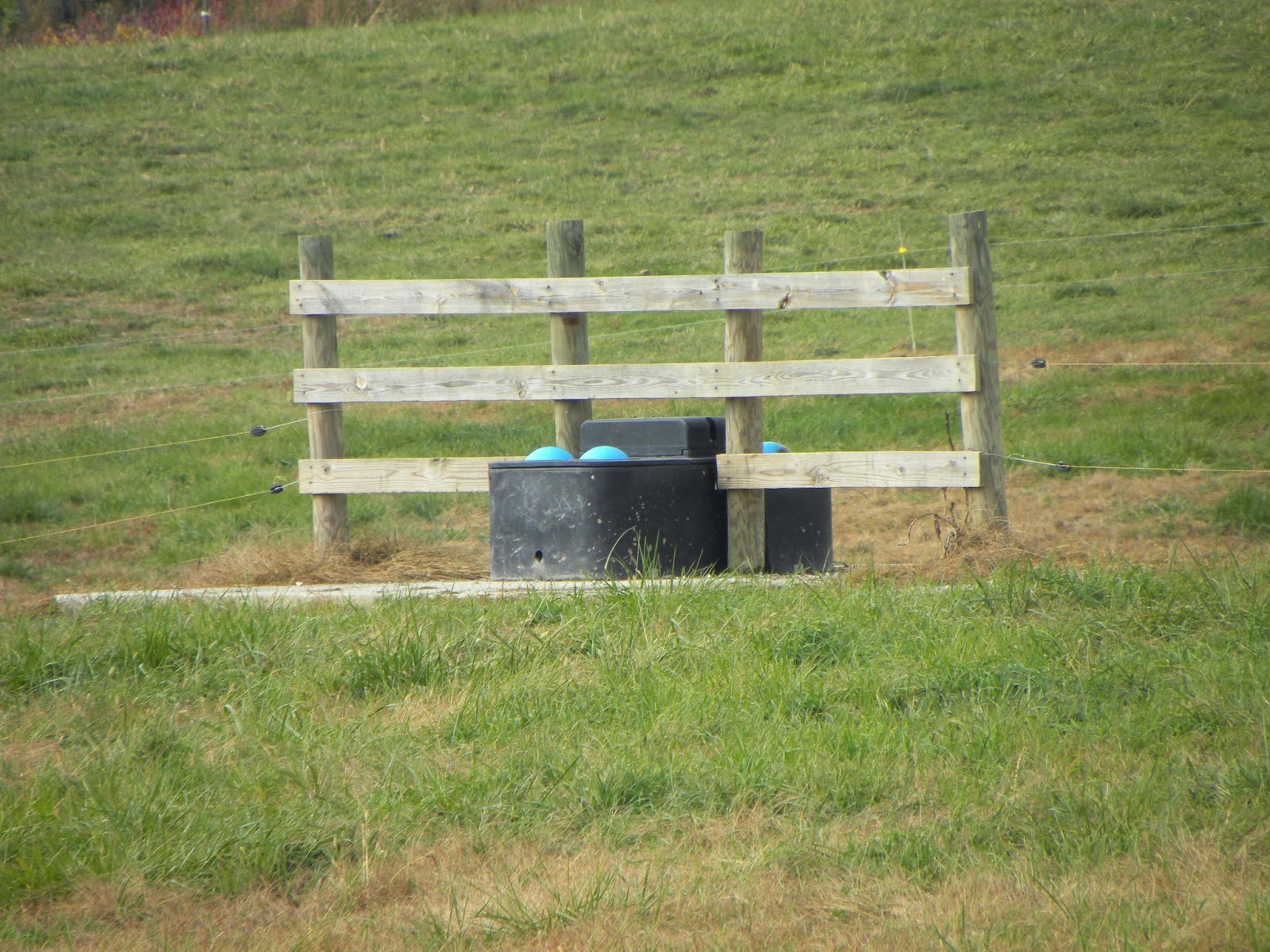
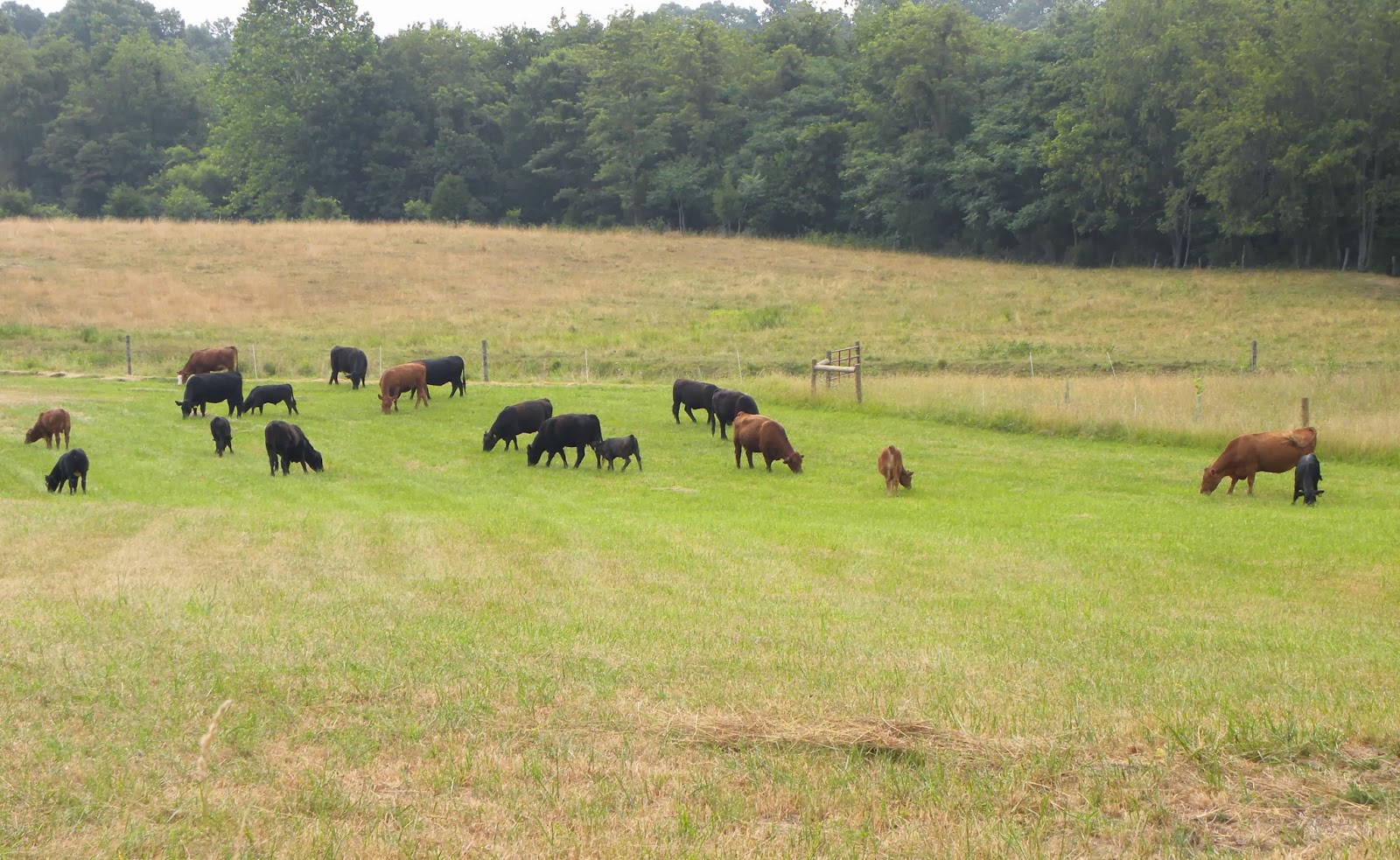
These voluntary programs for livestock farms have helped not only provide alternative water sources, but have been conducive for rotational grazing.  I am a firm believer in management intensive grazing, and having strategically located water tanks makes it easier to operate.  Anyone that uses some form of managed grazing will notice improved forage production, healthier stands of grass, more drought tolerance, and the ability to increase stocking capacity.
One issue related to SWCDs that attracted a lot of attention from farmers this year was what agency would oversee the SWCDs and agriculture water quality programs.  Right now oversight is provided by Virginia Department of Conservation and Recreation (DCR).  There has been debate in the General Assembly about consolidating agencies and placing SWCDs in the Department of Environmental Quality (DEQ).  This generated lots of discussion at the Virginia Farm Bureau Conventionlast fall.  Several public meetings were held this summer and early fall to seek public input on this issue.  The Farm Bureau producer members developed policy that states “We support maintaining the agriculture water quality and Soil and Water District programs at the Department of Conservation and Recreation.  However, if DCR is unable to retain those programs, we believe VDACS is the best suited to serve those functions and programs.”
Many Farm Bureau members that I have talked to are opposed to a move to DEQ and attended the public meetings to voice their concerns.  As for now the SWCDs still remains with DCR.
You may want to check with your local SWCD and see if there are any programs that might work for you.  I know some people have considerable challenges in implementing programs due to topography and locations of streams, especially in the more mountainous areas.  But it doesn’t commit you to anything to check your options.  I will end by saying that I do not foresee less regulations related to water quality.  In fact, water availability, access, and quality will likely be regulated more as the human population increases. 
Until next time,

Mark

Commissioner of Agriculture and Consumer Services Leaving for Farm Credit Position

Matthew J. Lohr, 14th Commissioner of the Virginia Department of Agriculture and Consumer Services (VDACS), announced today that he will be leaving the agency in early December to begin a new position as Director of the Farm Credit of the Virginias Knowledge Center in Harrisonburg, Virginia. Lohr has been VDACS Commissioner since his appointment by Governor Robert F. McDonnell in May 2010. He currently serves as the President of the Southern Association of State Departments of Agriculture, a post he will leave upon his departure from VDACS.
“Serving as the Commissioner of VDACS has been an amazing honor and opportunity,” Lohr said. “I have enjoyed assisting Governor McDonnell and Agriculture and Forestry Secretary Todd Haymore in strengthening our Commonwealth’s number one industry. We have worked tirelessly to assist producers, promote agriculture and increase its importance and visibility all across the state.  It has been a wonderful experience championing an industry I care about so passionately.”    

The mission of the Farm Credit Knowledge Center is to facilitate the sharing of knowledge and resources for the betterment of all farmers through customer-focused programs that increase and advance the knowledge base of the agricultural community. “Here I will have the opportunity to build relationships and serve as a resource for young, beginning, small, minority and veteran farmers, as well as the established full-time producers,” Lohr said. “It’s a very exciting opportunity and one that will allow me to work from Harrisonburg and be at home much more for my two young children.”
“Matt has led VDACS with distinction and honor over the last three and one-half years and the agency is a better place for his service,” said Secretary Haymore. “He’s been a great partner in implementing the strategic plan behind the Governor’s decision to integrate fully agriculture and forestry into the administration’s overall economic development agenda.  Our work with the private sector on the Governor’s agenda has yielded much success and Matt deserves credit for achieving those accomplishments. Indeed, his passion for the promotion and betterment of Virginia agriculture is unmatched and I know that he’ll bring the same passion to his new role with Farm Credit.”
Haymore noted that Governor McDonnell will announce soon a VDACS leadership transition plan for the remaining months of the administration.
Prior to coming to VDACS, Lohr represented the 26th House District in the Virginia state legislature from 2005 to 2010. A lifelong farmer, Lohr and his family currently operate a 250 acre farm that includes commercial poultry, beef, row crops and sweet corn.    
A graduate of Virginia Tech, Lohr was very involved in the Virginia Farm Bureau Federation, winning the American Farm Bureau “Excellence in Agriculture Award” in 2003.  He also served several years as his county Farm Bureau president and chaired both the Rockingham County Planning Commission and School Board.

As a youth, Lohr was very active in the FFA organization where he served as state president and national vice president in the early 1990s.

Public Invited to Provide Input on Future Road, Rail, Transit Projects at Meetings

Governor Bob McDonnell has invited Virginia residents to attend the public meetings to be held across the state this fall so they can learn more about transportation projects funded in the current Six-Year Improvement Program (SYIP) and to provide comments for transportation improvements in the upcoming SYIP for fiscal years 2015-2020.
The Commonwealth Transportation Board (CTB) approves a SYIP for road, rail, and transit projects each June.
Speaking about the public meetings, Governor McDonnell said, “For the first time in 27 years, transportation in Virginia received a major boost, thanks to bipartisan cooperation in the General Assembly that allowed passage of legislation to provide much-needed, long-term sustainable funding for roads, bridges, and transit. Now I am looking to Virginians to provide their input on potential projects that will improve transportation.”

CTB Chairman and Secretary of Transportation Sean T. Connaughton added, “The new transportation investment will support better roads and stimulate job and economic growth as well.  The state’s transportation program is $17.6 billion for the next six years, including $15.7 billion for highway, rail and public transportation projects in the current SYIP and $1.9 billion in new funding sources for Northern Virginia.  Much of the funding is going toward rehabilitating aging highways and bridges, improving safety and operations as well as increasing capacity to reduce congestion.  Already, VDOT has advertised more than $2 billion in projects during this year alone.” 
“The new transportation funding will help each motorist in Virginia reach their destination quicker and more safely,” said Virginia Department of Transportation (VDOT) Commissioner Greg Whirley. “I am asking for your ideas, suggestions and input on how we can improve roads and bridges. You can do this by meeting with your regional transportation representatives during these fall planning meetings.”
“Due to the historic transportation funding bill signed into law this year,  the Commonwealth continues to provide for and grow its regional intercity passenger rail service and provide  for more public transportation choices, while reducing the amount of single-occupancy vehicles and maximizing the existing transportation infrastructure,” said Thelma Drake, director of the Department of Rail and Public Transportation.
Projects include interstate, road, rail, bicycle, pedestrian and public transportation initiatives. They emphasize bridge and pavement projects along with those to improve safety and reduce congestion throughout the transportation network. All SYIP projects eligible for federal funding will be included in the Statewide Transportation Improvement Program (STIP), which documents how Virginia will obligate its federal money.
Representatives from the CTB, VDOT, Virginia Department of Rail and Public Transportation (DRPT), metropolitan planning organizations (MPOs), and planning district commissions (PDCs) will be at the meetings to discuss their respective projects and programs.
If you cannot attend, information about the meeting will be available Oct. 22 at www.virginiadot.org/2013fallmeetings.  Send comments on rail, public transportation, and transportation demand-management projects to: Public Information Officer, DRPT, 600 East Main Street, Suite 2102, Richmond, Va., 23219 or DRPTPR@drpt.Virginia.gov.  Send comments on highway projects to: Programming Director, VDOT, 1401 East Broad Street, Richmond, Va., 23219 or SixYearProgram@VDOT.Virginia.gov.  Comments will be accepted until Dec. 6, 2013.
Meeting schedule at each location*:
6 p.m.-7 p.m. – Open house displays and general discussion
7 p.m. – Moderated public meeting
Wednesday, October 30, 2013
Northside High School
6758 Northside High School Road
Roanoke, VA 24019
Wednesday, November 6, 2013
VDOT Central Office Auditorium
1221 East Broad Street
Richmond, VA 23219
Wednesday, November 13, 2013
University of Mary Washington
Stafford Campus – University Hall (North Building)
125 University Boulevard
Fredericksburg, VA 22406
Thursday, November 14, 2013
Holiday Inn Staunton
Conference Center
152 Fairway Lane
Staunton, VA 24401
Monday, November 18, 2013
Germanna Community College
Daniel Technology Center
18121 Technology Drive
Culpeper, VA 22701
Tuesday, November 19, 2013
Holiday Inn and Suites
Bristol Convention Center
3005 Linden Drive
Bristol, VA 24202
Thursday, November 21, 2013
Kirkley Hotel and Conference Center
2900 Candler’s Mountain Road
Lynchburg, VA 24502

* You can find the localities that make up each district at www.virginiadot.org or by calling 800-367-7623.
Breaking News: Poultry Grower Lois Alt Prevails Against EPA

Poultry and livestock farmers declared victory on Wednesday when a federal court ruled in favor of West Virginia poultry farmer Lois Alt in a lawsuit she brought against the Environmental Protection Agency. The U.S. District Court for the Northern District of West Virginia ruled that contrary to EPA’s contention, ordinary stormwater from Alt’s farmyard is exempt from National Pollutant Discharge Elimination System permit requirements.
Alt filed suit against EPA in June 2012 after the agency threatened her with $37,500 in fines each time stormwater came into contact with dust, feathers or small amounts of manure on the ground outside of her poultry houses as a result of normal farm operations. EPA also threatened separate fines of $37,500 per day if Alt failed to apply for a NPDES permit for such stormwater discharges. AFBF and the West Virginia Farm Bureau intervened alongside Alt as co-plaintiffs to help resolve the issue for the benefit of other poultry and livestock farmers.
“We are pleased the court flatly rejected EPA’s arguments and ruled in favor of Lois Alt,” said AFBF President Bob Stallman. “The outcome of this case will benefit thousands of livestock and poultry farmers who run their operations responsibly and who should not have to get a federal permit for ordinary rainwater from their farmyards.”  

In ordering Alt to seek a permit, EPA took the legal position that the Clean Water Act’s exemption for “agricultural storm water discharges” does not apply to farms classified as “concentrated animal feeding operations” or “CAFOs,” except for areas where crops are grown.  In other words, any areas at a CAFO farm where crops are not grown, and where particles of manure are present, would require a permit for rainwater runoff.   
In April of this year, the federal court rejected efforts by EPA to avoid defending its position by withdrawing the order against Alt.  In opposing EPA’s motion to dismiss, Alt and Farm Bureau argued that farmers remained vulnerable to similar EPA orders, and the important legal issue at stake should be resolved.  The court agreed.

“This lawsuit was about EPA’s tactic of threatening farmers with enormous fines in order to make them get permits that are not required by law,” said Stallman. “Lois Alt was proud of her farm and her environmental stewardship, and she stood her ground. We’re proud to have supported her effort.”  

Help South Dakota Cattle and Sheep Farmers Affected by Winter Storm Atlas

While the government shutdown was dominating the news the last two weeks, tragedy struck South Dakota cattle and sheep farmers after an early October blizzard decimated herds. Up to 4 feet of snow fell in the Black Hills area during the storm, killing at least 10,000 to 20,000 head of livestock, state officials say. The South Dakota Stockgrowers Association estimates this part of the state lost at least 5 percent of its cattle, which is mostly raised for beef.

Wisconsin dairy farmer and agriculture blogger Carrie Mess wrote an article that appeared in The Guardian, a leading English newspaper, about the storm, its detrimental effect on farmers and how we can help through the Rancher Relief Fund. The article is below:

South Dakota’s cattle cataclysm: why isn’t this horror news?Ranchers in South Dakota lost tens of thousands of cattle from a freak storm. Thanks to the shutdown, no one is paying attentionBy Carrie Mess 

If you aren’t in the agriculture world, you most likely haven’t heard about the devastating loss that ranchers in western South Dakota are struggling with after being hit by winter storm Atlas.

For some reason the news stations aren’t covering this story. I don’t understand why they wouldn’t. This story has heartbreak, tragedy and even a convenient tie into the current government shutdown. Isn’t that what the news is all about these days? 

But the news isn’t covering this story. Instead, it is spreading around on social media, and bloggers are writing from their ranches in South Dakota. Bloggers are trying to explain how the horrible happened. And now I am going to join them to tell you the part of the story that I know, and I am going to ask you to help these people, because if you are here reading this, I know you give a crap about these people. 

Last weekend western South Dakota and parts of the surrounding states got their butts handed to them by Mother Nature. A blizzard isn’t unusual in South Dakota, the cattle are tough and can handle some snow. They have for hundreds of years. 

Unlike on our dairy farm in Wisconsin, beef cattle don’t live in climate controlled barns. Beef cows and calves spend the majority of their lives out on pasture. They graze the grass in the spring, summer and fall and eat baled hay in the winter. 

In winter these cows and calves grow fuzzy jackets that keep them warm and protect them from the snow and cold. The cows and calves live in special pastures in the winter. These pastures are smaller and closer to the ranch, and they have windbreaks for the cows to hide behind. They have worked for cows for hundred of years. 

So what’s the big deal about this blizzard?

It’s not really winter yet. 

The cows don’t have their warm jackets on. The cows are still out eating grass in the big pastures. Atlas wasn’t just a snowstorm, it was the kind of storm that can destroy the ranchers that have been caring for these cattle for hundreds of years.

Last weekend Atlas hit. It started with rain. The rain soaked the cows and chilled them to the bone. Inches and inches of rain fell. The rain made horrible mud. Then the winds started – 80mph winds, hurricane force. When the wind started, the rain changed to snow. A lot of snow. The cows were wet, muddy and they didn’t have their winter jackets when the wind and snow came. Wet snow. Heavy snow.

The cows tried to protect themselves. They hid in low spots away from the wind. The low spots where the rain had turned the ground to thick mud. Some got stuck in the mud. Some laid down to get away from the wind, to rest a little, they were tired from trying to get away from the weather when they were already so cold. 

The snow came down so heavy and so fast the the low spots that the cattle were laying in filled with snow. Not a few inches of snow, not a foot of snow. Enough snow that the cows and their calves were covered in snow.

The cows and calves suffocated or froze to death. 

The caretakers of these cattle had no power to save them. They had to stand by and take the lashings from Mother Nature. They had no options. When it was all over, they went out to discover what they had left.

Can you even imagine what that would feel like? Standing with your hands tied as your life’s living, breathing and mooing work is destroyed. I can’t imagine, I don’t know how I would recover from a loss like that. This wasn’t just one or two herds of cows. This wasn’t just one or two families that lost animals. This wasn’t just a few cows. Tens of thousands of cows are gone. Some ranchers lost their entire herds. All of their cows, gone. 

In the fall, a cattle rancher sells their calves to someone who specializes in raising them for market. It’s how a ranch generates income. Calves are the lifeblood of a cattle ranch. Most ranchers had not yet sold their calves when Atlas hit. Their calves are gone. The cows that made those calves were pregnant with with next year’s calves. Those cows are gone, those calves are gone.

Meanwhile in Washington DC, the shutdown has doubly screwed the ranchers. The people that are supposed to try to help these people are unable to do their jobs. The farm bill is held up again. No one knows when, how or if help is going to come. 

Insurance? Not likely. 

When a flood comes and your corn is flooded out, you have some options. Insurance for cattle is expensive and it comes with hundreds of loopholes that make the gamble of farming without it the most practical choice for many.
There is no way around it, this storm has put some ranchers out of business. 

Time will tell just how many. 

• This was originally posted on the author’s blog, The Adventures of Dairy Carrie. The author also points out that the AgChat Foundation has partnered with several organizations to create a grassroots effort to help ranchers who lost so much.

Governor McDonnell Announces Agriculture and Forestry Industries Development (AFID) Fund Planning Grant Recipients

Governor Bob McDonnell has announced the recipients of the initial round of fiscal year 2014 planning grants from the planning grants program of the Governor’s Agriculture and Forestry Industries Development Fund (AFID).  The AFID planning grants program was developed to encourage local governments and regional organizations to think strategically about how they can better support and integrate agriculture and forestry-based industries into their community’s overall economic development efforts.

“At the state level, we’ve had great success incorporating the Commonwealth’s two largest industries, agriculture and forestry, and their $70 billion overall impact on our economy into our economic development agenda,” said Governor McDonnell. “Creating a program that incentivizes communities to plan for how they can best grow and support these industries in their business community is a natural continuation of a strategy that is proven to benefit Virginians and create jobs.” 

The communities and regions receiving AFID planning grants will match each dollar awarded with a dollar of local funds, including certain types of allowed in-kind contributions. The program also requires the active participation of a board, committee or working group representing the relevant agriculture and forestry interests in the locality.  

“Applicants were given flexibility to pursue the type of project that made the most sense for their region or locality, whether it was taking advantage of an existing asset, as Roanoke County is doing with their study of Virginia Tech’s Catawba Sustainability Center or exploring the creation of a new asset, as Albemarle County is doing with their Virginia Wine Heritage Center Study,” said Todd Haymore, Secretary of Agriculture and Forestry.  “By actively involving the agriculture and forestry community into the planning process we are helping communities grow a long standing component of their economic infrastructure while providing new opportunities to our farm and timber producers.”

The AFID planning grants program guidelines were first announced by Governor McDonnell on November 27, 2012.  Fiscal year 2013 awards were announced May 8, 2013 and awarded $249,000 to eleven projects covering thirty-one localities.  With this announcement, the AFID planning grants program has committed $309,500 to fourteen projects covering thirty-eight localities.  Applicants demonstrating a clear need, a solution to be undertaken, and strong support from local government and the agriculture and forestry community received the highest marks during the review process.  For the remainder of fiscal year 2014, requests from the AFID planning grants fund, which has $189,500 in uncommitted funds, will be accepted, reviewed, and awarded on a rolling basis until the fund is exhausted.

Details on the grant awards are below. Localities interested in applying may visit http://vdacs.virginia.gov/agribusiness/planning.shtmlfor more information.

According to a 2013 economic impact study by the Weldon Cooper Center for Public Service at the University of Virginia, agriculture and forestry are two of Virginia’s largest industries, with a combined economic impact of $70 billion annually. Agriculture generates more than $52 billion per annum, while forestry induces over $17 billion. The industries also provide more than 400,000 jobs in the Commonwealth.

Governor’s Agricultural and Forestry Industries’ Fiscal Year 2014
Planning Grant Recipients and Projects
Project Title: Feasibility Study to Establish Virginia Wine Heritage Center in Albemarle County
Applicant: Albemarle County
Award: $20,000
Summary: Albemarle County is partnering with the Charlottesville/Albemarle Convention and Visitors Bureau, Thomas Jefferson Foundation/Monticello, and Piedmont Virginia Community College, to bring in an expert consultant to examine the feasibility of establishing a Virginia Wine Heritage Center in Albemarle County.  The study will look at critical partnerships, facility attributes and location, funding needs, and the appropriate business model.

Project Title: Building Agricultural and Forestry-based Businesses in The Foothills
Applicant: Rappahannock-Rapidan Region-Planning District (RRPDC); includes Culpepper, Orange, Madison, Fauquier, and Rappahannock counties
Award: $33,000
Summary: The project is an effort to increase support and preservation of the region’s agricultural and forestry based industries by implementing specific strategies designed to raise awareness of these industries, increase the purchases of regional ag and forestry products, and sustain the future of agriculture and forestry in region. Deliverables include a regional agro-artisan trail, directory, brand, annual conference, marketing effort, and completion of regional green infrastructure maps and data with agricultural soils and water quality.

Project Title: Linking the Virginia Tech Catawba Sustainability Center to the Local Food System
Applicant: Roanoke County
Award: $7,500
Summary: The Virginia Tech Catawba Sustainability Center is a 377 acre historic dairy farm located in Roanoke County that was donated by the former Catawba Sanitarium to Virginia Tech.  In recent years, Roanoke County has helped fund the activities of the center and searched for ways to help the center contribute to region’s economy. Roanoke County and staff at the Sustainability Center, will work with Virginia Tech’s Office of Economic Development to explore strategies to increase the connectivity of the Catawba Sustainability Center to the regional food system. 

Know Your Boundaries to Avoid Timber Trespass and Theft

Andrew Smith
Senior Assistant Director
Governmental Relations
Lately I have seen a greater number than normal logging operations going on around my home in rural Virginia. It always brings to mind the important issue of property lines. So often I hear of disputes after timber has been cut because of someone not knowing or making assumptions about boundary lines. I hear the discussion of what is the difference between “timber theft” and “timber trespass” often.  Though the issue isn’t a simple one. Primarily the difference comes down to whether the boundaries of the property not being harvested were clearly marked or not showing others where the lines are. Certainly the harvested property owners should know where their lines are, but whether or not the neighboring property is clearly marked can make the difference between timber theft and timber trespass.

Honestly, what can make the difference is a walk in the woods and a can of paint. It pays to know your property lines and monuments and to routinely make sure they are marked. Don’t get me wrong, I realize the diverse terrain of Virginia’s landscape, where walking 100 acres in Hanover County isn’t the same as walking the same number of acres in the western portion of the state. The bottom line making sure your lines are clearly marked could save you a lot of money and headache in the future. It pays not only in forest management, but during hunting season as well.

There are some great articles that explain the issue in more detail and we make them available to you here. I encourage you to print them out and give them a read. As the old adage goes, an ounce of prevention…

Tax Holiday for Energy-Efficient Appliances Returns to Virginia October 11-14

If your old appliances are on their last legs, it’s a great time to replace them with energy-efficient products while saving some money.  Virginia’s seventh Energy Star and WaterSense Sales Tax Holiday returns Friday, Oct. 11, and lasts through Monday, Oct. 14.
Energy Star and WaterSense products are better for the environment, and have the added benefit of lowering your home’s energy bills.
Each qualifying product must cost $2,500 or less, have either an Energy Star or WaterSense label affixed, and be purchased for personal or noncommercial use.  Qualifying Energy Star products include air conditioners, ceiling fans, washing machines, dishwashers, dehumidifiers, refrigerators and compact fluorescent light bulbs (CFLs). WaterSense-labeled bathroom sink faucets, faucet accessories, toilets, showerheads, urinals and landscape irrigation controllers will also be tax-exempt. Certain used Energy Star and WaterSense items will also qualify for tax-free status during the four-day exemption period.

 “If there’s one thing most of us can relate to this time of year, it’s a desire to lower our energy bills,” said Governor Bob McDonnell.  “Not only is it a good way to save some money, it’s also good for the environment.  For the past several years, Virginians have had the opportunity to save money by replacing their old, outdated appliances with Energy Star or WaterSense products. Even if you’re not in the market for new appliances, everyone needs light bulbs – and CFLs are included in the holiday. I urge everyone who needs these products to go out and take advantage of this long money-saving weekend.”

The Department of Taxation has posted guidelines, frequently asked questions, and a list of approved Energy Star and WaterSense items on its website at tax.virginia.gov.
Online purchases of qualifying Energy Star and WaterSense products will also be exempt from the sales tax as long as the orders are placed during the Oct. 11-14 exemption period and the sellers have the items available for immediate shipment.

In addition to exempting certain Energy Star and WaterSense products from the sales tax during the four-day tax holiday, retailers may also offer non-exempt merchandise sales-tax free.  Retailers who choose to do this must pay the tax themselves to the Department of Taxation.

From the Field: Harvest Report and Ag Spotlight Straight from Southeastern Virginia

From the Field is a bi-monthly column written by Mark Campbell, Farm Bureau Field Services Director for the Central District. He writes about Farm Bureau member benefits and County Farm Bureau activities.
I spent a day and a half with District Field Services Director Daryl Butler in the Southeast Field District to learn more about the agriculture in that part of the state and the harvest.  
In the counties of Southampton and Isle of Wight, the most common crops were cotton, peanuts, and soybeans.  There was some corn, but not as much as I anticipated.  I later found out that corn wasn’t as prevalent in some areas due to soil type and water holding capability.  All of the corn had been harvested that I saw. 
Yields were very good with many farmers reporting around 200 bu/acre.  Average yields in the area usually run around 125 bu/acre.  Soybeans had a few weeks to go until they were to be harvested.
It was a very busy time as peanut and cotton harvest had started.  All of the peanut fields that I saw had already been dug with the rows of peanuts and vines on top of the ground.  I was able to witness a self-propelled peanut combine in action.  It harvested 8 rows and it was as dusty an operation as I have ever seen.  But it makes sense though, since the machine is harvesting a product that was once underground.  Plus the weather had been very dry until this week.  These peanuts were transferred to tractor-trailers in the field for transport to market.  We visited a peanut-buying station and processor and got a quick tour of the business between the owner shuttling wagon loads of peanuts around the bins.  The peanut crop was the largest last year in recorded history.  While the peanut crop this year isn’t that large; it is coming in at a larger yield than average and the quality is excellent.  I’m glad, because I love Virginia peanuts.  They are the premium peanut.  I also learned that China is a big buyer of peanuts.  They use it for oil and peanut butter.

Cotton harvest was just beginning. Some fields still had lots of leaves on the plants.  But others were ready.  Farmers have to spray a defoliant on the plants to make the leaves fall off.  Cotton, unlike some other crops, requires more pest and fungus management throughout the growing season.  There are two types of cotton picker: those that are a basket type that unloads into a module builder and those that make a round bale on the go.  A module builder looks like a large trash compactor.  It compacts the cotton into a shape similar to a loaf of bread.  This is done in the field, and the cotton gins have special trucks that go to the fields to pick-up the cotton.  The cotton trucks have a roll back feature that slides under the cotton and pulls it onto the truck bed that is covered with a tarp.  The cotton pickers that make the round bales are more expensive and heavier.  The tradeoff is quicker harvesting and less labor.  The cotton picker basically has a round baler on the back, and the technology of the baler portion is almost identical to the round bale hay balers.  While all hay producers are familiar with net wrap.  These cotton pickers have the same thing, but it is plastic wrap and it does cover the edge as well.  The one farmer with one of these cotton pickers reported that they could harvest as much as 80 acres in a day.  Cotton yields, while still very early in the season seem to be above average to good.

The technology on the equipment was neat for me to see.  Being from a livestock background, this type and size of equipment is rare to see.  However, in crop production, it is pretty standard equipment to have.  We have heard a lot about precision agriculture with GPS; but aside from that there is still a lot of technology.  Most all of the newer tractors have digital displays about fuel economy, percentage of power used, engine status, and more.
It became evident very quickly that the investment in equipment was huge, but very necessary.  As one farmer put it, “You can’t get into cotton half way.  You need to go all-in.”  That was true.  These families farmed significant amounts of acres and having equipment that ran efficiently with minimum breakdown, covered more acres in less time and lowered labor expenses was of paramount importance.
I thank Daryl for a very informative tour of southeast Virginia agriculture, and I thank the farmers who put it all on the line to bring us the best food and fiber crops in the world.  On the way back to central Virginia, I made sure to stop in Wakefield and buy some peanuts. 
Until next time,

Mark