First AFID Award to Promote Economic Development, Increase Agricultural Exports

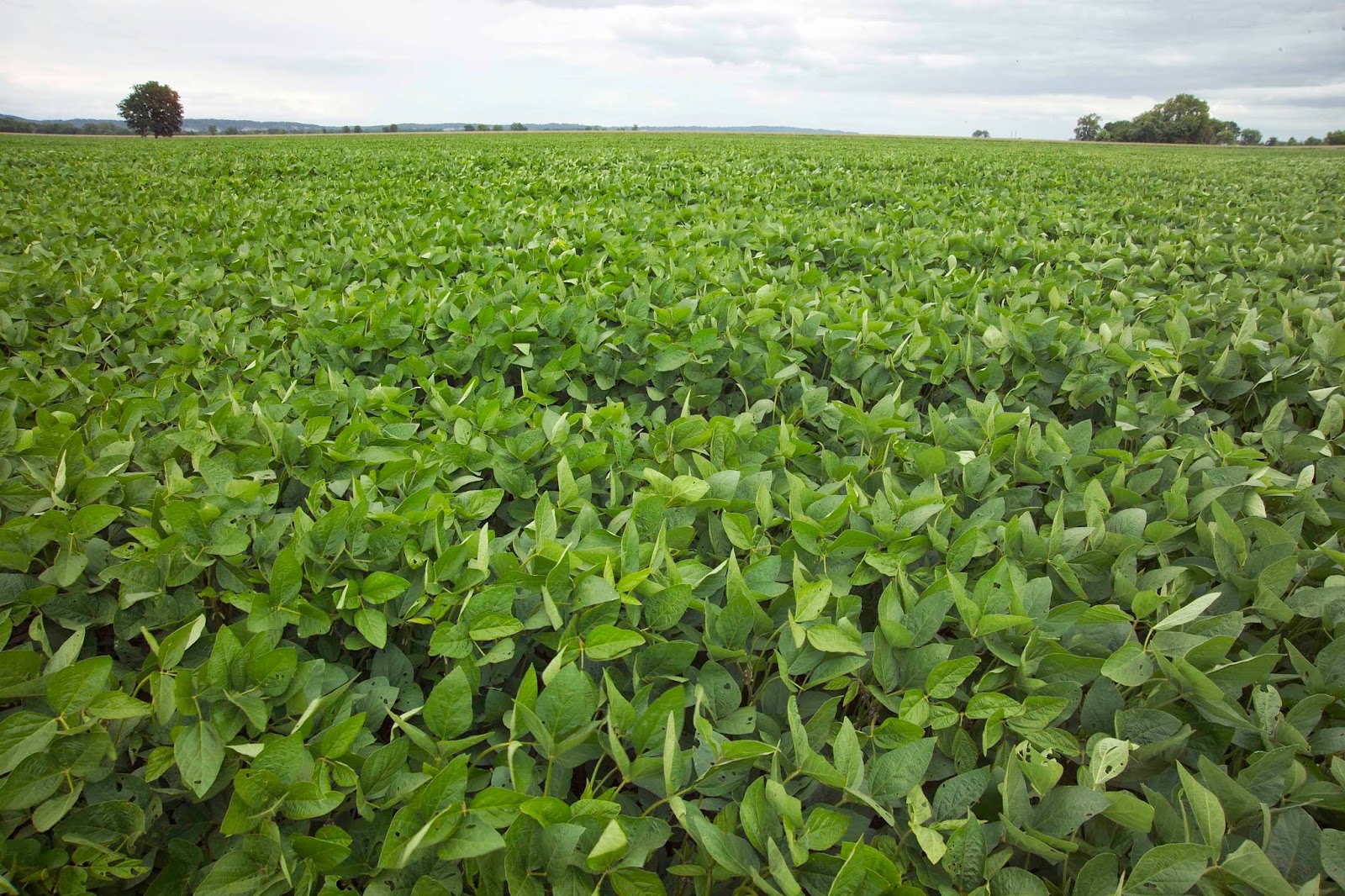
Governor Terry McAuliffe has awarded his administration’s first economic development grant from the Governor’s Agriculture and Forestry Industries Development Fund (AFID) for a business expansion project that Montague Farms, Inc. has undertaken at the company’s Windsor facility in Isle of Wight County.  Montague, a family-owned producer and exporter of specialty soybeans based in Center Cross, will invest more than $600,000 to purchase a new state-of-the-art packaging line, soybean testing lab, and warehouse facility. The AFID grant of $14,100 was matched by Isle of Wight.

In addition to the creation of three new jobs at the facility, the company will now be able to sell into the highly regulated, but lucrative sprouting soybean market of South Korea and beyond.  To serve this new market, the company will purchase more than 4,000 metric tons of Natto soybeans from Virginia producers over the next three years. 

Speaking about the announcement, Governor McAuliffe said, “I am delighted to award the first AFID economic development grant of my administration to Isle of Wight and Montague Farms, furthering two goals of my economic development and jobs creation strategy for the Commonwealth.  By collaborating with our private sector partners and local governments, we can make the make smart, targeted investments needed to position our economy for new opportunities, especially in agriculture, Virginia’s largest industry.  Secondly, with a focus on increasing the amount of products shipped from Virginia into the global marketplace, we can make Virginia the East Coast capital for agricultural and forestry product exports and return more jobs, revenue and prosperity to our rural communities.” 

Montague Farms has been involved in exporting food-grade non-genetically modified organism (GMO) soybeans for over twenty-five years, successfully focusing their exports on the Japanese Natto market, widely recognized for its demanding quality standards.  Investments announced today enable them to enter a new market, increasing and diversifying their opportunities for selling these value-added soybeans abroad.  Further, farmers in the region will now have the opportunity of supplying Montague with product and receiving a premium for their efforts, helping them diversify their farming operations while sending more money to the bottom line.  Montague owns and operates two grain storage and conditioning facilities in Virginia, the Windsor operation and another in Center Cross. 

“More than ninety percent of the world’s customers lie outside the borders of the United States, so if we are to see continued growth in Virginia’s agricultural sector it is imperative that we continue seeking new export opportunities in the global marketplace,” said Todd Haymore, Virginia Secretary of Agriculture and Forestry.  “I thank Montague Farms for their leadership in this area, for supporting so many other Virginia growers by purchasing their crops, and for moving us as toward Governor McAuliffe’s goal of making Virginia the leading state for agricultural and forestry product exports on the East Coast.” 

 “We are very thankful to Governor McAuliffe and Secretary Haymore for making Isle of Wight County not just the first AFID Grant recipient of this administration, but the first locality in Virginia to have received two AFID Grants,” said Byron B. Bailey, Chairman of the Isle of Wight County Board of Supervisors.  “First, this past June, with the reopening of the former International Paper sawmill by Franklin Lumber, and now with this facility, we are continuing our partnership with the Commonwealth in supporting projects in our county that bring jobs to our citizens and create new markets and opportunities for our forest and farmland owners.” 

“Exports are what drives our business, so we are glad to have this assistance from the Commonwealth of Virginia that enables us to continue to develop these markets” said Tom Taliaferro of Montague Farms. “Whether through trade missions promoting Virginia agricultural products, or through their support of the infrastructure needed to access these markets, as we are receiving today, we are appreciative of the Commonwealth’s focus on agriculture exports.”

Young Farmers Remain Concerned About Land Availability

Young Farmers discuss issues at the
2014 YF&R Leadership Conference
Securing adequate land to grow crops and raise livestock was the top challenge identified again this year in the American Farm Bureau Federation’s annual outlook survey of participants in the Young Farmers & Ranchers program. That challenge was identified by 22 percent of respondents, followed by economic challenges, particularly profitability, which was identified by 15 percent of the respondents.

“For young people today, securing adequate land to begin farming or expand an established farm or ranch is a major challenge,” said Jake Carter, AFBF’s national YF&R Committee chair and a farmer from Georgia. “Another major challenge is figuring out how to excel – not just survive – in today’s economy,” he said.

Other issues ranked as top concerns by young farmers and ranchers included burdensome government regulations and red tape, 12 percent; availability of farm labor and related regulations, 9 percent; water availability and urbanization of farm land, 7 percent each; and health care availability and cost, 6 percent.

The 22nd annual YF&R survey revealed that 91 percent of those surveyed are more optimistic about farming and ranching than they were five years ago. Last year, 90 percent of those surveyed said they were more optimistic about farming compared to five years ago.

The 2014 survey also shows 93 percent of the nation’s young farmers and ranchers say they are better off than they were five years ago. Last year, 83 percent reported being better off.

More than 91 percent considered themselves lifetime farmers, while 88 percent would like to see their children follow in their footsteps. The informal survey reveals that 87 percent believe their children will be able to follow in their footsteps.

The majority of those surveyed – 69 percent – consider communicating with consumers a formal part of their jobs. Many use social media platforms as a tool to accomplish this. The popular social media site Facebook is used by 74 percent of those surveyed. Twenty-two percent of respondents said they use the social networking site Twitter, 16 percent have a farm blog or webpage and 13 percent use YouTube to post videos of their farms and ranches.

“Use of technology and all the tools at our fingertips to not only improve production practices on the farm but also to interact with consumers – our customers – among young farmers continues to grow,” Carter said. “Use of social media platforms, personal outreach through farm tours, agri-tourism, farmers’ markets or a combination of these methods is where we’re at today,” he added.

High-speed Internet is used by 71 percent of those surveyed, with 28 percent relying on a satellite connection and fewer than 2 percent turning to dialup.

New this year, the young farmers and ranchers were asked about their rural entrepreneurship efforts, with 40 percent reporting they had started a new business in the last three years or plan to start one in the near future.

The survey also shows that America’s young farmers and ranchers are committed environmental caretakers, with 55 percent using conservation tillage to protect soil and reduce erosion on their farms.

AFBF President Bob Stallman said the results of the YF&R survey point to the future of U.S. agriculture being in good hands.

“I am confident that the know-how and tenacity of our young farmers and ranchers will ensure that the best days are ahead for our country and agriculture,” Stallman said. “They are the future of American agriculture and food production.”

The informal survey of young farmers and ranchers, ages 18-35, was conducted at AFBF’s 2014 YF&R Leadership Conference in Virginia Beach, Va., in February. The purpose of the YF&R program is to help younger members learn more about farming and ranching, network with other farmers and strengthen their leadership skills to assist in the growth of agriculture and Farm Bureau.

From the Field: Spring is On the Way!

From the Field is a bi-monthly column written by Mark Campbell, Farm Bureau Field Services Director for the Central District. He writes about Farm Bureau member benefits and County Farm Bureau activities.

While not a Farm Bureau activity, the winter weather has been the dominant topic of discussion for the past 3-4 months.  Although we did reschedule our Legislative Day at the Capitol and Presidents Conference due to winter weather. 
In addition to cold temperatures, significant moisture has been a big factor in farming this winter.  Many of the grain producers couldn’t get on fields to spread nitrogen.  In some areas, extreme cold temperatures and lack of snow cover stressed some wheat fields and other small grains and diminished stand survivability. Saturated pastures made for muddy feeding and tire tracks in the field that are still present.  Or you may have lost a boot to the mud, or water and mud splashed over your muck boots and down into your socks.  Extra hay stocks at the beginning of the feeding season have quickly declined as livestock required more feed to stay warm and maintain body condition. 
As I heard on a TV farm program one day, the discussion was about field conditions due to the weather.  But the weather man reminded everyone that spring will come.  Temperatures will warm, and farmers will start planting in a few weeks.


We, as farmers and ranchers, are as much in tune with nature and weather as any other profession that I know of.  We have the benefit in Virginia of having four distinct seasons.  Although some people would like to have had a shorter winter.  But as the calendar pages flip, the seasons roll by.  Spring will come.

We were teased this week with two days of temperatures in the 70s.  Teased is right, because Thursday is supposed to have a high that won’t make it to 40 degrees in some parts of the state.  But spring is on its way. 
I love spring time on the farm.  There are all kinds of signs that spring is on its way, and once it arrives; our cold and wet winter will be a distant memory.  The past two weeks, there have been small sprigs of green grass pushing up through the leftover hay that I unrolled a couple of months ago to feed the cows.  The birds such as Meadowlarks and Kill Deer scatter across the fields.  The daylight hours each day are getting longer.  The animals seem to have a pep in their step.  On these warm days, the lambs run and jump as if their energy is limitless.  The cows take the occasion at hay feeding time to give a snort and then a buck and jump at the hay bale being carried across the pasture. 
Farmers and ranchers have the honor and privilege to be stewards of these natural resources, but to also enjoy the splendor of nature.  Springtime for many farmers and ranchers brings calving or lambing.  For others it is the sight of green plants popping out of the soil in rows of green across a field.  With the popularity of backyard chicken flocks, baby chicks arrive on the scene.  
Calving and lambing never ceases to be miraculous to me.  To see that calf or lamb born and shake its head and take its first breath is truly amazing.  To have the built in internal functions and signals to get the lungs to start working and the instinct for the calf to get up and go toward the udder and get milk is nature’s mystery.  I had a heifer that calved during the March snow storm, which for a period of time was a blizzard.  Just like spring coming on its cycle and timing, the birth process of that heifer was taking place and it wasn’t going to stop for a snow storm.  The heifer, now cow, and calf are doing great.  I did have a barn that I got her in before calving to offer some relief from the wind and snow and made available some dry straw to lay on.  In the registered cattle business, most of the cattle have names as part of their registration pedigree.  The little bull calf born on March 3rd was aptly named Blizzard.
 Even though the temperatures have still been cold in the latter half of the winter, the longer hours of daylight have been an overriding factor in getting some typical spring things going.
The past several months in Farm Bureau have been really busy and also a signal of spring is that our meetings start to wind down.  In March we already had the Governor’s Conference on Trade and Presidents Conference.  Meetings still left in March are District Leadership and Policy Development Meetings and the State Women’s Conference. 
Time is a valuable commodity and there always seems to be lots going on.  But I hope that you get to take a few minutes to take in and enjoy natures Spring show.  It has its time and then another season will be upon us. 
Until next time,

Mark

On-Farm Activities Bill Signed By Governor

Trey Davis
Assistant Director
VFBF Governmental Relations
On Wednesday, March 5, Governor McAuliffe signed SB51 (Stuart) into law.  The provisions of SB51 will go into effect July 1, 2014.  HB268 (Orrock) has been passed by the House of Delegates and Senate and we expect it to be signed soon as well.

SB51 is truly a compromise, bi-partisan bill, and we are excited for the potential it has in growing the industry.  The legislation is a result of discussions from the On- Farm Activities Working Group (OFAWG) convened in 2013 by the Department of Agriculture and Consumer Services (VDACS) and the Secretariat of Agriculture and Forestry.  The OFAWG was comprised of private citizens, local government representatives and agricultural stakeholder groups with the mission of identifying problems and potential solutions to address the conflicts that have risen between local governments and farmers relating to zoning regulations.  Following the final meeting of the OFAWG, a consensus was reached among the majority of the participants to present the compromise bill (SB51) in the 2014 General Assembly.

SB51 strikes the appropriate balance between the needs of agricultural entrepreneurs and local government control.  The legislation very closely mirrors the protections given to farm wineries in §15.2-2288.3, and provides the rest of the agriculture industry the same standards of local protection that wineries have enjoyed since §15.2-2288.3 was enacted in 2006.  It specifically encourages farmers to do the following at their farm:

–sell their agricultural products or related items incidental to the operation, and sell food products in compliance with State law; and,

–host agritourism activities as already defined in §3.2-6400, including pick-your-own and farmers markets, and other activities that are usual and customary at Virginia farms.

Localities will still be able to ask for permits and regulate these activities if there is a “substantial impact” on the health, safety, or general welfare of the public. This same standard of review has been applied by localities as they enact local ordinances to address farm wineries, and as such, creates consistency in local government oversight for other portions of the agriculture industry.

Further, localities will still be able to ask for permits that are required by State law, such as erosion and sediment control, health department inspections, etc., and to utilize local taxing authority as established by Title 58.1.  These specific provisions were added at the request of Virginia’s localities during negotiations on SB51 .

All of the activities listed in SB51 must occur at a legitimate “agricultural operation” which is a property “devoted to the bona fide production of crops, or animals, or fowl including the production of fruits and vegetables of all kinds; meat, dairy, and poultry products; nuts, tobacco, nursery, and floral products; and the production and harvest of products from silviculture activity” as defined in §3-2.300.  This will ensure the main purpose of the property remains devoted to the production of agricultural commodities, ensuring that agricultural properties will be able to be used in a diverse manner to bring additional value-added benefit to the agricultural operation.

SB51 was heavily amended throughout the General Assembly to address the various concerns of stakeholders and represents a compromise amongst many groups that do not always agree.  Because of these changes, the bill received overwhelming bipartisan support and passed the Senate on a vote of 33-6 and the House of Delegates on a vote of 75-19. 

Thanks to all of you for your support and the contacts you made in supporting this bill.  If you have any questions, please do not hesitate to e-mail me at trey.davis@vafb.com.

Virginia Agricultural and Forestry Exports Reach New Record High

Governor Terry McAuliffe announced today that Virginia agricultural exports, which also include forestry products, reached a new all-time high of $2.85 billion in 2013, up more than 8 percent in total value from the previous record reached in 2012.  The announcement came during the Governor’s keynote remarks at the sixth annual Governor’s Conference on Agricultural Trade held in Richmond.  The conference runs through Friday at the Richmond Marriott.

Speaking about the new record setting agricultural and forestry export figures, Governor McAuliffe stated, “Continuing to increase Virginia’s agricultural and forestry exports and making Virginia the East Coast capital for these exports are top economic development and job creation priorities for my administration.  Agriculture and forestry, two of the state’s largest industries, play critical roles in maintaining our economic well-being, and the positive economic impact of these sectors is especially important to Virginia’s rural communities.  Beyond that, new export sales can spur economic growth throughout the Commonwealth – from our world-class ports to our outstanding farms – and help us achieve important goals such as preserving more working farmland and attracting new business investments in agricultural processing and related industries.”

The Commonwealth previously reached a record level of agricultural exports in 2012, when more than $2.61 billion in products were shipped from Virginia ports into the global marketplace.  In 2011, more than $2.35 billion in agricultural products were purchased by foreign customers.  The 2011 figure was a six percent increase from 2010.  Agricultural exports have grown in value by approximately 27 percent since 2010 when the Commonwealth launched a strategic plan to grow agricultural and forestry exports.  Virginia’s agricultural exports are competitive in the global marketplace because of the high quality and diversity of products available for export and the Commonwealth’s excellent sea, air, and land port system.  The growth in agricultural exports comes despite a continued slow economic recovery worldwide.

Governor McAuliffe’s strategic plan in agriculture and forestry for continuing to grow Virginia’s economy includes helping existing agribusinesses expand operations, recruiting new agribusinesses to Virginia, expanding international markets for Virginia products, and making strategic investments in rural infrastructure that support job growth in these areas.  Nearly a quarter of all Virginians live in rural communities, meaning the health of Virginia’s entire economy is linked closely to the prosperity of agriculture and forestry.  With more than thirty percent of gross farm income linked to exports, access to vibrant international markets is important to Virginia’s future economic prosperity.

“In spite of sharp decreases in prices for some of our key export products, increased volumes on strong demand and a pro-active and strategic trade marketing plan helped Virginia continue move more goods into the global marketplace,” said Todd Haymore, Virginia Secretary of Agriculture and Forestry.   “Indeed, we now have the infrastructure in place to help Virginia companies find new opportunities overseas.  Exporters can take advantage of Virginia’s network of trade representatives in key markets around the globe who have expertise in a variety of important market regions and countries.  We have on-the-ground resources in Canada, Latin America, Europe, India, Russia, China and Hong Kong covering greater Southeast Asia.  These representatives are there to work one-on-one with Virginia businesses looking to achieve new international sales.”

This year’s record amount of agricultural exports shipped from Virginia was driven by increased strong demand as the overall value of U.S. crops fell almost 10 percent in 2013.  According to figures issued by the United States Department of Agriculture (USDA), farmers saw a decline in crop prices between 2012 to 2013 for major commodity crops such as corn and soybeans.  The value of field crops fell to $166.95 billion in 2013, a significant decrease from $185.12 billion reported in 2012 according to USDA.  Field crop harvests in 2012 were negatively impacted by a severe Midwestern drought, leading to record high prices for corn and soybeans in that year.  In 2013, better nationwide growing conditions led to a record corn crop and third-largest soybean crop, which sent crop prices lower.
The top agricultural and forestry product exports from Virginia in 2013 included: soybeans, soy meal, and soybean oil; lumber and logs; unmanufactured leaf tobacco; wheat, corn, barley and other grains; animal feed; pork; poultry; seafood and other marine products; processed foods and beverages, including wine; wood pellets; animal fats and oils; raw peanuts; and cotton. 

The top three export markets for Virginia in 2013 were China, Canada, both filling the same two spots in 2012, and Switzerland, which moved up from fourth in 2012.  China imported more than $580 million in export agricultural purchases, while Canada totaled just over $259 million.  Switzerland imported more than $190 million in goods from Virginia in 2013.  Virginia’s other top export markets, along with the values shipped rounded to the nearest million dollars include: Russia, $117 million; Indonesia, $110 million; Vietnam, $83 million; Saudi Arabia $80 million; Egypt, $79 million; Venezuela, $76 million; Taiwan $75 million; United Kingdom, $69 million; Poland, $56 million; Turkey, $48 million; Mexico, $45 million; Morocco, $45 million; Ireland, $44 million; Italy, $41 million; Netherlands, $40 million; Malaysia, $39 million; and Cuba, $38 million.

The Governor’s Conference on Agricultural Trade is co-hosted by the Virginia Farm Bureau Federation, Virginia Port Authority, Virginia Tech’s Department of Agricultural and Applied Economics, and the Virginia Department of Agriculture and Consumer Services.  In addition to Governor McAuliffe and Secretary Haymore, the conference featured presentations from Amassador Kenichiro Sasae of Japan; Ambassador Nguyen Quoc Cuong of  Vietnam; C. Larry Pope, President and Chief Executive officer of Smithfield Foods; Bob Stallman, President, American Farm Bureau Federation; Darci Vetter, Deputy Under Secretary of Agriculture for Farm & Foreign Agricultural Services; Giulio Menato, Agriculture Counselor for the European Union; Maria Eugenia de Sanchez, Coordinator of Traffic Forecasting, Panama Canal Authority; and several additional leading industry executives.

According to a 2013 economic impact study conducted by the University of Virginia’s Weldon Cooper Center for Public Service, agriculture and forestry are two of Virginia’s largest industries, with a combined economic impact of $70 billion annually.  Agriculture generates more than $52 billion per annum, while forestry induces over $17 billion. The industries also provide more than 400,000 jobs in the Commonwealth.

This Week’s Commodity Comments by Jonah Bowles

Jonah Bowles

Plows and Politics is proud to feature Commodity Comments, a weekly newsletter designed to provide agricultural producers with an analysis of current market trends by Farm Bureau Market Analyst Jonah Bowles.

Jonah grew up in rural Hanover County where he helped his family raise livestock and small grains.  It was this background that provided an interest in agriculture that would become an integral part of his adult life.

After serving four years in the US Coast Guard, Jonah returned to Virginia to attend the University of Richmond where he received a Bachelor’s degree in Economics.  Upon graduation, he became a stockbroker specializing in hedging agricultural products in the commodity futures markets.  His clients included grain elevators, meat packing plants and livestock and row-crop farmers in the United States and Europe. 

In 1999 Jonah joined Virginia Farm Bureau Federation in the position of Market Risk Analyst. He publishes a weekly “Commodity Comment” for farmers interested in improving their risk management and market planning skills.  Through his efforts, Virginia Farm Bureau has formed a partnership with USDA/Risk Management Agency to educate producers in market opportunities available to them.   He has conducted risk management seminars for farmers in numerous states and has advised the Egyptian Embassy on price risk management matters.  He has been asked to assist the Agricultural Futures Trading Commission in Bangkok, Thailand with issues relating to the new exchange.  He taught agricultural economics for three semesters at Virginia Tech in Blacksburg.

Along with being published in Virginia, Commodity Comments is also published on an agricultural risk management Web site in Australia.

Click here to view Commodity Comments: https://drive.google.com/file/d/0Bwdwqn87Kb-9TjFCLWlUdDlSWGs/edit?usp=sharing

Global Opportunities for Va. Farmers is Focus of Trade Conference

A representative of Canada’s new trade office in Washington will meet with Virginia agribusinesses during the sixth annual Governor’s Conference on Agricultural Trade.

Those appointments are just one option for Virginia farmers and agribusiness professionals interested in learning about export opportunities at the March 6 and 7 event in Richmond.

Trade representatives from Japan, Vietnam, Panama and the European Union have been invited to talk about Virginia agricultural trade with their countries and how trade partnerships can be strengthened. Additionally, Gov. Terry McAuliffe will address his plans to make Virginia the East Coast capital for exported farm goods and will announce total figures for Virginia’s 2013 agricultural exports.

“This conference is an excellent chance for farmers and others associated with Virginia’s agricultural industry to learn more about export opportunities and to network with representatives of countries interested in trading with us,” said Virginia Farm Bureau Federation Commodity Marketing Director Spencer Neale. Farm Bureau is one of the conference’s organizers, along with the Virginia Department of Agriculture and Consumer Services, the Virginia Port Authority and Virginia Tech’s Department of Agriculture and Applied Economics.

Conference details are available at here.

Nearly $600,000 in USDA Specialty Crop Grants Available for Virginia Agricultural Interests

Governor Terry McAuliffe has announced that the Virginia Department of Agriculture and Consumer Services (VDACS) is accepting applications for USDA Agricultural Marketing Service Specialty Crop Block Grant funding.  Agricultural associations, industry groups, community-based organizations and producer groups that seek to improve the competitiveness of specialty crops in Virginia are eligible to submit proposals for grants up to $50,000 per project. VDACS anticipates administering nearly $600,000 in funds for the development of specialty crop projects. The deadline for returning applications is March 21, 2014.  

Speaking about the grants, Governor McAuliffe said, “Agriculture is Virginia’s largest industry, and I am committed to keeping it at the forefront of my administration’s job creation and economic development efforts.  Utilization of these grants likely will yield positive long-term economic benefits for our diversified agricultural interests and strengthen the industry as a whole.  I encourage producer groups to take advantage of this opportunity to apply for funding for projects that enhance the competitiveness of Virginia’s many specialty crops.” 

Specialty crops are categorized as fruits, vegetables, tree nuts, dried fruits and nursery crops, including floriculture, that are not typically covered by traditional crop insurance. Specialty crops do not include standard commodities such as corn, wheat, soybeans, peanuts, cotton, or tobacco. Processed foods are eligible as long as they enhance the competitiveness of specialty crops. Specialty crop competitive grant proposals must be specific and explain how an association, industry group or organization will use the funds to enhance the competitiveness of specialty crops. Some examples include research, promotion. and marketing plans, as well as food safety projects.  

In awarding the USDA Specialty Crop Block Grant funds, VDACS will give priority to projects with the sole purpose of enhancing the competitiveness of specialty crops as they pertain to the following issues: 
  • increasing child and adult nutrition knowledge and consumption of specialty crops;
  • improving efficiency and reducing costs of distribution systems;
  • assisting all entities in the specialty crop distribution chain in developing Good Agricultural Practices, Good Handling Practices and Good Manufacturing Practices;
  • investing in specialty crop research, including organic research to focus on conservation and environmental outcomes;
  • enhancing food safety;
  • developing new and improved seed varieties and specialty crops; pest and disease control;
  • developing organic and sustainable production practices; and
  • increasing the competitiveness of specialty crop farmers. 


Guidelines, instructions, and the application for the USDA Specialty Crop Competitive Grants are available online at http://www.vdacs.virginia.gov/marketing/scrop.shtml (click on Application Form to apply), via e-mail to Melissa Ball at melissa.ball@vdacs.virginia.gov, or at VDACS, 102 Governor Street, Richmond, VA  23219. 

USDA 2012 Census: Market Value of Production on Virginia Farms Up Almost $1 Billion

Virginia’s farms saw a dramatic increase in both the market value of production and the average value of products sold per farm according to the preliminary results of the U.S. Department of Agriculture’s 2012 Census of Agriculture.  From 2007 to 2012, market value of production sold increased 29 percent to $3.8 billion while the average value of products sold per farm increased 33 percent to $81,540.  

The Virginia Department of Agriculture and Consumer Services (VDACS) announced today the first look at state and national data from the 2012 Ag Census. The preliminary results were provided by the U.S. Department of Agriculture’s National Agricultural Statistics Service (NASS). 

“It is terrific to see such a dramatic increase in the value of production coming off of Virginia’s farms in the last 5 years,” said Governor McAuliffe. “Agriculture is Virginia’s largest industry, and it is my administration’s priority to continue that growth through sound policies and aggressive economic development efforts. Increasing farm production puts people back to work in our rural communities and provides the commodities that feed our robust agribusinesses throughout the Commonwealth.” 

Virginia also showed a reversal in the loss of farm land in the Commonwealth with a gain of 3%, rising to 8.3 million acres of land held in farms.  While farm land has increased, the number of farms has decreased, meaning that farms are growing larger here in Virginia.  Farmers in Virginia are also continuing to age, now averaging 59.5 years, up from 58.2 years in 2007, and a full year older than the national average of 58.3 years. 

“As Secretary, I am fully committed to helping our farms generate more income through the development of markets both domestically and internationally,” said Secretary of Agriculture and Forestry Todd Haymore.  “The increased value of production being sold by Virginia’s farms is an indication that our efforts are making an impact.  The ability to generate greater value on the farm enables land to be kept in production rather than being converted to other uses.  However, we are not without difficulties here in Virginia.  We continue to lose farms at the same time that the average age of our farmers is increasing.  My secretariat will continue to focus on these challenges through farm retention programs in our Office of Farmland Preservation such as the Purchase of Development Rights, the Farm Link and Certified Farm Seeker programs.” 

The preliminary 2012 Census data show the following key trends for Virginia. 

  • In 2012, the number of farms in Virginia totaled 46,036, down 3 percent (1,347 farms) from 47,383 farms in 2007
  • Land in farms, 8.3 million acres, was up 3 percent from 8.1 acres in 2007
  • The average size of farm in Virginia was 181 acres, compared to 171 acres in 2007
  • Market value of production sold was $3.8 billion, up 29 percent from $2.9 billion in 2007
  • The average value of products sold per farm was $81,540 compared to $61,334 in 2007
  • The average age of the principal farm operator was 59.5 years, compared to 58.2 years 2007
  •  There were 38,383 principal male operators and 7,653 principal female operators in 2012, compared to 39,537 male and 7,846 female in 2007 

At the national level, the 2012 Census reported little change in land in farms, a more diverse principal operator population and several historic changes in value of sales for U.S. agriculture producers from 2007 to 2012. 

Between 2007 and 2012, the amount of land in farms in the United States declined by less than one percent, from 922 million acres to 915 million. While continuing a downward trend, this is the third smallest decline between censuses since 1950 and is within the margin of error. 

According to the 2012 Census, principal farm operators are becoming older and more diverse. The average age of a principal farm operator was 58.3 years, up 1.2 years since 2007, and continuing a 30-year trend of steady increase. And, more minority-operated farms were also accounted for in 2012 than in 2007. 

The United States had 2.1 million farms, down 4.3 percent in 2012. In terms of farm size by acres, the decline continued a downward trend in mid-sized farms, while the smallest- and largest-size farms held steady. 

In 2012, the value of agriculture products sold totaled $394.6 billion, up 33 percent ($97.4 billion) from 2007. For only the second time in Census history, crop sales ($212.4 billion) exceeded livestock sales ($182.2 billion). 

“One of the most important takeaways to remember about the Census of Agriculture is that the information is used for decision-making by producers as well as all those who serve farmers, ranchers and rural communities – federal, state and local governments, agribusinesses, trade associations and many others,” said Herman Ellison, State Statistician for USDA. “When we look at the data for our state, we can all use it as a snapshot in time to see how Virginia agriculture is changing over time and how it compared to the rest of the country.” 

The release of the preliminary 2012 Census of Agriculture results is only a first look at the data and NASS will publish the final report this May. The 2012 Census was not conducted in a typical crop year, and drought had a major impact on U.S. agriculture, affecting crop yields, production and prices. NASS is still reviewing all 2012 Census items to the county level and therefore data is preliminary until published in the final report. 

Conducted since 1840, the Census of Agriculture accounts for all U.S. farms and ranches and the people who operate them. When available in May, the final report will provide even more detailed information for Virginia, providing data on all farm operators and data down to the county level. The publication will also provide new insights into the agriculture industry reporting new or expanded data on internet access, regional food systems, biomass production, agro-forestry and equine. 

For more information about the Census, including access to the 2012 Census of Agriculture preliminary report and the full report when it is released in May, visitwww.agcensus.usda.gov

According to a 2013 economic impact study conducted by the University of Virginia’s Weldon Cooper Center for Public Service, agriculture and forestry are two of Virginia’s largest industries, with a combined economic impact of $70 billion annually.  Agriculture generates more than $52 billion per annum, while forestry induces over $17 billion. The industries also provide more than 400,000 jobs in the Commonwealth.