State Veterinarian Encourages Livestock Show Managers and Exhibitors to Observe Strict Biosecurity

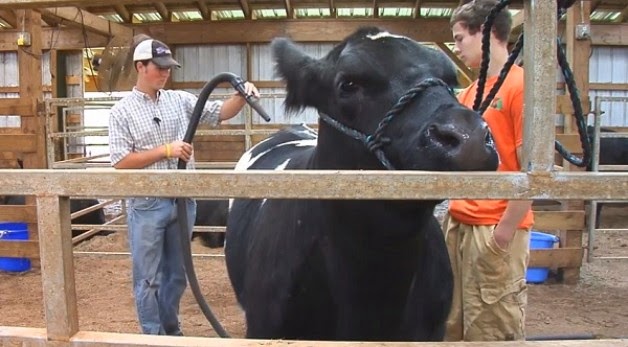
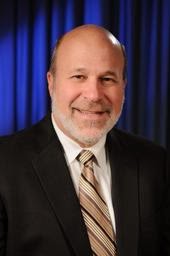
Dr. Richard Wilkes, State Veterinarian with the Virginia Department of Agriculture and Consumer Services (VDACS), announced today that Virginia has just received laboratory confirmation of its first case of Porcine Epidemic Diarrhea  (PED) In light of this case, which coincides with the beginning of the exhibit season for 4-H members, FFA students and other livestock exhibitors, Dr. Wilkes says strict biosecurity is the most effective and most practical way to prevent the spread of PED and many other livestock and poultry diseases. 
Wilkes encourages every person involved in showing livestock to enhance their biosecurity efforts. “We always urge livestock owners who show animals and managers of show and exhibition facilities to keep biosecurity uppermost in their minds,” Wilkes said, “but with swine, it is even more important now that Virginia has experienced its first case of PED. Good biosecurity can help keep the disease from spreading.”
Anytime animals are co-mingled at events, there is a risk they may be exposed to an infectious disease agent. Some states have cancelled pre-show weigh-ins or other animal commingling events to try to prevent PED infection of swine. Virginia show managers may want to consider voluntarily cancelling some of the higher risk activities. 

The PED virus is highly contagious, and commonly spreads through pig manure. Consuming pork continues to be safe and the disease does not affect humans, but is often deadly to piglets. Practicing and implementing sound biosecurity measures is critical in keeping the state’s animals disease free and marketable.
Equine Herpes Virus is another highly contagious disease that has caused disease and death at multiple equine events across the country recently.
Wilkes says that good biosecurity and advance planning will reduce the chances of spreading an infectious disease by people, animals, shoes and clothing or equipment. Show managers should have a proper biosecurity plan ready to execute in the event that an animal disease is introduced at a major stock show or event.
VDACS offers the following guidelines to help minimize risk at events where animals co-mingle.  Note that these general recommendations also apply to diseases that can be spread between humans and animals
Biosecurity for animal exhibitors:
  • Consult your veterinarian to establish an appropriate vaccination program for your livestock prior to attending an event.
  • Before stalling your animal at an event, make sure the stall has been cleaned and disinfected and use clean, fresh bedding.
  • Minimize direct contact with other animals.
  • Use your own water and feed buckets. Avoid letting your animal(s) drink from a communal water trough. Fill water buckets from a faucet, not a shared tank.
  • For equines, do not share grooming equipment or tack. If you must, then wash and disinfect it before returning to your own animal(s).
  • Wash your hands thoroughly after handling other animals to minimize the risk of transferring a disease back to your animal.
  • Before returning home from an event, clean and disinfect your equipment (boots, tack, grooming supplies, buckets, etc.) to help reduce the risk of transporting an infectious agent back home.
  • Isolate your returning animal(s) for 2 weeks or prevent contact with your other animals and watch for signs of illness in all of your animals.
  • When you come home from a fair/exhibition be sure to disinfect your trailer.
  • Consult your veterinarian concerning these and other steps you can follow which may reduce the risk of your animal acquiring an infectious disease while traveling.

Biosecurity for event organizers:
  • Minimize contact between animals where possible.
  • Minimize spread by human hands (limit public access, provide hand sanitizer, establish restricted areas in front of stalls and trailers, post hand-washing signs).
  • Minimize spread by shared tack (post signs advising participants not to share equipment).
  • Where practical, provide solid, high-walled stalls to minimize spread of infectious nasal droplets.
  • Biosecurity when visiting an animal exhibit such as a fair or petting zoo:
  • Locate hand-washing stations and use them often. Always wash your hands after petting animals or touching the animal enclosure, especially before eating and drinking.
  • Use running water and soap whenever possible. Use hand gels if running water and soap are not available.
  • Keep food and drinks out of animal areas.
  • Never allow children to put their hands or objects such as pacifiers in their mouths while interacting with animals. 

“Livestock exhibitions are an enriching and rewarding experience for our youth,” said Dr. Wilkes. “Implementing simple biosecurity measures to prevent disease spread and having an established plan of action to address disease outbreaks if they occur protects that experience for exhibitors and event managers alike.” 
For more information about biosecurity measures and plans, contact the State Veterinarian’s Office at 804.692.0601 or your local Office of Veterinary Services at the Regional Animal Health Diagnostic Laboratory in your area. See the Laboratory Services section at http://www.vdacs.virginia.gov/about/directory-ais.shtml.

Statement by Bob Stallman, President, American Farm Bureau Federation, Regarding EPA’s Proposed ‘Waters’ Rule

Bob Stallman
AFBF President
“Last week, the American Farm Bureau Federation carefully reviewed EPA’s March 25 release of the ‘waters of the U.S.’ proposed rule. The results of our review are dismaying.
“The EPA proposal poses a serious threat to farmers, ranchers and other landowners. Under EPA’s proposed new rule, waters – even ditches – are regulated even if they are miles from the nearest ‘navigable’ waters. Indeed, so-called ‘waters’ are regulated even if they aren’t wet most of the time. EPA says its new rule will reduce uncertainty, and that much seems to be true: there isn’t much uncertainty if most every feature where water flows or stands after a rainfall is federally regulated.
“Under this proposed rule, farmers, ranchers and every other landowner across the countryside will face a tremendous new roadblock to ordinary land use activities. This is not just about the paperwork of getting a permit to farm, or even about having farming practices regulated. The fact is there is no legal right to a Clean Water Act permit – if farming or ranching activities need a permit, EPA or the Army Corps of Engineers can deny that permit. That’s why Clean Water Act jurisdiction over farmlands amounts to nothing less than federal veto power over a farmer’s ability to farm.

“EPA accompanied its proposal with a new ‘interpretive rule’ claiming to clarify certain statutory exemptions for agricultural conservation practices, including activities as commonplace and essential to farming as building a fence. But these exemptions apply only to ‘dredge and fill’ permit requirements. They do not protect farmers from federal veto power over pest and weed control, fertilizer application, and other essential farming activities that may result in the addition of ‘pollutants’ to ‘navigable waters,’ – providing one views every ditch and wet spot across the landscape as ‘navigable waters.’
“The American Farm Bureau Federation will dedicate itself to opposing this attempted end run around the limits set by Congress and the Supreme Court. The Supreme Court has ruled repeatedly that Congress meant what it said: ‘navigable waters’ does not mean all waters. This proposed rule shows that EPA refuses to accept those limits.”

From the Field: Main Street Agriculture Coming to a Community Near You

From the Field is a bi-monthly column written by Mark Campbell, Farm Bureau Field Services Director for the Central District. He writes about Farm Bureau member benefits and County Farm Bureau activities.
If you haven’t heard about Main Street Agriculture, then you will have a couple of opportunities to experience it at events in Charlottesville and Winchester this fall.  Main Street Agriculture is a movement with a mission to bring education and awareness of the importance of agriculture to the community year-round with a Main Street Agriculture celebration event in early Fall. 
Bringing the farm to the city has been well received by the general public since it was first launched in Winchester in October 2012.  Bringing the message to the nonfarming public where they live and work is very effective.  In 2013, the Winchester Main Street Agriculture event drew more than 10,000 people on one day.  The events are always downtown and on a Saturday.  The movement connects farmers, families, agribusinesses, city government, and merchants.

In addition to the mission of increasing the awareness of the importance of agriculture, a sideline benefit, and really important one, is the new partnerships created with city government, chamber of commerce, city leaders, and downtown businesses.  This is one area that Farm Bureau and the agriculture community haven’t really explored until the Main Street Agriculture movement.  I have been pleasantly surprised at how accommodating the city of Charlottesville has been.  They have welcomed us with open arms and will be providing the Downtown Walking Mall, Lee Park and closing several streets.  Downtown restaurants are planning to offer a local food menu the night before as well as the day of the event.  This movement also provides advertising for Farm Bureau. The exposure is a good buy considering the alternative cost of media advertisement. The movement also creates year-round awareness of the importance of agriculture and the power of Farm Bureau through membership while enjoying the benefits.
Putting on a Main Street Agriculture event can feel overwhelming at first because it is a big event and it is not like anything we have ever done before.  However, Dee Cook of Virginia Farm Bureau provides significant help and guidance in getting things started by making inroads with city government leaders, and businesses. She has also developed a guide for county Farm Bureaus to follow when delivering this event.
The Main Street Agriculture event is sponsor-funded which helps the county Farm Bureau connect to community leaders who offer support. In many cases, the sponsors and community leaders had no previous connection or understanding of our grassroots mission. The county Farm Bureau contributes startup funds to launch the program. All proceeds above and beyond expenses are donated to Virginia Foundation for Agriculture in the Classroom.  Donations to AITC are based on the percentage of sponsorship and given in the name of the sponsor.
If you are interested in doing a Main Street Agriculture event in your community, visit the website at www.mainstreetag.organd contact your county Farm Bureau president.  I’ll keep you updated on this. 
Until next time,

Mark

Urban Agriculture Summit to Include Film Screening, Farm Tour

Virginia’s second Urban Agriculture Summit will feature a screening of the documentary Growing Cities: A Film About Urban Farming in America and tours of the nonprofit urban farm Lynchburg Grows.

Most of the event will be held April 15 and 16 at the Holiday Inn Lynchburg. The movie will be shown April 14 at Randolph College.

Virginia’s first lady, Dorothy McAuliffe, will speak at the summit’s opening lunch, and speakers from the U.S. Environmental Protection Agency and the Virginia Department of Environmental Quality will address “Fostering Urban Agriculture through Brownfield Redevelopment” that afternoon.

The April 16 agenda will feature panel discussions on the health, nutritional and social aspects of urban agriculture; urban food systems and opportunities for economic development; and urban agriculture and city governments.

Registration is $75 for two days or $50 for one day, and participants can register or print a registration form to mail at http://events.SignUp4.com/UrbanAgSummit2014.

Organizers of the summit are Centra; the Federation of Virginia Food Banks; Lynchburg Grows; Shalom Farms; the Society of St. Andrew; Virginia Cooperative Extension; the Virginia Department of Agriculture and Consumer Services; the Virginia Department of Health; Virginia Farm Bureau Federation; the Virginia Food System Council; the Virginia Foundation for Agriculture Innovation & Rural Sustainability; and Virginia’s Region 2000 Partnership Local Government Council.

Virginia’s Finest Celebrates 25th Anniversary

Governor Terry McAuliffe has announced that this year marks the 25th anniversary of the Virginia’s Finest® program.  Developed in 1989 by the Virginia Department of Agriculture and Consumer Services (VDACS), the program identifies, differentiates and promotes top-quality agriculture and specialty food and beverage products.  Buyers and consumers recognize the familiar blue and red “VA check mark” logo and know they are purchasing top quality Virginia-produced and processed products.  Today’s announcement kicks off a series of events in 2014 that will highlight the silver anniversary of the program. 
Speaking about the silver anniversary recognition, Governor McAuliffe stated, “The Virginia’s Finest® program has enhanced the economic opportunities and success of Virginia’s specialty food companies, processors, and agriculture producers.  Agriculture is Virginia’s largest industry and the Virginia’s Finest® program has helped play a key role in that success by raising the profile of the high quality food and beverage products that are made from the Commonwealth’s diverse agricultural bounty.  I am excited to recognize and celebrate the 25th anniversary of this innovative program, which contributes to the Commonwealth’s reputation for being the best state in the nation for doing business, agricultural excellence, entrepreneurialism, and promoting small businesses.” 

Governor McAuliffe also issued a proclamation recognizing 2014 as the 25th anniversary of the Virginia’s Finest® program in the Commonwealth of Virginia.  First Lady Dorothy McAuliffe and Secretary of Agriculture & Forestry Todd Haymore will present today the proclamation to Steven Lynch of Montebello Kitchens, Chair of Virginia’s Specialty Food Advisory Committee, at the Virginia Food and Beverage Expo at the Greater Richmond Convention Center.  This popular tradeshow connects buyers representing grocery stores, restaurants and gift shops directly with Virginia small businesses that produce specialty food and beverage products.  Almost all of the products at the Virginia Food and Beverage Expo have earned the Virginia’s Finest® designation.
Today, the Virginia’s Finest® program boasts more than 400 participating businesses representing a diverse assortment of specialty food products, including meats, cheeses, peanuts, condiments, confections, baked goods, beverages, sauces, soups and seafood.  To discover Virginia’s Finest® offerings, explore a complete list at www.vafinest.com.  Participation in the quality-based trademark program is by application and open to all Virginia agricultural producers and food processors who consistently meet specific quality standards.  Only Virginia products that meet or exceed quality standards are part of the Virginia’s Finest® program. All authorized Virginia’s Finest® products must be approved by the Virginia’s Finest® Review Committee, which consists of food safety officials and product marketing specialists. The Committee reviews product packaging and labels to ensure products meet state and federal regulations. In the case of most products, the producer must provide proof of its current and valid food safety inspection certificate.
The specialty food industry is a growing sector of the nation’s economy.  According to the Specialty Food Association, specialty food is among the fastest-growing industries in the United States, with sales skyrocketing by 22.1 percent between 2010 and 2012.  Total U.S. specialty food sales in 2012 topped $85.87 billion.

Happy National Ag Day and Virginia Agriculture Week/Virginia Agriculture Literacy Week

Today Secretary Haymore read to 3rd graders at St. Bridget School for Virginia Agriculture Literacy Week

Today, March 25, is National Ag Day, a time when producers, agricultural associations, corporations, universities, government agencies and countless others across America gather to recognize and celebrate the abundance provided by American agriculture.
As the world population soars, there is even greater demand for the food, fiber and renewable resources produced in the United States.

The National Ag Day program believes that every American should:
  • understand how food, fiber and renewable resource products are produced.
  • value the essential role of agriculture in maintaining a strong economy.
  • appreciate the role agriculture plays in providing safe, abundant and affordable products.
  • acknowledge and consider career opportunities in the agriculture, food, fiber and renewable resource industries.

In the spirit of National Ag Day, the National FFA Organization developed a list of agriculture facts that you may not know. Check them out:


1. Today, every farmer feeds 144 people — up from 25 in the 1960s
Quite simply, American agriculture is doing more – and doing it better. As the world population soars, there is an even greater demand for the food and fiber produced in the United States. [source]

2. The number of farms operated by women have doubled in the U.S. since 1978
Across the country, nearly 300,000 women serve as principal operators on 62.7 million acres of farm and ranchland, accounting for $12.9 billion in farm products in 2012. Countless more women live, work and raise families in rural America. [source]

3. By 2050, we’ll have to produce more food to feed the world than ever before.
Taking into account a growing population and shifting diets, the world will need to produce 69 percent more food calories in 2050 than we did in 2006.  World Food Prize President Amb. Kenneth M. Quinn calls “the single greatest challenge in human history: whether we can sustainably feed the 9 billion people who will be on our planet in the year 2050.” [source]

4. Agriculture employs more the 22 million people
Agribusiness Management, Agricultural and Natural Resources Communications, Building Construction Management, Agriscience, Resource Development and Management, Parks, Recreations, and Tourism Resources, Packaging, Horticulture, Forestry, Food Science, and Fisheries/Wildlife are all categories of agricultural careers. [source]

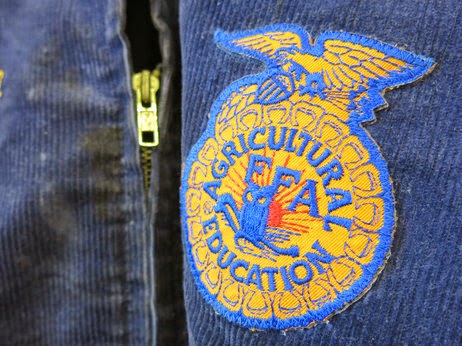
5. FFA is showing impressive membership growth 
With global needs today to fight hunger and prepare for the expected population explosion, the agriculture industry needs educated, skilled and passionate people dedicated to sustainability.

Students are answering that call, evidenced by an explosion in FFA membership to nearly 580,000 members throughout the U.S., Puerto Rico and the Virgin Islands in the past year. [Source]

6. Need a job? Several agriculture careers are in demand
Shortfalls of qualified graduates to work as plant geneticists and plant breeders, climate change analysts, and food safety and security specialists are anticipated during 2010–15, according to a Purdue University study. [source]

7. 10 percent of all Americans are involved in farming
One in 10 Americans play a role in the nation’s food and fiber supply, showing the extreme importance of agricultural awareness and understanding. Agriculture is too important a topic to be taught only to the small percentage of students considering careers in agriculture and pursuing vocational agricultural studies. [source]

8. FFA members nationwide are fighting hunger with community-based projects and by donating more than one million meals

In 2014, more than 450,000 meals have been provided by FFA members participating in the FFA Hunger Heroes Challenge while 122 FFA chapters nationwide are fighting local hunger with FFA: Food For All grant projects. [source]

Virginia is also celebrating Virginia Agriculture Week/Virginia Agriculture Literacy Week March 23-29. Throughout that week, VDACS employees and local Farm Bureau members will read to children in schools from Stephens City to Wytheville, Harrisonburg to Hanover. Everyone will read the same book, What’s in the Garden?, to pre-schoolers through second graders. The book asks and solves a riddle about a variety of agricultural products, gives simple recipes using those products and includes instructional sections on the parts of a plant and basic cooking terms.

Click here for information on Ag Week and here for more information on Ag Literacy Week. Teachers, parents and students will find a variety of resources and activities here. Schools that are interested in hosting a reader should contact Elaine Lidholm.