
Click here for this week’s Commodity Comments, a weekly newsletter designed to provide agricultural producers with an analysis of current market trends by Farm Bureau Market Analyst Jonah Bowles.
Click here for this week’s Commodity Comments, a weekly newsletter designed to provide agricultural producers with an analysis of current market trends by Farm Bureau Market Analyst Jonah Bowles.
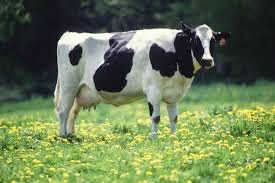
Eighty-one percent of those outbreaks were caused by unpasteurized milk purchased in states where the sale of such milk is legal.
That raises concerns among Virginia farmers about legislation before this year’s Virginia General Assembly. HB 1290, also known as the Virginia Food Freedom Act, would exempt food products, including unpasteurized milk, made in private homes from government regulations as long as they are sold directly to the consumer and labeled with a disclosure statement. Two other bills, HB 1461 and HJ 519, also would allow for sales of unpasteurized milk.
“Farmers have a responsibility to provide safe food products to consumers, and Virginia’s dairy farmers take that very seriously,” said Lindsay Reames, assistant director of governmental relations for Virginia Farm Bureau Federation. “There are known health risks associated with unpasteurized milk, and we want to ensure the food system remains safe for everyone, particularly children, who are most at risk.”
Pasteurization is the process of heating a liquid briefly to destroy disease-causing germs. Those germs, the CDC notes on its website, usually do not change the way milk looks, tastes or smells; pasteurization is a means to ensure that they are not present.
In 1987 the U.S. Food and Drug Administration banned the interstate sale or distribution of unpasteurized milk. Laws regulating intrastate sales vary from complete bans to allowances for sales from farms or retail outlets. Some states allow cow-share or herd-share agreements, in which buyers pay farmers a fee for the care of animals in exchange for a percentage of milk produced.
Consumption of unpasteurized milk has been associated with serious illnesses caused by several pathogens, including E.coli and salmonella. Despite those risks, demand for unpasteurized milk has increased, and some states have considered relaxing restrictions on its sale.
State and local health departments voluntarily report foodborne illness outbreaks to the CDC. Between 2007 and 2012, 81 outbreaks due to consumption of unpasteurized milk were reported from 26 states.
The outbreaks resulted in 979 people becoming ill and 73 being hospitalized. Most occurred in states where the sale of unpasteurized milk was legal at the time. Information on how the milk was obtained was available for more than two-thirds of the outbreaks. Seventy-one percent of those were related to milk obtained from dairy farms; 13 percent were related to milk from licensed or commercial sellers; and 12 percent were related to milk from cow- or herd-share agreements.
The study found that the number of outbreaks caused by Campylobacter spp. bacteria nearly doubled in the six-year study period. “This increase,” the authors note, “was concurrent with a decline in the number of states in which the sale of unpasteurized milk was illegal, from 28 in 2004 to 20 in 2011 and with an increase in the number of states allowing cow-share programs.”
The study findings also note that the legal unpasteurized milk sales in one state can lead to illness outbreaks in nearby states if consumers travel to buy that milk.
Proponents of the Virginia bills that would allow sales of unpasteurized milk have asserted that current state law prevents farmers from accessing a willing local market.
“The local foods movement is incredibly robust and is in no way impaired by a ban on selling unpasteurized milk,” Reames said. “In fact, that movement would be imperiled by a change in the current law. If someone gets sick from consuming unpasteurized milk, we risk consumers being scared to buy any milk, local or otherwise, even though the vast majority of it is pasteurized and safe.”
The EID Journal article is available online at www.nc.cdc.gov/eid/article/21/1/14-0447_article.


Click here for this week’s Commodity Comments, a weekly newsletter designed to provide agricultural producers with an analysis of current market trends by Farm Bureau Market Analyst Jonah Bowles.
Farm Bureau Governmental Relations Assistant Director Lindsay Reames was recently interviewed by NBC 12 in Richmond on a bill that would legalize the sale of unpasteurized milk.
Click here to see the story: Legislators consider unpasteurized milk, homemade food sales without inspection
//cdn.embedly.com/widgets/platform.js

Originally posted on AgWeb Dec. 31, 2014 by John Dillard in his column Ag in the Courtroom. John Dillard grew up on a beef cattle farm and now works as an agricultural and environmental litigation attorney with OFW Law. His blog analyzes legal issues and court decisions that affect America’s farmers and ranchers.
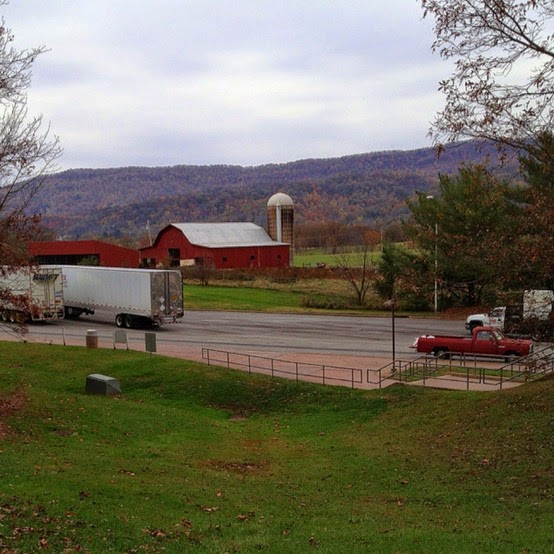
Speaking about the planning grant awards, Governor McAuliffe said, “In my strategic plan to help grow and diversify Virginia’s economy, it is essential to ensure that two of the Commonwealth’s largest private economic drivers, agriculture and forestry, are a major part of our efforts, especially in rural areas. Using our greatest resources to support local efforts and strengthen these critical industries is an important component of my economic development strategy as we work to build a New Virginia Economy. I applaud the leadership in Fauquier, Charles City, Buckingham, Cumberland and Appomattox for exploring how best to leverage their agricultural assets for future job creation opportunities.”
The AFID Planning Grant program was developed in 2012 to encourage local and regional governments to think strategically about how they can better support and integrate agriculture and forestry-based industries into their communities’ overall economic development efforts. The planning grants are part of the larger Governor’s AFID program, a discretionary, performance-based economic development tool specifically tailored for assisting businesses that add value to Virginia-grown agriculture and forestry-related products.
“I am pleased to see the continued use of the Governor’s AFID planning grant program to assist localities to fully integrate agriculture and forestry into their overall economic development and strategic plans,” said Secretary of Agriculture and Forestry Todd Haymore. “With these four projects, the AFID planning grant program has leveraged more than $465,000 since its inception to support 48 localities interested in building on their agriculture and forestry assets and seeking new initiatives that can have lasting positive impacts for their region.”
The Virginia Department of Agriculture and Consumer Services (VDACS) administers the AFID program, and planning grant applications are accepted on a rolling basis throughout the fiscal year. Successful funding requests must demonstrate a clear need, a proposed solution, strong support from local government and the agriculture and forestry community, and the ability to provide cash or in-kind matching funds. Localities interested in applying may visit http://vdacs.virginia.gov/agribusiness/planning.shtml, or contact AFID Fund Coordinator Stephen Versen at stephen.versen@vdacs.virginia.govor 804.786.6911 for more information.

Click here for this week’s Commodity Comments, a weekly newsletter designed to provide agricultural producers with an analysis of current market trends by Farm Bureau Market Analyst Jonah Bowles.

Click here for this week’s Commodity Comments, a weekly newsletter designed to provide agricultural producers with an analysis of current market trends by Farm Bureau Market Analyst Jonah Bowles.

