VFBF President Responds to Politifact Article on Estate Tax

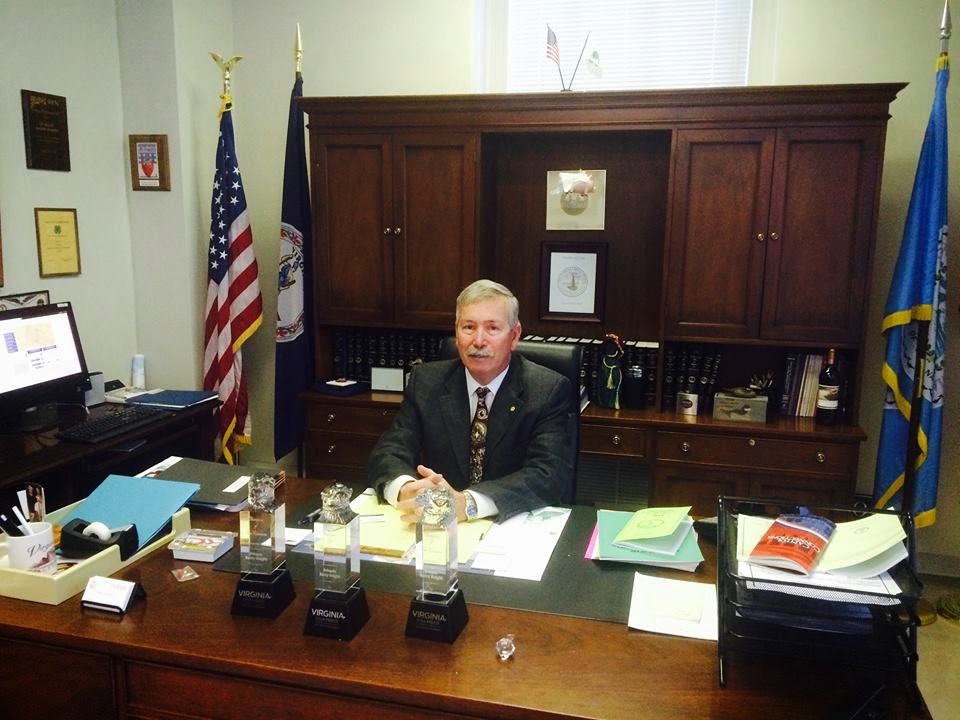
VFBF President
Wayne F. Pryor

Last week, Politifact published “Hurt amiss in blaming estate tax for sales of family farms and businesses. Here is VFBF President Wayne F. Pryor’s response.

“As a Virginia farmer and president of the state’s largest farmers’ advocacy organization, I would be remiss if I did not point out that PolitiFact Virginia’s “Hurt amiss in blaming estate tax for sales of family farms and businesses” serves to marginalize the threat that the federal estate tax poses to Virginia’s and the nation’s farmers.
The value of family-owned farms typically is tied to illiquid assets such as land, buildings and equipment. A strong appreciation of land values since 2002 has dramatically increased the number of farms that stand to be affected by the estate tax.
USDA reports from 2002 and 2013 indicate Virginia farm real estate appreciated $2,060 per acre—83 percent—in that 11-year period. Virginia cropland values appreciated $2,250 per acre—92 percent—in the same period.
Based on those 2013 land values, farms with more than 1,099 acres, or 1,064 acres of cropland, would reach the $5 million exemption. Based on the 2012 Census of Agriculture, the percentage of Virginia farms that exceed the $5 million exemption has increased from 1 percent to 2 percent, and the number of crop producers who exceed the limit has increased from 1 percent to 3 percent.
Individuals, family partnerships and family corporations own about 97 percent of U.S. farms, and I can assure you that 0 percent of them build and continue their family businesses to ultimately enrich the federal government. Perhaps, as Mr. Fiske asserts, “few families are wealthy enough to be bothered by the estate tax,” but the farm families who are that wealthy are the ones who are producing the majority of the nation’s food, fiber and fuel commodities.
They face a tax that penalizes them for their work and initiative and stands to claim the essentials of their livelihoods.
Virginia Farm Bureau is grateful to Reps. Hurt, Forbes, Goodlatte, Griffith and Wittman for their support on this issue.”
Wayne F. Pryor, President

Virginia Farm Bureau

From the Field: May is National Beef Month

From the Field is a bi-monthly column written by Mark Campbell, Farm Bureau Field Services Director for the Central District. He writes about Farm Bureau member benefits and County Farm Bureau activities.

It’s hard to believe it is May already. The old adage about time going by quicker as we get older is true. While May is when hay making season starts, temperatures in the mid-80s the past few days served as a wakeup call to get the hay equipment out of the sheds and out into the fields.
May is also national beef month and is the beginning of grilling season. Food today encompasses many thoughts and discussions other than just sustenance. In addition to nutrition; consumers consider source, brand, integrity, how it was raised, genetics, technology, price, humane treatment and even environmental impact.
This morning I read this article that came through my email. It is an interesting perspective of a former vegetarian that is also a registered dietician/nutritionist. I give her credit for not only allowing herself to once again enjoy a tasty steak, but she researched her misconceptions for herself. Here is the link. http://health.usnews.com/health-news/blogs/eat-run/2015/04/16/the-other-side-of-the-beef-is-bad-story.

She is not alone as many more consumers have misconceptions about beef and other foods. To make matters more complex, the national dietary guidelines advised in one generation to stay away from certain foods like eggs because of cholesterol and then a generation later are now heralded as a great protein source. The same goes for beef. It was bad for your heart. Now beef has been proven to lower bad cholesterol in the Beef in an Optimum Lean Diet (BOLD) study. This year for the first time in history the dietary guidelines factored in environmental impact. These are supposed to be dietary guidelines for nutrition, but the Dietary Guidelines Advisory Committee delved into environment and sustainability which is considered by many as being beyond the committee’s expertise. I don’t know if the federal dietary guidelines carry as much credibility with the general public as they used to, but the guidelines can still be far reaching as they are considered by federal food programs such as school lunches, nutritionists, and doctors.
So if your food product is being misportrayed, what are you to do? Most all of the commodity groups have lots of factual information for you to use as a resource to share with your doctor, neighbors, and others. These resources are backed by credible research and can be a reliable source for those you may be trying to educate or influence. This can be comforting to the consumer who is bombarded with conflicting messages on a regular basis.
There are also great testimonials on the internet such as https://feedyardfoodie.wordpress.comwhich is a blog by Anne Burkholder. She was raised in an urban setting, but is now an influential leader in the beef industry. Doing a little research of my own, I went to www.beefitswhatsfordinner.comand there was a lot of good information for consumers. The recipes looked good and gave me some new ideas to use ground beef. The www.incredibleegg.org is another good website.  I could go on. But if you have not done so, take a look at your commodity’s website. It can be a great resource to refer someone to if you get questions. Happy grilling.
Until next time,

Mark

American Farm Bureau Announces Get a Move On for GMOs Campaign

AFBF President
Bob Stallman
As things heat up on the biotech labeling front, AFBF is providing a new resource to engage farmers and ranchers in the debate. This week, we are launching our Get a Move On for GMOs campaign. A Get a Move On website—at getamoveon.fb.org—is the first campaign resource we are rolling out. It explains why farmers and ranchers must be on the frontlines of defending access to biotechnology, how much is at stake if we lose that access, and why supporting a voluntary labeling bill is important. A “Take Action Now” link makes it easy for farmers and ranchers to urge members of Congress to support the voluntary labeling bill.

While GMO opponents want labeling mandates, Farm Bureau and food makers support a more reasonable approach. The Safe and Accurate Food Labeling Act (H.R. 1599) would establish that FDA is the nation’s foremost authority on food safety and create a voluntary labeling program run by USDA—similar to the USDA Organic Program. With a growing and troubling patchwork of state and local labeling requirements, we believe it’s time for a national approach—one that does not amount to putting warning labels on safe and wholesome foods. Get a Move On gives farmers and ranchers a way to oppose the multiple, varied state and local initiatives with the click of a mouse.

Members of Congress have told us that they are hearing plenty from the anti-biotech crowd, making it difficult for them to stand with agriculture. They know that GMO opponents are engaging in alarmism and opportunism. Lawmakers say they MUST hear from us. We have to Get a Move On, or else our vocal opponents will drown us out.

Last year, Farm Bureau surprised a lot of people with our Ditch the Rule campaign. In a fight against EPA and vocal environmental activist groups, we helped generate thousands of comments on the Waters of the U.S. proposed rule. Farmers and ranchers showed up, big-time! The Ditch the Rule campaign demonstrated what is achievable when we motivate the grassroots and deploy smart tools to make it easy to take action. We need to build on that success. It’s time to Get a Move On for GMOs! Check out the new website. Let us know what you think. And please keep your eyes peeled for more Get a Move On resources to come.   

New Specialty Poultry Production, Processing Facility to Locate in Albemarle County

Governor Terry McAuliffe has announced that Kelly Turkeys USA, LLC will locate new operations for its specialty poultry production and processing facility in Albemarle County.  The company, which grows, processes, and sells high-end, heritage breed turkeys through direct and retail markets, will invest $1.4 million in a new facility.  The investment will allow the company to create 33 new jobs in the area and to grow production to 10,000 turkeys annually, over three years.  The Commonwealth is partnering with Albemarle County and Kelly Turkeys USA on this project through the Governor’s Agriculture and Forestry Industries Development (AFID) Fund.
VA FAIRS, the Foundation for Agriculture, Innovation and Rural Sustainability, is also assisting Kelly Turkeys USA with other funding opportunities. Virginia FAIRS offers a cohesive and transparent mechanism to foster program delivery and project development between Virginia Farm Bureau Federation, Virginia Department of Agriculture and Consumer Services, Virginia Cooperative Extension, Virginia Department of Business Assistance, Virginia Tech and other stakeholders with an interest in agricultural economic development, administration of programs, and assistance with obtaining grant funding. The Center acts as a vehicle where a multitude of talented and experienced stakeholders cooperatively enhance and expand services and programs to rural Virginia. VA FAIRS offers services to all Virginia producers and rural areas, including farmers, groups, associations, and agricultural and rural development centers. 

Speaking about the announcement, Governor McAuliffe stated, “I am pleased to announce Kelly Turkeys’ investment in Albemarle County, which creates new jobs and grows the poultry industry, the largest sector of Virginia agriculture.  This investment bolsters Virginia’s reputation as a center for artisanal food production and highlights the importance of the growing agricultural economy of Albemarle County.  My administration is committed to expanding our diverse agriculture industry, one of the Commonwealth’s greatest assets, to help build the new Virginia economy.”
Founded in the United Kingdom in the 1970s, Kelly Turkeys U.K. is known for its unique breed of turkeys, the KellyBronze turkey.  The company has grown steadily in sales and reputation for the past 25 years and has been voted the best turkey in the United Kingdom for eight consecutive years.  Kelly Turkeys USA will bring the same brand and production methods to Virginia, establishing the company’s first United States facility.  The new U.S. location for the long-standing and established Kelly Turkeys brand will produce 100% Virginia-grown premium turkeys.
“The demand for artisanal foods is growing quickly, and companies like Kelly Turkeys are meeting that demand right here in Virginia,” said Secretary of Agriculture and Forestry Todd Haymore, who represented Governor McAuliffe at the announcement.  “Virginia has long been known for its quality agricultural products, and we are excited to further cement our reputation as an artisanal food producer.  As we work to build the new Virginia economy, I’m pleased the Governor’s AFID Fund could support this project and Albemarle’s commitment to it.”
“It’s great to see Albemarle County continuing to develop and diversify its agricultural economy,” added First Lady Dorothy McAuliffe, who also attended the announcement.  “Artisanal products like KellyBronze Turkeys contribute significantly to growing the new Virginia economy, and I am pleased that customers across the country will have access to these 100% Virginia-grown products.”
Through this announcement, Kelly Turkeys USA will help to grow the already diverse agricultural economy of Albemarle County.  The company’s new facility will utilize working farmlands in Albemarle County to support the Commonwealth’s largest private sector industry, agriculture.   This artisanal product will supply the growing market for premium turkeys in the Commonwealth and around the country. 
“The artisan quality of the KellyBronze Turkey fits in perfectly with the local food movement that is so strong in this area,” said Judd Culver, owner of Kelly Turkeys USA.  “The positive feedback we have earned from our customers for our Thanksgiving and Christmas KellyBronze Turkeys has been remarkable.  Most of our customers honestly say that it is the best turkey they have ever tasted and we can’t help but be over the moon about that!”
VDACS partnered with Albemarle County to secure this project for Virginia.  Governor McAuliffe approved a $29,000 grant from the AFID Fund to assist with the project and Albemarle County will provide a $29,000 cash match. 
“Albemarle County is extremely pleased to partner with Governor McAuliffe and Kelly Turkeys USA through this important grant, which furthers our long standing priority of supporting the County’s agricultural heritage and economy,” said Tom Foley, Albemarle County Executive.  “Through the AFID grant, we are utilizing an important economic development tool that is not only creating jobs and spurring capital investment in Albemarle, but is adding to the quality and diversity of our agricultural products.”
Speaking about the announcement, Senator Creigh Deeds, D-Bath County said, “Thanks to Kelly Turkeys USA working in partnership with the Commonwealth and Albemarle County, we have another expanding business creating new jobs and Virginia-grown products.  I am pleased to be a part of this company’s first commercial-scale poultry production and processing facility in the County.”
Delegate R. Steven Landes, R-Weyers Cave, who sponsored the legislation creating the AFID program in 2012, added, “I am thrilled to see the AFID program being utilized once again to support important economic development projects in this region.  As Virginia’s largest industry, it is important to do all we can to promote economic development and job creation in agriculture throughout the Commonwealth, and I am pleased to know that Governor McAuliffe agrees and supports this vital economic sector.” 
About the Agriculture and Forestry Industries Development Fund
The AFID Fund was created during the 2012 session of the General Assembly and is being embraced by the McAuliffe Administration as an important tool in growing the Commonwealth’s agriculture and forestry sector and helping to make Virginia the leading exporter of agricultural and forest products on the East Coast.  More information about the AFID grant, which has the flexibility to assist projects large and small throughout Virginia, can be found at http://www.vdacs.virginia.gov/agribusiness/afid.shtml.

Vote for Roanoke County Farm Bureau Member Megan Seibel for Farm Mom of the Year

Congratulations to Megan Seibel of Roanoke for being named the 2015 southeast regional winner of the America’s Farmers Farm Mom of the Year contest! This is the third time in the past four years that a Virginia Farm Mom has been named the southeastern winner! Dee Dee Darden from Smithfield won in 2012 and Betty Rosson of Louisa won in 2013.
Megan is now in the running to be named the national winner of the contest. Voting starts today and goes until May 5.
Please spread the word and vote for Megan, by using this link:http://www.americasfarmers.com/reco…/farm-mom-nominees-2015/

From the Field: Farm Bureau Coordinates Career Fair

From the Field is a bi-monthly column written by Mark Campbell, Farm Bureau Field Services Director for the Central District. He writes about Farm Bureau member benefits and County Farm Bureau activities.

I’m sure you are familiar with career fairs, but how about one specifically for agriculture careers? 
On April 20, more than 350 FFA students from middle and high schools came to the Rockingham County Fairgrounds to learn more about career opportunities.  Counties represented were Augusta, Botetourt, Clarke, Highland, Frederick, Page, Rockbridge, Rockingham, and Shenandoah.  The students were able to speak with agribusinesses and organizations in order to determine which sector of agriculture they would like a career.

Lord Fairfax Community College, Dabney Lancaster Community College, and Blue Ridge Community College were present with guidance and career counselors to help the students find a field that suited them.
Dana Fisher, former agriculture teacher and now District Field Services Director for Virginia Farm Bureau, coordinated the event.  He reached out to 4-H, Virginia Agribusiness Council and of course Farm Bureau to provide resources for the event.  
VFB had a significant presence representing numerous facets of the agriculture industry and showcasing our Young Farmer program.  Several Rockingham County Farm Bureau producer members were on hand to meet and speak with the next generation of agriculturalists.  The VFB exhibit also had a “selfie” area where students wrote down what they thought what Farm Bureau was and took their picture in front of a large background of a farming scene.  While at the VFB exhibit, we encouraged their FFA chapters to participate in a membership recruitment contest to win some Milwaukee and Dewalt power tools.
The students at this career fair were genuinely interested in being there, which was great to see in comparison to some other career fairs that I have attended were the students were more interested in having free time and visiting with friends. 
FFA and 4-H always provide hope and promise of a bright future for agriculture.  Sometimes we can get a little pessimistic in the ag industry about how we are a smaller percentage of the population.  But if you get around some FFA and 4-H kids, your mood will soon be lifted to optimism.  However, we in the ag industry do need to provide encouragement and stepping stones for the upcoming generation and this agriculture career fair was one way that we enjoyed doing that.  
Until next time,

Mark

Governor McAuliffe Announces Major Conservation Initiative

Governor Terry McAuliffe has announced the launch of Virginia Treasures, the Commonwealth’s new strategy for conserving land and expanding access to public outdoor recreation.
Governor McAuliffe made the announcement during an Earth Day visit to Pocahontas State Park in Chesterfield County. Virginia Secretary of Natural Resources Molly Ward, members of Virginia’s land conservation community and representatives from the state’s natural resources agencies also attended.
“Virginia Treasures will enable us to focus on what’s important for land conservation and public outdoor recreation,” Governor McAuliffe said. “This initiative will prioritize our land conservation efforts, taking into account factors such as biodiversity, public access and wetlands preservation.”

The administration’s goal is to identify, conserve and protect at least 1,000 treasures by the end of the governor’s term. Criteria for what constitutes a treasure have been developed by the Commonwealth’s natural resources staff. Treasures could fall into one of two defined categories: land conservation or natural, cultural and recreational.

Land conservation treasures include agricultural lands, forests that provide water-quality benefits, wetlands, and habitat for rare or threatened plants and animals.
Natural, cultural and recreational treasures include trails, water-access points, parks, scenic byways, rivers and viewsheds, public gardens and wildlife-viewing areas.
Governor McAuliffe announced a new Virginia Treasure at Pocahontas State Park: a monarch butterfly garden. The garden will provide native plants and grasses for monarchs and other pollinators as part of an initiative to restore the monarch population, which has been on the decline due to the loss of food sources and habitat.
“Parks, natural areas, agricultural lands and historic sites are part of the foundation needed to build a new Virginia economy,” Governor McAuliffe said. “These are the assets that support our thriving tourism, fishing and farming industries, and enhance the quality of life for thousands of Virginia residents.”
“Expanding access to public outdoor recreation is a critical component of the initiative,” Secretary Ward said.
“When we give children and adults opportunities to experience nature, we help to instill a sense of stewardship not only in this generation but in future generations,” Secretary Ward said. “This sense of stewardship is critical to protecting Virginia’s natural resources for years to come.”

The Virginia Department of Conservation and Recreation is the lead agency charged with tracking Virginia Treasures. Multiple state agencies, land trusts, local governments and private groups are involved in the initiative.