American Farm Bureau President: Here’s What We Know about the Final WOTUS Rule

Well, the other shoe has dropped—or perhaps “heavy boot” is more apt. The EPA and Army Corps of Engineers have finalized the rule to redefine “waters of the United States” under the Clean Water Act. We’re going through the final rule (and the nearly 300 pages of accompanying explanation) line by line to determine how it will affect farmers and other landowners. Regardless of EPA’s assurances about what the rule will or won’t do, we’ve dealt with enough EPA doubletalk and overzealous enforcement to know that it’s the fine print that really matters, not a blog post, news release or choreographed town hall meeting.

Here is what we know so far. First, EPA and the Corps have not addressed agriculture’s concerns. In particular, the agencies have doubled down on their definition of regulated “tributaries” broadly to include any place on the landscape where rainwater channels and flows enough to leave a mark. Second, the agencies have not consulted with state and local governments, small businesses or the regulated  community to determine the best way to protect truly important waterways without interfering with our ability to use and manage the land. Actually, it appears they’ve added components that weren’t even initially proposed for public review and comment (so much for transparency). Third, the rule does not provide more clarity than landowners had before. If anything, it will be even more confusing and difficult for a landowner to determine if he or she will have to get a federal permit. Fourth, EPA has been deceptive in its promotion of the rule—saying this is about drinking water when it’s really about federal control over land, and misrepresenting Internet “clicks” in support of “clean water” as public “comments” in support of the rule. The agency also has made promises it cannot possibly keep concerning whose activities will and won’t be regulated once enforcement is in the hands of individual regulators, citizen enforcers and the courts. 

Last year, AFBF took the time we needed to pore over the rule and report our findings. The result was a comprehensive, credible analysis that enabled Farm Bureau to show exactly where and how the rule would create problems for farmers and ranchers. Due to our leadership, some groups (which shall remain nameless) that had high praise for the proposed rule on day one had to backtrack, and were more reticent in their reactions to the final rule. We are taking the same care to evaluate the final rule and respond thoughtfully and accurately to the agencies’ spin campaign. There is no one more qualified and able to do this than your AFBF policy and legal experts.

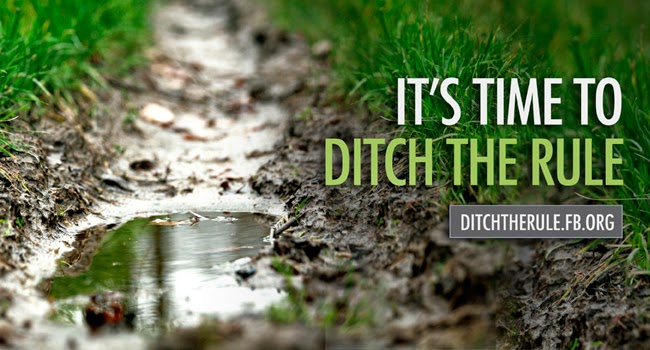
Here is one more thing we know: This is far from over. We can and must ditch this rule. Stay tuned!

Farm Bureau Reviewing Final WOTUS Rule

The American Farm Bureau Federation is undertaking a thorough analysis of the final WOTUS rule—released earlier today—to determine whether the EPA listened to the substantive comments farmers and ranchers submitted during the comment period. The organization is looking in particular at how the rule treats so-called ephemeral streams, ditches, small ponds and isolated wetlands, AFBF President Bob Stallman said in a statement.

“Based on EPA’s aggressive advocacy campaign in support of its original proposed rule—and the agency’s numerous misstatements about the content and impact of that proposal—we find little comfort in the agency’s assurances that our concerns have been addressed in any meaningful way,” Stallman said.

Stallman also reiterated farmers and ranchers’ concern that the process used to produce the rule was flawed, with EPA’s proposal transgressing clear legal boundaries set by Congress and the courts. The rule deals more with regulating land use than protecting the nation’s valuable water resources.

“EPA’s decision to mount an aggressive advocacy campaign during the comment period has tainted what should have been an open and thoughtful deliberative process,” he added. “While we know that farmers and ranchers were dedicated to calling for substantial changes to the rule, we have serious concerns about whether their comments were given full consideration.”

After a thorough review of the rule, which Farm Bureau expects to complete in the next few days, the organization will decide on an appropriate course of action.

Details on the final rule from EPA. 

Delegates Who Farm Help Educate Their Non-Farming Colleagues

Delegate Barry Knight, R-Virginia Beach

Delegates who farm said that work affords them a unique understanding of legislation that stands to affect Virginia’s farmers and rural communities.

“Until it is your blood, sweat, tears and money, you do not fully understand the situation of a farmer,” said Del. Barry Knight, R-Virginia Beach, who has been a hog and grain producer and forest owner since 1975. “This is why we have citizen legislators, so they can have day-to-day experience as citizens and not politicians.”

Knight, who has been a member of the General Assembly since 2009 and also serves as Virginia Beach Farm Bureau’s vice president, said Farm Bureau provides a strong voice to help bridge the gap between farmers and legislators who do not have farming backgrounds.

Legislative support of agricultural issues is an important function of the Virginia Farm Bureau Federation, and it helps that more than half a dozen Virginia delegates are farmers.

Del. Robert Bloxom, R-Mappsville, an aquaculturist on the Eastern Shore, said assembly members with agricultural experience are sought out by other legislators for information regarding bills that would affect farmers.

“Other legislators look to us for answers, which is good, because if they seek information elsewhere, that source may not have the farmers’ interest at heart,” said Bloxom, who has raised oysters and clams for about 20 years.

Del. James Edmunds, R-Halifax, agreed, saying colleagues without an agricultural background “lean upon those of us that do to explain how certain issues will affect our rural lifestyles.” Edmunds operates a Halifax County beef cattle, grain and tree farm and has served in the legislature for six years.

“I believe that it is important for non-ag members of the General Assembly to hear from the farmers when issues arise that they may not understand,” he said.

Farmers Seek Balance in Drone Regulations

As the Federal Aviation Administration drafts final regulations for the use of unmanned aircraft in agriculture, farmers are seeking to protect privacy and reap the benefits of a new tool for precision agriculture.

The Virginia Farm Bureau Federation supported two bills in the 2015 General Assembly that prohibit any government agency or organization from using drones to survey property except during the execution of a search warrant or when an inspection warrant has been issued. The bills also permit drone use for agricultural research and development, along with other exemptions. Both bills recently were signed by Gov. Terry McAuliffe.

“Our members felt unauthorized aerial surveillance of their farms and forests by government agencies would be an invasion of privacy,” said Trey Davis, VFBF assistant director of governmental relations. “This legislation essentially puts some checks and balances into that use of drones, while encouraging our research institutions to find new ways to help farmers improve yields and protect the environment.”

Using unmanned aircraft to take pictures of large farm fields or use temperature and other sensors holds great promise. Virginia Tech has an entire research center, the Virginia Center for Autonomous Systems, dedicated to technology like drones. Sampling microbe data above a farm field is just one of the technologies being studied.

“Precision agriculture is all about using technology to fine-tune our existing crop production techniques and even develop new ones,” Davis said. “One of (farmers’) goals is to apply only as many nutrients as are necessary for a healthy crop. Another is to improve yields across large amounts of acreage. Data from drones could be very useful in accomplishing both goals.”

Draft rules being considered by the FAA include requiring operators to obtain an unmanned aircraft system operator certificate, stay away from bystanders and fly only during the day. They would limit flying speed to 100 mph and altitude to 500 feet. In addition, the aircraft could weigh no more than 55 pounds and would have to remain within the operator’s line of sight.

“This is cutting-edge technology. Commercial drone systems are already being demonstrated to Virginia farmers,” Davis said. “We need balanced regulations to help this new agriculture tool thrive while protecting the privacy of all Virginians.”

Who Will Be the Next Farm Bureau Rural Entrepreneur of the Year?

Entrepreneurs thinking about entering the Farm Bureau Rural Entrepreneurship Challenge – with $145,000 in startup funds up for grabs – are encouraged to pay close attention to the entry criteria, as there have been some changes since the inaugural competition.

“New this year, competitors must submit an idea for a business that is related directly or indirectly to food and agriculture,” said Dr. Lisa Benson, the American Farm Bureau Federation’s director of rural development. “This competition aims to address Farm Bureau’s mission to enhance and strengthen the lives of rural Americans to build strong, prosperous agricultural communities. We believe supporting rural businesses that relate in some way to food and agriculture is a winning strategy to accomplish this.”

Businesses directly related to food and agriculture include farms or ranches, processing facilities, value-added food processing, food hubs, community-supported agriculture programs (CSAs), farm-to-table restaurants and farmers’ markets. Businesses indirectly related to food and agriculture include support services such as crop scouting, agritourism, ag advertising agencies and ag tech companies that develop apps.

Also new, Farm Bureau will endeavor to connect top-scoring teams with resources for crowdfunding loans to help them jumpstart their businesses.

“Taking a startup company from innovative concept, to strategy, to reality often hinges on access to funding,” Benson said. “The challenge and crowdfunding are great options for small rural business owners to access necessary funding to take their business to the next level.”

Applications for the competition will be accepted beginning June 1 through June 30. Entrepreneurs will compete for $145,000 in startup funds. The challenge, now in its second year, provides an opportunity for individuals to showcase ideas and business innovations being cultivated in rural regions of the United States. It is the first national business competition focused exclusively on rural entrepreneurs working on agribusinesses.

Again this year, competitors must be based in a rural community as defined by the U.S. Census Bureau. Competitors’ primary residences or businesses must be located in a county with less than 50,000 residents or a town with less than 2,500 residents.

The application includes a business plan, video pitch and photo. Judges will review the applications and provide feedback to the participants. Participants have the option of resubmitting portions of their applications based on feedback from the judges; resubmission is optional and participants are not penalized for not resubmitting their applications.

The top 10 teams will be announced on Oct. 15. This includes six teams who will win $10,000 in startup funds and four finalist teams who will win $15,000 in startup funds and compete in a live competition at AFBF’s 97th Annual Convention in Orlando, Florida, in January.

Finalists will compete for the grand prize title Farm Bureau Rural Entrepreneur of the Year and $15,000 in additional startup funds to implement their ideas. One of the finalists also will be honored with the People’s Choice Award and $10,000 in additional startup funding.

The challenge timeline, detailed eligibility guidelines and profiles of the 2015 finalist teams are available online at http://www.strongruralamerica.com/challenge. A preview of the online application is available. Applications may be submitted online beginning June 1.

Judges for the challenge come from a wide range of economic development backgrounds, including banking, universities and rural development non-profit organizations. Farm Bureau staff at the county, state and national level may not serve as judges.


VSU to Hold Informational Field Days This Spring

Blueberry is the fastest growing crop in many states including North Carolina, Georgia and Florida. Market demand for blueberry is high and profit potential for growing locally grown blueberry is considerable. One major issue for blueberry growers is the planting of the new blueberry cultivars (varieties) that are becoming available with superior fruit size, taste, color and disease tolerance.

New and experienced blueberry growers will learn about new and better cultivars for planting.

At Virginia State University’s Randolph Farm a collection of 45 different blueberry cultivars (15-20 plants/cultivars) have set fruit. All are different in terms of cluster density, productivity, plant structure, bush size, vigor, etc. This is an opportunity to see these cultivars and decide which one may be suitable for your future blueberry production.

Beginning and experienced farmers will learn from Cooperative Extension Specialists about the latest research, trends and proven techniques for maximizing farm profits on limited acreage. USDA representatives will be on hand to explain how government resources can open doors for small farmers. Visit farm-related exhibitors and enjoy an Iron Chef competition demonstrating how to prepare winning meals with locally grown produce.

American Farm Bureau Hails House Passage of ‘Waters’ Bill

The U.S. House of Representatives voted May 12 to overturn a rule proposed by the Environmental Protection Agency that would redefine which bodies of water and farm activities are subject to EPA oversight.
H.R. 1732 would force the EPA to withdraw its “Waters of the U.S.” rule and develop a new proposal. It will now be considered by the Senate.
The “Waters” rule was cause for concern among the nation’s farmers because it would give the EPA broad jurisdiction over dry land features and farming practices that historically has been relegated to individual States under the Clean Water Act.
Bob Stallman, president of the American Farm Bureau Federation, said House members “sent a strong, bipartisan message that the flawed ‘Waters of the U.S.’ rule is unacceptable and should be scrapped. Furthermore, it was refreshing to see members of Congress order regulators back to the drawing board with an admonition to listen to the very real concerns of people who would have their farm fields and ditches regulated in the same manner as navigable streams.”

The AFBF has characterized the “Waters” rule as an end-run around Congress and around U.S. Supreme Court decisions, and Stallman said it focused more on regulating land than on protecting valuable water resources.
“Farmers and ranchers know all about the importance of protecting water, and they will continue to put that belief into practice,” he said. “Through cooperative conservation measures, we have helped cut land erosion by more than 50 percent in just the last 20 years.”
U.S. farmers also have reduced pesticide use and today use cutting-edge technology to apply just the right amount of fertilizer at just the right time, Stallman said.
“We look forward to a new water rule that recognizes the enormous work we have done and honors the limits authorized by Congress and the Supreme Court.”