
Robert Harper with Virginia Farm Bureau’s grain division provides this week’s market updates.
#merchandiserminute #grainfuture #virginiafarmbureau
Robert Harper with Virginia Farm Bureau’s grain division provides this week’s market updates.
#merchandiserminute #grainfuture #virginiafarmbureau
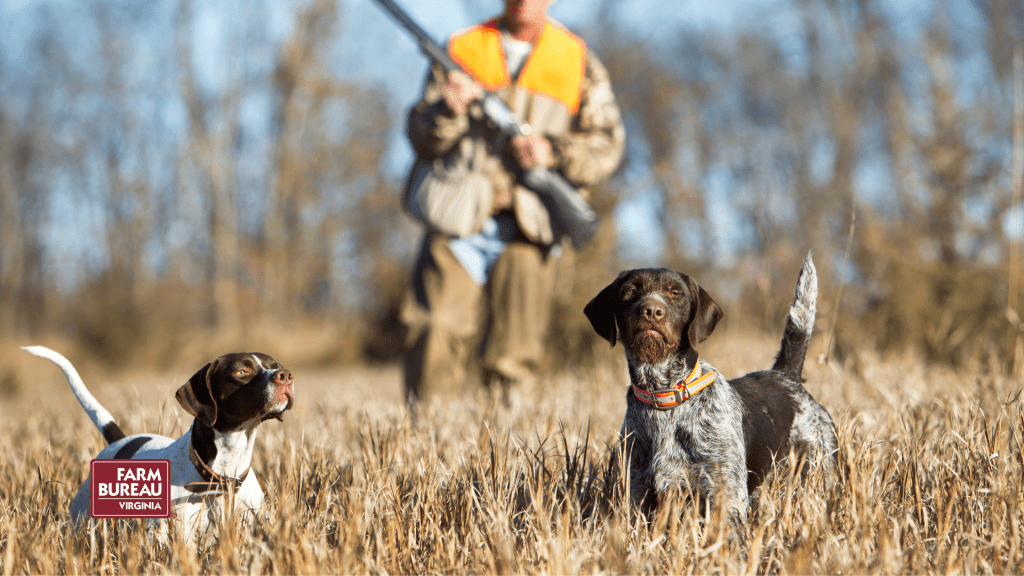
Following a public scoping period where ideas on changes to wildlife regulations were reviewed, the Virginia Board of Wildlife Resources proposed amendments to Virginia’s regulations governing wildlife and boating. A public comment period is currently ongoing through May 10, 2023. You can read the proposed changes and provide feedback here.
Public comment will also be taken both virtually and in-person during the May 25 meeting of the Board of Wildlife Resources. Meeting details, including an agenda and registration link, will be posted here when available. The board anticipates adopting final regulation amendments that will be effective on August 1, 2023.
Virginia Farm Bureau members can contact Stefanie Taillon at stefanie.taillon@vafb.com or 804-363-9505 with questions or concerns.
Robert Harper with Virginia Farm Bureau’s grain division provides this week’s market updates.
#merchandiserminute #grainfuture #virginiafarmbureau
Robert Harper with Virginia Farm Bureau’s grain division provides this week’s market updates.
#merchandiserminute #grainfuture #virginiafarmbureau

The American Farm Bureau Federation (AFBF) and CNH Industrial brands, which includes Case IH and New Holland, signed a memorandum of understanding (MOU) on March 9, 2023, that provides farmers the right to repair their own farm equipment. The MOU follows a similar agreement AFBF entered into with John Deere earlier this year.
“Our members urged us to find a private sector-solution that gives them access to repair their own equipment and I’m pleased months of discussions have again paid off,” said AFBF President Zippy Duvall. “Farmers and ranchers are more dependent on technology than ever before, so it’s critical they have access to the tools to keep things running on the farm so the food supply chain keeps running, too.”
“We understand the work our customers do is time-sensitive and critical for a safe and abundant food and fiber supply,” said Sally Johnson, Vice President, New Holland Agriculture North America. “This agreement is the next step in delivering on New Holland’s promise to better serve our customers, and in a way that helps them safely and effectively manage and maintain their equipment uptime.”
“This agreement underscores CNH Industrial’s commitment to empowering our customers by providing them with resources and tools that allow them to safely self-repair their equipment in a timely matter,” said Kurt Coffey, Vice President, Case IH North America. “We know that agricultural equipment is one of the most significant investments for the American farmer. As a farmer, Farm Bureau member myself and brand leader, this MOU is a positive step forward in continuing to put the customer at the center of everything Case IH does.”
The MOU sets a framework for farmers and independent repair facilities in all 50 U.S. states and Puerto Rico to access CNH Industrial brand manuals, tools, product guides and information to self-diagnose and self-repair machines, as well as support from CNH Industrial brands to directly purchase diagnostic tools and order products and parts.
The MOU respects intellectual property rights and recognizes the need to ensure safety controls and emission systems are not altered. CNH Industrial and AFBF will meet semiannually to review the agreement and address ongoing concerns.
The AFBF board of directors unanimously approved the MOU with CNH Industrial brands Case IH and New Holland.
Read the MOU here.

Known as Guidance for Industry #263, the Food and Drug Administration (FDA) has released a recommended process for voluntarily bringing remaining approved animal drugs containing antimicrobials of human medical importance under the oversight of licensed veterinarians by changing the approved marketing status from over-the-counter (OTC) to prescription.
The guidance document outlines a new process for authorizing the use of these antimicrobials to treat animals, including livestock, equine, and companion animals. Owners will be required to obtain a prescription from a veterinarian before accessing antimicrobial drugs considered medically important to human health in forms such as injectables and boluses for their animals.
The change is expected to take effect June 11, 2023. Labels of OTC antimicrobials that are considered medically important to human health will be required to include the following: “Caution: Federal law restricts this drug to use by or on the order of a licensed veterinarian,” and the purchaser must have a prescription or drug order to buy it. Existing inventory of OTC-labeled products that are already in distribution may continue to be sold.
Farmers can prepare by:
Robert Harper with Virginia Farm Bureau’s grain division provides this week’s market updates.
#merchandiserminute #grainfuture #virginiafarmbureau
While the General Assembly was originally scheduled to adjourn this Saturday, unfortunately, that is no longer the case. The House of Delegates and the Senate have been unable to produce a budget conference committee report, therefore the bodies have yet to vote on final adoption of a budget. This means that the General Assembly session will be extended; however, it is unclear at this time for how long.
We will send a comprehensive update of final bills and budget items as soon as possible. In the meantime, please enjoy our annual “smiley face” bill rundown!
Robert Harper with Virginia Farm Bureau’s grain division provides this week’s market updates.
#merchandiserminute #grainfuture #virginiafarmbureau
This week, we’re giving you updates on bills covering renewal of the food donation tax credit, mandatory farm practices and stormwater management and erosion sediment control for farm buildings. Watch until the end for a preview of the big things happening next week!

