VDH Schedules More Public Discussions on Uranium

The Virginia Department of Health (VDH) will hold a series of meetings to gather public input on the issues of water supply and recreational water to assess the impact of uranium mining and milling in Virginia. More specifically, VDH will collect public comments related to the following questions:

1. What are the public’s concerns about related to the impact of uranium mining and milling on water quality and quantity of private wells?

2. What are the public’s concerns related to the impact of uranium mining and milling on recreational use of surface water?

3. What role should VDH play in assuring that public health is protected in regard to private wells and recreational water use in regard to uranium mining and milling?

4. What safeguards should be in place to protect private wells and recreational water?

Evening meetings will be large meetings and VDH will receive comments from as many participants as time allows. Registration is not required to attend the public meetings that will be held in the evenings. Individuals who are unable to attend but want to submit comments or issues for consideration may do so at http://www.uwg.vi.virginia.gov/.

In addition to accepting comments in the public forum, VDH and other agencies will staff tables to provide information and collect questions and comments from the public. Staff will be available at these tables for one hour before the public meetings begin. Questions may be asked and comments made in the public forum, at the tables or both.

Schedule of VDH Large Group Meetings on Uranium Mining and Water:

August 7, 2012
6:00 – 8:00 p.m.
Chatham Circuit Court Building
3 North Main St. Chatham

August 15, 2012
6:00 – 8:00 p.m.
Warrenton The Barn, Lord Fairfax Community College
6480 College St. Warrenton

August 29, 2012
6:00 – 8:00 p.m.
Virginia Beach Meyera Oberndorff Library Auditorium
4100 Virginia Beach Boulevard Virginia Beach

Day-long issue discussion sessions will allow a small group of participants to engage in more focused and in-depth discussion of public concerns, health risks, and potential regulatory changes. These meetings will require participants to devote a full day to participation, and participants will be identified prior to the meetings. Although we expect that a large number of persons will be interested in serving on the discussion groups, because VDH would like to conduct a very in-depth discussion, only a small number of persons will be selected.

Members of the public who are interested in participating are invited to submit their name for participation in one of the discussion sessions listed in the schedule. A total of 15 to 20 persons will be randomly selected from the names submitted and VDH is suggesting that individuals indicate their interest or expertise in the following areas, in order to assure a robust discussion: the agricultural community, water service provider, general business community, business associated with recreational water, academic with a special knowledge of geology or groundwater, local government, or private homeowner. The only requirements for your participation are that you commit to attending the entire meeting, that you indicate your area of interest from one of the groups listed above, and that you are willing to join in an open discussion of the issues. These are public meetings and a summary of the discussion, along with a list of participants, will be made available to the public after the meetings. Please note that if you volunteer your name will be listed as a participant in the public summary of the meeting.

If you are interested please submit your name, your area of interest, address and telephone number, e-mail address and other contact information, and preferred meeting location to https://www.vdh.virginia.gov/ODW/publicmeeting. You must submit your information no later than August 3, 2012. Persons selected for participation will be notified beginning August 3 and notification of selections will be completed by August 6, 2012.

Schedule of VDH Small Group Discussion Meetings on Uranium Mining and Water:

August 8, 2012
8:00 a.m. – 4:15 p.m.
Chatham County Administration Building
1 Center St. Chatham

August 16, 2012
8:00 a.m. – 4:15 p.m.
Warrenton Warrenton Rescue Squad Building
210 Hospital Drive Warrenton, VA

August 30, 2012
8:00 a.m. – 4:15 p.m.
Virginia Beach Virginia Beach Health Department
Glass Conference Room (second floor)
4452 Corporation Lane Virginia Beach

AFBF: Report Shows Real Harm of Estate Taxes

The American Farm Bureau Federation recently said it concurs with a Joint Economic Committee report that details the financial harm posed by estate taxes on family businesses. The JEC, a bipartisan committee composed of members from the House and Senate, issued its report, “Costs and Consequences of the Federal Estate Tax,” earlier today.

According to the report, there are extensive costs associated with the estate tax in terms of the dissolution of family businesses, slower growth of capital stock and a loss of output and income over time. This can be particularly hard on farm families, who own 98 percent of the nation’s 2.2 million farms.
“With the average age of a farmer being 58 years old, the estate tax creates even a steeper barrier for young farmers and ranchers to take up the profession at a time when farming is already difficult to enter,” said AFBF President Bob Stallman.
The report also found that the estate tax impedes economic growth because it discourages savings and capital accumulation. Gaining access to capital is vital to farms and rural economies. In 2010, land accounted for approximately 85 percent of total farm assets. Currently, in some parts of the country, land values have increased well over $10,000 per acre. Further, land values from 2010 to 2011 increased on average 25 percent and have greatly expanded the number of farms and ranches that now top the estate tax $5 million exemption.
Especially holding true for farmers and ranchers, the report also found that the estate tax is a significant hindrance to entrepreneurial activity since many family businesses lack sufficient liquid assets to pay estate tax liabilities. In 2010, liquid assets in agriculture comprised only 12 percent of total assets whereas hard assets (including land and buildings) comprised 88 percent of total assets. Alone, real estate accounted for approximately 85 percent of farm assets in 2010.
“When estate taxes on an agricultural business exceed cash and other liquid assets, surviving family partners are forced to sell illiquid assets, such as land, buildings or equipment to keep their businesses operating,” said Stallman. “With 88 percent of farm and ranch assets illiquid, producers have few options when it comes to generating cash to pay the estate tax.”

AFBF supports permanent elimination of the estate tax. Until this can be accomplished, Farm Bureau supports extending the current $5 million exemption. Without congressional action, in 2013, the estate tax exemption will shrink to $1 million per person with no spousal transfer, and the top rate will increase to 55 percent, striking a blow to farmers and ranchers trying to transition from one generation to the next.

From the Field: Spreadin’ Some Farm Bureau Joy

From the Field is a bi-monthly column written by Mark Campbell, Farm Bureau Field Services Director for the Central District. He writes about Farm Bureau member benefits and County Farm Bureau activities.

Farm Bureau has a history of helping meet the needs of farmers, and this is just another example that has been very successful.
Louisa, Madison, and Fauquier County Farm Bureaus rent a poultry litter spreader to farmers in their county as a service of the county Farm Bureau and Virginia Poultry Federation. 
The Virginia Poultry Federation first offered grant money in 2003 to county Farm Bureaus in the central and northern Piedmont regions of Virginia to help facilitate the movement of poultry litter from concentrated areas such as the Shenandoah Valley to deficit areas such as central Virginia. 
The poultry litter spreader fills a real need, as it is difficult to find someone to spread litter in central Virginia.  Most times, farmers are able to get trailer loads of litter delivered to their farm. But getting someone to spread it is difficult unless large quantities are purchased. 
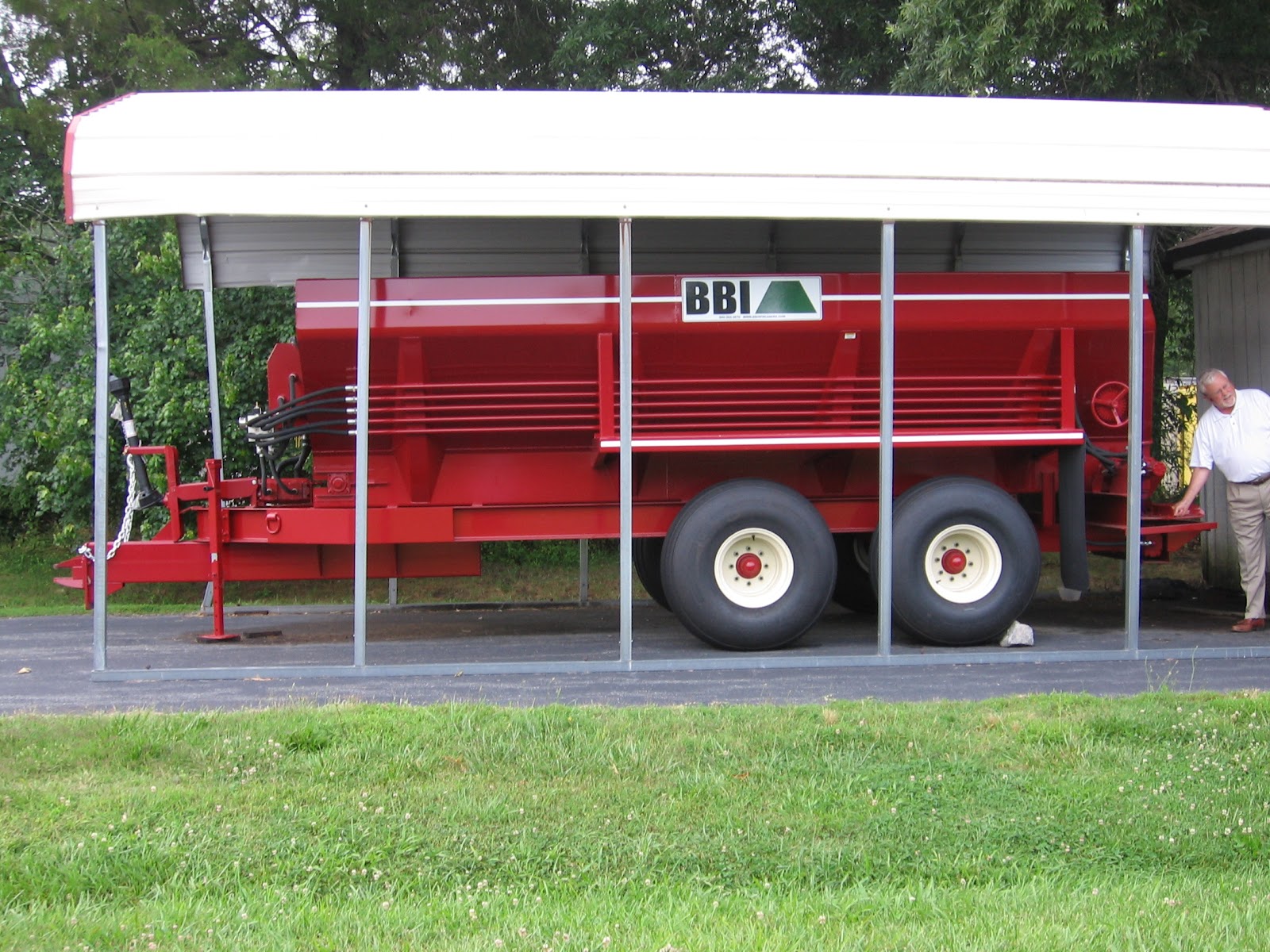
Louisa County Farm Bureau houses their spreader under a carport at the county Farm Bureau office and the county administrative assistants administer the applications and keep records.  The Virginia Poultry Federation grant helped fund the purchase of the spreader, but the administration, record keeping, maintenance, and insurance are the responsibility of the county Farm Bureau.  The county Farm Bureaus do charge a daily rental rate, which helps cover these things.
As part of the grant, users must use Virginia poultry litter for land application, and use is restricted to within 35 miles of the county Farm Bureau office.  Louisa County Farm Bureau developed guidelines, application, and an inspection check list to ensure proper and efficient administration of the rental of the spreader. 
The spreader in Louisa has been highly utilized over the years.  So much so that Louisa County Farm Bureau purchased their second spreader just a few months ago to replace the first one.  Their new litter spreader is a BBI brand, 16 ton pull type, hydraulically operated with a heavy duty suspension and floor chain. 
If you’re a Farm Bureau producer member in Louisa, Madison or Fauquier County and interested in renting a litter spreader, contact your county office.
Until next time,
Mark

Uranium Working Group Sets Public Meetings

The Uranium Working Group established by Governor Bob McDonnell has been busy with their work, which includes holding a series of public meetings held around the state. The most recent was held at Chatham High School in Chatham.

You will remember from previous reports, the working group was established to “to provide a scientific policy analysis to help assess whether the moratorium on uranium mining in the Commonwealth should be lifted, and if so, how best to do so.”

Virginia Farm Bureau has been monitoring the progress of the group’s work, including attending each of the public meetings. In addition, VAFB has submitted questions for consideration on the issue from an agricultural standpoint. These questions were the result of surveying each of the County Farm Bureaus for concerns they felt needed to be addressed.

We encourage all of our members to read the current reports on the issue and, if possible, participate in the public meetings. Members can access the reports and also provide comment to the working group through their website at http://www.uwg.vi.virginia.gov/

VAFB will continue to monitor the issue and keep member’s concerns before the Working Group and policy makers. The remaining public meeting dates and locations have been set except the final one, which will be held in Richmond. The actual location and date has yet to be set.

Should you have any questions or comments please contact Andrew Smith in the Governmental Relations Department at andrew.smith@vafb.com or 804-290-1021.

Remaining Public Meetings on the Uranium Working Group

• August 2, 2012 – 6 pm (joint meeting with NRC)
Old Dominion Agricultural Complex
19783 US Highway 29, Suite G
Chatham, VA 24531

• August 28, 2012 – 6 pm
Virginia Beach Convention Center
1000 19th Street
Virginia Beach, VA 23451

• October 17, 2012 – 6 pm
Old Dominion Agricultural Complex
19783 US Highway 29, Suite G
Chatham, VA 24531

• November 2012 (TBA)
Richmond, VA

Community Animal Response Teams Keep Animals Safe During Emergencies

Lindsay Reames
Assistant Director
Governmental Relations

Last Friday I attended a very informative meeting about CARTs- Community Animal Response Teams.

Research has shown that the No. 1 reason people refuse to evacuate their homes during an emergency is because they don’t want to leave pets behind. In 1999, Hurricane Floyd claimed the lives of millions of animals in North Carolina and thousands were separated from their owners. Many of the animals could have been saved by a coordinated response plan.

Out of this tragedy grew the CART concept. Virginia adopted the concept in 2006 to address the needs of animals during natural or man-made disasters.

VASART– the Virginia State Animal Response Team to—was formed to address the needs of animals during natural or man-made disasters. VASART was created through a private-public partnership to serve as a unifying network of organizations, businesses, federal and state government agencies and individuals that support the prevention, preparedness, response and recovery for emergencies affecting animals. Tony Banks, assistant director of Farm Bureau’s Commodities and Marketing Department, is co-chair of VASART.

The group is working to increase CARTs in the state. There are currently eight groups in Virginia, but that’s more than other states have. As part of the animal response teams, trained volunteers will help people find shelter for their pets. Campbell County may be the next locality to form a community response team.

The state and county groups are primarily focused on companion animals but are starting to put more emphasis on large livestock animals.

Here are some suggestions from VASART on what to do to prepare your pets for an emergency:

• Keep a pet emergency kit ready, which includes a few days worth of medicine, your pet’s medical and vaccination records, a leash, collar, identification, water, food, toys and bedding.

• Make sure that your animals have some form of permanent identification such as a microchip, brand or tattoo.

• Purchase a pet carrier and label it with emergency contact information.

• Store water and feed for emergencies.

• Create a contingency plan for animals including horses and livestock that addresses transportation, water and feed resources, and areas for confinement if needed.

Governor Signs Property Rights Bills; Coalition Officially Launches Campaign

Virginia landowners will be confident that their private property cannot be taken and given to another private owner under eminent domain if the commonwealth’s voters approve Question 1 on the Nov. 6 ballot.

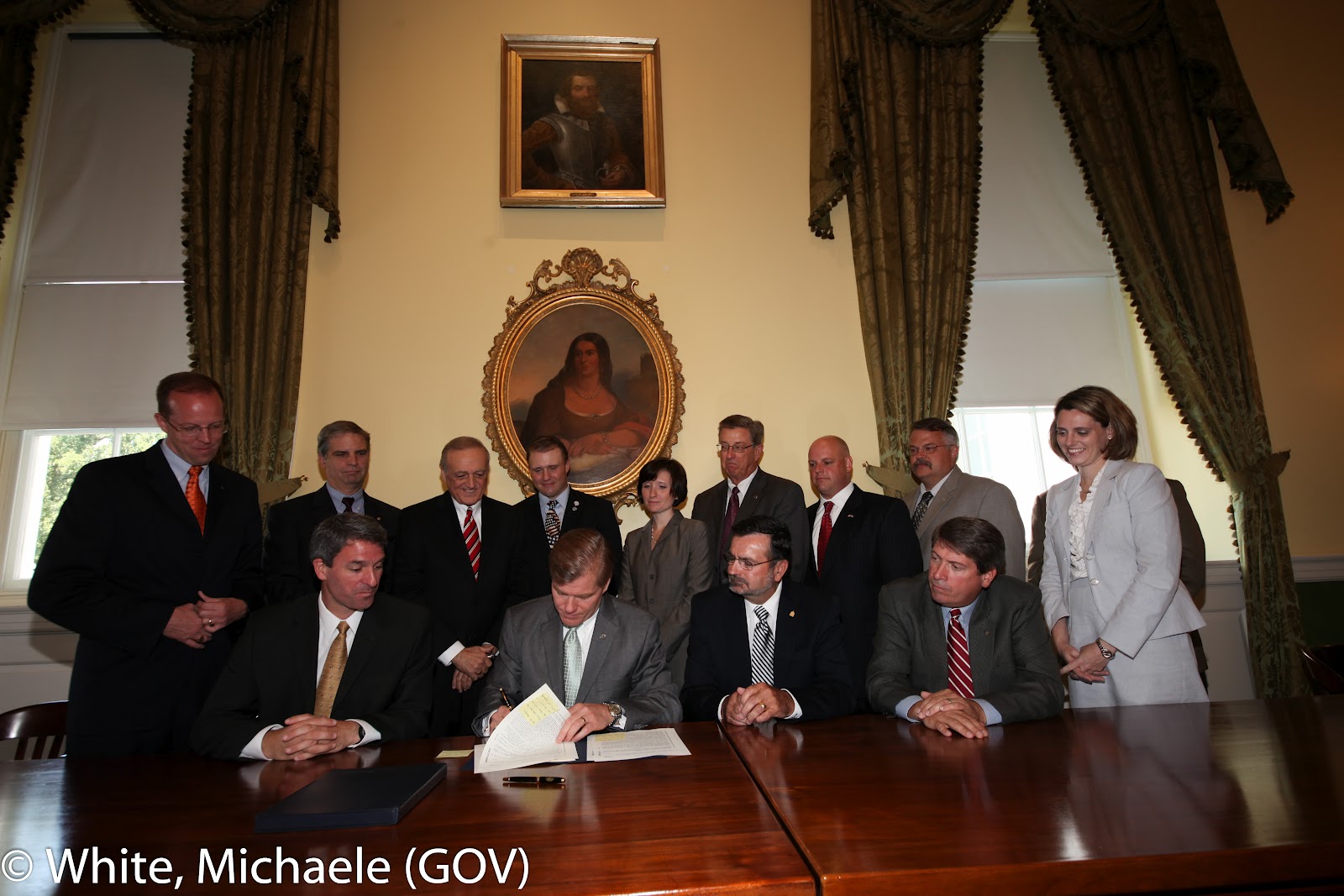
Bipartisan legislation was signed by Gov. Bob McDonnell yesterday to place a proposed constitutional amendment on this fall’s ballot to protect the private property rights of Virginia’s farmers, small businesses and individuals. The amendment specifies that eminent domain cannot be used unless it is for a true public use and further ensures just compensation for the landowner, including the opportunity for lost access and lost profits to be considered as part of that compensation. The language in the amendment also clarifies what is a true “public use” and specifies that no more land than is necessary can be taken.

The “Private Property Rights” amendment and companion legislation was supported by Attorney Gen. Ken Cuccinelli and patroned by Sen. Mark Obenshain, R-Harrisonburg; Del. Rob Bell, R-Albemarle; and Del. Johnny Joannou, D-Portsmouth.

At the July 16 bill signing, a coalition of private property rights advocates announced the launch of a campaign encouraging Virginians to “Vote Yes for Private Property Rights.”

“Our members are excited about the opportunity that this constitutional amendment will provide. No longer will our farms, homes or businesses be taken and given to another private property owner under Kelo-type eminent domain abuses,” said Wayne F. Pryor, president of the Virginia Farm Bureau Federation. Martha Moore and Trey Davis, Farm Bureau Governmental Relations staff, were also in attendance.

“Our members are grateful to Gov. McDonnell, Attorney Gen. Cuccinelli and the General Assembly for understanding that, while sometimes the government may want someone’s property for a well-agreed public use, taking someone’s home, farm or business so someone else can develop the land is just plain wrong,” said Nicole Riley, state director for the National Federation of Independent Businesses. “This amendment ensures that, if property is taken for a legitimate public use, private property owners will be justly compensated.”

Elected officials “have given Virginians the opportunity to approve this historical measure,” added Katie K. Frazier, president of the Virginia Agribusiness Council. “Our job now is to educate the public on what this constitutional amendment does and why it is important to them. We’ll be doing so through grassroots activism and communication.”

The “Vote Yes for Private Property Rights” campaign is supported by Farm Bureau, the NFIB, the Virginia Agribusiness Council, the Virginia Forestry Association, the Virginia Poultry Federation, Americans for Prosperity, the Family Foundation of Virginia and other advocacy groups. The coalition will be posting campaign signs, distributing literature and organizing other activities through the fall.

Agriculture and Forestry U.S. Senate Candidates Forum to be held in July

The Virginia Farm Bureau Young Farmers Committee will be hosting the Agriculture and Forestry U.S. Senate Candidates Forum in July. They have partnered with other agriculture and forestry groups to host this event in conjunction with their 2012 Young Farmer Summer Expo in Lynchburg. These partners are Virginia Farm Bureau Federation, Virginia Agribusiness Council, Virginia Forestry Association and Virginia Forest Products Association.

George Allen (Republican Nominee) and Tim Kaine (Democratic Nominee) have both agreed to participate. You will have the opportunity to submit written questions for each candidate during the forum. This is the only event planned with a specific focus on Virginia’s agriculture and forestry industry before the election on November 6. Time will be set aside to meet and greet the candidates.

WHEN: Friday, July 27, 3:00 PM to 5:30 PM

WHERE: James River Conference Center
400 Court Street
Lynchburg, VA 24504
(The Center is located in downtown Lynchburg off Rt. 29 Business. Traveling west on Main Street, turn left on 5th Street then right on Court Street. The Center will be on your right.)

RSVP: Please let Norma Opel know you are coming by Monday, July 23 by emailing her at norma.opel@vafb.com or by phone at 804-290-1013.


Allen


Kaine


From the Field: Introducing Mark Campbell

Welcome to the new column, “From the Field.” My name is Mark Campbell, and I am the Senior District Field Services Director for Virginia Farm Bureau Federation in the central part of the state. I will be sharing Farm Bureau activities and events throughout the state and other agricultural information and interesting stories, as well as my love for all things agriculture. “From The Field” will be posted here every other Wednesday.

I work out of and live in Nelson County—one of the most beautiful areas of the state! My wife, Dana, our two sons Hayden (9) and Daniel (7) and I live on our family farm, Deer Creek Farm, where I was raised. The rolling and sometimes mountainous terrain of Nelson County is best suited to cattle and sheep and fruit trees. While we do not have fruit trees on our farm, Nelson County is a leader in production of fresh apples and peaches. Nelson is also a high ranking county for vineyards and wineries. Another business that has really taken off in Nelson County is micro-breweries. The county also has a large wholesale nursery. There’s a lot more about Nelson County, click here http://www.nelsoncounty.com/

When I am not working for Farm Bureau, I enjoy working on our farm raising registered Simmental and SimAngus cattle. We sell bulls and replacement heifers to other cattlemen. We send the steers and cull heifers through the Virginia Retained Ownership Program, administered by Virginia Tech in coordination with Iowa State University. The cattle are fed at several participating feedyards in southwest Iowa near the Nebraska border, and are harvested in Iowa. In addition to the cattle, the only crops we raise are grass and trees. Over the years, I have installed several conservation projects with cattle water tanks and implemented a rotational grazing program.

Oh, by the way, we have a small flock of commercial sheep and one Italian Maremma guard dog. That is our new project and I am still working, and sometimes get frustrated trying to integrate them into our cattle system.

My sons are just now getting old enough to start showing cattle at some shows. They really enjoy it and are gaining knowledge about genetics, nutrition and animal care. They are also at that age where they tell everyone they know about everything they know. You know what I mean–some things you wished they didn’t share! Oh well, that makes it real and genuine. So they are doing a great job of being advocates for agriculture. They have a real passion for agriculture.

I thoroughly enjoy being involved in agriculture. It has always been a part of my life. I am an alumnus of Virginia Tech with a Bachelor of Science degree in Animal Science. I was a member of Alpha Gamma Rho, Block and Bridle, and was on the Livestock Judging Team. After college, I worked four years with USDA Grain Inspection Packers and Stockyards Administration (GIPSA) in the Packers and Stockyards Administration division. After that, I started with Virginia Farm Bureau in the northern field district, and then transferred to my current district in central Virginia. My Farm Bureau career has presented me the opportunity to work with 21 county Farm Bureaus and lots of wonderful people over the past 14 years.

My job as District Field Services Director (DFSD) allows me the opportunity to interact with over 100 producer members and assist 10 county Farm Bureaus on a monthly basis who are involved in all facets of agriculture. In central Virginia, we have a wide assortment of agriculture products such as beef cattle, apples, peaches, corn, soybeans, wheat, barley, vegetables, nurseries, tobacco, vineyards, dairy, horses, sheep, goats, hay, timber, poultry, hogs, honey, and even rabbits. I may have missed a few, but you get the picture.

As a DFSD, I am a liaison between Virginia Farm Bureau and 10 county Farm Bureaus. DFSDs work closely with county Farm Bureaus and Virginia Farm Bureau to strengthen the Farm Bureau organization, improve the agriculture industry, promote agriculture, monitor legislation and contact our elected legislators, and help develop future agriculture leaders. In other words, we do whatever we can through Farm Bureau to make things better in the agriculture community.

I am pretty much in agriculture mode all of the time with a few exceptions. And even then, agriculture always finds a way in. The boys and I like model railroading. We are working on a new layout with grain, cattle, and corn ethanol set in Nebraska. We plan to have two trains; one with hopper cars for the grain, and one with tanker cars for the ethanol. Go figure! Agriculture. It’s a way of life.

My next post will be about a successful member benefit that Louisa County Farm Bureau offers to their producer members. Thanks for reading and doing all that you do for Farm Bureau and Virginia agriculture.

Mark

Land Preservation Opportunity for County Farm Bureaus

As part of Governor McDonnell’s new project to increase the amount of working farm and forestland in Virginia, Virginia Farm Bureau has been working with interested parties on the development of the new “Working Lands Variant” Conservation Easement from the Virginia Outdoors Foundation.

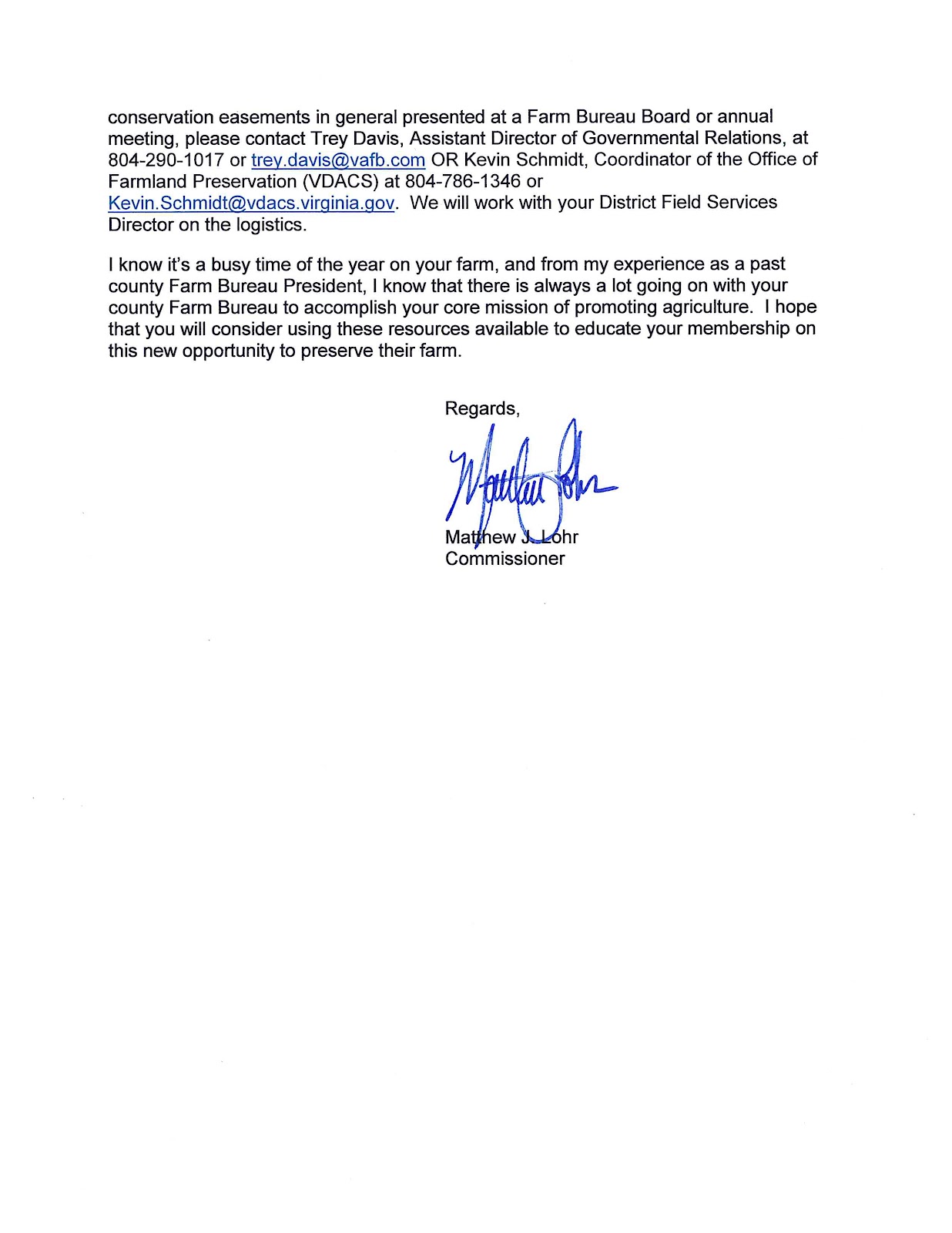
Below is a letter from Matt Lohr presenting an opportunity and resources for those of you that may have interest within your county membership to hear more about an option for preserving your land.

Please contact Trey Davis, Assistant Director of Governmental Relations, at (804) 290-1017 or trey.davis@vafb.com if you have further questions with the information contained in the letter.

New AFBF Campaign: Stop the Flood of Regulation

Farmers are working to stop an effort by the U.S. Environmental Protection Agency to regulate waterways Congress never intended the agency to regulate.

The American Farm Bureau Federation has launched its “Stop the Flood of Regulation” campaign because it believes the EPA is trying to improperly alter the Clean Water Act. That law gives the EPA the power to write rules to protect navigable waters.

Using what is called a guidance document, the EPA is seeking to take the word “navigable” out of the law, which would allow it to regulate even a roadside ditch that holds water after a heavy rain.

“A guidance document is supposed to be a non-binding policy document for field offices on how to implement current law and current policies,” said Cody Lyon, AFBF grassroots and advocacy director.

Of concern to Farm Bureau, Lyon said, is that “there’s uncertainty with how this guidance document can be implemented. This could be interpreted many different ways around the country or even many different ways within a state. For 40 years the Clean Water Act has done a great job. The problem is the guidance document goes beyond Congressional intent, and they’re also ignoring the Supreme Court precedents that have determined the definition of ‘navigable.’”

That could be problematic for farmers and ranchers, who fear that even a farm pond or ditch could now fall under EPA permitting regulations.
“We’re talking thousands, tens of thousands of dollars,” he said, because the guidance could affect “anything dealing with livestock operations, anything dealing with applications of pest management tools, anything dealing with wetlands, groundwater, runoff, storm water. You could start having a flood of regulations that start coming in just from this one guidance document.

“We’re trying to make sure we stop this flood of regulations at the very beginning, before it starts getting out of control.”

Farm Bureau is asking its members who farm to tell their Congressional representatives how hard the new rule could hit them, and to ask for support of H.R. 4965, a bill that would preserve existing U.S. water rights and responsibilities in the Clean Water Act.

AFBF President Bob Stallman said the EPA guidance document “improperly changes the law of the land,” and he asserted that, in issuing it, the EPA is bypassing the necessary public outreach required under the Administrative Procedures Act.

Please stay turned for more information and action alerts related to this campaign in the next few weeks. To sign up action alerts, please contact Kelly Pruitt at kprui@vafb.com or 804-290-1293 with your producer membership number.