Proposed eminent domain amendment protects ‘the little guy’

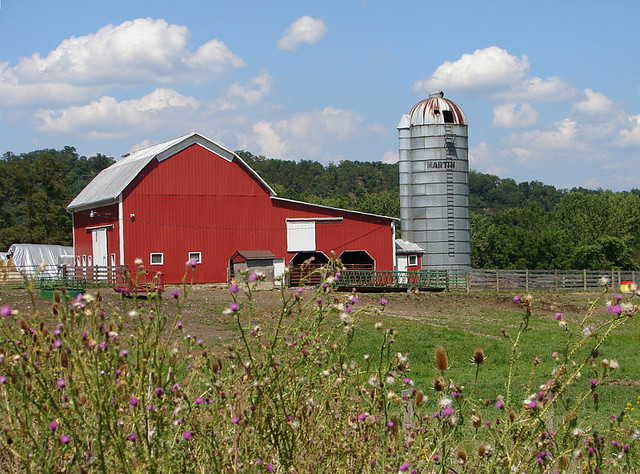
November 6th is fast approaching, and many people are still not aware of the property rights constitutional amendment and how its passage (or lack thereof) will affect them. Below is another example of eminent domain abuse in Virginia that appeaered in last week’s edition of News Leads, a press release of the top stories in Virginia agriculture sent to media across the state by Farm Bureau’s Communications department.

If the amendment doesn’t pass, Snively’s story could happen again to someone else. Please remember to Vote Yes on Question 1 on Nov. 6, and please encourage your friends and family to do the same.

Joel Snively served 22 years as a Marine in posts around the world. Ironically, he said, one of his toughest battles was defending his private property rights at home.

Five years ago Snively was approached to allow a utility easement on Stafford County land zoned for agricultural use.

“In my case they offered me a certain amount of money for an easement for an underground power line. They almost acted like they were renting the property from me for the purpose of putting a line in,” he said.

But when he didn’t agree to the request, a local court moved immediately to condemn the land through eminent domain.

“My land was condemned by a judge with no hearing. I never even got my day in court before the condemnation. They rammed the case through and then decided to sort out who got what,” Snively said. “They said I could farm this land, but they told me I couldn’t raise certain crops. My point is now I can’t use my land as I see fit. … In reality they own it except in title. They can restrict my movement on it, they can put up a barrier saying you can’t come onto the property, but under current law I still have the tax burden on it.”

After four years of legal wrangling Snively reached a settlement and has relocated to Augusta County to pursue his dream of starting a small farm operation. But he said his case is one of many that prove Virginia’s constitution needs to be amended.

“It’s not what they take that’s so valuable as what they take from your future,” Snively said. “They limit what you can do with the property in the future. … This amendment will help balance the scales when the little guy goes up against a big utility or government body in an eminent domain dispute.”


From the Field: Where’s the Beef?

From the Field is a bi-monthly column written by Mark Campbell, Farm Bureau Field Services Director for the Central District. He writes about Farm Bureau member benefits and County Farm Bureau activities.

I recently received the 25th Anniversary edition of Directions. Directions is a report that the National Cattlemen’s Beef Association (NCBA) publishes in their magazine to members. I always look forward to reading this report and viewing the rankings.

It should come as no surprise that there were some shifts in cattle production and numbers this year. The droughts of the past two years have placed significant pressure in cattle country, which is the center of the country to include the Midwest and Plains states. Although I will say, the Southeast contributes a significant number of cows to the US herd.

We all heard and saw pictures and video of the severe drought in 3/4ths of the country this summer. Even now, the drought still persists. Let’s not forget about the severe drought that brought Texas and Oklahoma to its knees last year. These two years of droughts have forced a lot of cattle to the market that would not have normally gone there. Some ranchers completely exited the beef business. Others sold part of their cow herd.

The one shinning spot in this were the record high prices for all classes of cattle and good exports. This has been good for the cow-calf producer; but not for the cattle feeders who have lost upwards of $250/head this year. Packers have not done much better as they have been forced to pay more for a limited supply of cattle. Higher input costs and land competition have also been challenges to the beef industry the past few years. Higher input costs such as diesel fuel hovering around $4.00/gal., and high fertilizer prices have led many cattlemen to skip a year or go with reduced amounts of fertilizer on the hay and pasture land.

While we have not seen the land competition between livestock and grain farmers as much on the East Coast; it has been very competitive in the Midwest. With the higher prices for corn and soybeans, cattlemen haven’t been able to compete on land rental rates with the grain guys. Cattlemen that I know in the Midwest and Plains have all talked about this as a big challenge to long term sustainability. Even here in my travels in central Virginia; I have seen corn and beans in fields that I would have never expected. Round-up ready crops and no-till drills add a lot of flexibility these days as to what one does with agriculture land.

Here are just a few highlights from the report. As of January 1, 2012, cattle numbers are down 2 percent, with the largest decline in region 4 which includes Texas, Oklahoma, and Arkansas. Virginia also had a decline. Lots of states had declines.

But some states actually saw an increase in their cattle numbers. Remember what I ssaid about the changing demographics? Nebraska had a huge jump this year of 250,000 cattle and calves. I heard that Nebraska experienced a large increase last year as well, where some cows were shipped from Texas and Oklahoma ranches to Nebraska where there was some grass to be found. Florida had an increase in cattle numbers. You may not think of Florida as being a large cattle state, but they are a major player. How about this? In the top 25 largest cow-calf operations in the country, 8 are in Florida with the largest having 42,000 cows and the smallest Florida ranch in the top 25 with 4,700 cows. Florida also ranks #10 in the number of beef cows per state. If you ever travel to Florida; take a drive into the central and southern parts of the state. You will see plenty of cattle and other agriculture enterprises and get a sight of what the native Floridians call the “Old Florida”.

Kentucky and Tennessee hold the 8 and 9 spots. Actually, these state rankings on beef cows haven’t changed much. But there is a consolidation taking place towards larger ranches with larger cowherds. The cattle feeding sector ranking has not changed much at all. The top 25 feeders are the same as last year. The big shift in the feeding sector has occurred with the smaller feedyards; primarily those with 5,000 head capacity and less. Most of the large feedyards are located in the High Plains of Nebraska, Colorado, Kansas, Texas, and Oklahoma. With the ethanol industry, the feeding sector in the Corn Belt areas such as western Iowa have seen a thriving group of feeders. These feeders have taken advantage of the ethanol industry by utilizing more economical co-products in feed rations to give them a competitive advantage. Plus they are still close to many of the packers in eastern Nebraska and western Iowa.

With cattle numbers low and beef demand high; the prospect for high prices into the future looks good, and cattlemen are optimistic. The grain prices will continue to play a significant factor in how cattle are raised, where they are grazed, and how they are fed and marketed. Obviously weather will always be a major factor. Let’s hope that all of us across the country enjoy good weather into the future with adequate precipitation for growing lots of grass. With plenty of forage, beef cattle have a nice advantage in being able to turn sunshine and grass into a wholesome, nutritiuos, and tasty beef.

Until next time,
Mark.

Tell Gov. McDonnell Your Ideas for Regulatory Reform

Governor Bob McDonnell has announced the launch of the Governor’s Regulatory Reform initiative and creation of a new portal for citizens to submit ideas for regulatory reform. Governor McDonnell has also charged regulatory agencies to conduct a comprehensive review of regulations currently in place and repeal regulations that are unnecessary or no longer in use, reduce unnecessary regulatory burdens on individuals, businesses, and other regulated groups, and identify statutes that require unnecessary or overly burdensome regulations. The initiative is an extension of Governor McDonnell’s efforts as Attorney General to eliminate unnecessary and burdensome regulations through his Task Force on Regulatory and Government Reform. The task force made more than 300 recommendations to streamline Virginia’s Administrative Code, and reduce burdensome government regulation.

Speaking about the launch, Governor McDonnell said, “While the regulations contained in the Virginia Administrative Code are important parts of ensuring the safety and well-being of Virginians, these regulations can sometimes also be unnecessarily burdensome on the people and job creators of the Commonwealth. Unnecessary administrative burdens hamper job creation by Virginia employers. Smart regulatory reform will produce a freer and better environment for citizens and businesses. The initiative launched today will result in a reduction in unnecessary regulations and regulatory burdens, and I look forward to receiving recommendations from citizens and business people who understand firsthand the intended and unintended consequences of regulations.” Governor McDonnell continued, “All regulatory activity should be undertaken with the least possible intrusion in the lives of the citizens of the Commonwealth consistent with protecting the health, safety, and welfare of the people of Virginia. Proposed and final regulations should make state government more efficient and should make Virginia a better place to live and work.”

As part of this initiative, Governor McDonnell welcomes recommendations from citizens and stakeholders regarding regulations that are overly burdensome and where reform is appropriate. They may submit their recommendations, here: http://www.RegReform.Virginia.Gov.

USFRA responds to: It’s Been Said: GMOs don’t actually decrease pesticide use, they increase it

More than a year ago, Virginia Farm Bureau joined the United States Farmers and Ranchers Alliance, agricultural groups at the national, regional and state levels that have collaborated to lead the dialogue and answer Americans’ questions about agriculture and how we raise our food. On their Web site, www.fooddialogues.com, they respond to questions from readers as well as articles from publications that may contain some misinformation about agriculture.

Recently, they responded to an article that appeared in the Huffington Post about GMOs and pesticides. Here is an excerpt from the article:

University of Washington agricultural scientist Charles Benbrook recently looked at the rate of pesticide use in the age of genetically engineered seeds, or GMOs. Benbrook’s results undercut one of the main arguments in favor of this technology — the idea that they have significantly brought down pesticide use. According to Benbrook’s analysis, since their introduction in the 1990s, pesticide use for commodity crops like corn and soy has actually increased by approximately 7 percent.

Benbrook claims that Monsanto and its herbicide-resistant RoundUp Ready product line — seeds engineered to withstand the herbicide RoundUp — had the opposite effect, encouraging farmers to use a single pesticide, ultimately to excess.

Source: http://www.huffingtonpost.com/2012/10/04/pesticides-gmo-monsanto-roundup-resistance_n_1936598.html?utm_hp_ref=mostpopular

USFRA posted this response:

Benbrook’s study is flawed and incomplete. The U.S. Department of Agriculture ended its pesticide use tracking program in 2006, so Benbrook estimated the total use by using incomplete data from the USDA combined with other sources, like planting data and pesticide-use models. Not to mention, RoundUp Ready is an herbicide-resistant product line. Not pesticide.

In addition, according to a study assessing the global economic and environmental impacts of biotech crops for the first nine years (1996-2004) of adoption, biotechnology has reduced pesticide use – pesticide spraying decreased by 380 million pounds and has reduced environmental footprints associated with pesticide use by 14% (http://www.isaaa.org/resources/publications/pocketk/4/default.asp).

Farmers use herbicides, pesticides, fungicides and fertilizers with respect to the environment. They carefully follow labels and consider weather patterns that may impact the efficacy or leaching of an application. Further, farmers are incentivized to properly manage these tools because of the cost. Most strive to reduce the “inputs” they use to be more profitable.

USFRA firmly believes that biotech crops are safe for human and animal consumption. Countless studies have proven the value of biotech seeds. Farmers’ yields continue to increase while the amount of land used continues to be the same or even decrease. While these examples may only sound like farmer benefits, the environmental impact continues to decrease – less water, less pesticides, less land are needed.

As members, USFRA wants you to use Benbrook’s study as an opportunity to share your farming stories and background of biotech seeds. Tell consumers how you eat the same food that you produce and safety is an important factor when you grow and raise crops. Share what you have witnessed on your own farm firsthand – healthier crops, less pesticide use, less water use, etc. You can also share a recent discussion USFRA hosted regarding conventional and organic farming practices, which may help answer many consumer questions: http://fooddialogues.com/organic-chat-conventional-farming-discussion

Also, here’s the link to USFRA’s Overview of Biotechnology in Seeds:
http://www.fooddialogues.com/2012/08/22/overview-of-biotechnology-in-seeds

Want to learn more about USFRA? There will be a workshop at the Virginia Farm Bureau’s Annual Convention in November about USFRA and how to answer consumers’ questions about farming and agriculture. Be sure to sign up when you register!

BREAKING NEWS: Court Allows AFBF to Join Farmer Lawsuit Against EPA

The U.S. District Court for the Northern District of West Virginia has ruled that the American Farm Bureau Federation has a right to join in a lawsuit over the scope of the Environmental Protection Agency’s authority to regulate poultry and livestock farms under the Clean Water Act. In July, AFBF asked for permission to join on the side of West Virginia poultry grower Lois Alt, who brought suit to challenge an EPA order demanding that she obtain a CWA discharge permit for stormwater runoff from her farmyard. The West Virginia Farm Bureau has also joined the lawsuit. EPA aggressively opposed the Farm Bureaus’ participation.

“The court clearly recognizes the importance of this case for thousands of other livestock and poultry farmers threatened by EPA’s unlawful restriction of the agricultural stormwater exemption,” said AFBF President Bob Stallman. “The court flatly rejected EPA’s argument that other farmers facing similar EPA demands should be forced to file their own lawsuits. We are pleased that Farm Bureau will be allowed to challenge EPA’s actions on behalf of all our farmer and rancher members,” he added.

Alt sued EPA in June after the agency ordered her to obtain a National Pollutant Discharge Elimination System discharge permit. EPA’s order threatens Alt with $37,500 in fines for each time stormwater comes into contact with dust, feathers or dander on the ground outside of her poultry houses, or small amounts of manure that may be present in the farmyard as a result of normal poultry farming operations. EPA also seeks separate fines if Alt fails to apply for an NPDES permit.

According to AFBF’s intervention papers, EPA’s order to Alt represents the latest EPA attempt to regulate non-discharging farmers—this time by unlawfully narrowing the statutory exemption for “agricultural stormwater discharges.” EPA has claimed here that the agricultural stormwater exemption does not apply to larger farms that qualify as concentrated animal feeding operations, except for certain “land application areas” where crops are grown.

According to Judge John Preston Bailey, AFBF and WVFB demonstrated that a ruling upholding EPA’s order would harm numerous other farmers and ranchers. Under EPA’s reasoning, Bailey stated, “virtually every large [CAFO] would likely have an obligation to obtain a federally mandated permit if it rains enough in their area to wash manure and dust particles off their land and eventually into a jurisdictional water.”
In allowing AFBF’s participation, Judge Bailey noted that AFBF is a “veteran advocate in the courts on issues related to CWA permit requirements for CAFOs.” Stallman agreed and noted, “We are proud of our past efforts on behalf farmers and ranchers, and we are honored that the court recognizes that we bring something useful to the table.”

AFBF President Bob Stallman: Your Democracy, Your Vote, Your Responsibility

AFBF President
Bob Stallman

Tuesday, Nov. 6, 2012 is a very important day. Not because a Democrat may be reelected as the U.S. President or because a Republican may ascend to the office. Tuesday Nov. 6 is significant because on that day we will all have a say in the future direction of our government as we cast our votes at ballot boxes across America.

Because many brave Americans have fought to ensure this inalienable right, it is all of our responsibility as citizens to uphold it by engaging in the political process. This is crucial to a functioning democracy. George Bernard Shaw best stated this sentiment when he said, “Democracy is a device that ensures we shall be governed no better than we deserve.”

Road to the White House

At the top of the political rung this election are two qualified candidates seeking the presidency. And while the American Farm Bureau remains bipartisan and does not support one candidate over the other, we are most definitely politically active. We encourage Farm Bureau members to study the issues and assess how each of these two candidates would treat U.S. agriculture and our rural communities.

President Barack Obama and Governor Mitt Romney recently took time to answer an AFBF questionnaire on important agricultural issues and how their administrations would work with farmers and ranchers. From the past four years, we know where President Obama has stood on many Farm Bureau priority issues. For example, he has shown his support for AFBF-supported trade agreements, home grown energy sources and passage of the farm bill. But, he has also overseen the Environmental Protection Agency’s power grab on environmental issues impacting farmers.

In his responses, President Obama said a farm bill must be passed this year that maintains a strong crop insurance program and an extended disaster assistance program. He also said he will increase funding for agricultural research and development by more than 20 percent and extend tax incentives for wind energy and other clean energies that would help farm income.

According to Governor Romney’s responses, he supports many of the same tax incentives as Farm Bureau members, like eliminating the estate tax and the alternative minimum tax, as well eliminating the capital gains tax for lower income Americans. He also supports making environmental regulations more rational and cost-effective. On labor issues, he supports allowing kids to work on family farms.

Differing from Farm Bureau, Romney supported his running mate, Rep. Paul Ryan’s (R-Wis.), vote on the House disaster bill, an alternative to pushing for congressional agreement on the long-term farm bill that is much needed.

All Politics is Local

Just as important to agriculture and rural America are the ballot initiatives taking place around the country. Often the agriculture industry is far more impacted by local referenda than what happens in Washington.

For example, the North Dakota Farming and Ranching Amendment, also known as Measure 3, sponsored by the North Dakota Farm Bureau, would forever guarantee modern agricultural practices in the state. Specifically, the measure calls for a constitutional amendment that would block any law ‘which abridges the right of farmers and ranchers to employ agricultural technology, modern livestock production and ranching practices.”

In California, many farmers are fighting Prop 37, a ballot initiative that, if passed, would make California the first state to require labeling of foods produced with biotechnology. According to opponents of Prop 37, like the California Farm Bureau, the measure would raise food costs, hurt small businesses and farmers and create frivolous lawsuits. Further, farmers feel that labeling wrongly implies that biotech foods are unsafe and misleads many consumers.

So, as Tuesday, Nov. 6 approaches, take the opportunity to read up on the candidates and issues that could impact your lives and livelihoods. Once you get past all the campaign rhetoric, you may be surprised at what’s really at the heart of the issues. It’s your democracy—get involved!

BREAKING NEWS: AFBF Presents Case on Chesapeake Bay Regulations

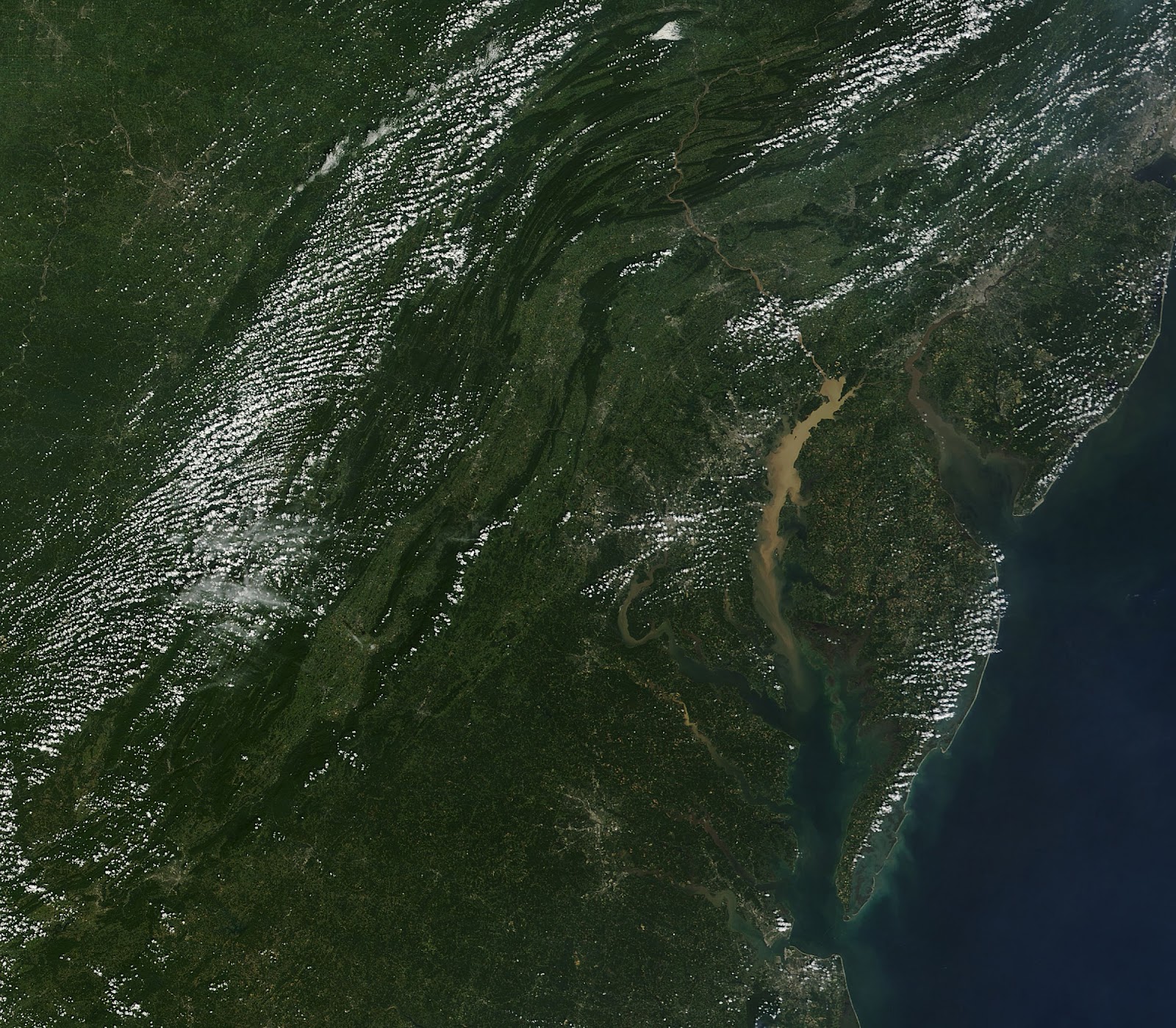
Photo By NASA Goddard Photo & Video

Attorneys for the American Farm Bureau Federation delivered legal arguments Thursday explaining why the Environmental Protection Agency violated the Clean Water Act when it issued its “Total Maximum Daily Load” regulation for the entire Chesapeake Bay watershed.

AFBF believes that states in the Chesapeake Bay watershed, not the federal government, are authorized by law to decide how best to achieve water quality goals. “The Clean Water Act put states in the driver’s seat when it comes to decisions about how to achieve clean water and restrictions on land use and development,” according to Don Parrish, senior director of regulatory relations for AFBF.

AFBF delivered the oral arguments and answered questions during a lengthy session before Judge Sylvia H. Rambo in the U.S. District Court for the Middle District of Pennsylvania in Harrisburg, Pa. More than a dozen Pennsylvania farmers, as well as staff from several state Farm Bureau organizations within the watershed, attended the argument to show their support for the legal challenge.

“Judge Rambo clearly believes this case is important and involves complex legal questions,” said AFBF General Counsel Ellen Steen. “She had carefully studied the parties’ arguments and was active in her questioning. At the end of a very long day of arguments, she told the parties not to expect a quick decision.”

Obama & Romney Outline Positions on Farm Issues


Photo by Scout Tufankjian

President Barack Obama and Republican nominee Mitt Romney recently spelled out their positions on agriculture issues for the American Farm Bureau Federation. In a questionnaire, both candidates went into detail about their positions on energy, environmental regulations, farm labor and more.

Every four years, the American Farm Bureau Federation asks the Democratic and Republican presidential nominees to address the issues that concern farmers and ranchers most. This election, energy issues and farm policy are the driving forces in the candidate’s responses.

“Our rural communities, farmers and ranchers can increase our energy independence and boost the transition to a clean energy economy,” Obama responded. “Last year, rural America produced enough renewable fuels like ethanol and biodiesel to meet roughly 8 percent of our needs, helping us increase our energy independence to its highest level in 20 years…and the new Renewable Fuel Standard helped boost biodiesel production to nearly 1 billion gallons in 2011, supporting 39,000 jobs.”

Romney, too, supports the RFS and other agriculture-derived energies.


“I have a vision for an America that is an energy superpower, rapidly increasing our own production and partnering with our allies, Canada and Mexico, to achieve energy independence on this continent by 2020,” said Romney. “The increased production of biofuels plays an important part in my plan to achieve energy independence. In order to support increased market penetration and competition among energy sources, I am in favor of maintaining the Renewable Fuel Standard.”

On farm policy, Obama said he understands the need for a strong farm safety net. “That’s why I increased the availability of crop insurance and emergency disaster assistance to help over 590,000 farmers and ranchers keep their farms in business after natural disasters and crop loss,” he said. “My administration expanded farm credit to help more than 100,000 farmers struggling during the financial crisis…and as farmers continue to go through hard times because of this drought, we are expanding access to low-interest loans, encouraging insurance companies to extend payment deadlines and opening new lands for livestock farmers to graze their herds.”

Romney said he supports passage of a strong farm bill “that provides the appropriate risk management tools that will work for farmers and ranchers throughout the country.” He also pointed out that his running mate, Rep. Paul Ryan (R-Wis.), voted for drought relief – a bill which the Senate never took up.

When asked why farmers should vote for them, Obama said he is committed to strengthening rural America through growing products that the world wants to buy and restoring middle class values of hard work and play. He further said, “I am the only candidate that is committed to strengthening the farm safety net, strengthening rural economic growth and supporting rural investments in clean energy.”

Romney said if he were elected, he would give farmers relief from hefty environmental regulations, as well as “a commonsense energy policy that develops our resources right here at home; a renewed focus on opening new markets; and a pro-growth tax policy that encourages investment and recognizes that death should not be a taxable event.”

To view the full questionnaires and responses, click here.

Coalition releases statement on Farm Bill expiration

In August, we reported on the formation of the Farm Bill Now coalition, more than 35 agricultural organizations, including the American Farm Bureau Federation, that have united to urge congressional lawmakers to pass a five-year farm bill before the current programs expire in September. The current Farm Bill expired on Sept. 28. The coalition has released the following statemet:

The 2008 law governing many of our nation’s farm policies expired on Sunday, September 30th, and the 2012 Farm Bill needed to replace it is bottled up in Congress. While the Senate and the House Agriculture Committees were both able to pass their versions of the new farm bill, the full House was unable to do so. While expiration of farm bill program authorities has little or no effect on some important programs, it has terminated a number of important programs and will very adversely affect many farmers and ranchers, as well as ongoing market development and conservation efforts. Following is a summary of these impacts.

Programs Affected by Expiration of the 2008 Farm Bill

Dairy producers will face considerable challenges. The Milk Income Loss Contract (MILC) program expired on Sunday. That program compensated dairy producers when domestic milk prices fall below a specified level. Without a new farm bill, dairy farmers are left with uncertainty and inadequate assistance. While milk prices are high enough that the price support program doesn’t kick in; unfortunately, there is no other safety net to help battle the highest feed costs on record.

Many farmers, ranchers and agribusiness or agricultural processors benefit from the Foreign Market Development Program (FMD). FMD is a cost-sharing trade promotion partnership between USDA and U.S. agricultural producers and processors. The program pools technical and financial resources to conduct overseas market development. FMD helps maintain and increase market share by addressing long-term foreign market import constraints and by identifying new markets or new uses for the agricultural commodity or product in the foreign market. That funding, as well as specific funding for personnel to run the program at USDA, will run out at the end of October. Since 31 percent of our gross farm income comes from exports which also make a positive contribution to our Nation’s trade balance, trade promotion is an important part of our safety net. Other countries will most certainly take advantage of the fact that the program is rendered inoperable and will do what they can to steal our markets – and everyone knows, the hardest market to get is the one you lost.

About 6.5 million acres rotates out of the Conservation Reserve Program (CRP) this year. While current contracts are protected, no new signup will be allowed for CRP or the Conservation Reserve Enhancement Program (CREP). Both of these programs are voluntary land retirement programs that helps agricultural producers protect environmentally sensitive land, decrease erosion, restore wildlife habitat, and safeguard ground and surface water. In addition, there cannot be sign up for the Wetlands Reserve Program or the Grasslands Reserve Program.

Both versions of the new Farm Bill contain funding for the disasters facing the livestock industry due to the drought. However, programs are currently only available for lack of forage, as well as death of animals.

Most producers of fruits and vegetables do not have a safety net, but instead receive funding to augment the competitiveness of specialty crops through programs that enhance trade, promote cutting-edge research, and implement on-the-ground projects to protect crops from disease and invasive species. Funding for these programs ended when the Farm Bill expired.

Numerous other programs, including energy, agricultural research, rural development and funding for new and beginning farmers could be added to this list of affected programs. The bottom line is that while expiration of the Farm Bill causes little or no pain to some, others face significant challenges.

Programs Not Affected by Expiration of the 2008 Farm Bill

Almost 80 percent of the Farm Bill’s cost is for nutrition programs – primarily the Supplemental Nutrition Assistance Program (SNAP), formerly commonly known as food stamps. Most recipients of nutrition program benefits will not be affected because the SNAP program did not need to be extended. Funds for nutrition assistance programs will continue to be provided to those Americans without issue.

Farmers and ranchers who manage their risks using the farm bill’s crop insurance provisions will be unaffected because, like SNAP, those programs don’t expire. Nor do some of the conservation-related programs. In addition, most commodity-specific programs are largely covered by the 2008 Farm Bill since it applies to the 2012 crop year, rather than the 2012 fiscal year. The main challenge, however, will be in planning for 2013. This includes lining up the critical financial assistance needed from lending institutions which prefer, if not demand, to see business plans presented in black and white. That will be difficult when producers don’t know when to expect a new Farm Bill – or what type of financial safety net is likely to be included in that bill.

Congress will return in mid-November for a lame-duck session prior to final adjournment in December. We will work to have the first order of business for the House of Representatives be to consider a new Farm Bill. We are urging our members to seek out their House members between now and the elections and remind them of the consequences of not having a new bill in place prior to adjournment at the end of the year.

American Farm Bureau Federation
American Pulse Association
American Soybean Association
National Association of Conservation Districts
National Association of Wheat Growers
National Barley Growers Association
National Corn Growers Association
National Council of Farmer Cooperatives
National Farmers Union
National Milk Producers Federation
National Sunflower Association
United Fresh Produce Association
USA Dry Pea & Lentil Council
U.S. Canola Association
Western Growers Association

Nine members of Congress in Va. receive national award

Nine Virginia members of the 112th Congress received the American Farm Bureau Federation’s Friend of Farm Bureau Award.  

This year’s Virginia recipients are Sen. Mark Warner (D), Rep. Eric Cantor (R), Rep. Randy Forbes (R), Rep. Bob Goodlatte (R), Rep. Morgan Griffith (R), Rep. Robert Hurt (R), Rep. Scott Rigell (R), Rep. Robert Wittman (R) and Rep. Frank Wolf (R).

The recipients were nominated for the award by the Virginia Farm Bureau, and approved by the American Farm Bureau Federation Board of Directors. The award was given based on their leadership on issues of importance to the Farm Bureau, as well as their accessibility and responsiveness to all Virginia Farm Bureau members.

AFBF is the unified national voice of agriculture, working through its grassroots organization to enhance and strengthen the lives of rural Americans and to build strong, prosperous agricultural communities. The organization’s priority issues include the 2012 Farm Bill, the Clean Water Act, regulatory reform, rural redevelopment and the permamnent repeal of the estate tax.

“In their own unique way, each of these members of Congress has demonstrated leadership on issues affecting farmers and the commonwealth’s economic welfare,” said Virginia Farm Bureau Federation President Wayne F. Pryor.

“Their action on the budget, the environment, labor and trade issues helped maintain agriculture as Virginia’s largest economic sector. Attention to tedious amendments and the marathon pace of federal legislation are reflected in the designation as a friend of Farm Bureau,” Pryor said. “On behalf of the Virginia Farm Bureau Federation, we thank and commend each of them for their service.”