Farm Bureau’s Martha Moore appointed to Rural Jobs Council

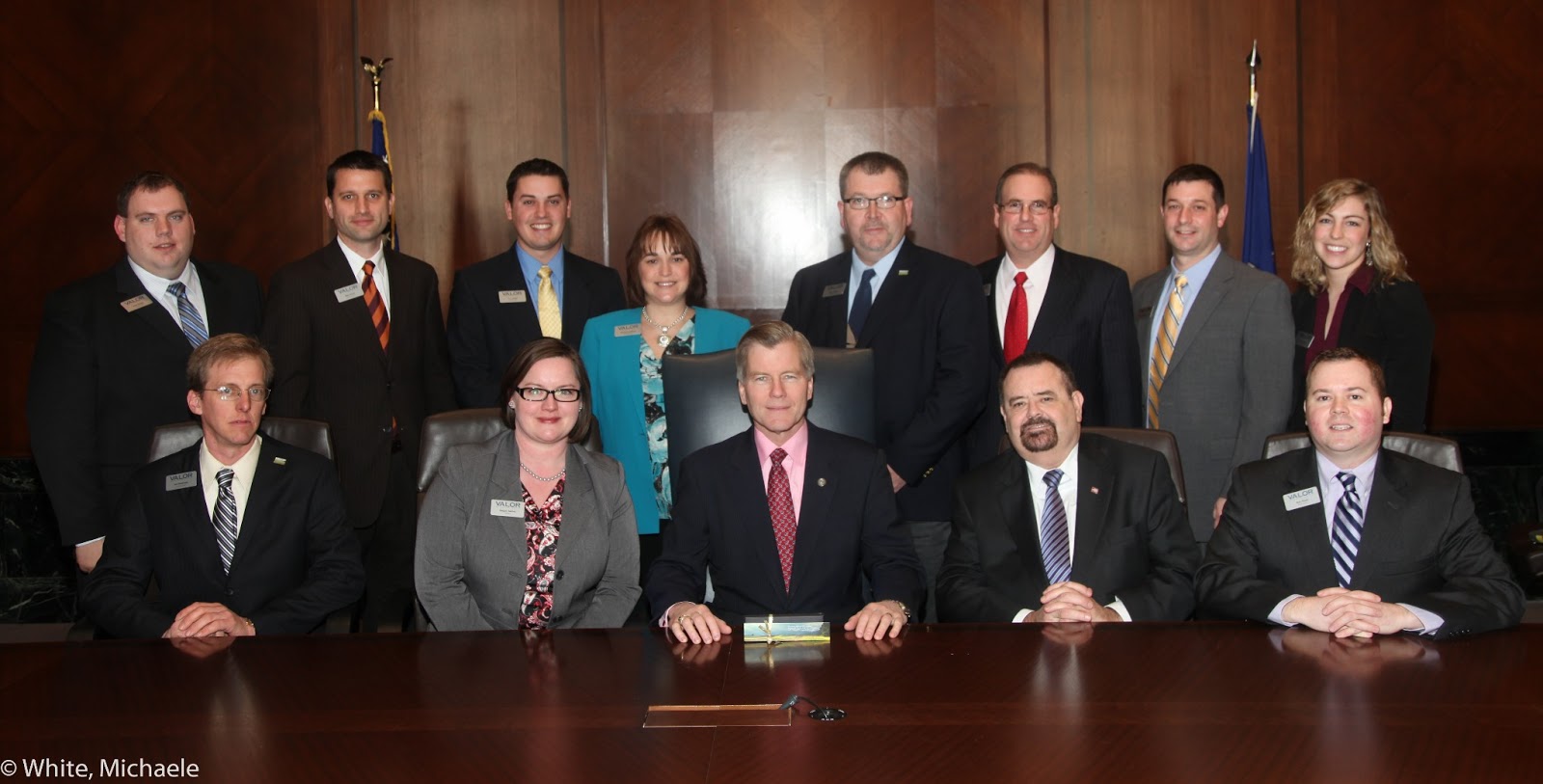
Governor Bob McDonnell has announced the membership of his newly created Rural Jobs Council.  This Council will build upon the success of the Governor’s Commission on Job Creation and Economic Development and continue the Administration’s focus on Virginia’s rural communities.
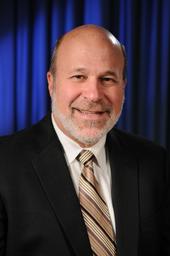
On Wednesday, January 2nd, Governor McDonnell issued Executive Order 57 establishing the Rural Jobs Council.  He has named Lieutenant Governor Bolling, Virginia’s Chief Jobs Creation Officer, as Chair of the Council.  Secretary of Commerce and Trade Jim Cheng and Secretary of Agriculture and Forestry Todd Haymore will serve as Co-Vice Chairs for the group.
The membership of the Council consists of legislators and leaders in the business, manufacturing, agriculture, and healthcare industries.  The group will make recommendations to address the challenges to economic growth in rural Virginia and develop a statewide rural infrastructure plan to include transportation, education, and community development. 

Speaking about the announcement, Governor McDonnell said, “I am pleased to announce that these community and industry leaders have agreed to serve Virginia on this newly created Rural Jobs Council.  Virginia’s rural communities are the heart and soul of our Commonwealth and we must do everything we can to bring jobs and opportunity to these regions.  I am confident this group will develop thoughtful recommendations and a solid infrastructure plan for rural Virginia.”
Lieutenant Governor Bolling remarked, “I am honored to serve as Chair of the Governor’s Rural Jobs Council.  For the past three years, Governor McDonnell and I have shown our commitment to economic development, especially in rural Virginia, and this Council will continue that focus.  This group will give Virginia the chance to expand Governor McDonnell’s recent initiatives in the areas of entrepreneurship and education reform to ensure that all Virginians have the same opportunities, no matter their zip code.”
Secretary of Agriculture and Forestry Todd Haymore said, “I am pleased to see Governor McDonnell continue his support of rural Virginia, especially through his continued commitment in making agriculture and forestry key components of his economic development and jobs creation strategies.  Agriculture and forestry have an economic impact in Virginia of $79 billion annually and support over 500,000 jobs in the Commonwealth.  It is important that we continue to support these industries and our rural communities.  I look forward to working with the Council on important rural development issues.”
Secretary of Commerce and Trade Jim Cheng commented, “We have seen much success in Virginia, lowering our overall unemployment rate to 5.5%, well below the region and the national average, but we still have a long way to go.  Too many areas of the Commonwealth still have stubbornly high unemployment rates.  This council will be tasked with building upon the success of the last three years and identifying ways to continue to bring economic growth to all of Virginia’s regions.
Members of the Governor’s Rural Jobs Council
·  Shannon Blevins, Director of Economic Development, UVA at Wise, Wise County

·  David Brash, Senior Vice President of Business Development and Rural Strategy, Wellmont Health   

   System, Lebanon
·  Delegate Kathy Byron, Lynchburg

·  Elizabeth Crowther, President, Rappahannock Community College, Saluda

·  Katie Frazier, President, Virginia Agribusiness Council, Richmond

·  Timothy Heydon, CEO, Shenandoah Growers, Harrisonburg

·  Rebecca Hough, Co-Founder and CEO, Evatran, Wytheville

·  Thomas Hudson, President, Virginia Coal Association, Richmond

·  Delegate Danny Marshall, Danville

·  Ned Massee, Chairman, Virginia Chamber of Commerce, Richmond

·  Delegate Don Merricks, Martinsville

·  Martha Moore, Vice President for Government Affairs, Virginia Farm Bureau Federation, Richmond

·  Delegate Israel O’Quinn, Abingdon

·  Bill Parr, Parr Properties, Cape Charles

·  Senator Phil Puckett, Tazewell

·  Delegate Margaret Ransone, Kinsale

·  Nicole Riley, State Director, National Federation of Independent Business, Richmond

·  Senator Frank Ruff, Clarksville

·  Brett Vassey, President and CEO, Virginia Manufacturers Association, Richmond

·  William Wampler, Executive Director, New College Institute, Martinsville

·  Delegate Onzlee Ware, Roanoke

Responsibilities of the Governor’s Rural Jobs Council
·  Identify impediments to and opportunities for job creation in Rural Virginia
·  Recommend strategies to improve K-12 education and the workforce pipeline
·  Produce a comprehensive and meaningful Economic and Infrastructure Policy for Rural Virginia
·  Make recommendations to improve the tax and regulatory environment in the Commonwealth
What is Hydraulic Fracturing?

Hydraulic Fracturing is another issue Virginians have turned their attention to.

Virginia Farm Bureau members have been invited to watch a 30-minute free webinar to learn the basics of what hydraulic fracturing.  Rayola Dougher, a senior advisor at American Petroleum Institute (API), will describe the process and talk about many myths and truths you have been hearing about.  And she promises to only use terms that we can all understand.  Questions will be answered at the end.  

The webinar will cover these frequently asked questions: What is hydraulic fracturing?  What are the facts and myths behind this 60-year old drilling process that has been used in over 1 million wells?  What role is hydraulic fracturing playing in the country’s new energy boom that is creating so many new jobs, government revenues, and economic growth?     

Pre-registration is required and viewers will be limited.

Title: What is Hydraulic Fracturing
Date: Wednesday, Feb. 6
Time: 1 p.m.-1:45 p.m.

Go here to register: https://www1.gotomeeting.com/register/682924673

After registering, you will receive a confirmation email containing information about joining the webinar

Writing Effective Messages to your Legislators


Writing to Your Legislators
Letters and e-mails can be particularly effective in influencing legislators’ views. Writing to legislators also offers an opportunity to maintain contact and keep your issues on the front burner even when you cannot meet personally.

Writing an Effective Letter
Keep it brief
 — Keep letters to one page. Try to discuss only one bill or issue in a letter.
Identify yourself
 — Begin with an introduction of yourself or the organization on whose behalf you are writing. Use a simple statement, such as “I am a third-grade teacher at _______ elementary school” or “On behalf of the members of the ________….”

Get to the point
 — Follow your introduction with a brief statement of your issue or concern, such as “We urge your support for H.R. _____, which will ________.” If you are writing in reference to a specific bill, include the bill number. Follow your opening paragraph with a concise explanation of why you support or oppose the particular bill or issue. A few strong, well-thought-out arguments are much more effective than a laundry list of reasons to support or oppose a bill. Whenever possible, use bullet points to outline your arguments.
Relate it to home
 — Help the legislator understand why your position is important to his or her constituents. Include specific facts about how a bill will impact educators, students or schools in the legislator’s district. If possible, include a local anecdote illustrating the problem you are seeking to address. Avoid the use of form letters or generic postcards — use your own knowledge and experience to inform the legislator.
Allow for follow-up
 — Include specific contact information and offer to act as a resource should the legislator or staff have questions or need additional information. Where appropriate, state in the letter that you will follow up with a telephone call. 
Address your letter correctly 
— See the details on addressing your letter below.
Using E-mail
E-mail can be an easy and effective tool for communicating with legislators. The tips outlined above for writing letters to legislators also apply to e-mails: keep them brief and to the point, with facts and anecdotes relevant to the legislator’s district.
Avoid informal language
 — E-mail to a legislator should be treated as seriously as a written letter. Resist the temptation to use the informal language and symbols often associated with e-mail communications. Never use impolite language or make “demands.” 
Include your full address and zip code 
— Make sure the text of your e-mail includes your full name and street address, including zip code. Many legislative offices screen e-mails for address information identifying the sender as a constituent. E-mails that appear to come from outside the district are unlikely to be read and may be blocked by filtering programs. 

Farmers have until May to implement SPCC Plan

Farms now have less than six months to prepare or amend and implement their Spill Prevention, Control, and Countermeasure (SPCC) Plans. The compliance date for farms is May 10, 2013.
Below is a FAQ to help determine if your farm is prepared for a spill. 
What is SPCC? 
The goal of the SPCC program is to prevent oil spills into waters of the United States and adjoining shorelines.  Oil spills can cause injuries to people and damage to the environment. A key element of this program calls for farmers and other facilities to have an oil spill prevention plan, called an SPCC Plan.  These Plans can help farmers  prevent oil spills which can damage water resources needed for farming operations.
What is considered a farm under SPCC?
Under SPCC, a farm is: “a facility on a tract of land devoted to the production of crops or raising of animals, including fish, which produced and sold, or normally would have produced and sold, $1,000 or more of agricultural products during a year.”

Is my farm covered by SPCC? 
SPCC applies to a farm which:
• Stores, transfers, uses, or consumes oil or oil products, such as diesel fuel, gasoline, lube oil, hydraulic oil, adjuvant oil, crop oil, vegetable oil, or animal fat; and
• Stores more than 1,320 US gallons in aboveground containers or more than 42,000 US gallons in completely buried containers; and
• Could reasonably be expected to discharge oil to waters of the US or adjoining shorelines, such as interstate waters, intrastate lakes, rivers, and streams.
If your farm meets all of these criteria, then your farm is covered by SPCC.
If my farm is covered by SPCC, what should I do? 
The SPCC program requires you to prepare and implement an SPCC Plan.  If you already have a Plan, maintain it.  If you do not have a Plan, you should prepare and implement one. Many farmers will need to have their Plan certified by a Professional Engineer (“PE”).  However, you may be eligible to self-certify your amended Plan if:
• Your farm has a total oil storage capacity between 1,320 and 10,000 gallons in aboveground containers, and the farm has a good spill history (as described in the SPCC rule), you may prepare and self-certify your own Plan. (However, if you decide to use certain alternate measures allowed by the federal SPCC Rule, you will need a PE.)
• Your farm has storage capacity of more than 10,000 gallons, or has had an oil spill you may need to prepare an SPCC Plan certified by a PE.
When should I prepare and implement a Plan?
Farms in operation on or before August 16, 2002, must maintain or amend their existing Plan by May 10, 2013. Any farm that started operation after August 16, 2002, but before May 10, 2013, must prepare and use a Plan on or  before May 10, 2013.  
Note:  If your farm was in operation before August 16, 2002, and you do not already have a Plan, you must prepare a Plan now.  Do not wait until May 10, 2013.
What information will I need to prepare an SPCC Plan for my farm?
• A list of the oil containers at the farm by parcel (including the contents and location of each container);
• A brief description of the procedures that you will use to prevent oil spills.  For example, steps you use to transfer fuel from a storage tank to your farm vehicles that reduce the possibility of a fuel spill;
• A brief description of the measures you installed to prevent oil from reaching water (see next section);
• A brief description of the measures you will use to contain and cleanup an oil spill to water; and
• A list of emergency contacts and first responders.
What spill prevention measures should I implement and include in my SPCC Plan?
• Use containers suitable for the oil stored.  For example, use a container designed for flammable liquids to store gasoline;
• Identify contractors or other local personnel who can help you clean up an oil spill;
• Provide overfill prevention for your oil storage containers.  You could use a high-level alarm, or audible vent, or establish a procedure to fill containers;
• Provide effective, sized secondary containment for bulk storage containers, such as a dike or a remote impoundment.  The containment must be able to hold the full capacity of the container plus possible rainfall.  The dike may be constructed of earth or concrete.  A double-walled tank may also suffice;
• Provide effective, general secondary containment to address the most likely discharge where you transfer oil to and from containers and for mobile refuelers, such as fuel nurse tanks mounted on trucks or trailers. For example, you may use sorbent materials, drip pans or curbing for these areas; and
• Periodically inspect and test pipes and containers.  You should visually inspect aboveground pipes and inspect aboveground containers following industry standards. You must “leak test” buried pipes when they are installed or repaired.  EPA recommends you keep a written record of your inspections.
How and when do I maintain my SPCC Plan?
Amend and update your SPCC Plan when changes are made to the farm, for example, if you add new storage containers (e.g. tanks) that are 55 gallons or larger, or if you purchase or lease parcels with containers that are 55 gallons or larger.  You must review your Plan every five years to make sure it includes any changes in oil storage at your farm.
What should I do if I have an oil spill?
• Activate your SPCC Plan procedures to prevent the oil spill from reaching a creek or river. 
• Implement spill cleanup and mitigation procedures outlined in your Plan.
• Notify the National Response Center (NRC) at 800-424-8802 if you have an oil discharge to waters or adjoining shorelines. 
• If the amount of oil spilled to water is more than 42 gallons on two different occasions within a 12-month period or more than 1,000 gallons to water in a single spill event, then notify your EPA Regional office in writing.
For more information, visit: http://www.epa.gov/oem/content/spcc/spcc_ag.htm

From the Field: Legislative Day at the Capitol

From the Field is a bi-monthly column written by Mark Campbell, Farm Bureau Field Services Director for the Central District. He writes about Farm Bureau member benefits and County Farm Bureau activities.

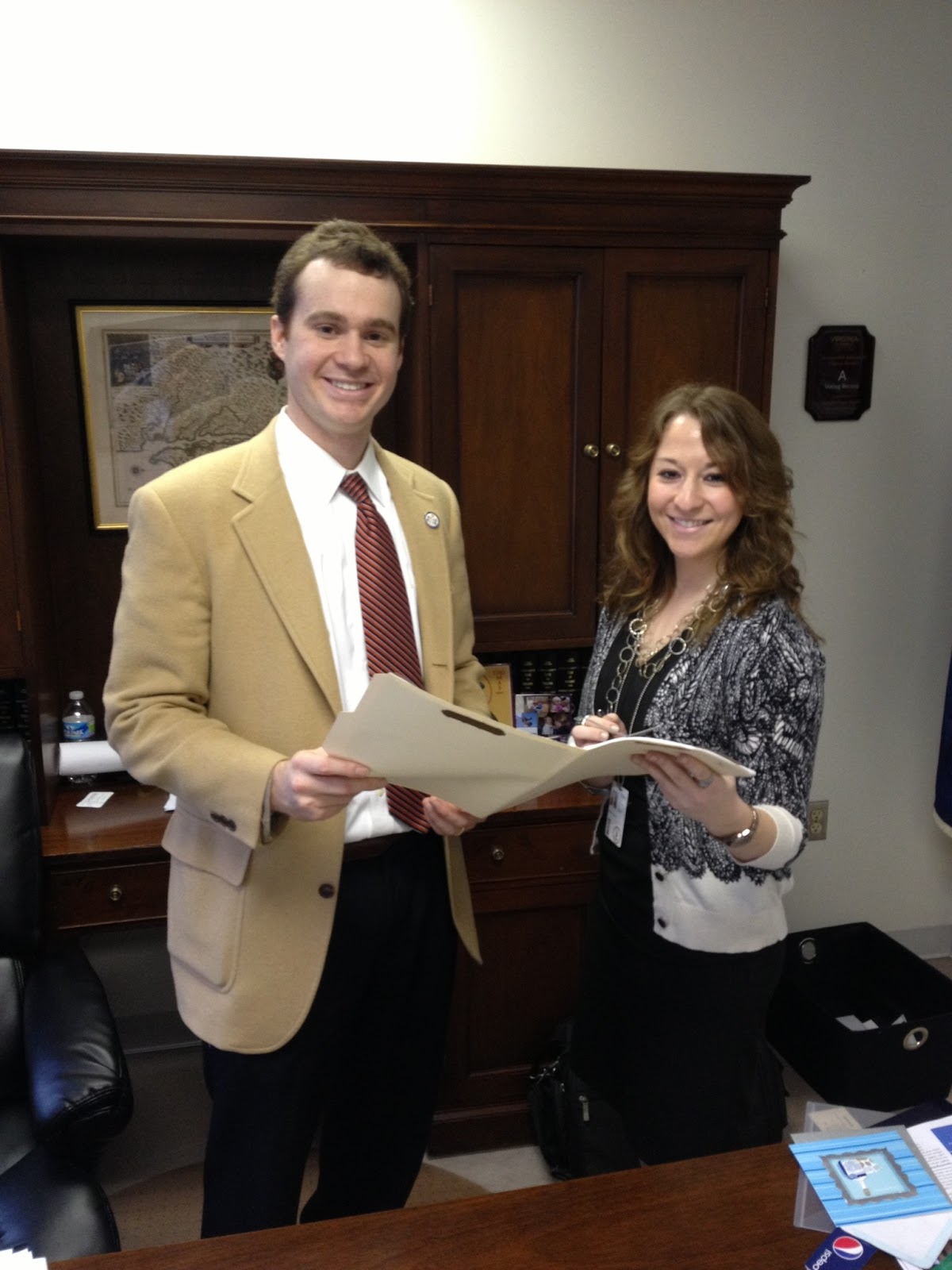
Pittsylvania County Farm Bureau member Tommy Motley
and Andrew Smith from Governmental Relations meet with
Delegate Rick Morris at the Farm Bureau Legislative
Reception.
We finished another Legislative Day at the Capitol yesterday. Many Farm Bureau members and county FarmBureaus maintain communication with their legislators throughout the year.  However, Legislative Day is an opportunity for members to get right in the middle of the legislative process by visiting offices of their elected representatives and speaking directly with a delegate or senator about current bills.  

For many Farm Bureau members, preparation for this took one or two days of planning back home.  Before leaving their farms, either the night before or early the morning of; farmers had to put out hay for livestock, check water tanks and wells so they didn’t freeze, and numerous other things that had to be done in their absence.  These are things that most of the general public doesn’t have to worry about when they leave for a meeting.  So we, at Virginia Farm Bureau, thank you for your dedication and service.

For members that have not attended before, the process may sound a bit intimidating, but Virginia Farm Bureau makes it easy.  The day kicked off at lunch with a briefing of the issues by our Governmental Relations staff, and the registration packets had everything a person could want to make the visits.  There were bills that members lobbied in favor of or opposed in the areas of Trespass and Private property rights, Right to Farm, Soil and Water Conservation Governance, and Uranium mining. 

Next, members took advantage of the shuttle vans provided by Farm Bureau to get to the legislators’ offices on this very cold day.  One word of caution in the General Assembly Building, you must not be timid on jumping on the elevator when the doors open.  Because when the doors open, there can sometimes be a mad dash to the elevator depending on the time of day.

For those that still aren’t cozy to the idea of meeting with legislators one on one on their turf, consider this:  You can tag along with members from an adjoining county.  Odds are that they are in the same district.  What better way to learn than to watch another county do it?  Soon, your confidence will build and you will likely throw in a few comments of your own. 

To reward your hard work and going out on the front line, Farm Bureau had snack bags for pick up upon returning.  And if that is not enough incentive, a wonderful reception for legislators and members capped off the evening.  

All of our Field Staff made visits with members throughout the afternoon.  We really enjoyed seeing the members in action.  This year, I made visits with member Bob Massey from Spotsylvania.  Spotsylvania, like some counties large in size or containing a large urban area, has many legislators.  On our list were three senators and five delegates.  Plus we visited one urban legislator not representing Spotsylvania Countyto inform them of the issues affecting agriculture.  We had some good visits.  I especially enjoyed our meeting with Senator Bryce Reeves.  We accompanied members from Louisa and Orange counties.  There was a good discussion of the issues, and Senator Reeves asked good questions to better understand the issues and Farm Bureau’s position on the bills.

If you missed Legislative Day, we can still use your help.  We are always seeking members to make contacts to legislators on state and national bills throughout the year.  You District Field Services Director would be glad to help you get involved and show you how to best make your voice be heard.  We are here to help.  

Until next time, 
Mark

Shenandoah County man wins national Farm Bureau honor

Dana Fisher
Photo by Sara Owens

Dana Allen Fisher of Shenandoah County was named the winner of this year’s American Farm Bureau Federation Young Farmers and Ranchers Excellence in Agriculture Award. He was recognized Jan. 14 at the AFBF Annual Convention in Nashville, Tenn.

 “We couldn’t be more proud of Dana and all of our Young Farmers Program participants. It’s great to see that they are receiving national recognition for all of their hard work and accomplishments,” said Virginia Farm Bureau Federation President Wayne F. Pryor. “Young farmers and other young ag professionals are the key to agriculture’s future, and Dana is working hard to make sure agriculture prospers.”

 Fisher is an agriculture instructor who teaches classes in leadership, horticulture and natural resources. He also is an FFA advisor and has served on the FFA Foundation board in several roles. He chairs his county Farm Bureau’s Young Farmers Committee and has served on the VFBF Young Farmers Committee for the past three years.

 The Excellence in Agriculture Award recognizes young adults who do not derive the majority of their income from an agricultural operation but actively contribute and grow through their involvement in agriculture, their leadership abilities and participation in Farm Bureau and other organizations.

 Fisher will receive his choice of a 2013 Chevrolet Silverado or a 2013 GMC Sierra, courtesy of GM, and registration for this year’s AFBF Young Farmers and Ranchers Leadership Conference.

Virginia Farm Bureau supports current provisions of Right to Farm Act

Many of you have heard through the media or seen through e-mails information on HB1430 (Lingamfelter) which amends the Right to Farm Act.

Virginia Farm Bureau is opposed to HB1430 based on policy voted on by our farmer members through our grassroots process.  While the bill may seem appealing in sound bytes, it drastically expands the Right-to-Farm beyond its original purpose of protecting bona fide agricultural operations.  The Right-to-Farm Act is an agreement between local governments and the agricultural community; by expanding these protections without buy-in from all stakeholders, it increases the chances of losing the current protections that the Code section provides.
The provisions of HB1430 would allow:

-art, literature, artifacts, and any other items to be deemed part of an agricultural operation if they make up 50% or less of the gross sales. This opens the Right to Farm act to allow stores, restaurants, museums, and other buildings to be built by-right on agricultural land;

-the bill would undermine current zoning laws in localities where the county government has passed ordinances to promote agriculture and agritourism in the locality;

-citizen suits to be brought against county officials or employees where they would be held personally liable for enforcement of county ordinances; and,

-expand the Right to Farm beyond the intent of bona fide production of agricultural products. This is the intent of the agreement between the agriculture community and the localities to ensure that true agricultural production practices not be hindered by the locality. Since HB1430 allows essentially anything to be built on agriculturally zoned land, it would increase the chances of losing the protections we already have with the Right to Farm in the future.

We are working with the patron and representatives of local government to see if there is some common ground that can be found on language to amend this specific Code section. If not, we are committed to working throughout the year with all stakeholders involved to find compromise language that protects legitimate production agriculture and value-added operations that may occur on agriculturally-zoned land.

Vilsack Sounds off on Short-Term Farm Bill

Vilsack

Agriculture Secretary Tom Vilsack appeared on NPR’s Talk of the Nationthis week to discuss the short-term farm bill provisions that Congress passed last week. Vilsack said the nine-month extension leaves farmers with uncertainty.
“I think farmers are expressing some frustration about the fact that they were close to getting a five-year program that would have been comprehensive, that would have had a series of reforms, that would have assisted in dealing with the fiscal challenges the country is faced with,” said Vilsack. “They’re now faced with uncertainty in terms of what the policies are going to be, and they’re faced with uncertainty in terms of how much support there will actually be once a five-year bill is ultimately passed by Congress.”
Click the link above to listen to the audio or read the transcript. 

From the Field: Forestry is a Significant Industry in Virginia

 From the Field is a bi-monthly column written by Mark Campbell, Farm Bureau Field Services Director for the Central District. He writes about Farm Bureau member benefits and County Farm Bureau activities.


We have often heard governors, elected representatives, and agency personnel talk about the significant economic contribution of agriculture and forestry to the state of Virginia.  Forestry is included, but have you ever thought of the forestry industry by itself instead of the agriculture portion that tends to get most of the recognition?  

There is quite a bit of logging that takes place in the southern part of my field district, especially the counties of Appomattox, Buckingham, Cumberland, and Nelson.  I know other areas of the state have significant forestry economies.  However, it wasn’t until my family had two tracts of land harvested this fall that I gained a much greater appreciation and knowledge of the forestry business.  It is a big business.  

When the farming community thinks of expensive equipment, thoughts of new combines and tractors come to mind with shiny new paint and electronic command centers at the driver’s seat.  But when I consider the costs of skidders, feller bunchers, knuckle boom loaders, chippers, tractor-trailers; the asset value sitting on a logging deck is easily over a million dollars.  For two months, it was just plain fun and interesting to watch the progress of the tree harvest.  At the end, it was a sad day to see all of the equipment and trailers pull away.  But my sons continue on with logging in smaller fashion with their new logging toys that they got for Christmas.  

The two tracts of land were clear cut.  This was the best decision for us.  That decision included an assessment of the trees standing prior to harvest.  Factors of that assessment were tree maturity level, quality, species and growth potential.  The other assessment was a plan for after the harvest.  Approximately 70 percent of the land will be planted to Loblolly Pine and the remaining 30 percent will be converted to pasture.  This type of assessment and planning of our wooded land in consultation with the local Virginia Department of Forestry (VDOF) staff and logger had never been done on our farm.  This was a major milestone.  

For the past 70 years that I know of, the wooded land was just allowed to grow and flourish with no thought to management.  When previous generations thought some trees were ready to harvest, it was done.  This clear cut will, in essence, allow us to start from a clean slate and be able to actively manage our forest land.  

During the harvest, the logger had a market for every piece of wood there was except the stump.  There were saw logs, logs for railroad ties, pine chips, hardwood chips, and fuel chips.  All of these different wood products went to numerous sources in the area such as MeadWestvaco in Covington, RockTenn in Hopewell, Greif in Riverville, and Dominion Power in Hurt.  Forest products include paper, cardboard and containers, wood pellets, lumber, rail road ties, furniture, and electricity from burning of wood chips just to name a few.  Here is a cool video link (https://www.dom.com/about/stations/renewable/pittsylvania-power-station.jsp) to the Dominion Power plant in Hurt that burns wood chips to make electricity for up to 20,000 homes.  

This logging experience increased my knowledge and awareness of the forestry industry dramatically.  I just think about all of the businesses such as those mentioned above that are close to me plus other businesses that are directly and indirectly involved in forestry.  It becomes quite clear how the forestry industry is a major economic driver for localities and the state.

 Here are a few statistics from the Virginia Department of Forestry website.
  1. 62% of Virginia land area is in forest.
  2. Most of Virginia’s forest land is privately owned or 12.8 million of 15.9 million acres.
  3. Majority of forests are hardwood type trees, of which half of that acreage is over 60 years old.  Approximately 20% of the acreage is pine.
  4. Economic impact of 144,000 jobs and $23.4 billion to the economy.
  5. It is a renewable resource.
Other important benefits include wildlife habitat, carbon sequestration, and water quality protection, especially in light of the Total Maximum Daily Load (TMDL) and the Watershed Implementation Plan (WIP) for the Chesapeake Bay.  

The VDOF is looking to the future and changing with the times.  The Tree Improvement Program researches and develops more efficient and faster growing genetics, studies planting density, tree thinning and nutrient applications.  A planting of Loblolly Pine can now be ready for harvest in 22 years thanks to improvements of seedling genetics and research.  There are some challenges though.  Pests of Pine Bark Beetle and Gypsy Moth have been on the decline the past 10 years thanks to vigilant control methods.  But new threats include the Emerald Ash Borer and Thousand Canker Disease of Black Walnut trees.  Other challenges are poor economy, changing demographics, changing forest land ownership, loss of forestland, especially blocks of acreage, and changing forest markets.  

The forestry industry is exploring new products and markets from forest products as we move into the future.  I think Virginia is in a very good position to further enhance our forestry industry with our topography, climate, and access to a large export facility.  Next time you are traveling take a closer look at your surroundings.  You just might see more going on in the woods than you thought.  

Until next time, 
Mark

2013 Virginia General Assembly Convenes Wednesday

Tomorrow, the 2013 Virginia General Assembly will convene in Richmond. Here is what Virginia Farm Bureau will be focusing their efforts on this year:

Agriculture Best Management Practices Cost-Share Program

 Virginia Farm Bureau urges legislators to:
  • Adequately fund for the Agriculture Best Management Practices Cost-Share Program in order for farmers to be able to meet Virginia’s Watershed Implementation Plan goals by 2017 to avoid mandatory agriculture best management practice requirements
 Soil and Water Conservation Districts Funding

Virginia Farm Bureau urges legislators to adequately fund operational support and technical assistance for Soil and Water Conservation Districts to:

  • Administer Agriculture Best Management Practices Cost-Share Program
  • Assist farmers in developing Resource Management Plans
  • Track voluntary agriculture best management practices to help document water quality improvements for input into the Chesapeake Bay computer simulation model
 Predator Control

Virginia Farm Bureau urges legislators to:

  • Support increased funding for the state portion of the state/federal coyote control programs to expand technical assistance east of Blue Ridge
  • Support funding for the implementation of a central contact point for wildlife damage issues

 Property Rights and Trespass

Virginia Farm Bureau urges legislators to:

  • Oppose any attempts to weaken statutory changes to Virginia’s law that defined “lost profits” and “lost access”
  • Support legislation to amend the Code of Virginia to further protect landowners from trespassers and liability claims from those who trespass
General Assembly updates and action alerts will be sent every Wednesday and Friday, so if you haven’t joined the Capitol Connections Action Center, please send your email address to kelly.pruitt@vafb.com. You must be a producer member to receive action alerts. Plows and Politics will continue to be updated every Tuesday and Thursday.

We will also be sending out printed updates three times during this year’s session starting in February.

And don’t forget Legislative Day at the Capitol is on Tuesday, Jan. 22nd! We look forward to seeing those of you who have registered at the Hill!