Pink Slime: A Year Later

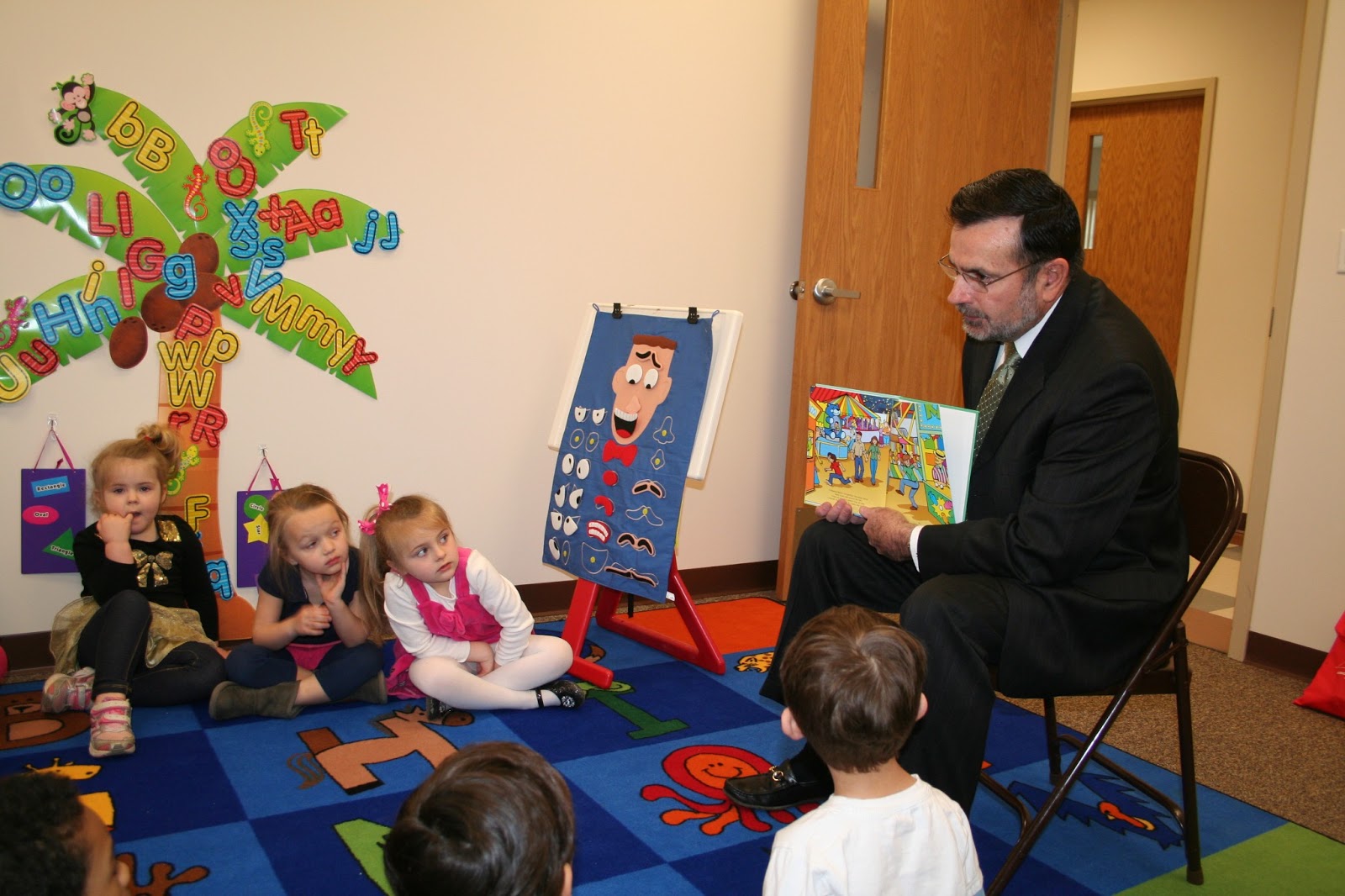
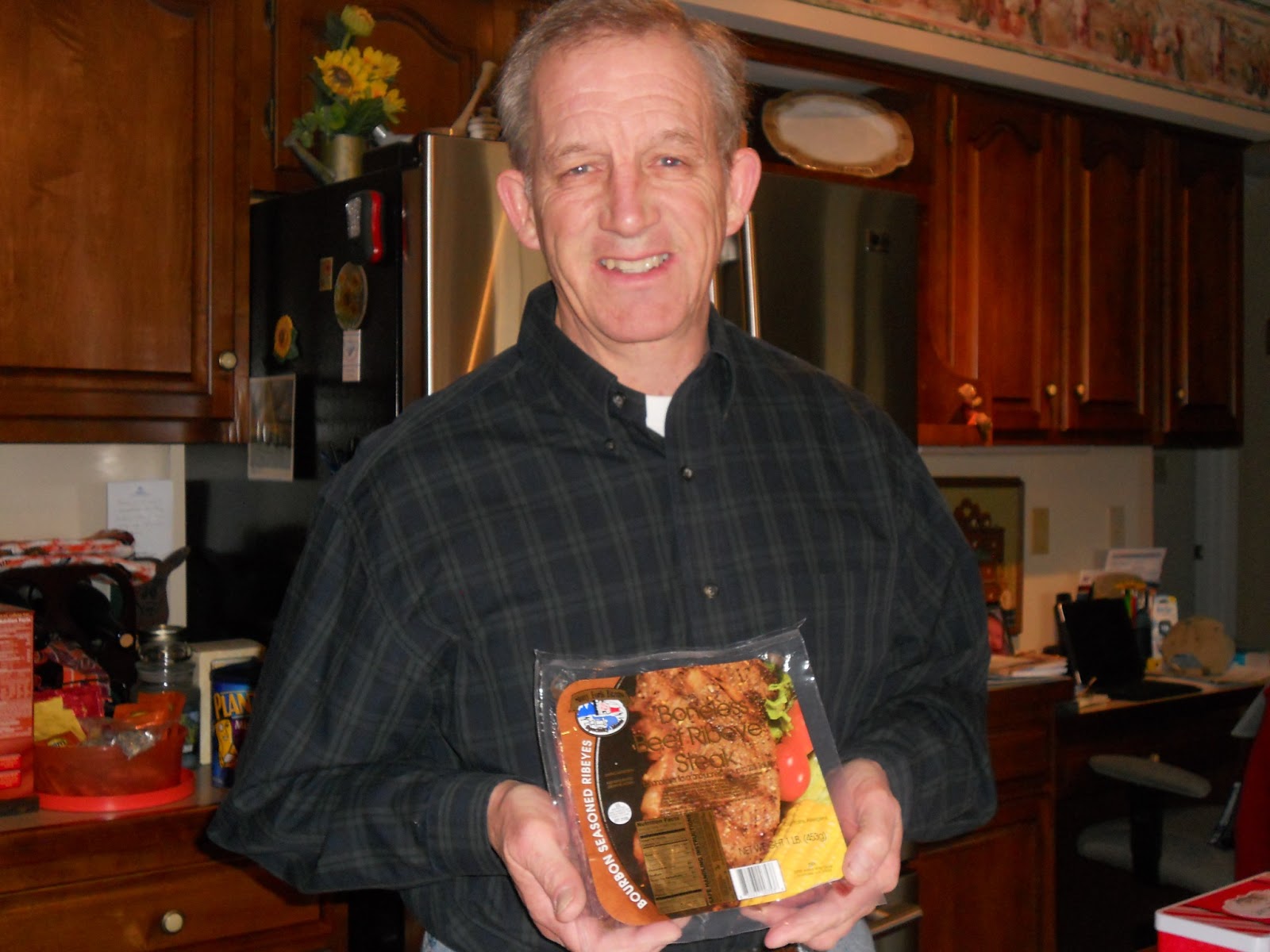
Charlie Drumheller, a member of Augusta County Farm Bureau,
was one of many Farm Bureau members negatively affected
by the “pink slime” news stories last year.

In March of 2012, ABC News aired a series of television reports on lean finely textured beef, a product used in ground beef that is made from trimmings and on which ammonia is used to remove potential pathogens.  They raised questions about its quality and dubbed it “pink slime,” sparking a public relations furor that roiled social media, consumer advocates and the nation’s beef industry.
A number of fast-food restaurants and grocery retailers – including Wal-Mart Stores Inc, Safeway Inc and Supervalu Inc – also stopped selling ground beef containing the product, even though the U.S. Department of Agriculture and industry experts say it is safe to eat.
Approximately 650 people lost their jobs, and the nation’s beef industry took a very hard hit.
Almost a year later, the beef industry is still trying to recover, while other livestock industries are feeling the effects. ABC News has been hit with several defamation lawsuits from Beef Products, Inc. and others, but will that stop ABC and other news outlets from the next slanted agriculture story?
Charlie Drumheller is a member of Augusta County Farm Bureau.  He has been in the beef industry for forty plus years, primarily in the area of quality assurance and food safety. With the first anniversary of the “pink slime” debacle around the corner, Charlie wanted to share some of his thoughts on the public relations nightmare.

The Pink Slime story was a lot of things, but most importantly, it was effective. Never mind that it was full of distortions and some outright lies. It did deliberately and intentionally damage the meat business.
 While many of you know that you are loosely associated with the meat industry, you may feel that it really didn’t directly affect you. Nothing could be further from the truth, except perhaps the story itself. If you raise livestock, even if it is not cattle, you have been dealt a damaging blow. Let’s examine some ways this story has influenced your ability to profit from your endeavors.
 The value that the packers are willing to pay for cattle is now reduced because of the extra waste that will now be incurred. It is estimated that 13 pounds is now wasted.  Less value for the cattle paid by the packers filters down to the price that the feedlots and backgrounders are willing to pay.
 Perhaps you purchase ground beef from grocery retailers.  The price of ground beef rose more than 15% right after the story hit the media.  Ground beef consumer pricing will remain higher because this option is no longer viable.
 Well, what about the safety of this LFTB (lean finely textured beef)?  This product has been tested every way possible to insure that a safe product is being produced.  It is very simply mechanically deboned meat.  The process has been used for many years.  It is all beef and the ammonium hydroxide that it is treated with is done to eliminate any pathogens.
 Probably the worst fear is that now that a template has been established, what other industries are in the crosshairs now? 

Farm Bureau Urges New Ag Labor Guestworker Program

A new, modern guestworker program for agricultural workers is needed so that U.S. farmers and ranchers can continue growing food, tending livestock and contributing to the nation’s economy, American Farm Bureau Federation President Bob Stallman told Congress this week.
“We want to keep these jobs in America for U.S. workers, not outsource them,” Stallman testified to the House’s Judiciary Subcommittee on Immigration and Border Security. Farm Bureau urged lawmakers to implement a new, market-based labor program administered by the Agriculture Department.
The new program would serve as a substitute for and eventually replace the H-2A program now in place, Stallman explained. It would also provide farmers with access to a legal and stable workforce over the long-term. In addition, the new program would provide employers with greater certainty that they will have access to the workforce they need, when they need it and at a competitive cost.
“Ultimately, agriculture’s goal is to develop a program that treats workers fairly, while being efficient and economical for employers to use,” Stallman said, noting that workers would be able to work for multiple employers under a structure that enforces worker rights and protects them from exploitation.  

Stallman also addressed agriculture’s short-term labor needs in his testimony.
“In order to provide short-term stability and an orderly, effective transition to a new guestworker program it is imperative that any legislation approved by Congress include provisions permitting current agricultural workers who might not otherwise qualify to obtain work authorization,” Stallman said.
“Any new program will take time to be implemented fully,” Stallman said. “Granting existing experienced agricultural workers work authorization is a crucial
part of making sure that there is not economic dislocation in the agricultural sector while we transition to a new program.”
AFBF economists estimate that the agricultural economy and the broader U.S. economy are facing $9 billion or more in lost productivity each year if the agriculture labor force issue is not addressed.
In closing, Stallman reiterated the cooperative efforts of a broad coalition—the Agriculture Workforce Coalition—that is working in a unified manner “to construct a model agricultural labor program that will work” for all sectors of agriculture.

USFRA responds to MSN’s "14 Foods You Should Never Eat" article

MSN.com recently ran an article on the 14 foods you should never eat, which includes hamburgers, corn, wheat and even McDonald’s. And why should one avoid these foods? Cattle raised for beef are “pumped full of growth hormones.” Corn is nothing more than “pesticide factories with roots.” Or, how about their statement that modern wheat is “nothing like the grain your mother or grandmother consumed.” And, avoid McDonald’s all together because their food comes from factory farms.    
Read the article here: http://on-msn.com/Z70ra3
USFRA’s Response:
The MSN.com article is based upon today’s fiction – not reality. Growing and raising safe food for everyone is paramount to farmers and ranchers. Not only because it’s the right thing to do, but they too feed their families the same food they raise. Here’s a breakdown of some of the article’s misconceptions.
  • Cattle raised for beef are loaded with hormones. Hormones are naturally occurring in any living organism. It’s a fact. Hormones have been used by American farmers and ranchers since the 1950s. They’re used under the guidance of veterinarians and animal nutritionists and given to animals only in targeted ways – in very low doses and at particular times in the animal’s life. For example, in beef cattle, supplemental hormones can help stimulate growth by improving how feed is converted into lean muscle. Over the past decade, they have been studied heavily, looking closely to monitor any impact they have in the short and long term. They continue to be approved for use in this country and many others because studies have shown they pose no risk to consumers.
The U.S. Farmers and Ranchers Alliance is made up of agricultural groups at the national, regional and state levels (including Virginia Farm Bureau) that are answering Americans’ questions about agriculture. 

VALOR fellows participate in seminar at Virginia Farm Bureau, General Assembly

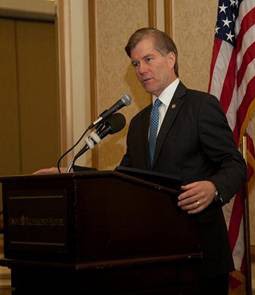
VALOR fellows with Gov. Bob McDonnell

This week, the inaugural fellows of the Virginia Agriculture Leaders Obtaining results (VALOR) program participated in their fourth of 12 seminars at the Virginia Farm Bureau building and the General Assembly in Richmond. VALOR is a two-year program that focuses on leadership development, team building, advocacy training, exploration of industry issues, and stakeholder networking.  The program’s 10 members were chosen from among peers across the state.

Members of the VALOR inaugural class are:

  • Roger Elkins of Jonesville, operator of Elkins Sandy Spring Farm;
  • Dana Fisher of New Market, agricultural education teacher at Central High School;
  • Ben Grove of Blacksburg, development officer with College of Agriculture and Life Sciences;
  • Ian Heatwole of Weyers Cave, producer and manager of Fox Run Farms LLC and FRF Cross Keys LLC;
  • Matt Hickey of Staunton, owner of Classic Carriage LLC and vice president of Blue Ridge Mass Appraisal Company;
  • C.J. Isbell of Rockville, co-owner and managing member of Keenbell Farm LLC;
  • Teresa Lindberg of Jarratt, agricultural education teacher at Edward W. Wyatt Middle School and past-president of the Virginia Association of Agricultural Educators;
  • Hunter Richardson of Shacklefords, owner/operator of Scattered Acres Farm;
  • Ken Ryan of Edinburg, Va., credit analyst with MidAtlantic Farm Credit; and
  • Andrew Smith of Beaverdam, senior assistant director of governmental relations with Virginia Farm Bureau Federation and owner of a commercial hay operation.

At Virginia Farm Bureau, VALOR fellows heard from Martha Moore, Vice President of VFBF Governmental Relations, and Donna Johnson, past-president of the Virginia Agribusiness Council about lobbying for agriculture. They also received media training from Norm Hyde and Sherri McKinney from the VFBF Communications Department.

The second half of the seminar took place at the General Assembly where fellows met with, Governor Bob McDonnell, Chief of Staff Martin Kent, Secretary of Agriculture and Forestry Todd Haymore, Deputy Secretary of Agriculture and Forestry Travis Hill, and Delegate Bobby Orrock. Participates also met with their legislators and toured the State Capitol.

Previous seminars have included meeting with faculty members of Virginia Tech’s College of Agriculture and Life Sciences, industry leaders and touring agriculture operations across the state.  

From the Field: Sustainability, the New Buzz Word

From the Field is a bi-monthly column written by Mark Campbell, Farm Bureau Field Services Director for the Central District. He writes about Farm Bureau member benefits and County Farm Bureau activities.

Sustainability is the hot buzz word that everyone talks about these days.  Some people have different definitions of the word, but Wikipedia defines it, in part, as “to maintain, support or endure.”  Further information on the Wikipedia page on sustainability was as varied as there are opinions on what sustainable is and more than I wanted to endure.  But I think most people would agree that a sustainable practice has outputs that are equal or greater than the inputs, without totally depleting the inputs. 
Water is one of those inputs, and we all use it.  Farmers and ranchers wisely utilize water to produce food, fiber, and other products.  I can cite numerous examples where agriculturalists have stepped up to the plate to meet the demands of a rapidly growing global population by using less water, land, fertilizer and fuel.

I want to highlight a local agriculture family business that defines sustainability and recently won an award for it.  Saunders Brothers, of Piney River, won the 2013 Environmental Stewardship Award from the Virginia Nursery and Landscape Association (VNLA).  Saunders Brothers is a large scale wholesale nursery and fruit producer in Nelson County.  Saunders Brothers started doing Evapotranspiration (ET)- based irrigation during the summer of 2011.  The goal of ET-based irrigation is to determine the amount of water lost from a containerized plant during one day and to replace exactly that amount through irrigation.  They have been conducting cutting edge research with the University of Florida on ET-based irrigation. 
Further testing and research was using Leachate Fraction (LF) technology, which is the ratio of the excess water lost out of the bottom of the container during an irrigation cycle to the total irrigation applied.  Testing and research was also conducted on the amount of nutrients that stayed in the pot.  The results of their testing showed that equal or better quality plants could be grown using less water and fertilizer.  It was determined that fertility levels could be reduced by as much as 30-40 percent on some crops.  This precision-type irrigation resulted in their using 50 percent less water in 2012 compared to the previous five year average. 
Saunders Brothers further enhanced this trial process by installing wireless irrigation controllers on a portion of the nursery.  So instead of adjusting irrigation levels out in the field, the irrigation run times are programmable on PCs and the data is wirelessly transmitted to control panels.  The irrigation system can even be run from the University of Florida in Gainesville from a PC.  They plan to convert the rest of the nursery to the wireless system by the fall of 2013.  By utilizing this technology, they are able to apply the specific amounts of irrigation and nutrients that the particular plants need, no more and no less.  The programmable irrigation system takes into account the type of plant, pot size and crown of plant. 
This year, another component will be added to the ET-based irrigation.  They plan to install an on-site weather system.  The on-site weather system will be tied into the irrigation system.  So rainfall will be factored into the irrigation needs.  For example, if 0.25” of water is called for a group of plants, and a 0.25” of rain falls, the irrigation system will not supply water that day. 
Saunders Brothers has other conservation measures such as irrigation ponds that also catch runoff from the nursery.  These ponds catch water that can be recycled back through the nursery.  The ponds also serve as settling locations for runoff nutrients which the company monitors on a regular basis.  Everything is tied together.  This is today’s precision agriculture.  An agriculture industry that precisely and smartly utilizes natural resources.
Sustainability, a buzz word, yes, but to many in the agriculture community, it is a way of doing business that helps profitability, efficiently utilizes natural resources and inputs and ensures that the business can be transitioned to the next generation.
American agriculture has been a shining light around the world when it comes to food production.  Time and time again, American agriculture has risen to the challenge.  We have another challenge ahead of us.  There will be 2.5 billion more people to feed in the year 2050, and we will have to find a way to do that.  No doubt that technology will be a major factor, and I am sure that we will continue to do it in a sustainable way. 
Until next time,
Mark

VSU to hold 6th Annual Virginia Berry Conference in March

The 6th Annual Berry Production and Marketing Conference will take place on March 14 from 8:00 a.m. to 4:30 p.m. at Virginia State University’s Gateway Dining Hall in Petersburg. 
Speakers include Dr. Penelope Perkins-Veazie, a professor at North Carolina State University who now heads research on postharvest physiology and technology for fruits and vegetables for NCSU; Dr. Ioannis Tzanetakis, an associate professor at the Division of Agriculture, University of Arkansas who is working on the epidemiology and molecular biology of berry, ornamental, and soybean viruses;  Dr. Gina Fernandez, a professor in the Department of Horticultural Science at North Carolina State University whose research activities focus primarily on season extension and breeding of blackberries and raspberries; and  Mrs. Kathy Demchak, a Senior Extension Associate in the Department of Plant Science at Penn State University who has conducted research on a wide range of berry-related topics from production systems such as high tunnels and plasticulture to research on disease and insect pests. 
Registration fee is $15.00. Registration Deadline is March 11, 2013. You can register online at 2013 Berry Conference or return completed registration form with check or money order payable to: VIRGINIA STATE UNIVERSITY, Attention: Mollie Klein, P.O. Box 9081, Petersburg, VA 23806, mklein@vsu.edu

Governor McDonnell to Co-Host 5th Annual Conference on Agricultural Trade March 7-8 in Richmond

Governor Bob McDonnell will co-host the 5th Annual Governor’s Conference on Agricultural Trade on March 7 and 8 in Richmond. The two-day conference, entitled “Virginia and the Global Market,” is co-hosted by Virginia Tech’s Department of Agricultural and Applied Economics, the Virginia Department of Agriculture and Consumer Services, Virginia Farm Bureau Federation and the Virginia Port Authority.  The event will bring together producers, agribusinesses, exporters, foreign ambassadors, embassy ministers, land-grant university leadership, state and federal government officials, and others to discuss challenges and opportunities for global exports.  Workshops and private meetings regarding the international trade of agricultural goods will be held as well.
Governor McDonnell will address the conference on Thursday, March 7 at 12 noon.  The Governor will discuss the importance of agricultural exports and the role agriculture and forestry, the state’s largest industries, play in Virginia’s economy.  The Governor will also announce total figures for agricultural exports from Virginia for 2012.  In 2011, the Commonwealth totaled more than $2.35 billion in agricultural exports, an all-time record.  That followed 2010’s $2.24 billion figure, the second largest total in history.

Speaking about the event, Governor McDonnell said, “I’m pleased to again co-host the Governor’s Conference on Agricultural Trade, which has become the premier event highlighting the importance of agricultural exports on the Commonwealth’s economy. These exports are generating billions of dollars and creating thousands of jobs throughout Virginia, from our farmlands to our ports.  That’s just one of the reasons I decided to integrate fully agriculture and forestry into my administration’s overall economic development and jobs creation agenda.  However, we also know that there are many more opportunities in the global marketplace for our producers and exporters.  With the new international marketing resources we’ve secured from the General Assembly, we’re now able to work more strategically with our private sector partners to take advance of these opportunities.  This conference is part of that effort, and I encourage all stakeholders currently exporting or interested in exporting to attend.
 In addition to Governor McDonnell, the conference is scheduled to feature presentations from, among others, Ambassador Mike Moore of New Zealand; Ambassador Islam Siddiqui, Chief Agriculture Negotiator for the Office of the United States Trade Representative; Dr. Charles Steger, President of Virginia Tech; Todd Haymore, Virginia Secretary of Agriculture and Forestry; Rodney Oliver, Executive Director, Virginia Port Authority; Mike McClendon, East Coast President, Lineage Logistics; and J.B. Penn, Chief Economist, Deere and Company.
Virginia Department of Agriculture and Consumer Services’ (VDACS) international marketing representatives from Hong Kong, China, India, the European Union, and Latin America will serve on a panel discussing their efforts to increase exports from Virginia.  In addition, the foreign trade representatives will be available to meet privately with attendees who are interested in exploring export opportunities in the countries or regions where they are based.
Since taking office in 2010, Governor McDonnell led overseas trade and marketing missions to Canada, Great Britain, Ireland, Switzerland, the Netherlands, Sweden, Germany, Japan, China, South Korea, Israel, and India.  These missions and the work of VDACS’ new international marketing staff with Virginia’s private sector exporters have resulted in almost $500 million in new agricultural exports from Virginia so far.  Gubernatorial trade missions for 2013 are being planned now.
Agriculture and forestry are Virginia’s largest industries, with a combined economic impact of $79 billion annually: $55 billion from agriculture and $24 billion from forestry.  The industries also provide approximately 500,000 jobs in the Commonwealth according to the Weldon Cooper Center for Public Service at the University of Virginia.
Details:
What:  The Governor’s Conference on Agricultural Trade Conference information and a tentative agenda available here: http://www.vafarmbureau.org/Agriculture/AgTradeConference.aspx
When:  Thursday, March 7: 11:45 a.m. – 5:30 p.m.
            Friday, March 8: 7:00 a.m. – 2:00 p.m.
Where:  Omni Hotel, Richmond
Who:  Governor McDonnell, U.S. and Virginia-based agribusinesses, exporters,  foreign ambassadors, embassy ministers, land-grant university personnel

AFBF Board Establishes Strategic Action Plan for 2013

AFBF President
Bob Stallman
Following the delegate session of the American Farm Bureau Federation’s 94th Annual Meeting, which wrapped up this week in Nashville, the organization’s board of directors met to establish priorities for AFBF’s strategic action plan for 2013.
“This plan represents those issue areas where we believe the American Farm Bureau Federation and its grassroots members will have real opportunities to achieve success this year, as well as challenges we will need to tackle to help safeguard our members’ ability to operate their farms and ranches,” said AFBF President Bob Stallman.
Aggressively working to secure passage of legislation early in the year that addresses both long- and short-term agricultural labor needs is a priority for AFBF. A recent Farm Bureau economic analysis concluded that $5 billion to $9 billion in annual production is in jeopardy if the employee shortage cannot be filled.
“Comprehensive immigration reform through legislation is needed to solve the agricultural worker problem,” Stallman said.
Passage of the Water Resources Development Act and reform of the harbor maintenance trust fund and the inland waterways trust fund is another priority for AFBF. 

“A reliable and efficient inland water system for shipment of farm goods is essential for U.S. agriculture to be competitive,” explained Stallman.


Another important priority is working to secure passage of a new farm bill that meets core principles important to farmers and ranchers. This includes a farm income safety net and crop insurance products to provide risk management tools that help protect farmers from catastrophes, including programs that provide emergency assistance for livestock and specialty crops producers not covered by farm programs or federal crop insurance.
The board also directed AFBF to defend standards and incentives necessary to further develop the U.S. renewable fuels industry; oppose Environmental Protection Agency efforts to expand the scope of navigable waters subject to federal regulations under the Clean Water Act; oppose expansion of federal Clean Water Act permit requirements for poultry and livestock farmers and ranchers; protect farmers’ and ranchers’ tax interests in debates on fiscal policy and tax reform; and protect farmers’ and ranchers’ interests in development of Food and Drug Administration food safety regulations.
“The 2013 priorities set by the board are built upon the dedicated efforts of our grassroots members working together during our annual meeting and throughout the year to achieve policy goals that will benefit all of agriculture, as well as the nation’s consumers and our customers around the world,” said Stallman.

The Life of a Legislative Aide: A Q&A

Stefanie Kitchen is the legislative aide for
Del. Peter Farrell (R-56th)

If you’ve ever tried to visit or contact your legislator, odds are you’ve interacted with their legislative aide. Some folks find this frustrating, especially when there’s an important issue they want to discuss with their legislator, but meeting or speaking with an aide can be just as effective. 
We sat down with Stefanie Kitchen, legislative aide to Delegate Peter Farrell (R-56th) and former Virginia Farm Bureau Governmental Relations intern, to discuss her life as a aide and how she works with constituents to make sure their messages reach their legislator. 

What exactly does a legislative aide do?
A legislative aide does anything and everything their delegate or senator needs to be an effective legislator.  Aides provide support in a variety of ways, including meeting with lobbyists and constituents, tracking legislation, organizing constituent outreach and response, writing press releases, and coordinating social media.
How much interaction do you have with the constituents?
I have a great deal of interaction with constituents. Constituents frequently contact the office, both during Session and the interim, to voice their opinions on legislation or request assistance with a state agency.  Aides serve as the first line of defense for legislators, so I usually speak to every constituent before passing them on to the delegate.   

What are the most effective ways for constituents to communicate with their legislator about issues that are important to them?
A face-to-face meeting is the most effective way for constituents to communicate with their legislator. A lot of people think legislators only meet with lobbyists, but that is definitely not the case. Most legislators enjoy seeing friendly faces from the district, and talking in-person conveys commitment to an issue. Conversely, the least effective way to communicate is a form letter. Not taking time to develop your own thoughts really detracts from the importance of an issue.
How are legislative aides influential to their legislators?
You’d have to ask the legislator! Each office is different, but I am lucky enough to work for a delegate who listens and trusts my discretion when it comes to the vetting process. I decide who meets with the delegate and who receives a letter or a phone call.   
What happens after you meet with some constituents Peter was unable to meet with? How do you get make sure he gets their information?
I record every constituent’s legislative comments in an electronic database after I talk to them. When Delegate Farrell is in committee or on the floor of the House of Delegates, he can pull up any given bill and see exactly who supports and opposes the legislation and why.
What are the best ways to befriend the aide and why is that beneficial?
The best way to befriend an aide is the simplest way: be polite. Aides meet with numerous people every day and the ones that stand out are the ones who are particularly friendly and the ones who are particularly rude. Don’t be part of the second group! Most aides genuinely want to help, and you never know when you are going to need one to go the extra mile for you.  

From the Field: Celebrate National Heart Month with Beef

From the Field is a bi-monthly column written by Mark Campbell, Farm Bureau Field Services Director for the Central District. He writes about Farm Bureau member benefits and County Farm Bureau activities.

February is National Heart Month and people are urged to be more conscious of a heart healthy lifestyle. The American Heart Association cites seven steps to have a healthy heart. They are:

1) Engage in regular physical activity,
2) Eat a healthy diet,
3) Maintain a healthy weight,
4) Don’t smoke,
5) Control cholesterol,
6) Manage blood pressure, and
7) Keep blood sugar at healthy levels.

The good news is that lean proteins such as beef, pork, and poultry can be a part of this.


I want to share with you exciting news about the benefits of beef in a heart healthy diet. It used to be that medical professionals and nutritionists discouraged consumption of red meat. But a study published in the American Journal of Clinical Nutrition called “Beef in an Optimal Lean Diet” or “BOLD” showed beef’s role in a heart healthy diet. The biggest take away from this study is that adding lean beef to a heart healthy diet reduces LDL “bad” cholesterol by 10 percent.

The BOLD diet includes 4 ounces of lean beef daily. New research and data are leading to more physicians and nutritionists recognizing that lean beef does play a role in a healthy balanced diet. The BOLD study also demonstrated that a diet including lean beef every day was as effective at lowering total and LDL “bad” cholesterol as the gold standard heart healthy diet DASH (Dietary Approaches to Stop Hypertension). The BOLD diet is similar to DASH in that it includes vegetables, fruits, whole grains, nuts, and beans. But the BOLD diet uses lean beef as the primary protein source.

What about the fat? Half of the fat in a cut of beef is monounsaturated, the same type found in salmon and olive oil. The other half that is saturated, 1/3 of that is stearic acid, which has a neutral effect on blood cholesterol levels. The beef community has made great strides in providing leaner products for the consumer. There are now more than 29 beef cuts that meet the government guidelines for lean. Some of those include the t-bone steak, tenderloin, new york strip, and 95 percent lean ground beef. Beef is also nutrient dense, specifically in protein, zinc, iron, and B vitamins.

The website www.beefnutrition.org has lots of information. There are also some downloadable fact sheets that you could hand out to your friends and neighbors. That can be another way to be an advocate for agriculture. Production practices and humane treatment aren’t the only areas that we agriculturalists need to promote. We also need to promote the nutritious and healthy aspects of our food products–whether you sell wholesale or retail; you are a food producer. Therefore, nutrition has to be a component of your promotion. What better way to promote National Heart Month than to share the good news about the healthy and nutritious benefits of beef.

So be BOLD by including beef in your diet and sharing the information with your friends and family.

Until next time,
Mark