VSU to Host 2016 National Small Farm Conference

The 7th National Small Farm Conference with the theme of “Creating and Sustaining Small Farmers and Ranchers” will be held September 20-22, 2016, at the Virginia Beach Convention Center in Virginia Beach, VA.

Strategies for creating and sustaining small farmers and ranchers for enhanced farm income and improved quality of life will be discussed. Successes in small farm activities will be shared as well as innovative ideas in research, extension and outreach to strengthen collaboration and partnership among state specialists who work to ensure that small farmers and ranchers not only survive, but thrive in today’s economy. This Conference will also serve as a forum to discuss the results of research geared towards addressing challenges facing small farmers and ranchers. Strengthening partnerships created at the six previous National Small Farm Conferences will continue to be a priority for the Virginia Beach meeting.

This conference will consist of short courses, oral presentations, exhibits, poster paper presentations, success stories, and educational tours within the Virginia Beach region, the Chesapeake Bay region and North Carolina.

For more information, click here.

Farm Bureau Rural Entrepreneurship Challenge Opens During National Small Business Week

The American Farm Bureau Federation will open online applications for its third Rural Entrepreneurship Challenge on May 1, to coincide with National Small Business Week (May 1-7). Entrepreneurs will compete for $145,000 in startup funds.

The competition provides an opportunity for individuals to showcase ideas and business innovations that benefit rural regions of the United States. It is the first national rural business competition focused exclusively on innovative entrepreneurs working on food and agriculture businesses.

Competitors are invited to submit for-profit business ideas related to food and agriculture online starting May 1 at www.strongruralamerica.com/challenge.

Businesses related to food and agriculture include farms or ranches, value-added food processing, food hubs, community-supported agriculture programs (CSAs), farm-to-table restaurants, farmers’ markets, wineries, breweries, cideries and distilleries. Businesses can also support food and agriculture such as crop scouting, agritourism, ag advertising agencies and ag technology companies.

“Owners of all types of businesses across the food and agriculture supply chain are encouraged to enter the competition,” said Dr. Lisa Benson, AFBF’s director of rural development. “Through the challenge, we’ll provide 10 rural entrepreneurs with access to funding to take their businesses to the next level.”

All applications, which include a business plan, video pitch and photo, must be submitted online by June 30. Judges will review the applications and provide feedback to the participants.

The top 10 teams will be announced in October. This includes six teams who will each win $10,000 in startup funds.

The final four teams will compete in a live competition at AFBF’s 98th Annual Convention in Phoenix on Jan. 8 to win:
  • Farm Bureau Entrepreneur of the Year award and $30,000 (chosen by judges)
  • People’s Choice award and $25,000 (chosen by public vote)
  • First runner-up prize, $15,000 and
  • Second runner-up prize, $15,000.

The Entrepreneur of the Year award and the People’s Choice award will be awarded to two different teams. The team that wins the Entrepreneur of the Year award will not be eligible for the People’s Choice Award. The competition timeline, detailed eligibility guidelines and profiles of the 2015 and 2016 finalist teams are available at www.strongruralamerica.com/challenge.
Goodlatte, Griffith and Brat Question EPA’s Anti Ag Campaign

Rep. Bob Goodlatte, Rep. Morgan Griffith, and Rep. Dave Brat were joined by 142 members on a bipartisan letter to the Environmental Protection Agency’s Administrator Gina McCarthy, raising concerns over EPA’s funding of a grassroots lobbying campaign against farmers and ranchers in Washington state.

The Members requested answers regarding EPA Region 10’s funding of the whatsupstream.com website and the associated grassroots advocacy campaign aimed at influencing Washington state legislators. The whatsupstream.com campaign is at least partially funded by a multi-million dollar EPA grant. The grassroots campaigned used these federal funds to maintain a website, run radio ads and place billboards depicting dead fish and polluted water. The campaign urges individuals to contact their state legislators and “hold the agricultural industry to the same level of responsibility as other industries.” Until very recently, a prominent section of the website directed the public “Take action! We’ve made it simple.” The public could then press a button to send a form email directly to their state legislators advocating for 100-foot stream buffer zones and other policies.

An EPA Inspector General’s report from 2014 warned EPA that it had insufficient protections in place to ensure awardees were not using funds for advocacy, propaganda, and/or lobbying efforts.

Virginia Farm Bureau Marking Myriad of Milestones

The state’s largest farm advocacy membership organization is celebrating its 90th year.

The Virginia Farm Bureau Federation has been representing the state’s farmers since 1926, and it marked the beginning of its 90th year at the 2015 annual convention last fall.

Last year it also observed the 65th anniversary of the Virginia Farm Bureau Mutual Insurance Co. and the 50th year of the organization’s lobbying arm.

“Fighting for Farm Bureau policy positions kept us busy throughout 2015,” said VFBF President Wayne F. Pryor. “It was a pivotal year for representing our members. Whether they were opposing the EPA’s ‘Waters of the U.S.’ regulatory over-reach or promoting common-sense immigration reform, Farm Bureau members spoke out loud and clear.”

The Virginia Farm Bureau was originally formed as a cooperative to provide discounted farm supplies for its members. It quickly branched out into providing legislative support for farmers who lacked representation at the General Assembly.

Today, Farm Bureau provides legislative representation as well as membership benefits for non-farmers, including a wide variety of insurance coverage. It also strives to keep its members informed through its membership magazines, Cultivate and Virginia Farm Bureau News.

And this February, Virginia Farm Bureau News, the organization’s publication of record, marked 75 years in print. The current magazine originally was a tabloid newspaper, first published Feb. 15, 1941.

Issues published between February 1941 and January 2000 are available online through a partnership with the Library of Virginia. To browse archived issues, go to digitalvirginianewspapers.com. Under “Browse the Collection,” click on the link to “Browse by Title,” and choose Virginia Farm Bureau News from the list of newspaper titles.

Other milestones marked over the past year include the Farm Bureau Young Farmers Program hosting a decade of summer expos. And this year was the seventh consecutive year Virginia Young Farmers received national recognition at the American Farm Bureau Federation’s annual convention.

2015 was the second year VFBF’s Agriculture in the Classroom Program honored Virginia teachers who successfully incorporate agriculture into their core lessons. It also was the second year Virginia’s AITC Teacher of the Year earned a national AITC Excellence in Teaching award

USDA Expands Safety Net for Dairy Operations

U.S. Secretary of Agriculture Tom Vilsack announced April 12 that dairy farms participating in the Margin Protection Program can now update their production history when an eligible family member joins the operation.

The voluntary program, established by the 2014 Farm Bill, protects participating dairy producers when the margin—the difference between the price of milk and feed costs—falls below levels of protection selected by each participant.

The U.S. Department of Agriculture’s Farm Service Agency published a final rule making the change effective April 13. Any dairy operation already enrolled in the MPP that had an intergenerational transfer occur will have an opportunity to increase the dairy operation’s production history during the 2017 registration and annual coverage election period. The next election period begins July 1 and ends Sept. 30. For intergenerational transfers occurring on or after July 1, notification must be made to the FSA within 60 days of purchasing the additional cows.

Each participating dairy operation is authorized one intergenerational transfer at any time of its choosing until 2018.

For more information, visit fsa.usda.gov/dairy or a local FSA office.

Agriculture Literacy Project Activities Reached 35,000 students

As many as 35,000 elementary school students learned how their favorite breakfast foods arrive on their plates during a two-week celebration of agriculture.

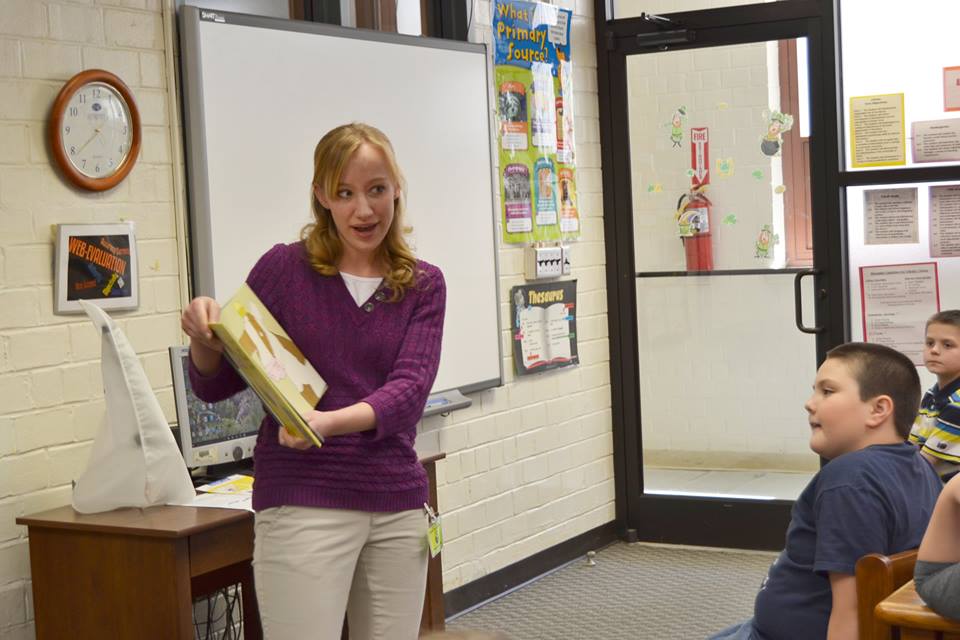
About 950 volunteer participants in Virginia’s sixth annual Agriculture Literacy Project visited 1,500 local classrooms and libraries between March 14 and March 31. Many of them read The Cow in Patrick O’Shanahan’s Kitchen, a children’s book by Diana Prichard that was named the 2016 Virginia Agriculture in the Classroom Book of the Year.

Some of the readings coincided with National Ag Week, which was celebrated March 14-20. That observance encourages Americans to understand how food and fiber are produced; appreciate the role agriculture plays in providing safe, abundant and affordable products; and value the essential role of agriculture in maintaining a strong economy.

Volunteers from 80 county Farm Bureaus, along with FFA chapters, 4-H club members and employees of Farm Credit, Southern States Cooperatives, soil and water conservation districts and the Virginia Department of Agriculture and Consumer Services read at their local schools. They also donated 1,783 copies of the Book of the Year to classrooms, schools and local libraries.

The Agriculture Literacy Project previously was known as Agriculture Literacy Week. Virginia Agriculture in the Classroom expanded the program to two weeks due to its popularity and increased demand for volunteer readers. Virginia AITC is part of a nationwide effort to help teachers and students understand and appreciate agriculture, which is Virginia’s and the nation’s largest industry.

“This project provides an opportunity for volunteers from the agriculture community to connect children to agriculture,” explained Tammy Maxey, AITC senior education manager. “The stories our volunteers share after visiting the schools show the need for agricultural education in the classrooms.”

For example, she said, Charlotte County volunteers said children asked why cows moo, and they wanted to know why there are no baby chicks in the eggs purchased at grocery stores.

Freezing Temperatures Affect Farmers Across State

There’s risk every spring that a hard freeze will kill tender fruit blossoms. Virginia apple and peach growers are familiar with that risk; most are in mountainous areas in the western part of the state, where cold temperatures linger into spring.

But growers across Virginia saw some losses from two hard freezes the week of April 3.

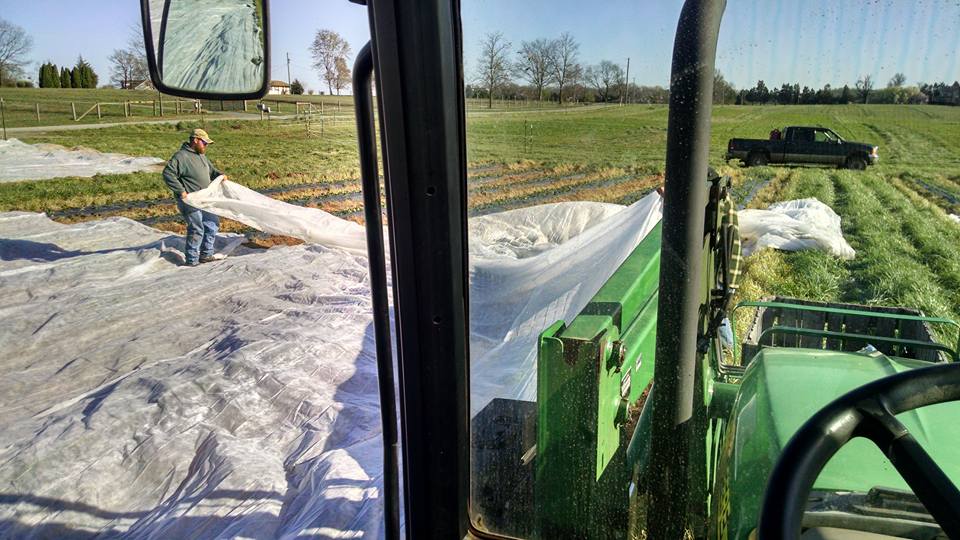
“We had row covers on all our strawberries and a few blueberry bushes Tuesday night, and we irrigated on Saturday night,” reported Jay Yankey, owner of Yankey Farms, a pick-your-own operation in Prince William County. He’s also a former Virginia Farm Bureau Federation board member. “We lost about 30 percent of our strawberry blooms. We had them covered, but it got down to 22 degrees, and the row covers only offer about 4 degrees of protection. So anything below 28 degrees means you start losing blossoms.”

The April 11 crop weather report from the Virginia office of the National Agricultural Statistics Service noted concerns about cold weather throughout the state. Snow showers hit many counties, and freeze warnings went into Southeast Virginia, where the strawberry crop ripens first.

“Saturday we ran irrigation over the row covers from 11 p.m. to 9 a.m., and by doing so we were able to keep the temperature under the covers at about 33 degrees. And we didn’t suffer any additional losses,” Yankey said.

Apple, cherry, nectarine, peach, strawberry and wine grape crops were hit by freezing temperatures in Nelson County, according to the report. Fruit trees in Carroll and Patrick counties also suffered a hard freeze. The cold weather delayed corn planting for growers across the state, and winter grain farmers in Eastern Virginia may have lost some yields.

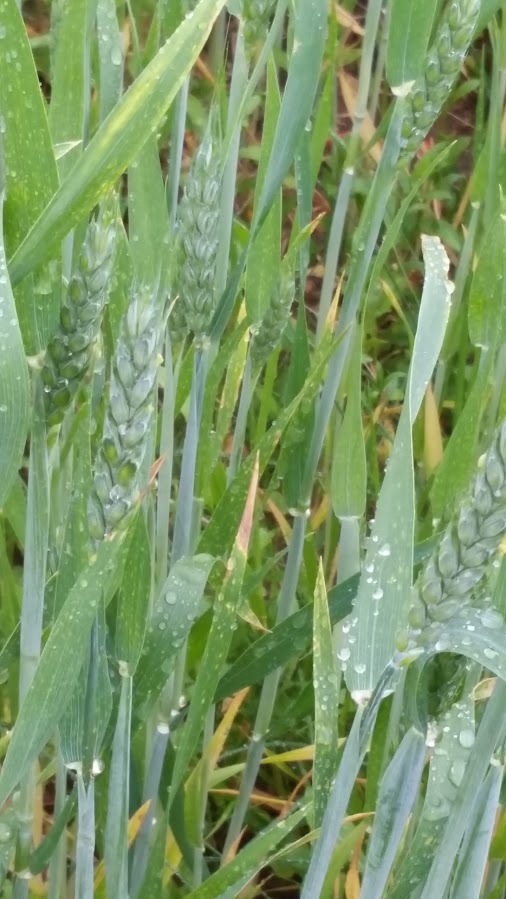
“The barley crop was about two weeks ahead of wheat, and the timing was all wrong” for the freeze, said David Moore, a Virginia Cooperative Extension agent in Essex County. “We’ll see some buggy-whipping and burnt ends, and now that the barley is starting to head out we’re seeing some empty heads.

“I expect wheat may have some white heads too when it starts to head out, but not nearly as bad as the barley crop. There’s not a whole lot you can do about it except tell your crop insurance agent.”

As frustrating as freeze losses are to growers, Yankey said he’s accustomed to hauling out his fabric row covers or setting up his sprinkler system.

“It’s probably more unusual to have a year where there’s no need to protect from freezes,” he said. “Some of the larger fruit growers have wind machines. … Elevation and just a little bit of a breeze can make a big difference on how much frost damage you get.”