By Katelyn Jordan, Assistant Director, Governmental Relations for the Virginia Farm Bureau
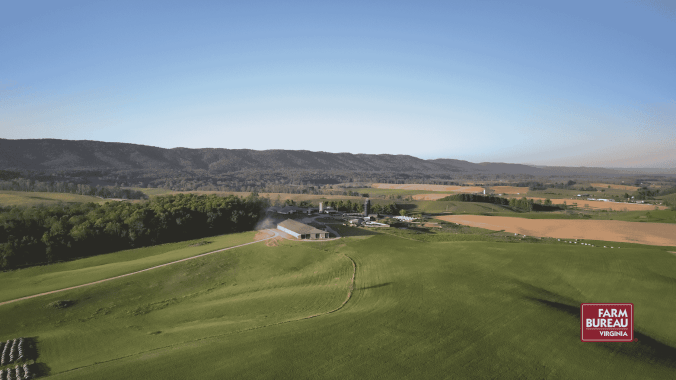
Local governments hold the key to farmland preservation. Through thoughtful land-use planning, zoning, and community engagement, our local leaders can safeguard the Commonwealth’s agricultural lands and reverse the concerning trend of rapid loss of farmland. We must empower our local leaders to act now – because protecting farmland starts at home.
The very real pressures of urban sprawl, population growth, deployment of renewable energy and development have had a direct impact on Virginia farms. Virginia’s farms are down 18% in 20 years—and over a third of a million acres of farmland have been converted due to development. If trends continue, the Commonwealth could lose another 800,000 acres by 2040.
While the forces driving this change may feel unstoppable, the reality is, we have choices.
Smart local land use planning can make all the difference. That’s why I’m proud to have contributed to the Planning for Agriculture in Virginia Toolkit, a new resource created by American Farmland Trust and partners to help counties, cities, and towns envision and prepare for a future where local farms can thrive.
Virginia Farm Bureau Federation (VFBF) is proud to partner with American Farmland Trust to ensure that the story of the backbone of Virginia’s economy is shared with local leaders. The reality is that many folks don’t know where their food comes from, or the hard work that went into getting it onto their plates. Educating community members on the importance of agriculture as well as the tools that are needed to ensure the industry’s vitality are critical.
This isn’t just about preservation. If you care about open space, food security or rural livelihoods, this matters. Virginia’s largest private industry, agriculture, is the cornerstone of the state and local economies. Among the nation’s most diverse farming sectors, it has a total economic impact of over $80 billion a year. If farmland is paved over, we don’t get it back. But with tools like use-value assessment, agricultural and forestal districts, and purchase of development rights (PDR) programs, we can chart a different course.
The Toolkit outlines these policies and shows how they’ve worked in Virginia. It’s full of fact sheets, resources and success stories, grounded in real-life applications.
We have the tools, let’s put them to work – for Virginia.
Visit the Planning for Agriculture in Virginia Toolkit here: farmlandinfo.org/planning-for-agriculture-in-virginia
 Plows and Politics