We have two new additions to the Governmental Relations team after departures from Jessica Walton in April and Arielle Brown in May. Jessica pursued an opportunity at William & Mary in Williamsburg to shorten her long commute. Arielle decided to pursue an opportunity with a law firm back in Washington D.C. We wish them well in their new jobs.
 I am pleased to announce that Emily Dunne joined our department on June 4th. Emily is a recent graduate of Virginia Commonwealth University with a degree in political science. During her academic career, she gained some valuable experience through internships with a non-profit group lobbying on behalf of college students as well as the Richmond office of Senator Mark Warner. In addition, she provided administrative support at the Federal Aviation Administration during some of her breaks. She will be serving as the Administrative Assistant supporting the Governmental Relations team and taking on numerous projects such as providing support for the Resolutions process.
 On July 9th, Ben Rowe will be joining our department as National Affairs Coordinator/Legislative Specialist. He will be coordinating our efforts at the national level with Virginia’s congressional offices. In fact, his first day he will be heading to the AFBF Public Policy Conference in Washington D.C. and provide support to other Farm Bureau staff bringing a group of young farmers visiting D.C. that week. In addition, he will handle issues surrounding labor, energy, plant-based commodities and providing back-up to me on environmental issues. Ben has a degree in Biology and Environmental Studies from Randolph Macon College. Ben is currently finishing up his duties as Vice President of Association Management with the Alliance Group. In this role, he served several agricultural and forestry clients including Executive Director for the Virginia Grain Producers Association, President of Virginia Forest Products Association and previously as Assistant Director to the Virginia Wine Council.
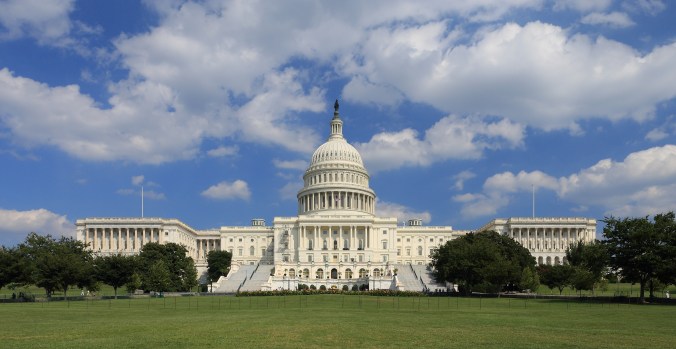 The following statement regarding Senate passage of the 2018 Farm Bill may be attributed to American Farm Bureau Federation President Zippy Duvall.
 The House passed its version of the farm bill today by a vote of 213-211. American Farm Bureau President Zippy Duvall released the following statement regarding its passage:
 The U.S. Department of Agriculture’s National Agricultural Statistics Service released its June Crop Production report today based on the Agricultural Yield survey conducted at the beginning of the month. The report includes information on Virginia’s winter wheat forecast.
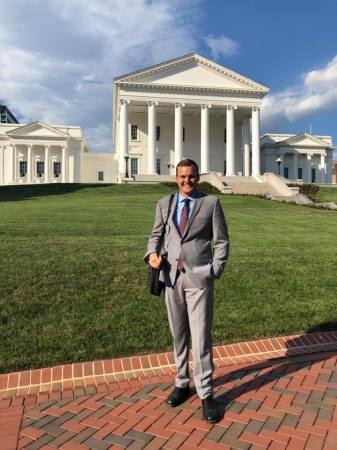 Chandler Vaughan grew up in Keysville, Virginia, where the cows outnumber the local human population. He remembers feeding the family cows on cold winter days and bonding with his dad as they planted pumpkin patches on their third-generation farm.
 The Senate Agriculture Committee today unveiled its version of the farm bill. This draft was hammered out by committee chairman Sen. Pat Roberts, R-Kansas, and ranking minority member Sen. Debbie Stabenow, D-Michigan. In the course of drafting it, the two repeatedly expressed a commitment to proposal with bipartisan support.
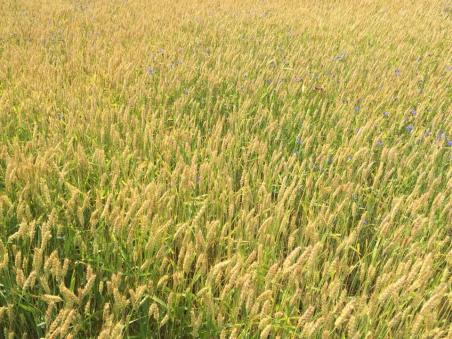 Participants in the Virginia portion of the 2018 Mid-Atlantic Wheat Tour were encouraged by what they saw on farms in the eastern part of the state.
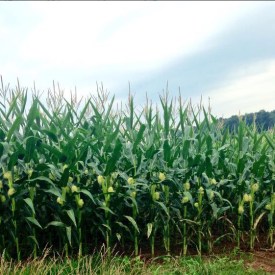 The Agriculture Department’s May 29
  Plows and Politics